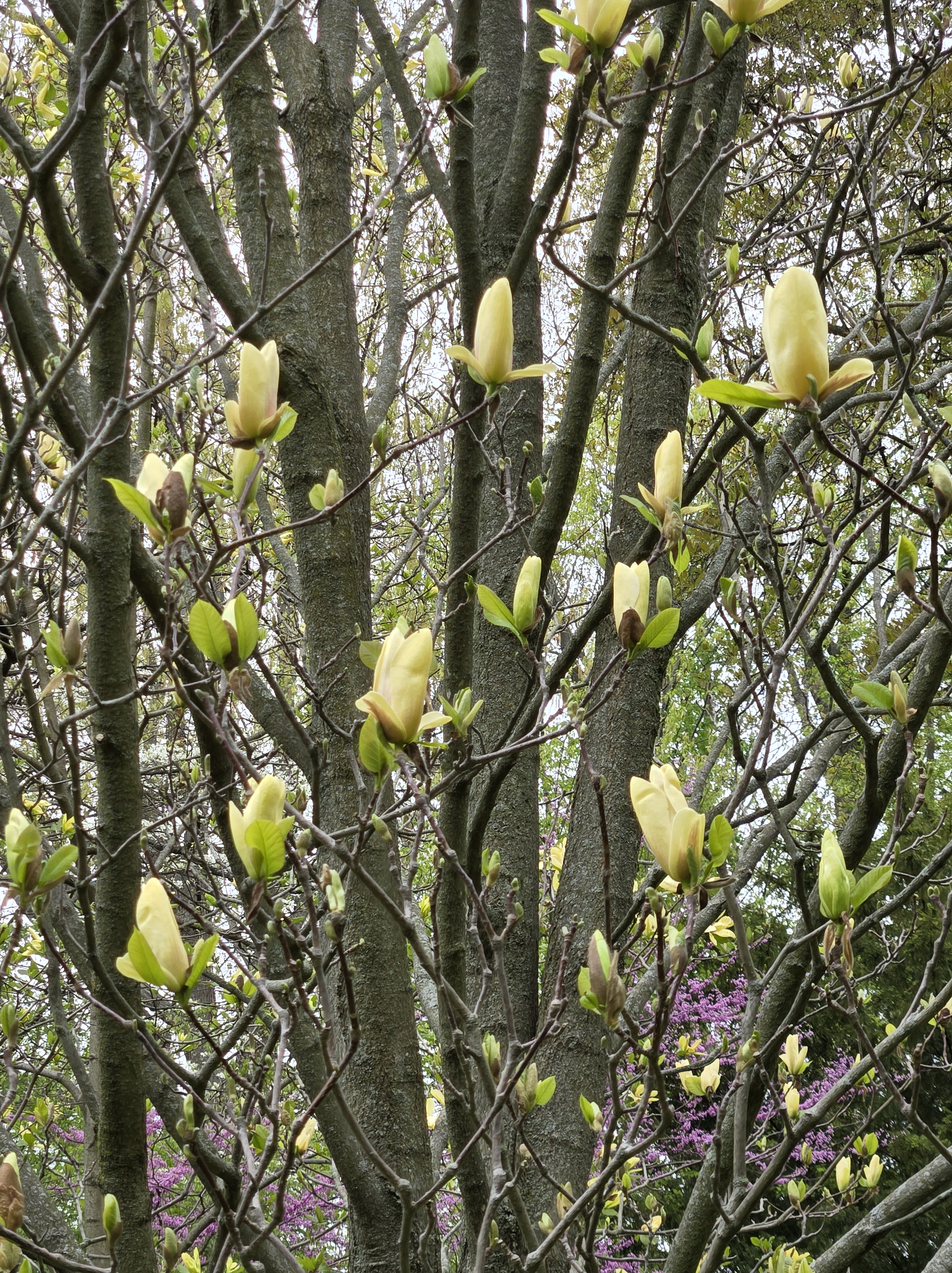
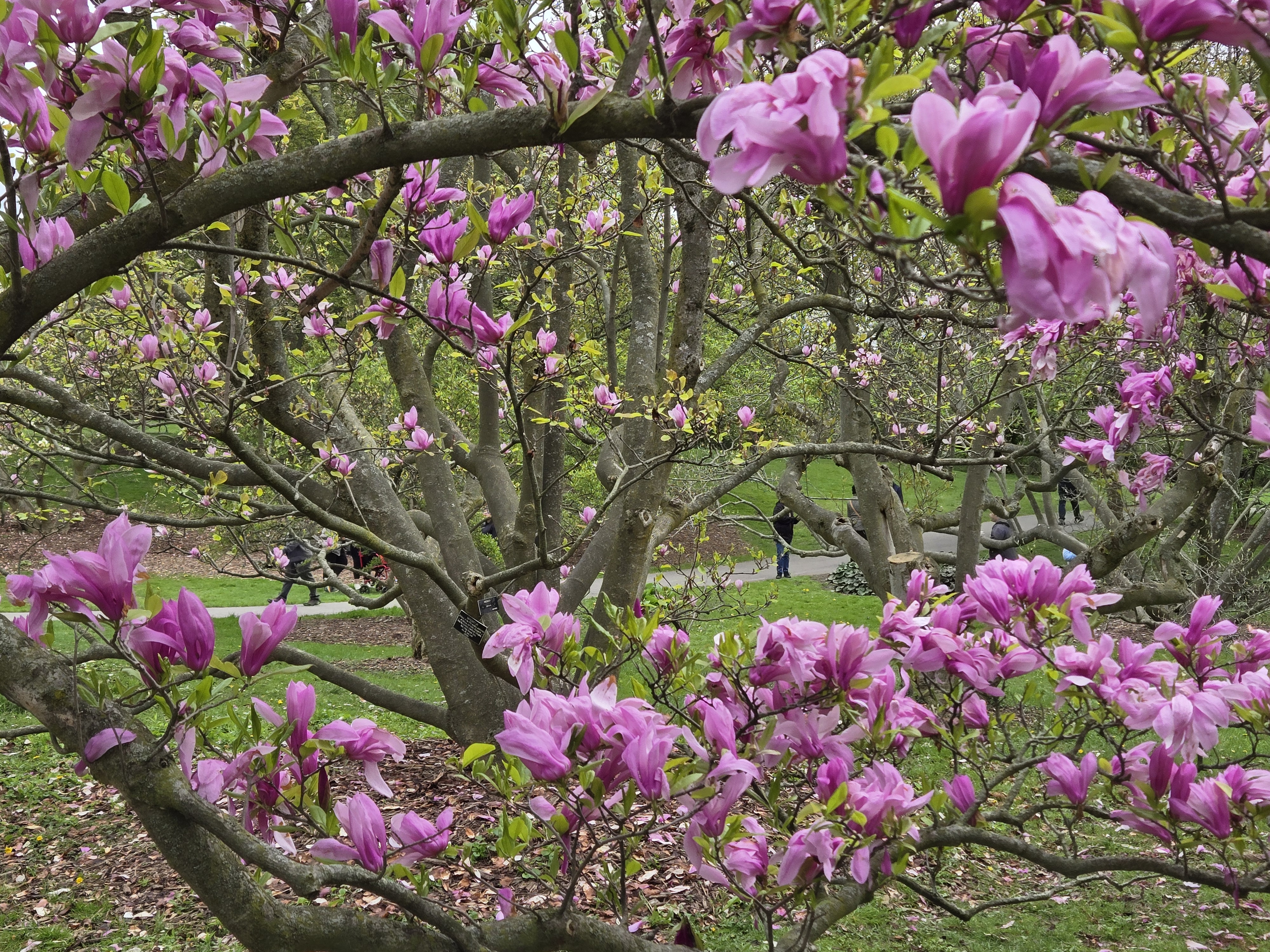
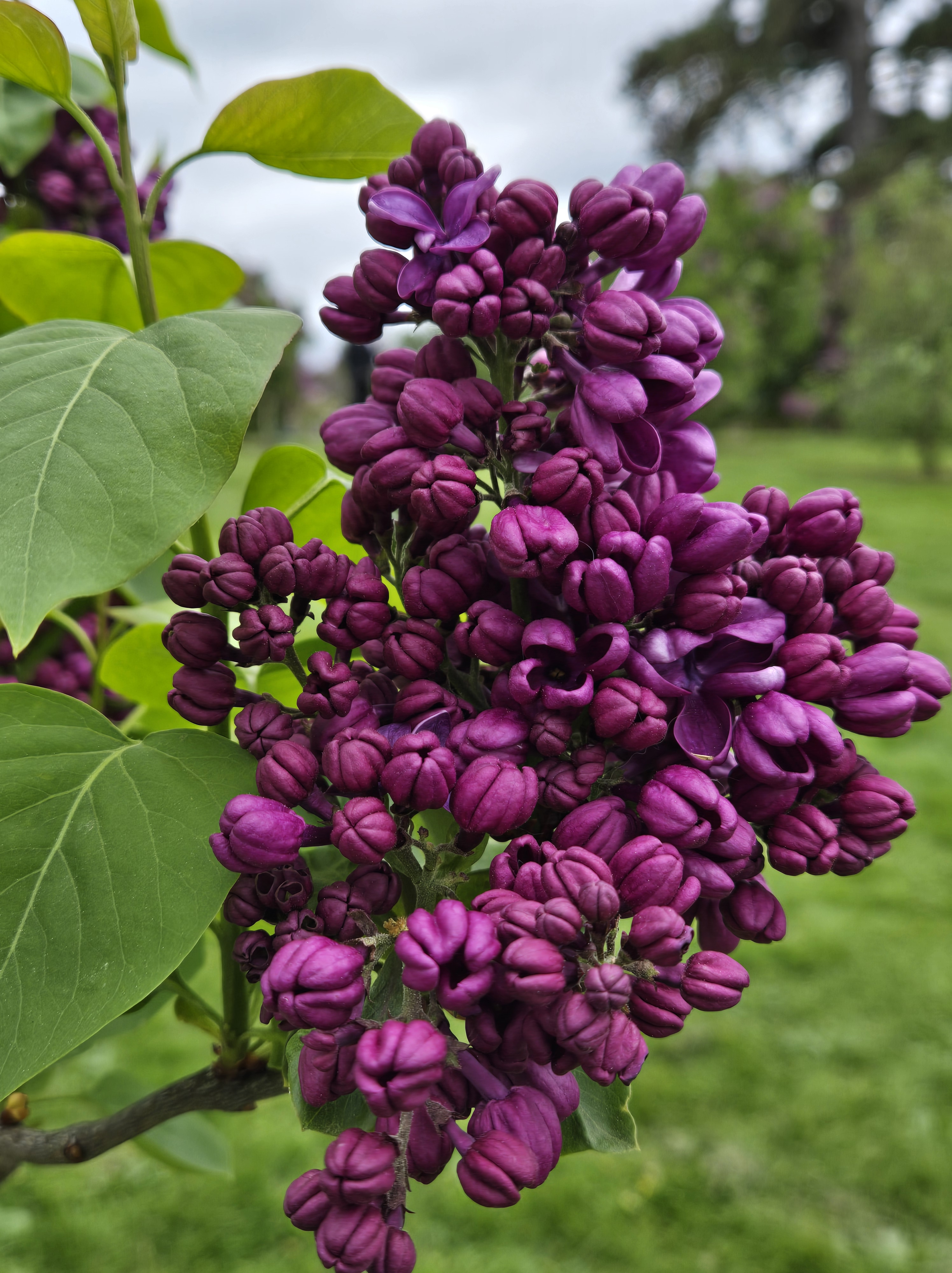
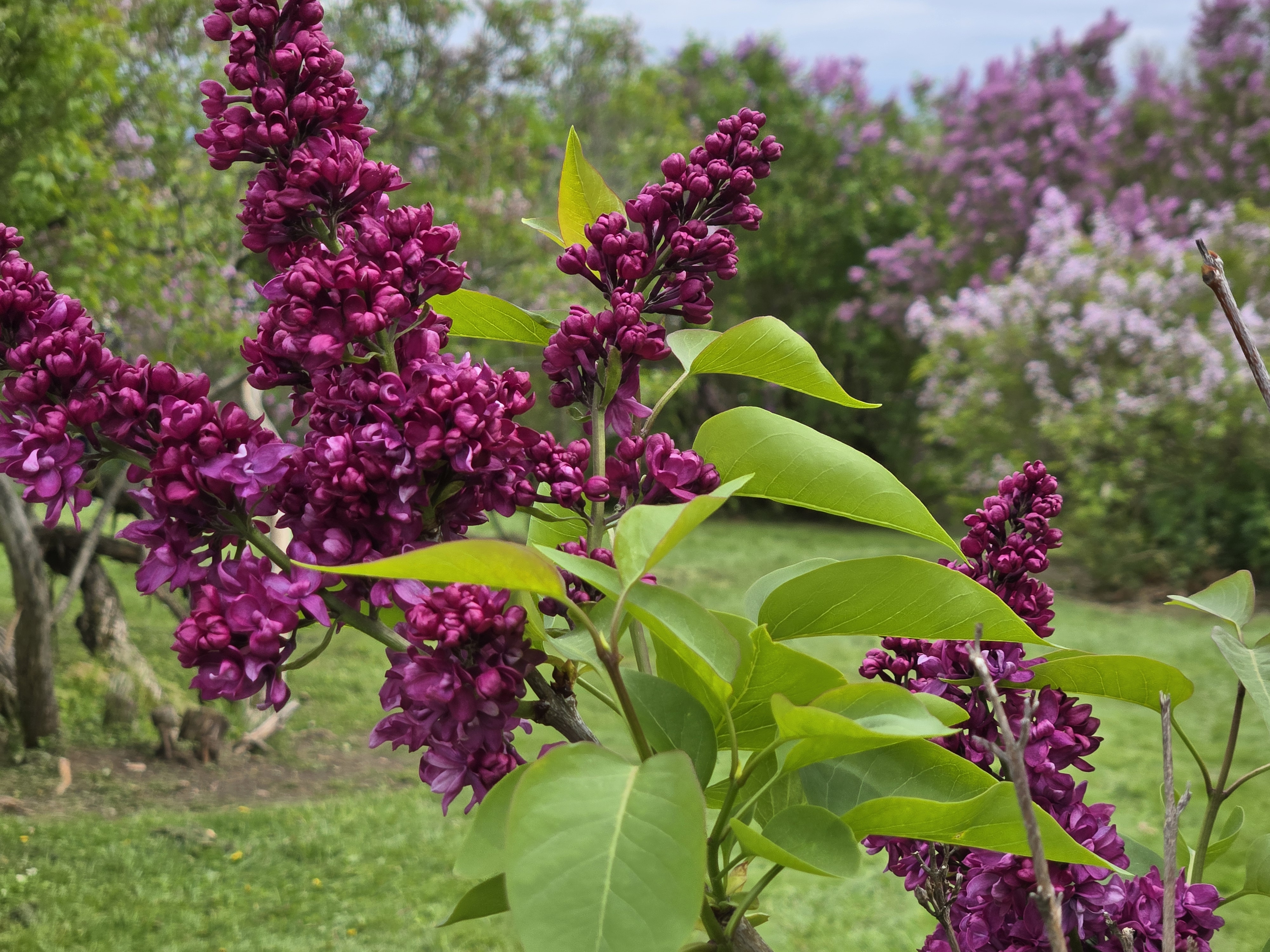
Highland Park – Rochester, New York’s Olmsted jewel – is in full bloom on Mother’s Day 2025 weekend.











With all due respect (and admiration),
Art Giacalone
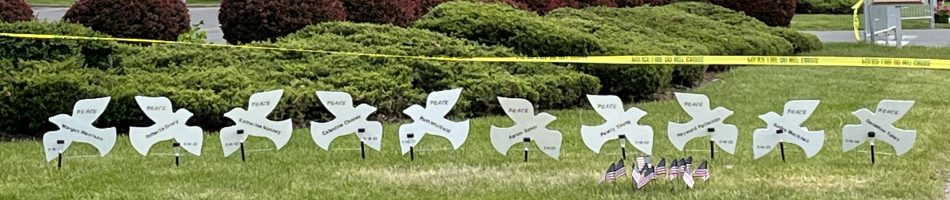
Highland Park – Rochester, New York’s Olmsted jewel – is in full bloom on Mother’s Day 2025 weekend.
With all due respect (and admiration),
Art Giacalone
Nearly six feet of snow fell at my South Buffalo home between January 13 and 19. It was a week of shoveling and little else as my world was reduced to my driveway, my house, and a view of my across-the-street West Seneca neighbors. I did feel extremely fortunate to have a warm and cozy place to call home. But I dearly missed my daily walks in Cazenovia Park and the freedom of driving to Wegmans, Office Depot, or wherever whenever I wanted.
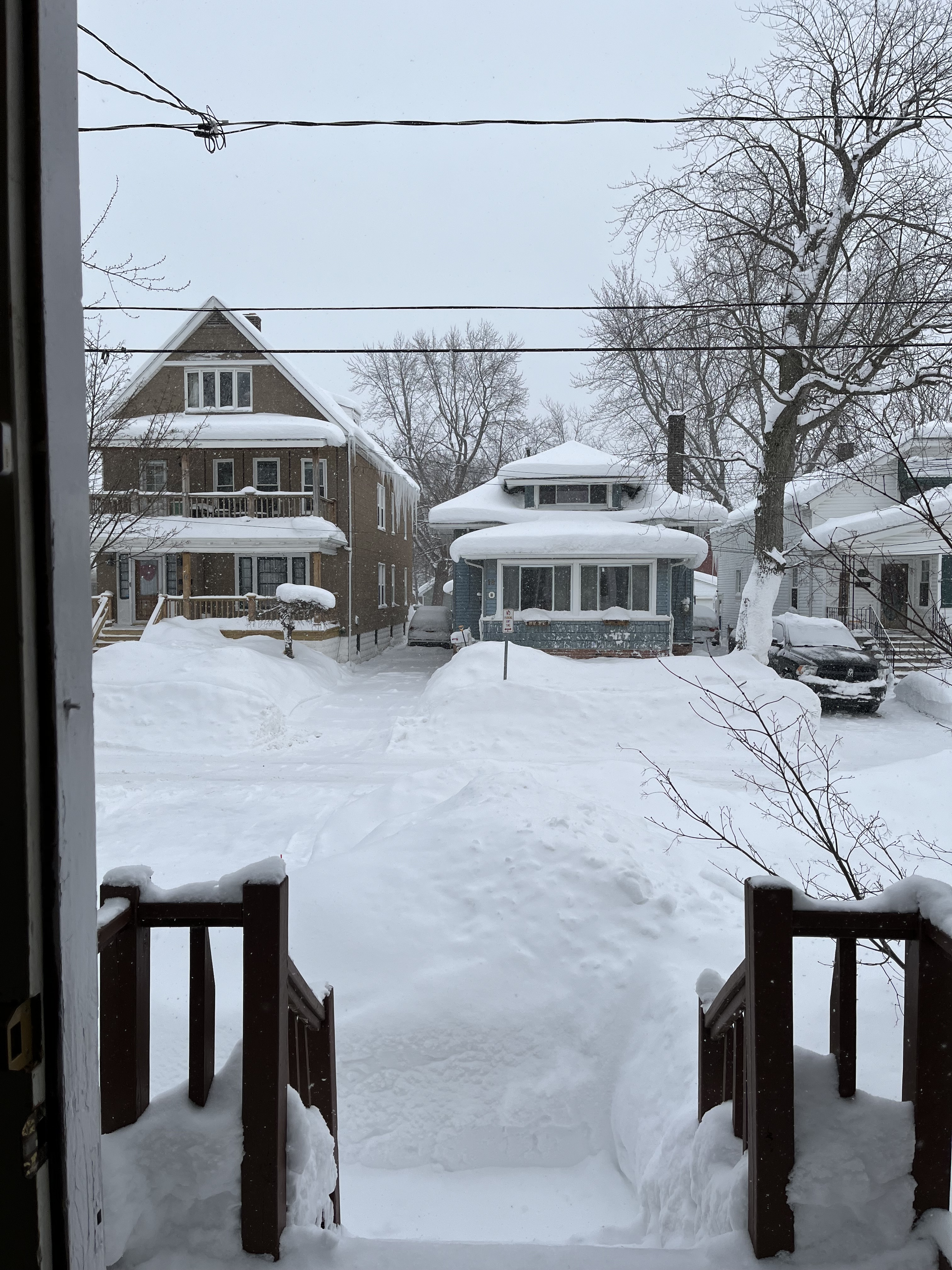 [View from my front porch door 01/19/2024.]
 [My back yard bird bath 01/15/2024.]
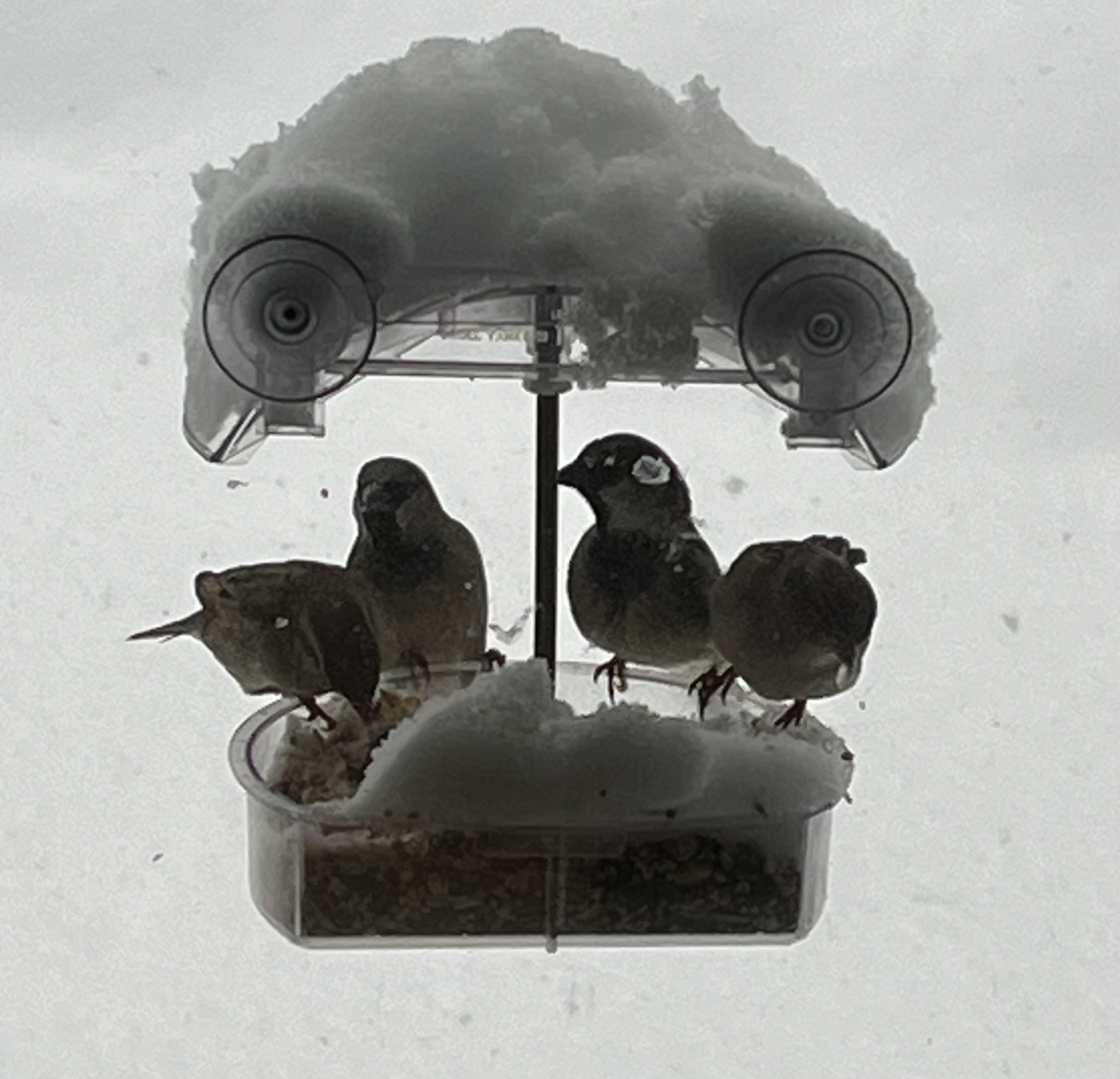 [Feathered friends at my window feeder 01/16/24.]
Mountains of snow and buried cars were eventually removed from nearby streets by the end of the day Saturday, January 20. The next morning the wind chill was a bone-chilling one degree Fahrenheit when crawled out of bed at 8 AM. I impatiently waited a few hours and, seeing that it had warmed to 10 degrees and a “feels like” temperature of zero, I bundled up and headed out my door to walk five blocks to Cazenovia Park.
I wasn’t disappointed. The contrast between the stunning azure skies and the pure white fields and hills (with crisscrossing boot prints and signs of sled tracks), snow-covered picnic tables and bleachers, and suddenly iced-over Caz Creek, was a joy to see and experience after a week of shoveling and “cabin fever.”
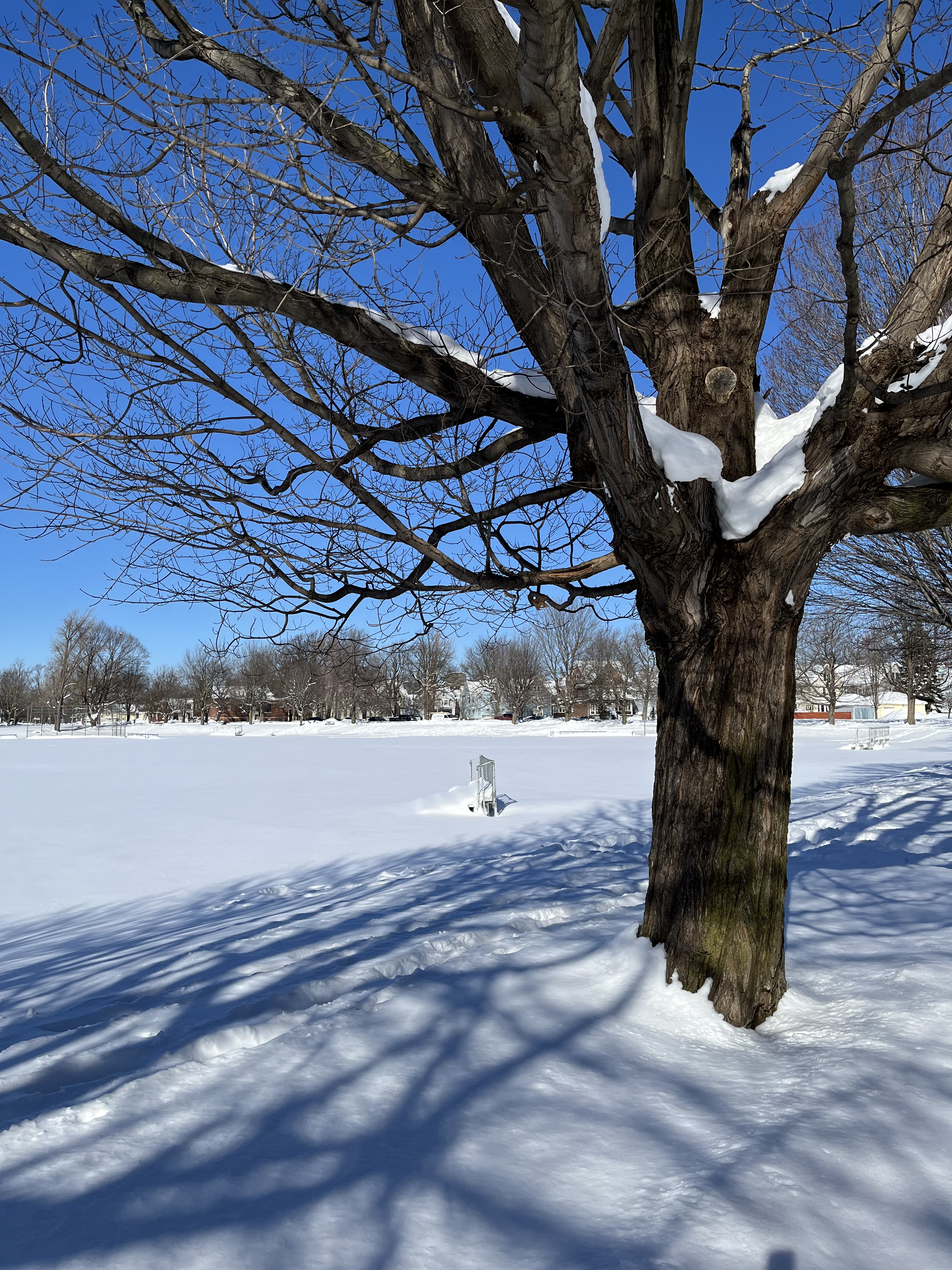

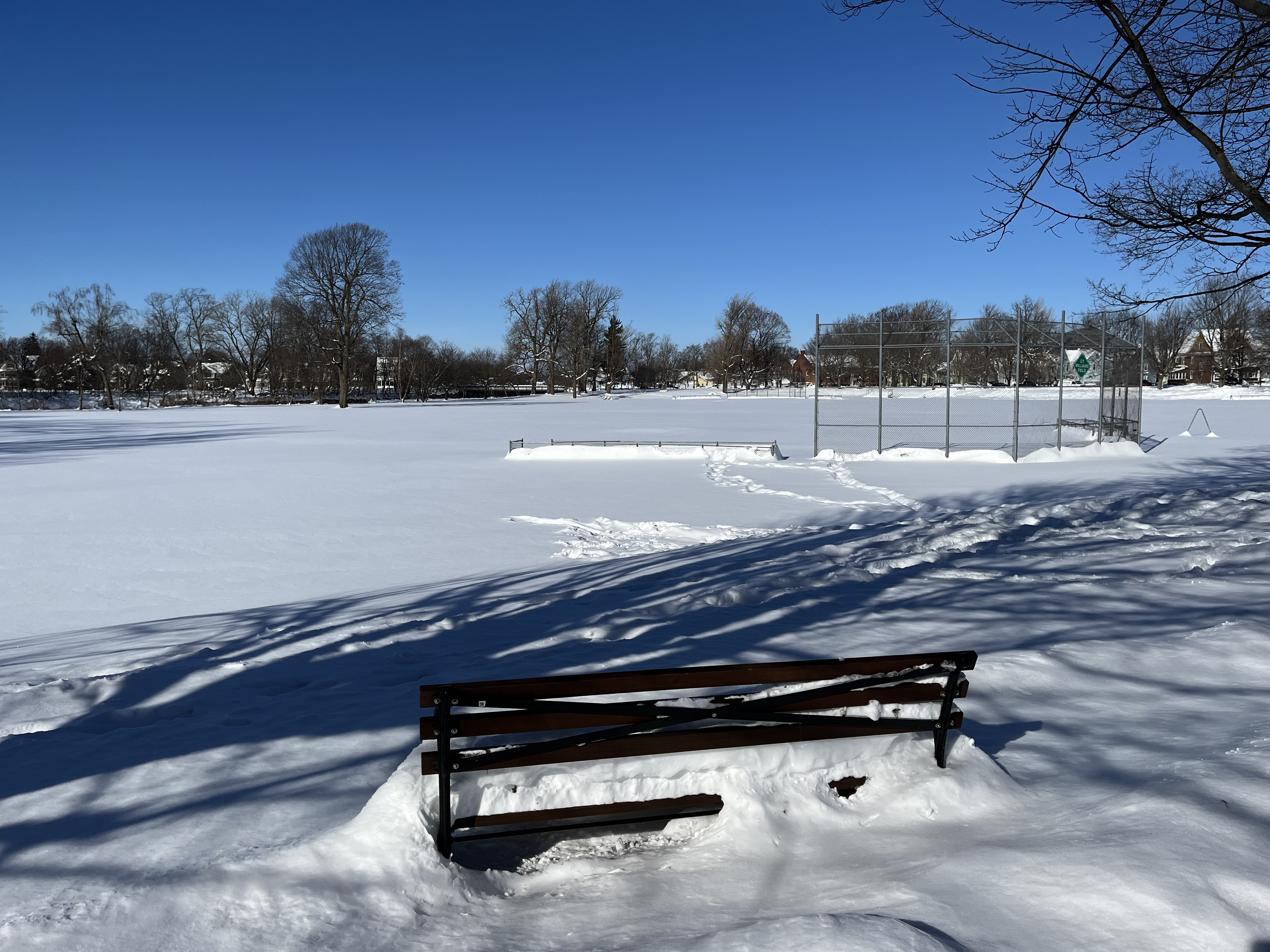


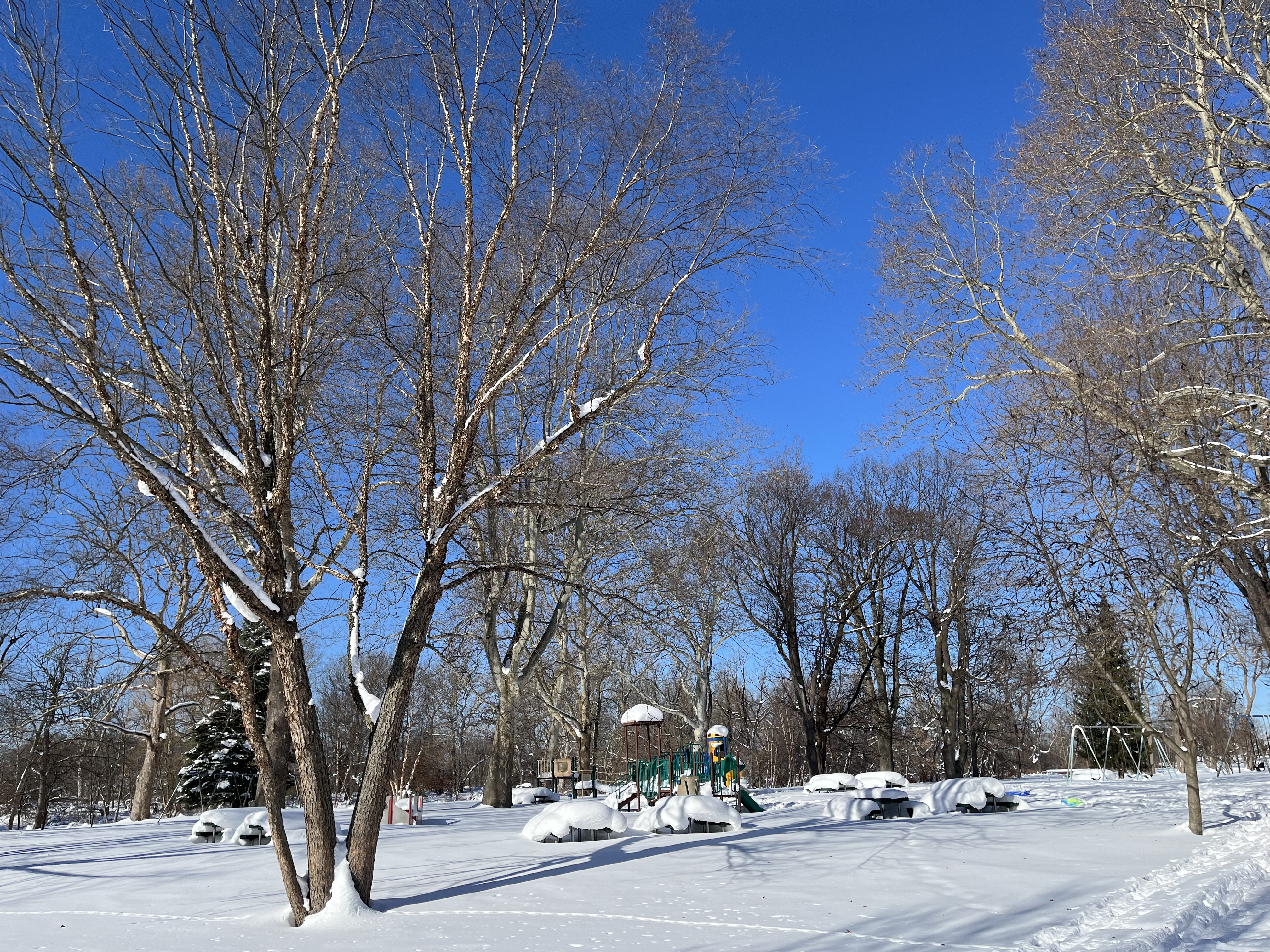
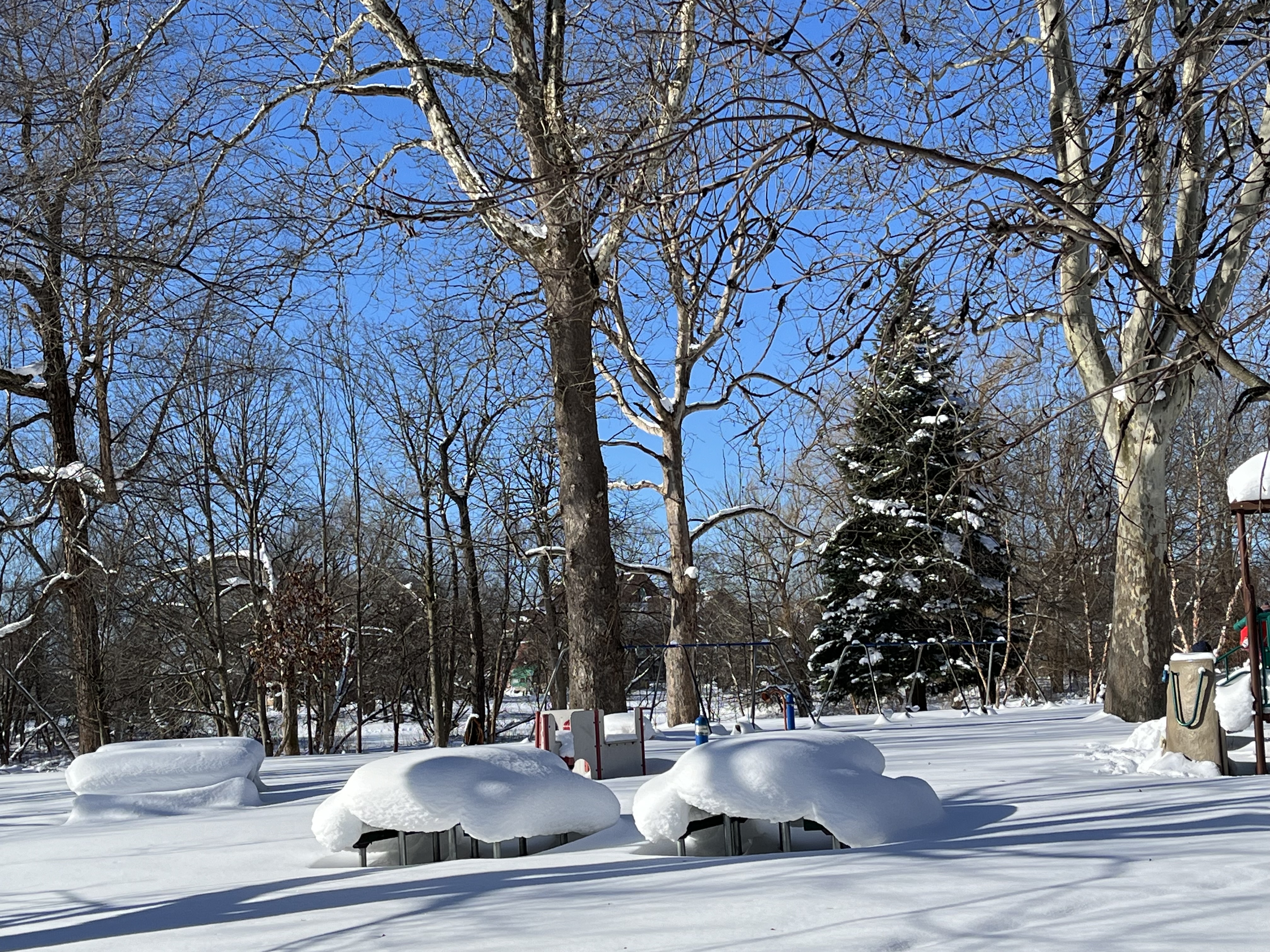
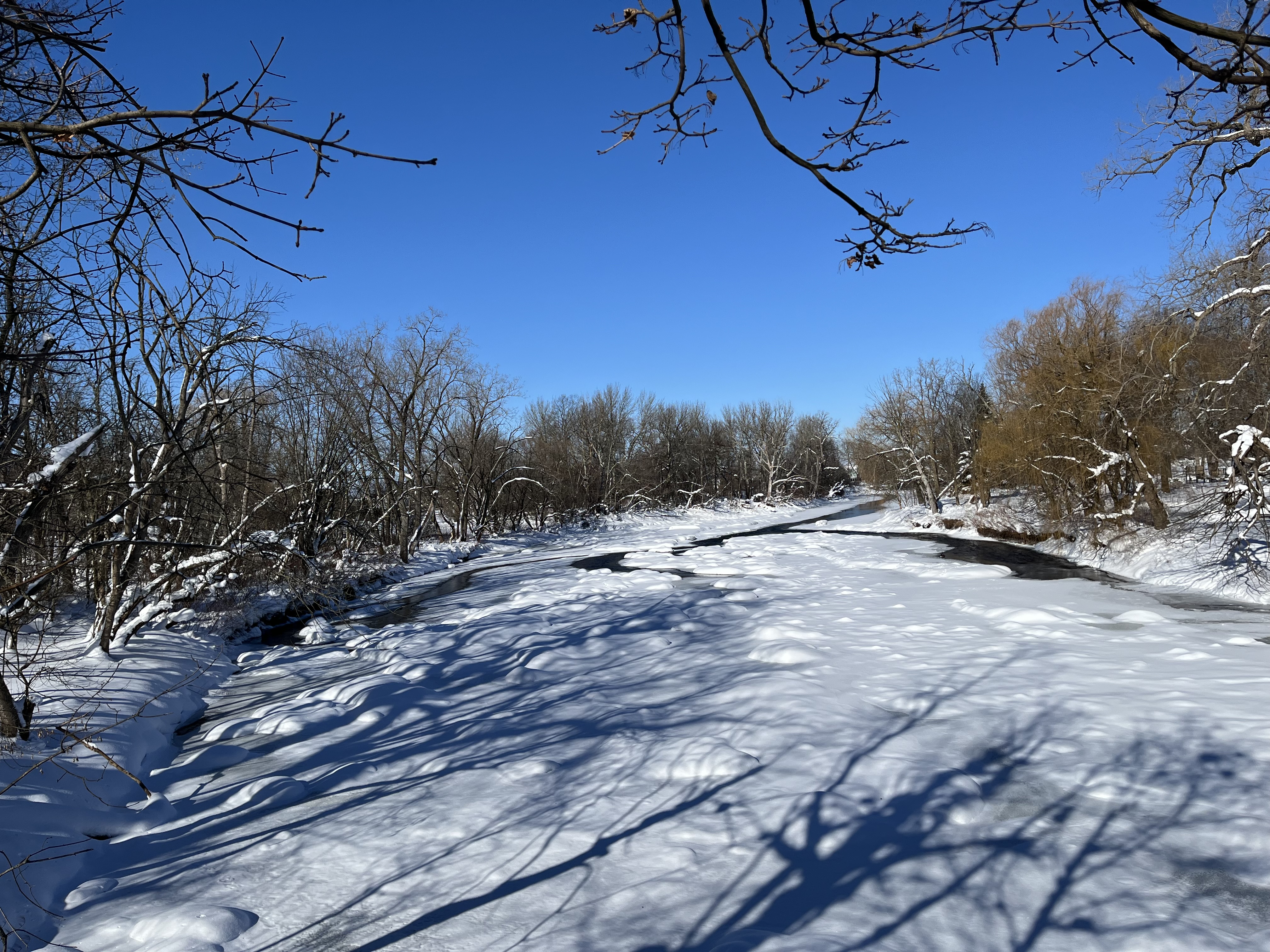
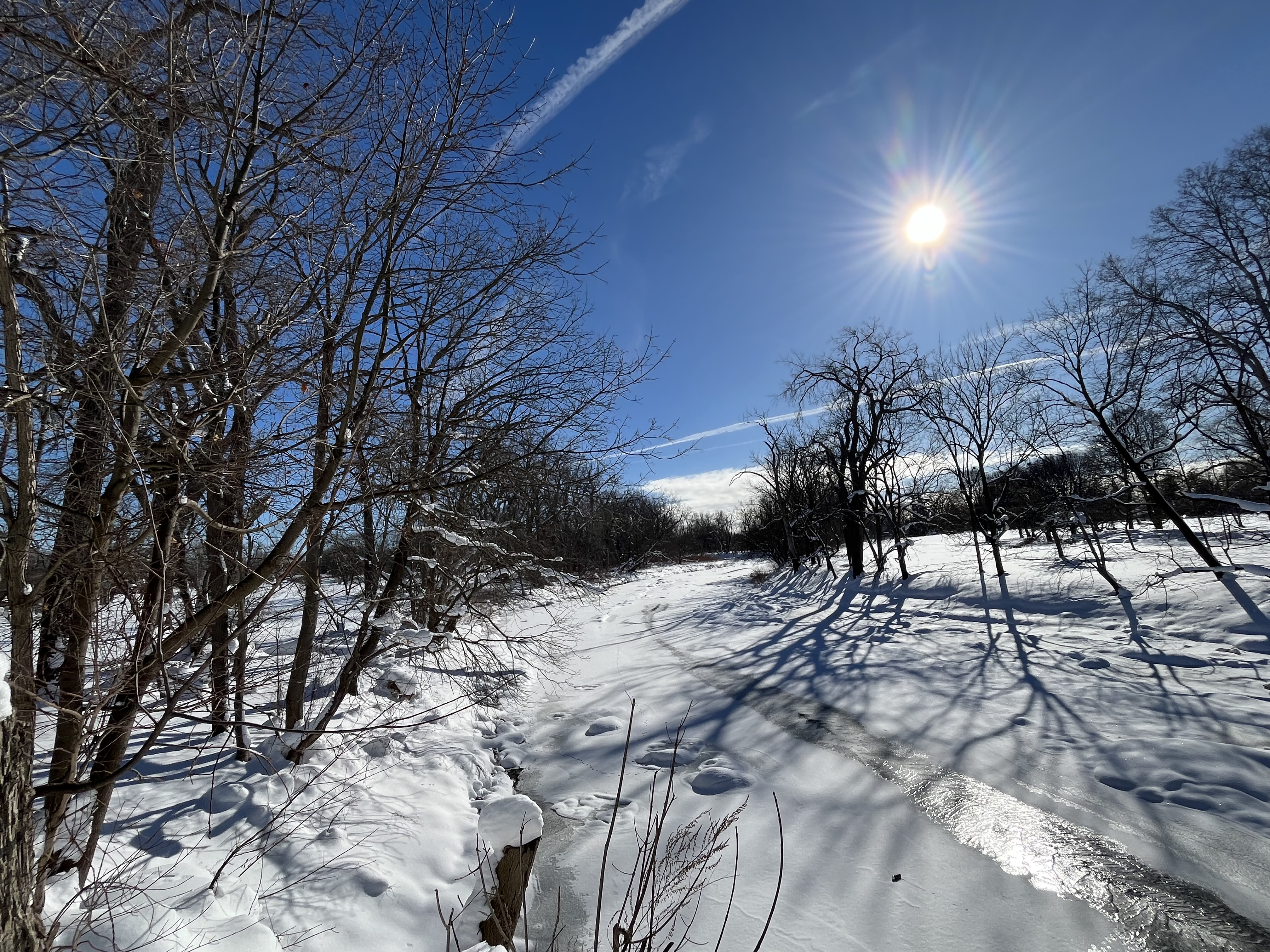
I’m not certain if the team of Olmsted landscape architects had South Buffalo winters in mind when they designed Cazenovia Park, but I’m pleased that this four-season gem adorns and defines my neighborhood.
With All Due Respect,
Art Giacalone
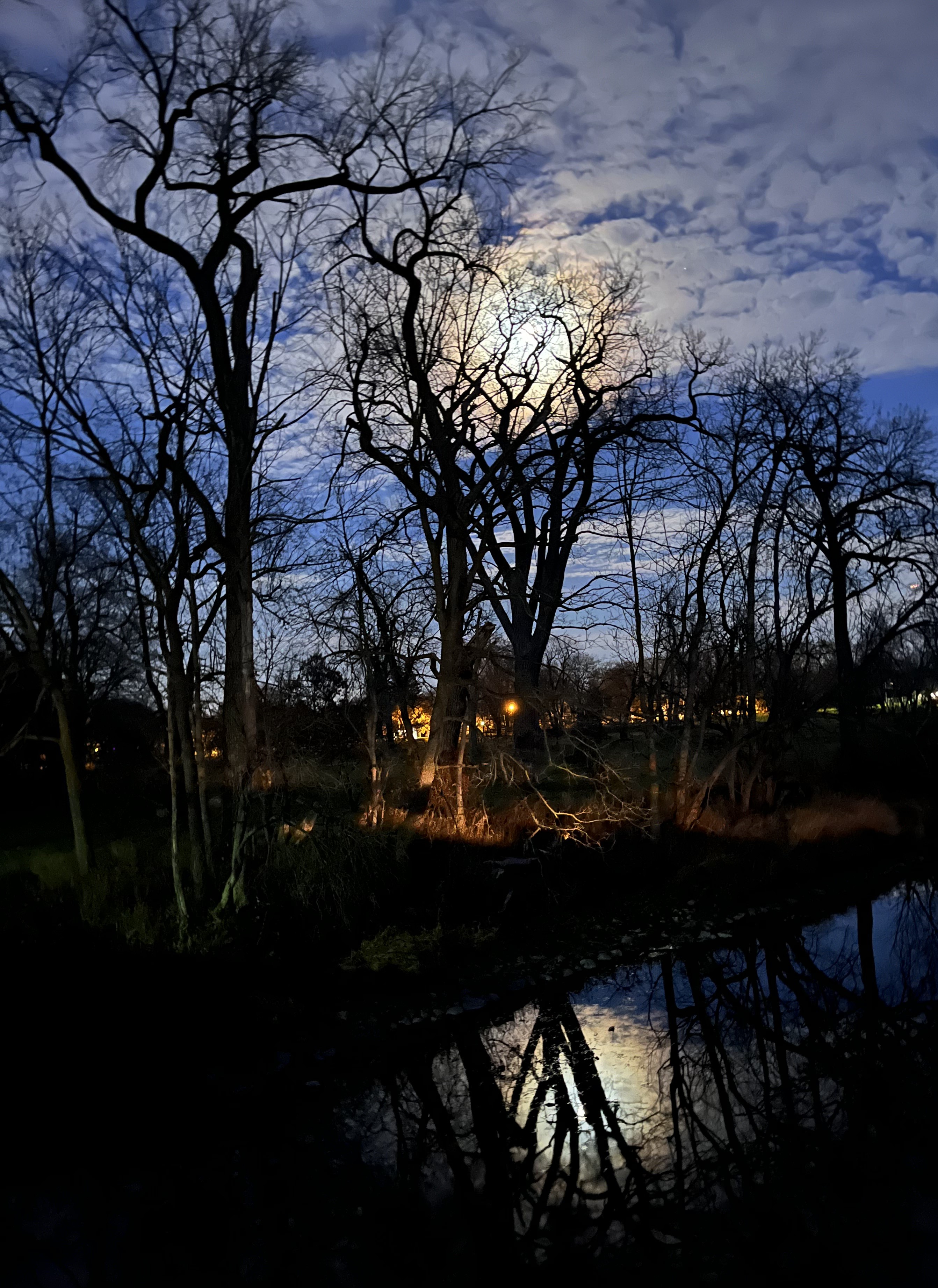
I have taken walks through South Buffalo’s Cazenovia Park virtually every day the past eight years. That welcomed ritual includes an admiring glance at Cazenovia Creek from the vehicular bridge on Warren Spahn Way. Not surprisingly (now that my eyes are wide open), the view changes dramatically depending upon the time of day, weather, presence of clouds, autumn hues, etc.
I’d like to share with you my favorite baker’s-dozen images from the past 80 days or so, working backwards from November 30.
[11/30/2023, 7:47 am]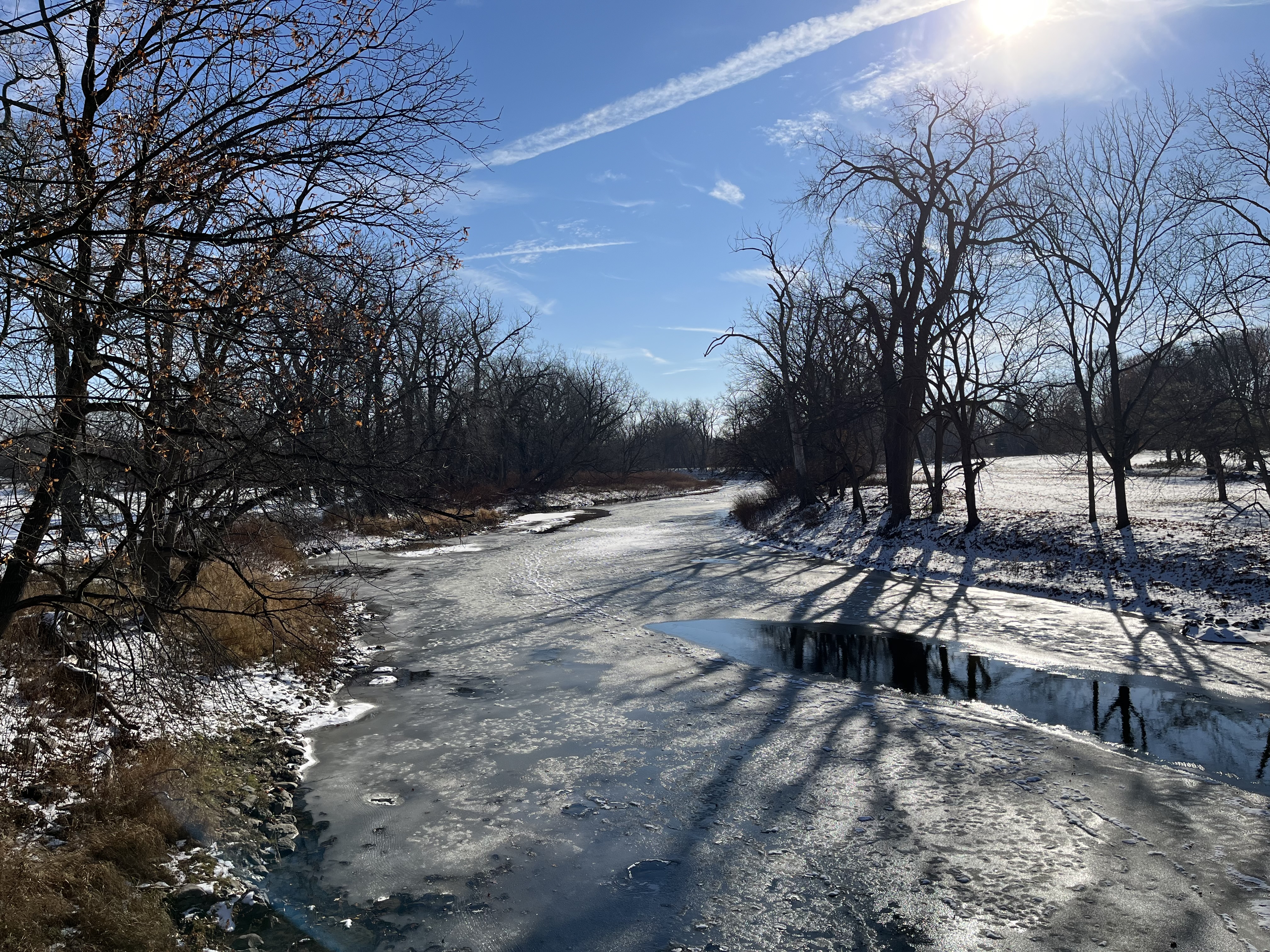
[11/26/2023, 11:04 am]

[11/25/2023, 5:34 pm]
[10/24/2023, 8:35 am]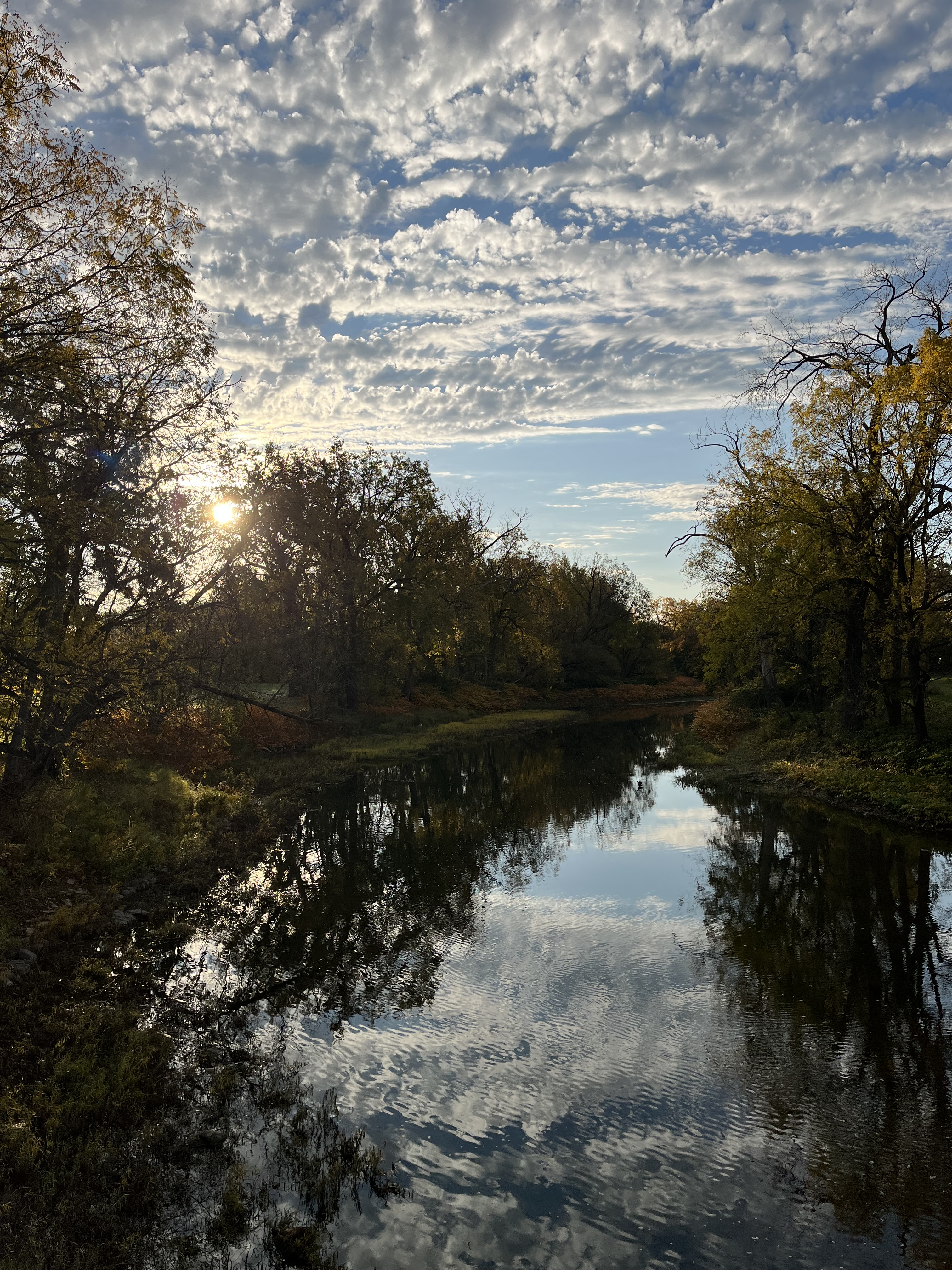

[10/22/2023, 5:03 pm]


[10/4/2023, 5:19 pm]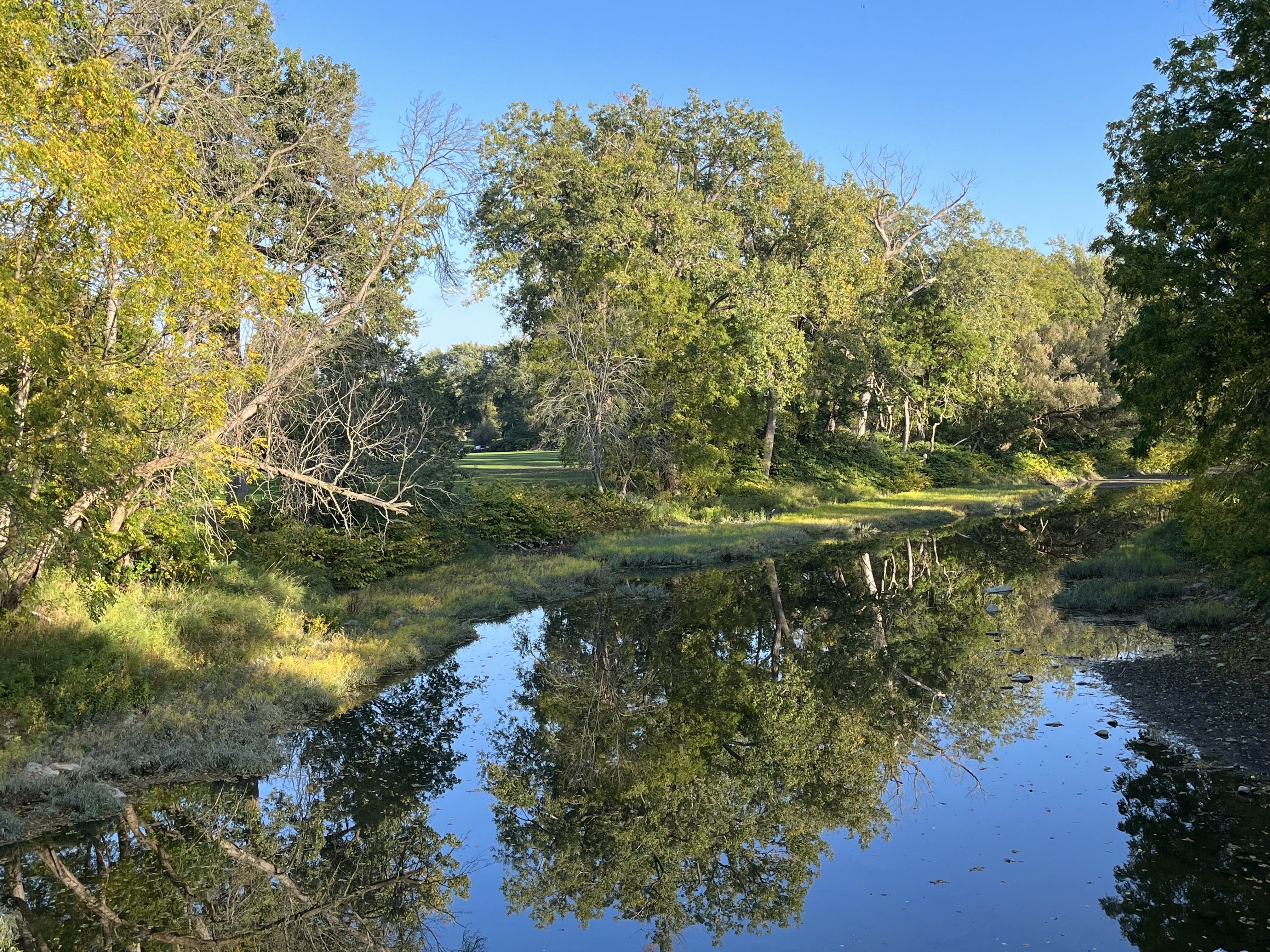
[9/11/2023, 7:47 am]
I hope you enjoyed the view from the Caz Park bridge.
With All Due Respect,
Art Giacalone
The past two months have been a bummer for me. Sciatica has prevented from taking my daily walks through my South Buffalo neighborhood and, most importantly, Cazenovia Park, accompanied by my trusty camera (a/k/a, iPhone). This afternoon I broke free from the confines of my home, and took the liberating stroll I’ve been waiting for.
That walk – and this posting – is dedicated to one of Buffalo’s remarkable nonagenarians, Mrs. Raymond G. Peterson. (Hopefully, her daughter will figure out a way to share this collection of photos with her).
By popular demand, I will keep my words to a minimum, and let the images of springtime in Caz Park speak for themselves. I hope you’ll enjoy their beauty, and feel their inherent energy and optimism in the weeks and months ahead.


The past few days have been noteworthy (in my mind, at least) for the recognition being shown to the culture and history of Western New York’s first inhabitants, the members of the Haudenosaunee Confederacy – the nations of the Seneca, Cayuga, Onondaga, Oneida, Mohawk, and Tuscarora – and their ancestors. [I admit my cultural ignorance, and offer this link as a useful primer reprinted at the website of the Syracuse Peace Council, “Understanding Haudenosaunee Culture.”]
The July 18, 2022 print version of the Buffalo News includes an article by Mark Sommer entitled, “WNY exhibits celebrate Haudenosaunee culture.” [Here’s a link to the on-line version under the headline, “3 WNY exhibits celebrate Haudenosaunee art, culture, history.”] Mr. Sommer reports on: (1) The Buffalo Maritime Center’s “The Haudenosaunee and the Erie Canal,” at the Longshed at downtown Buffalo’s Canalside; (2) The Buffalo History Museum’s “Haudenosaunee Resurgence: Marie Watts, Calling Back, Looking Forward“; and, (3) An art exhibition at SUNY at Buffalo’s Center for the Arts and Anderson Gallery, which celebrates the 50th year of UB’s Indigenous Studies program by displaying the work of around four dozen artists of the Haudenosaunee Confederacy.
Three days earlier, July 15, I witnessed something gratifying on a pleasant summer evening in South Buffalo’s Cazenovia Park. As the Buffalo Philharmonic Orchestra’s “Olmsted 200 Celebration” concert was about to begin, Stephanie Crockatt, executive director of the Buffalo Olmsted Park Conservancy, did something that had not previously been done at a BPO concert or BOPC event. She read the following statement to the assembled crowd:
Land Acknowledgement for BPO Concert at Cazenovia Park | July 15, 2022
Before we begin this concert, we would like to respectfully acknowledge
that the land on which we gather is part of the aboriginal territory of the
Seneca Nation and the Tonawanda Seneca Peoples. Their continued
presence on this landscape is affirmed by The Dish with One Spoon Treaty of
Peace and Friendship, and the 1794 Treaty of Canandaigua, between the United States Government and the Six Nations Confederacy. This region is both the traditional and the current home of the Seneca, Haudenosaunee, Erie, Wenro, and a host of
countless communities over time.
This very site where we listen to the Buffalo Philharmonic Orchestra,
Cazenovia Park, once held the Seneca Town of Buffalo Creek. A few blocks
away from Cazenovia Park at Buffum Street, is Seneca Indian Park, originally
the Seneca Indian Cemetery. The Buffalo Creek Treaty of 1842 eliminated
the Buffalo Creek Reservation. We sincerely hope that by recognizing the
historical wrongs that have taken place here and far, we will begin to try
understanding and healing the traumas that have been inflicted on the
Indigenous community, and to celebrate their rich culture and time on
Turtle Island. Please join us in showing gratitude for this opportunity to
share music and the natural environment of this beautiful land today.
These words of acknowledgement and respect were most fitting given both the location of the concert – the heart of the Buffalo Creek Reservation – and the BOPC/BPO’s stated desire to present “music inspired by nature and nods to the rich tapestry of cultures that make up the Buffalo community.”
 A sliver of the crowd at the BPO’s Olmsted 200 Celebration, Cazenovia Park, 07/15/2022.
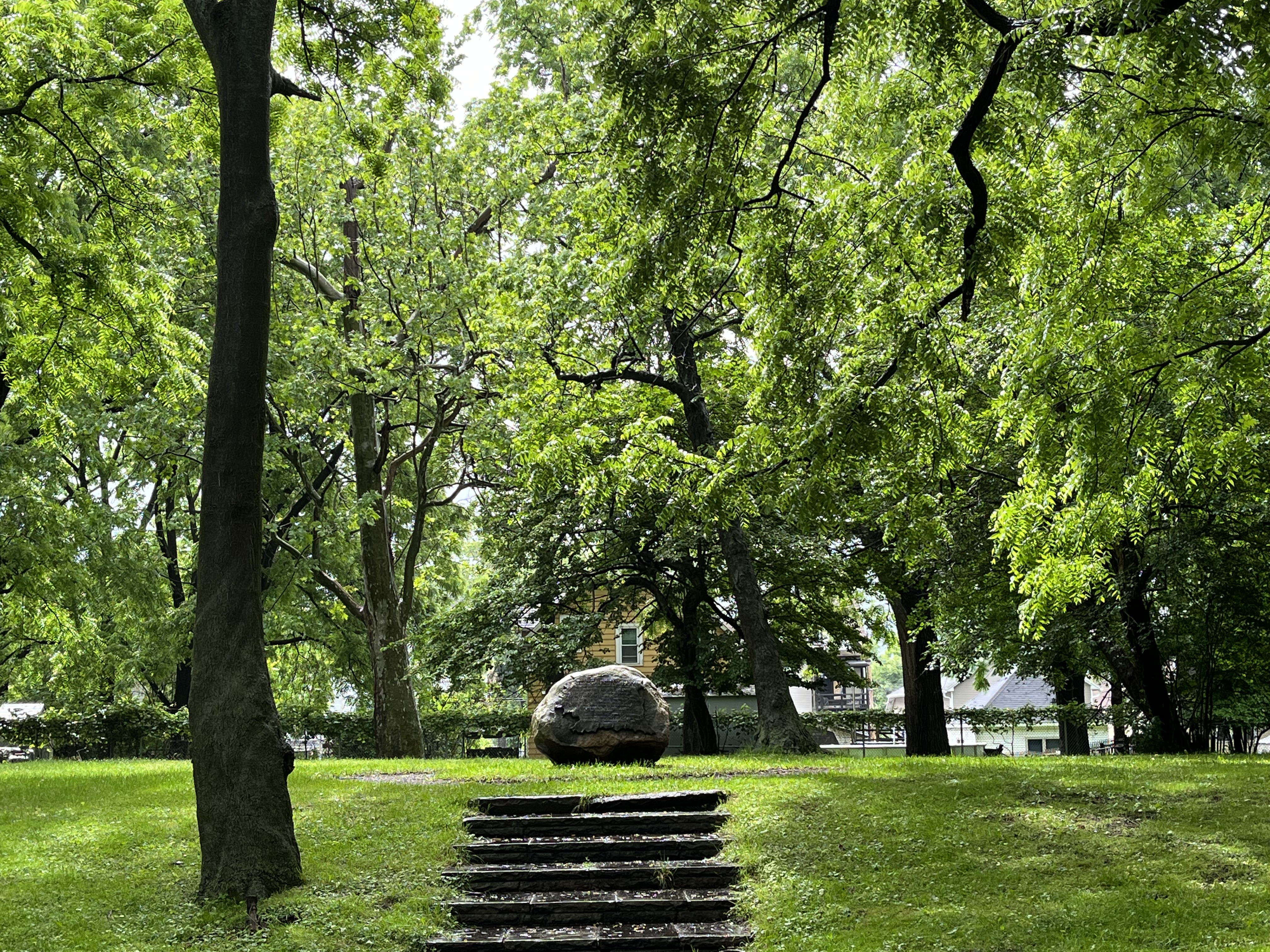 “Seneca Indian Park” on Buffum Street, site of an ancient Indigenous burial grounds.
The introductory statement – if my understanding is correct – came to timely fruition thanks to the receptiveness of the BOPC’s executive director, Ms. Crockatt, the focused efforts of BOPC’s marketing communications specialist, Zhi Ting Phua, and the guidance from Joe Stahlman, director of the Haudenosaunee cultural center in Salamanca, NY (known officially as the Seneca-Iroquois Museum).
My thanks to all involved.
With All Due Respect,
Art Giacalone
Okay. Perhaps I seemed a bit overly confident with yesterday’s posting, Signs of Spring 2022 in South Buffalo. And, just maybe, I tempted fate by whimsically suggesting that even the verdant meadow was whispering, “Yes, spring is here.” [I sincerely apologize for twice saying something that corny.] Worse of all, it now appears rather unwise to have gently dissed the Buffalo News’ use of the cliche “pretty in pink” (when referencing the cherry blossoms at the Delaware Park Japanese Gardens) by ending my April 26th post with the phrase: “Wonderful in white.”
I/We paid for all of my April 26th lapses with the wintry reprise that greeted us this morning. The verdant meadow wasn’t quite as green:


And the golden bush lost – at least, temporarily – much of its sparkle:
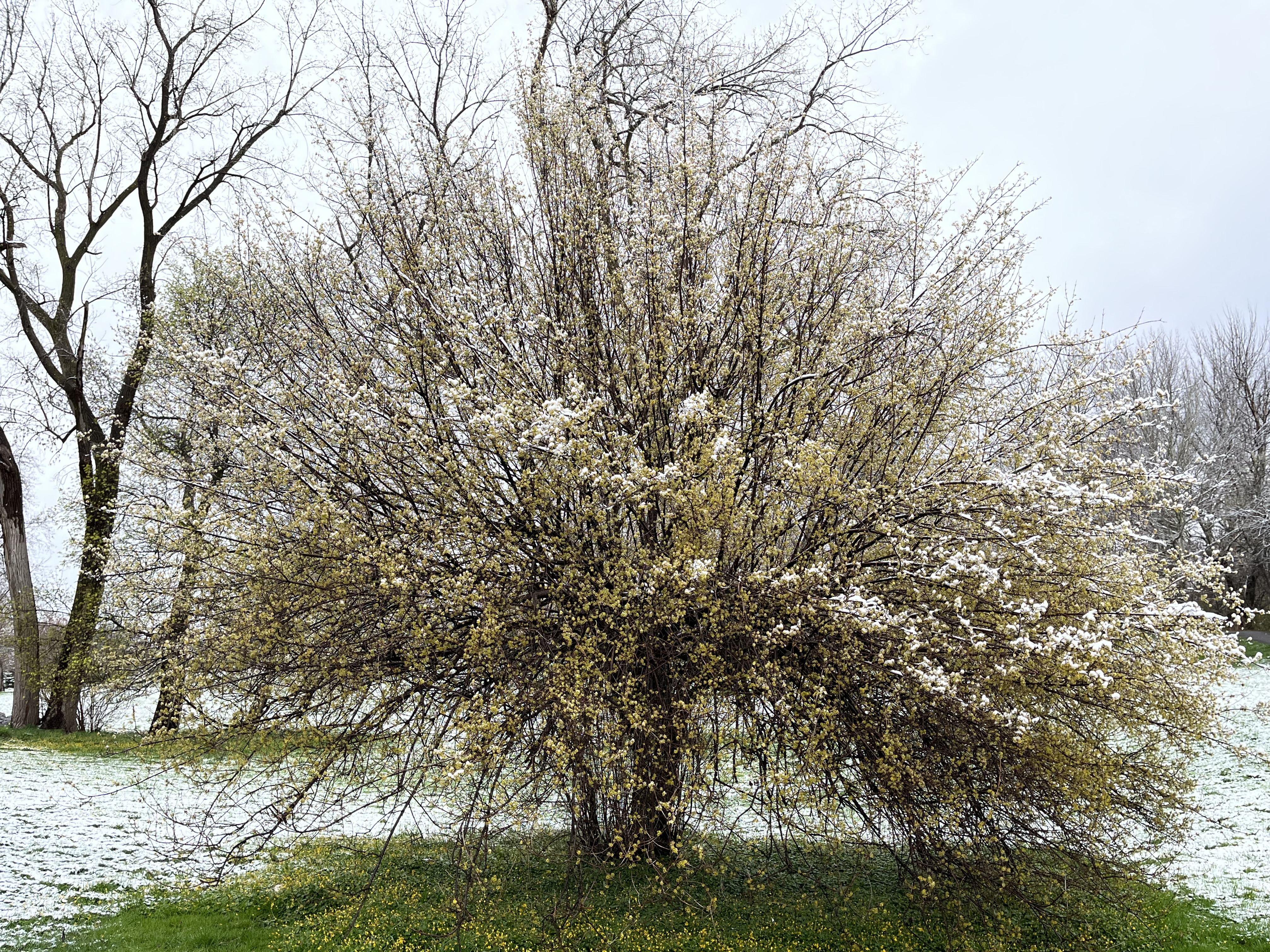
Nonetheless, I still think that Cazenovia Park looks wonderful in white:
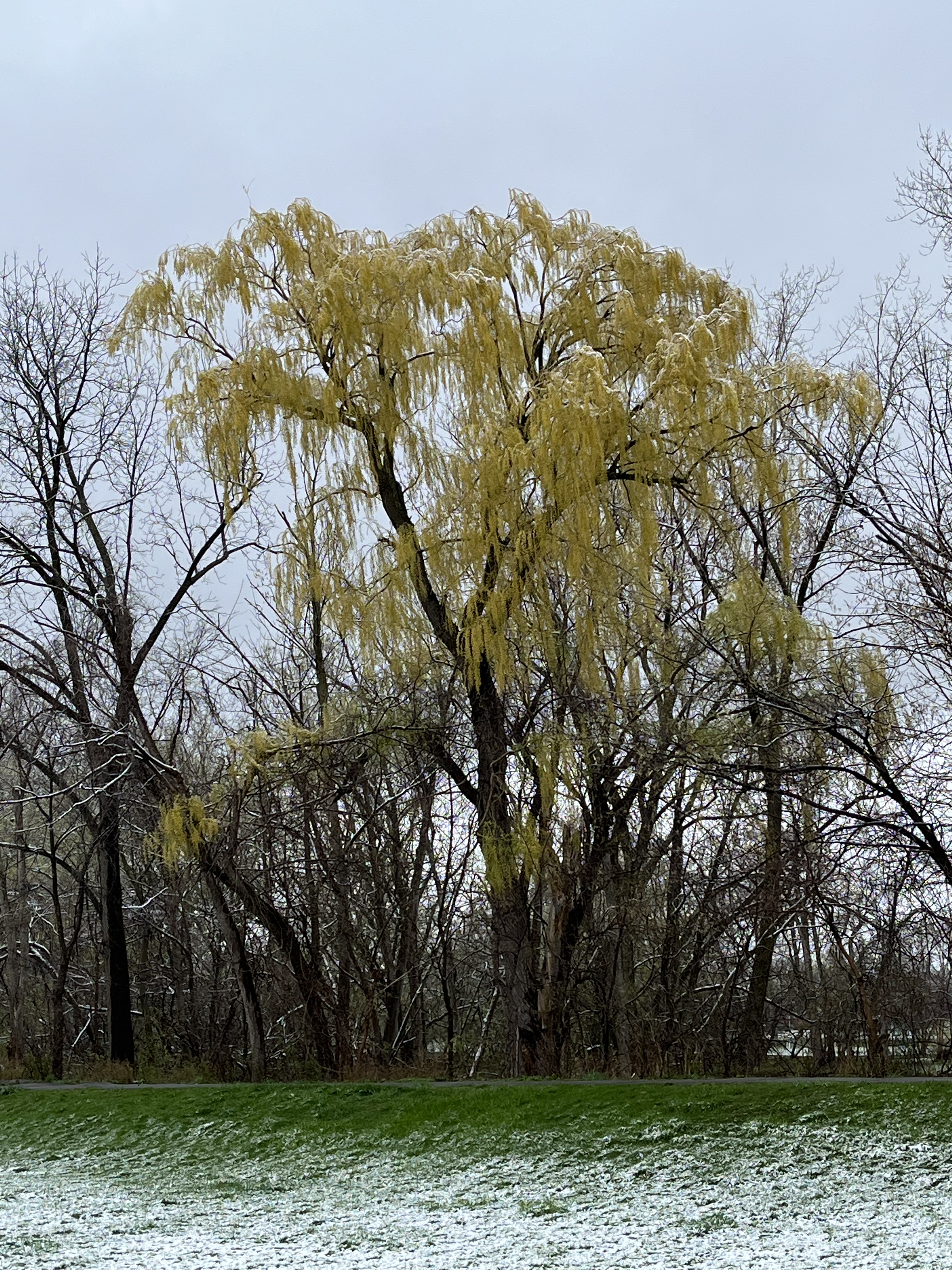

And, I’m fairly confident that spring (or, as the Italians say, La Primavera) will ultimately prevail in this annual battle of the seasons.
With All Due Respect,
Art Giacalone
P.S. When I posted my April 26th photos, I hadn’t yet visited the Japanese Gardens adjacent to Buffalo’s History Museum. I made a brief visit to see the cherry blossoms (post-Monday’s substantial rains) yesterday evening on my way to my beginners Italian language class at Centro Culturale di Buffalo (at the corner of Delaware and Hertel avenues). My biggest takeaway was a sense of disappointment – not with the blossoms on display – but with the apparent behavior of many members of my own species. Buffalo Olmsted Parks Conservancy should not have to plant dozens of the following signs throughout the garden:


I haven’t yet journeyed to Buffalo’s northern environs in search of springtime blossoms, but two Buffalo News photographers have. Derek Gee and Mark Mulville share their lush “pretty in pink” photos from Delaware Park’s Japanese Gardens in the April 26th print version of the newspaper.
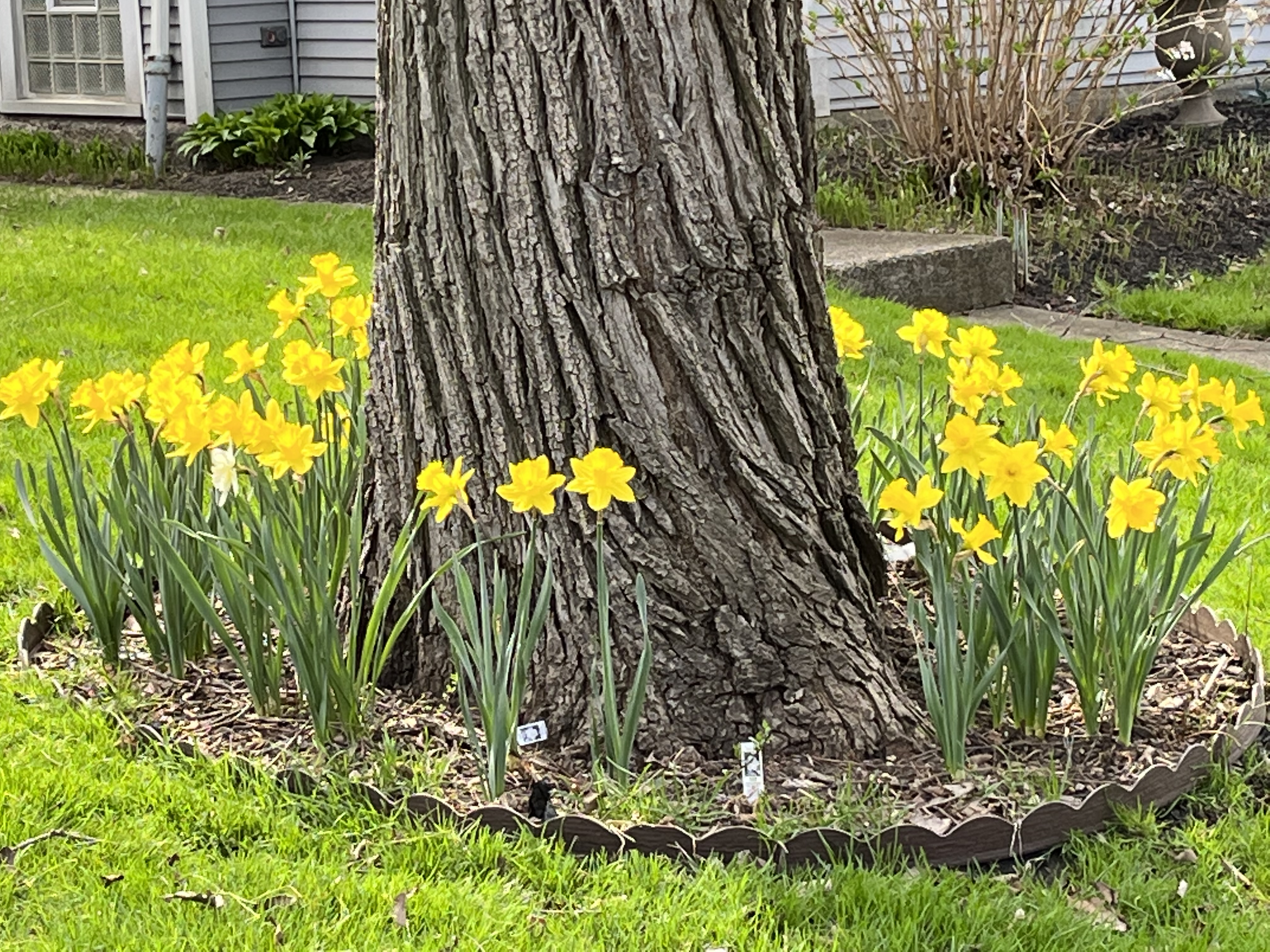
My “gallery” is predictably a bit less splendid, lacking Messrs. Gee and Mulville’s professional eye and equipment. But I thought you might enjoy some of the images that caught my eye earlier this week as I walked and bicycled through nearby South Buffalo neighborhoods.
This first beauty (I’ll let you all identify the species) greeted me on Indian Church Road, just steps from my Oschawa Avenue home:

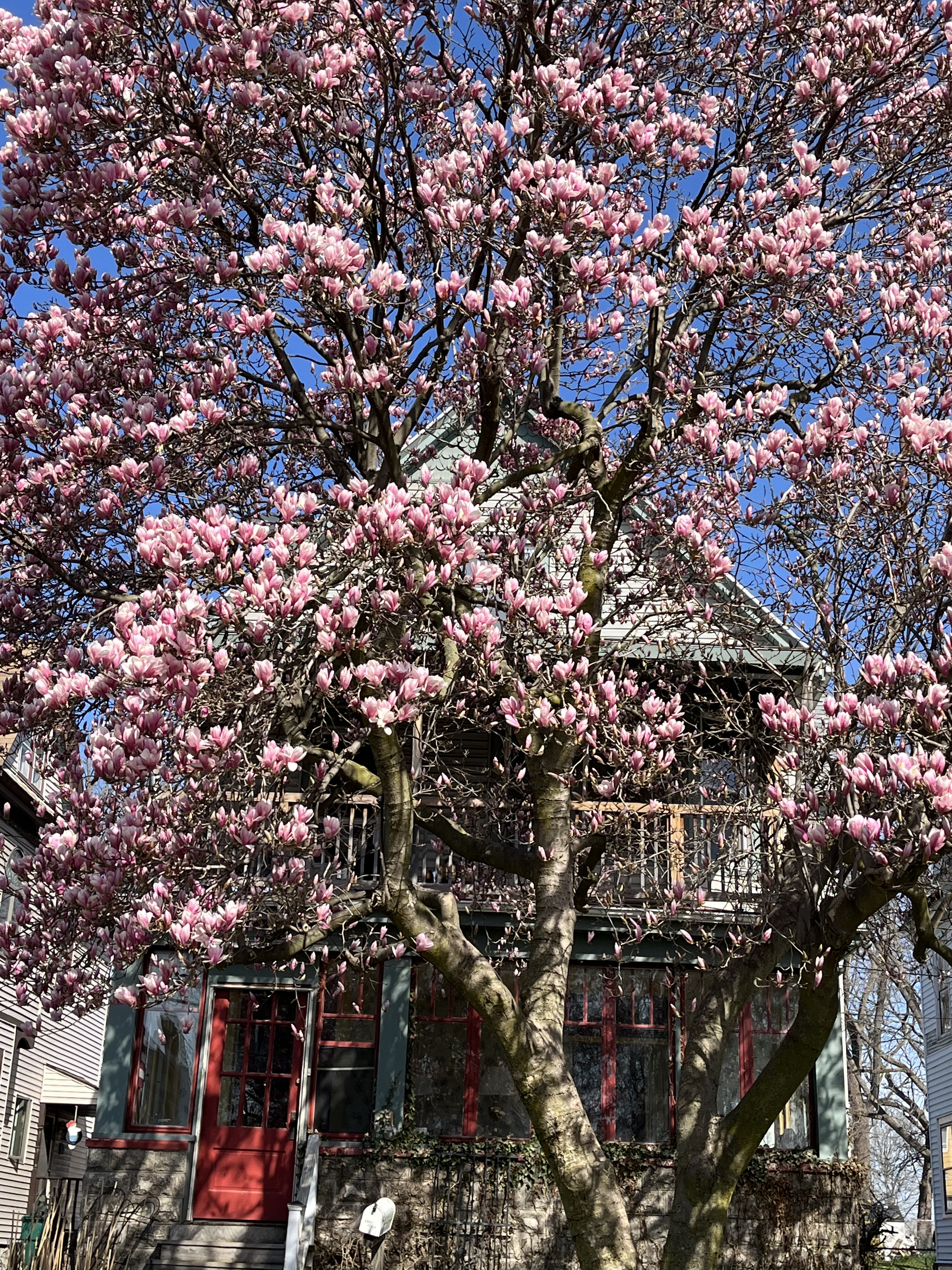
Minutes later, Cazenovia Park – my favorite Olmsted gem – offered these vividly reassuring signs that winter is behind us:

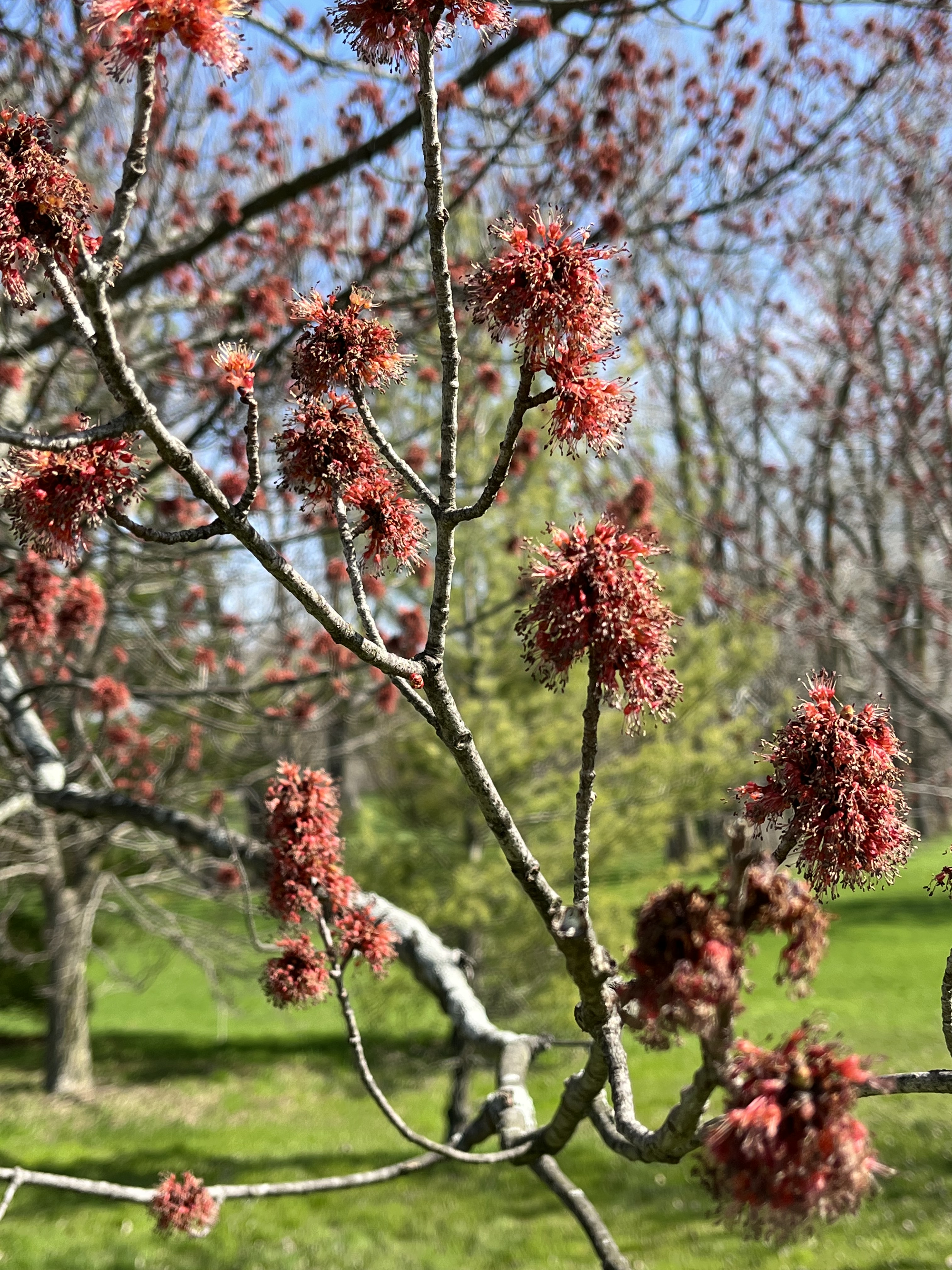
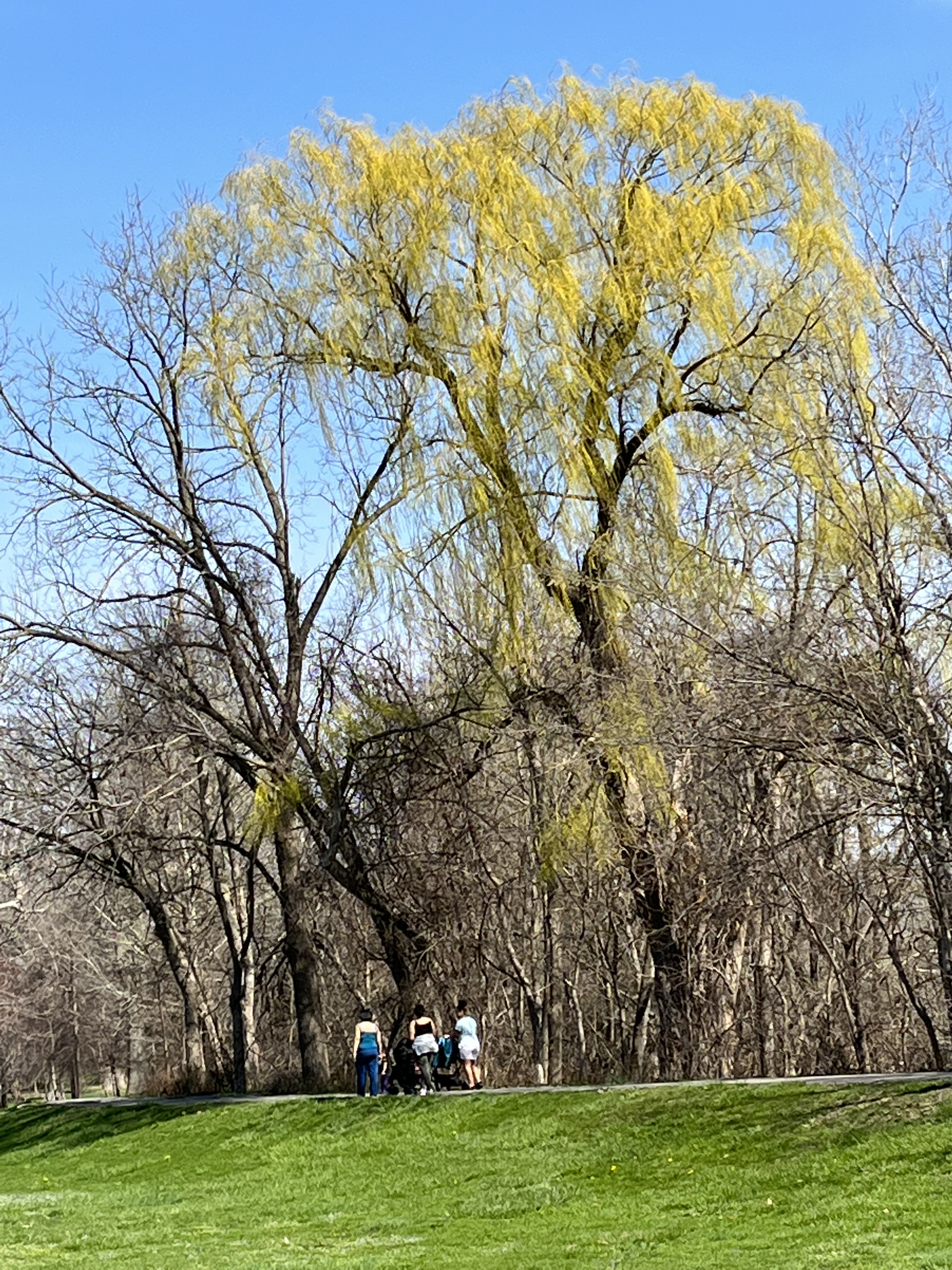
And, somehow, even the verdant meadow beyond the leafless branches seemed to whisper, “Yes, spring is here”:

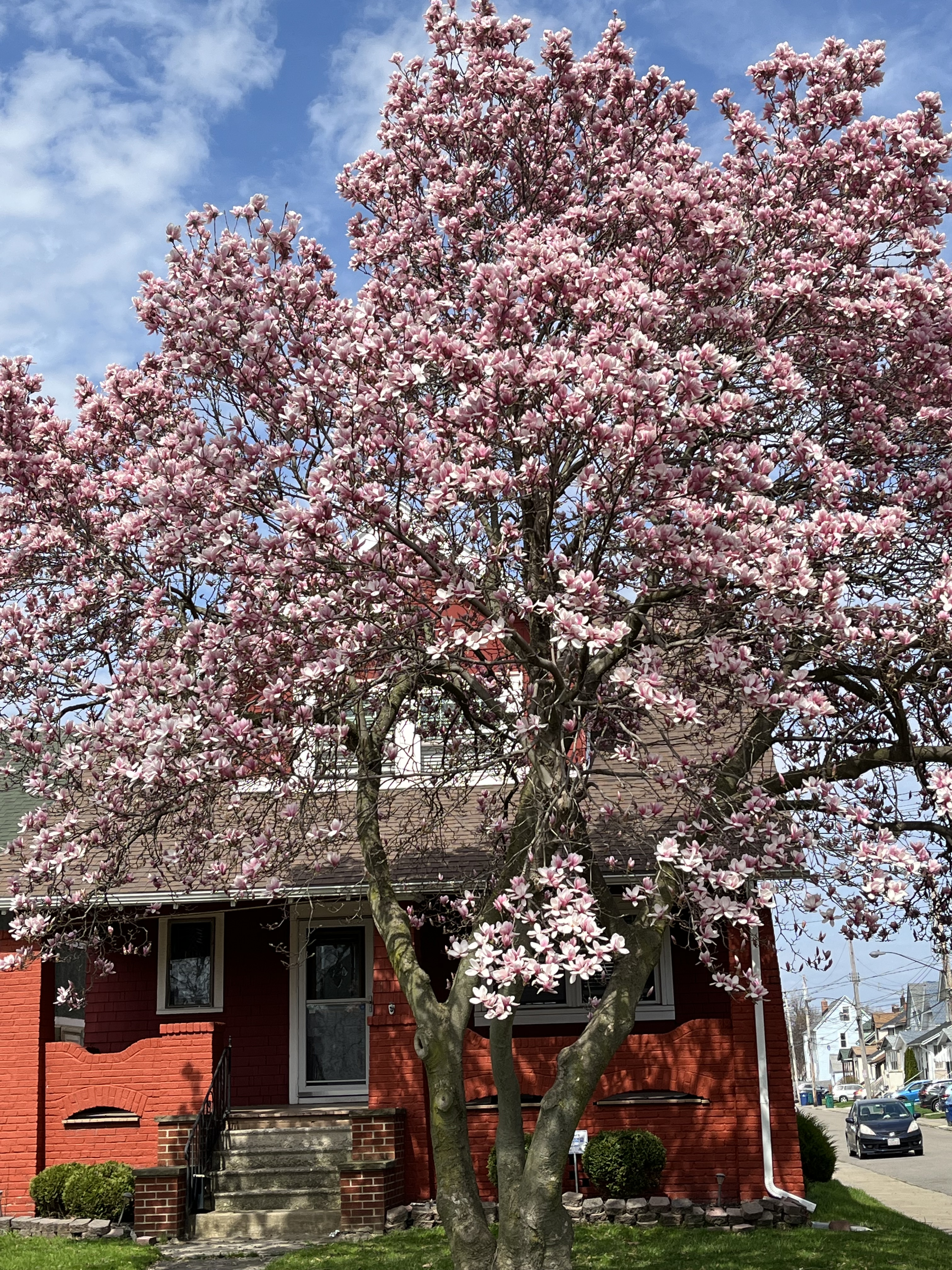
A day later, my bicycle provided the means to easily check out what was happening a mile or two from home on McKinley Parkway. I wasn’t disappointed:



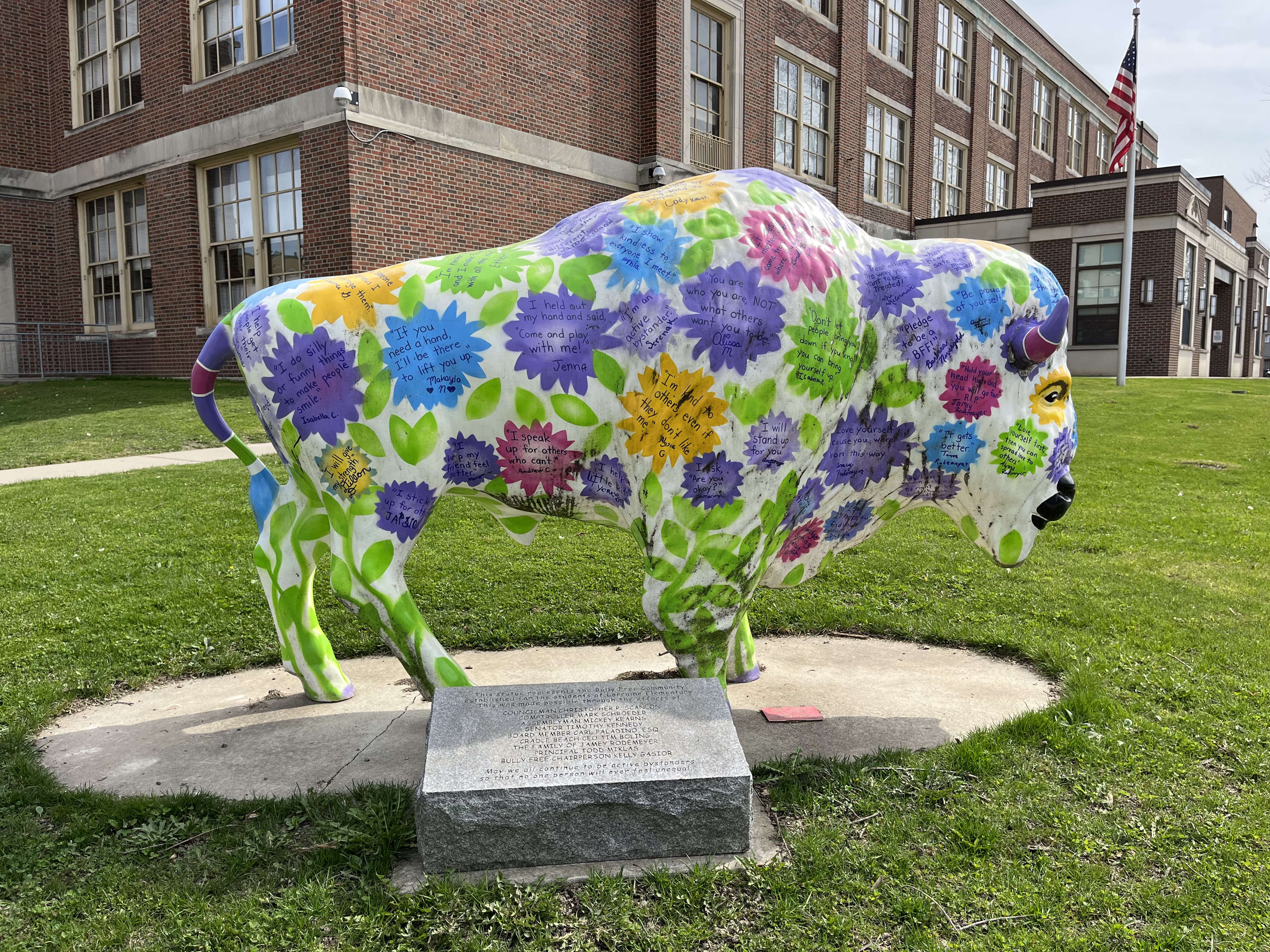
As I pedaled down Lorraine Avenue on my way home, I couldn’t resist taking a photo or two of a symbol a bit less natural, but just as inspiring as spring blossoms. Adorning the lawn at P.S. 72 (where I substitute taught a few times in 2018), is this monument to the school’s anti-bullying campaign:

I also lacked the self-control not to stop – at the edge of Cazenovia Street and Caz Park’s Warren Spahn Way – to capture these images:

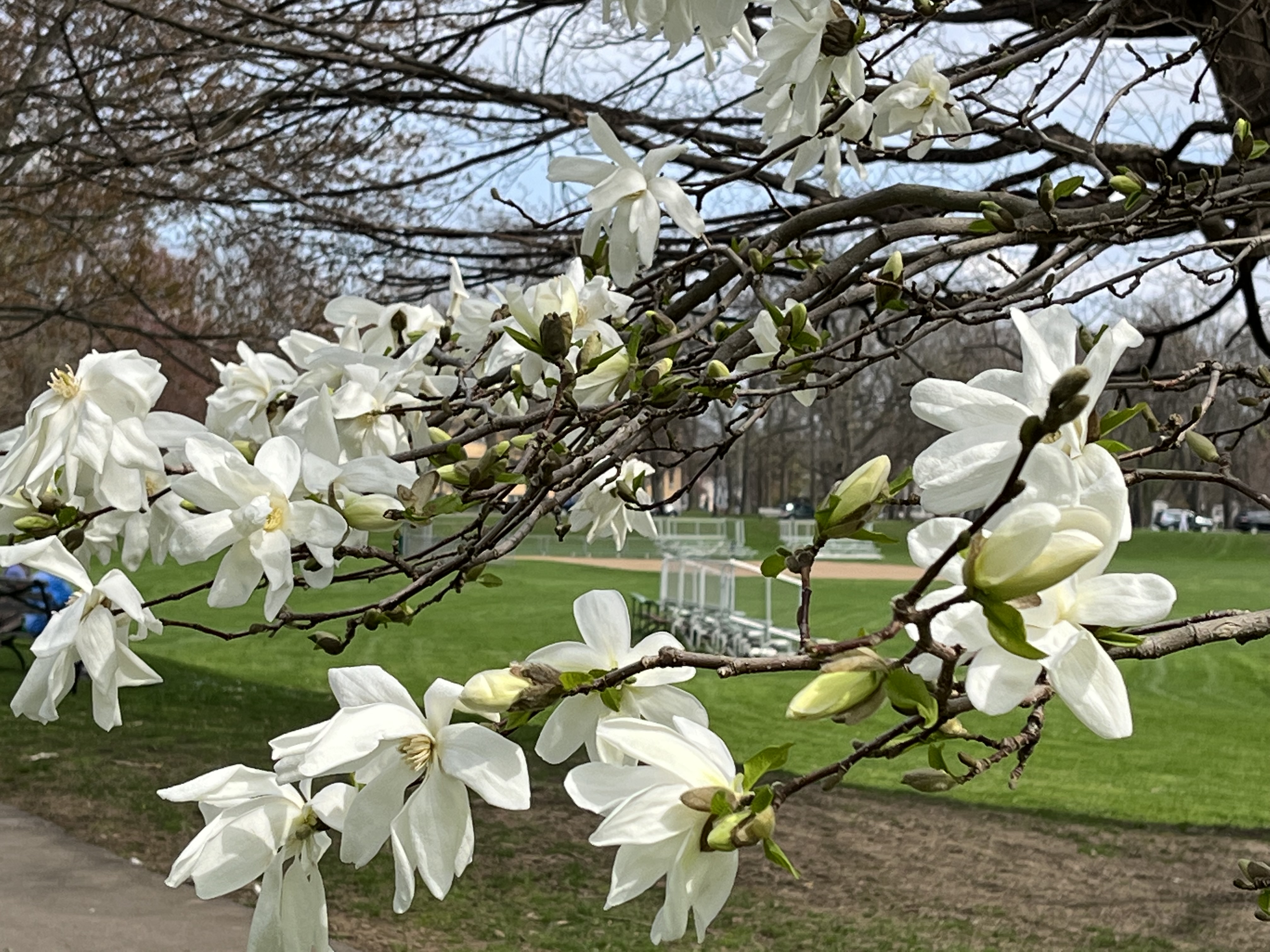

Wonderful in white!
With All Due Respect,
Art Giacalone
P.S. Today is Frederick Law Olmsted’s 200th birthday. His parks, parkways, and landscapes have done so much to enrich the lives of the inhabitants of our nation’s cities. What a remarkable legacy!
[Note: Photos from November 15, 2021 have been added to the original posting.]
Buffalo received its first measurable snow fall yesterday, November 13, a few weeks later than the typical year. The heavy layer of white on leaf-clad branches was a burden some limbs were unable to bear.

Nonetheless, autumnal hues could still be seen and admired in South Buffalo’s Cazenovia Park this morning, November 14.
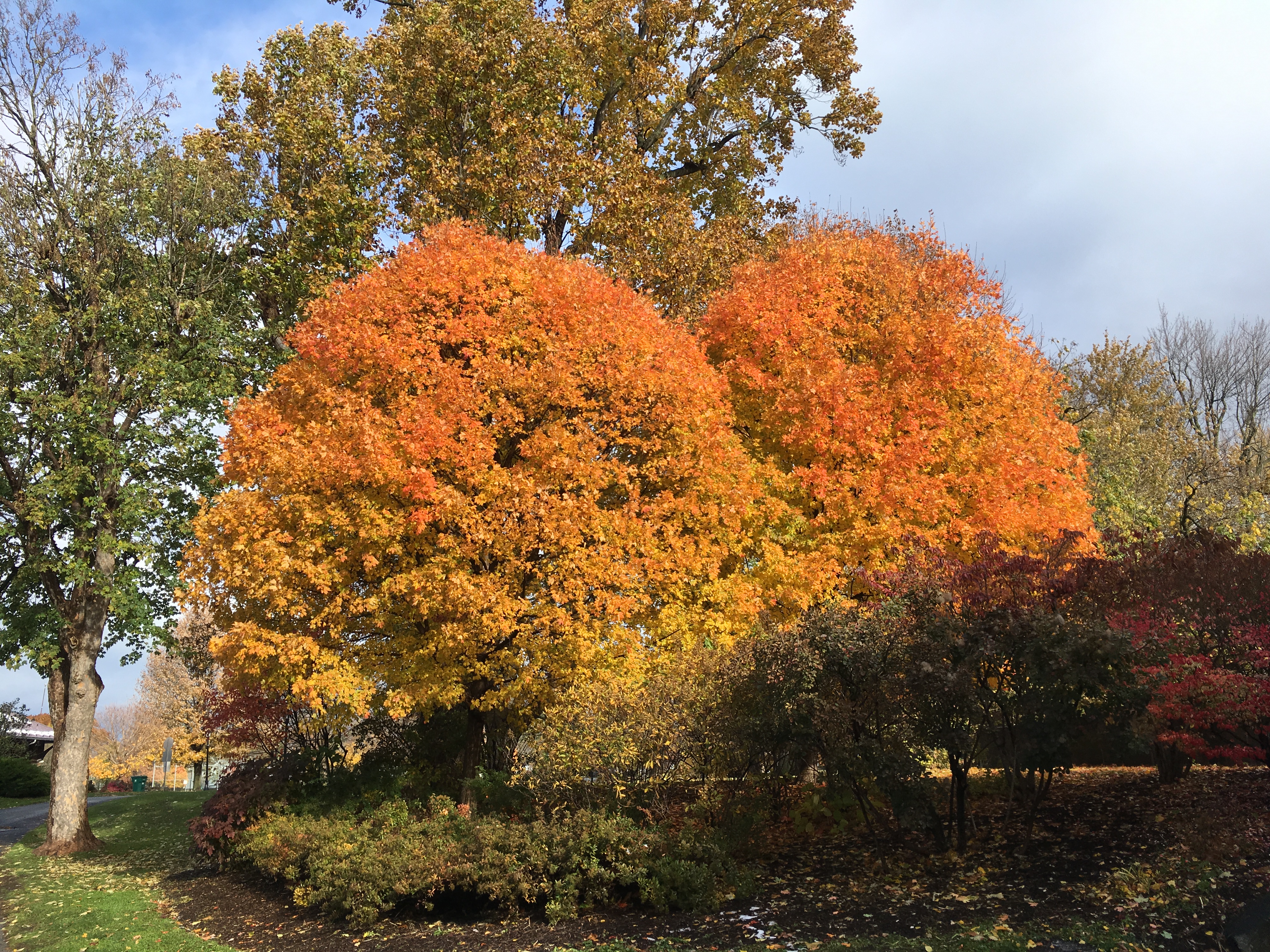

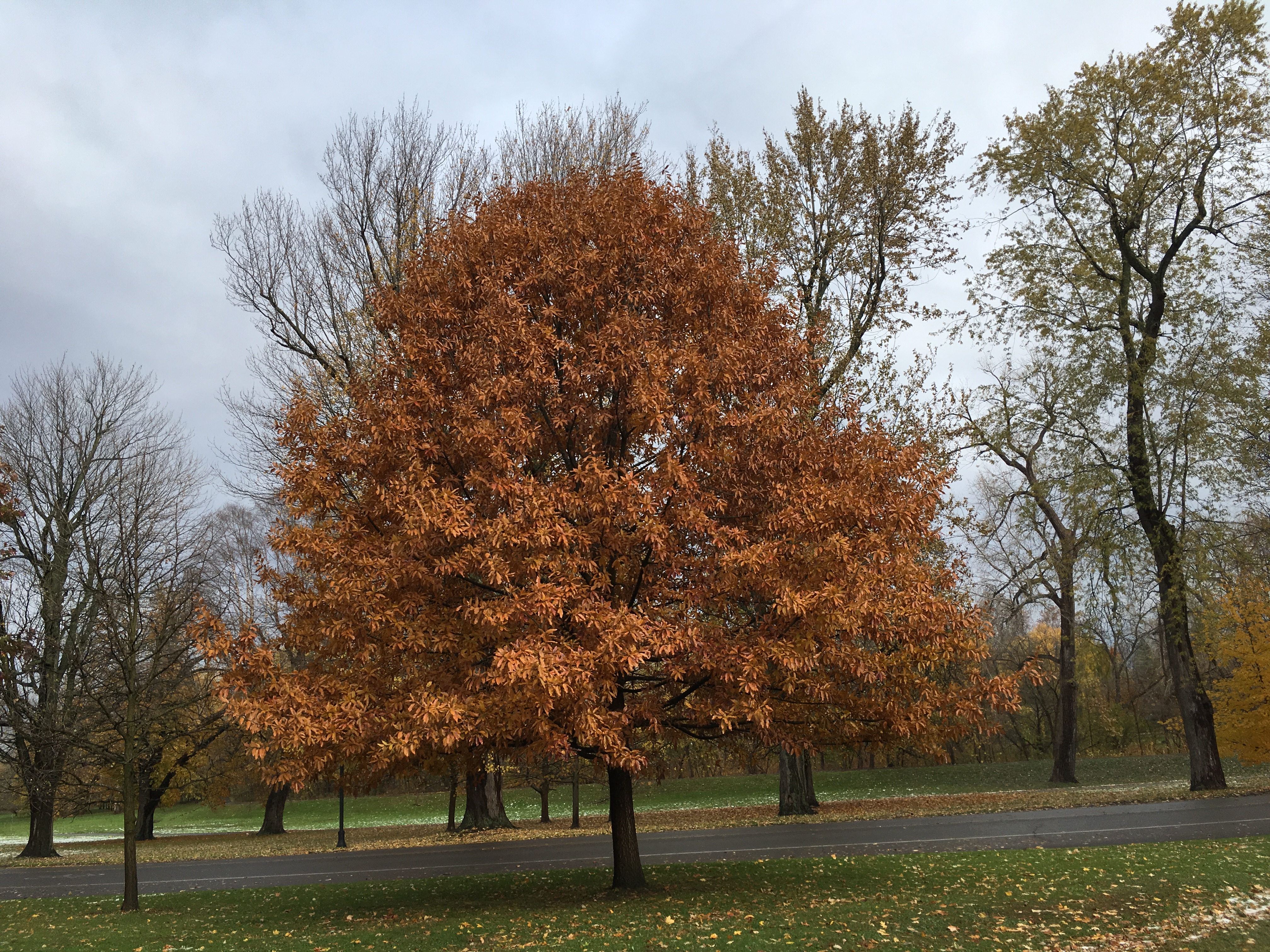


The following Caz Park photos were taken November 15th.


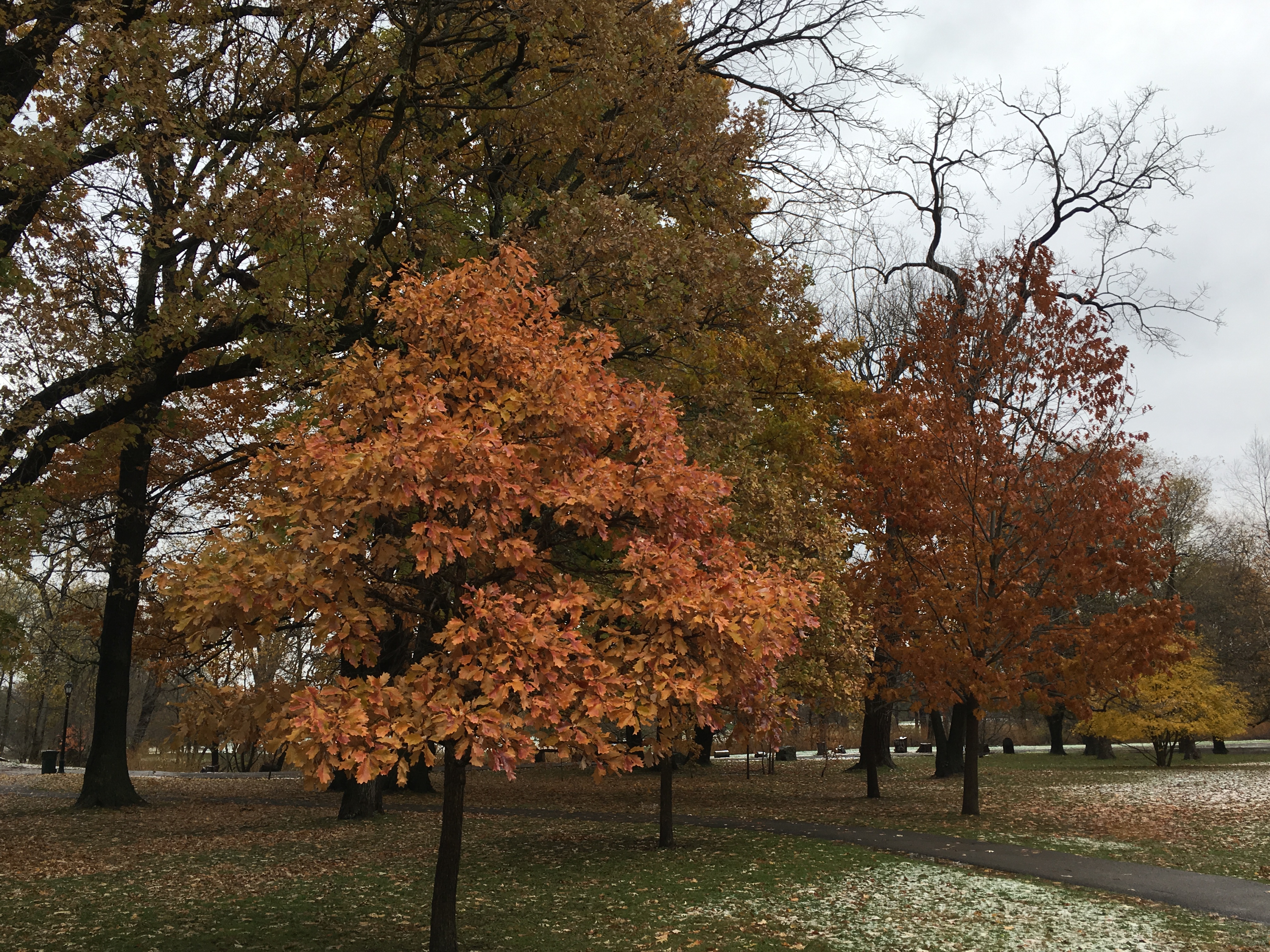
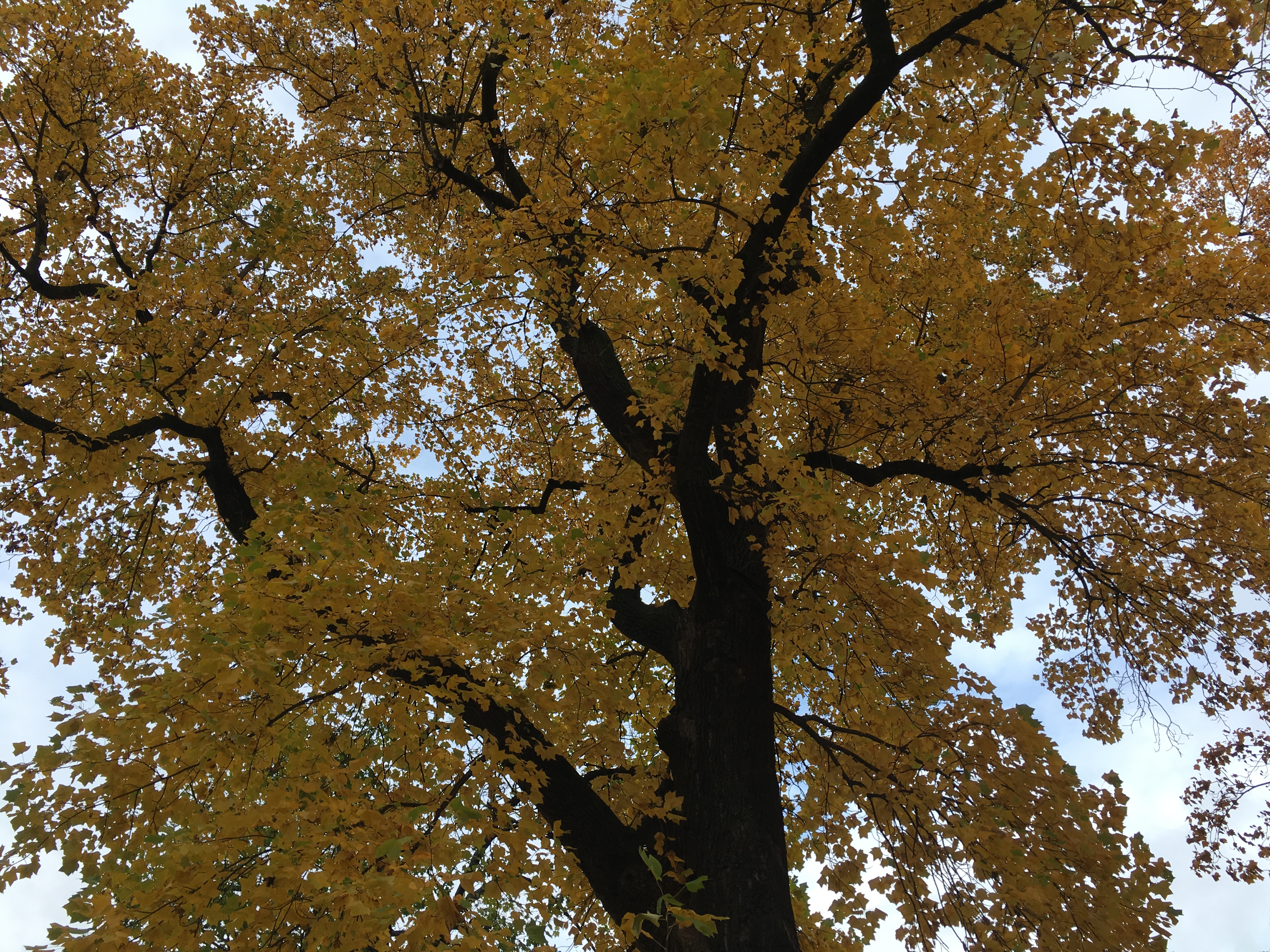


And, this golden-hued beauty greeted me on Indian Church Road as I headed home for Sunday morning breakfast.

With All Due Respect,
Art Giacalone
My 35 minute walk this morning took me an hour and a quarter. My septuagenarian legs were working fine, but no matter how hard I resisted the urge, my eye kept finding something interesting, unusual, or just plain beautiful. So I would stop, slip my smartphone out of my pocket, and snap a picture.
Here are the results (with a bit of a narrative):
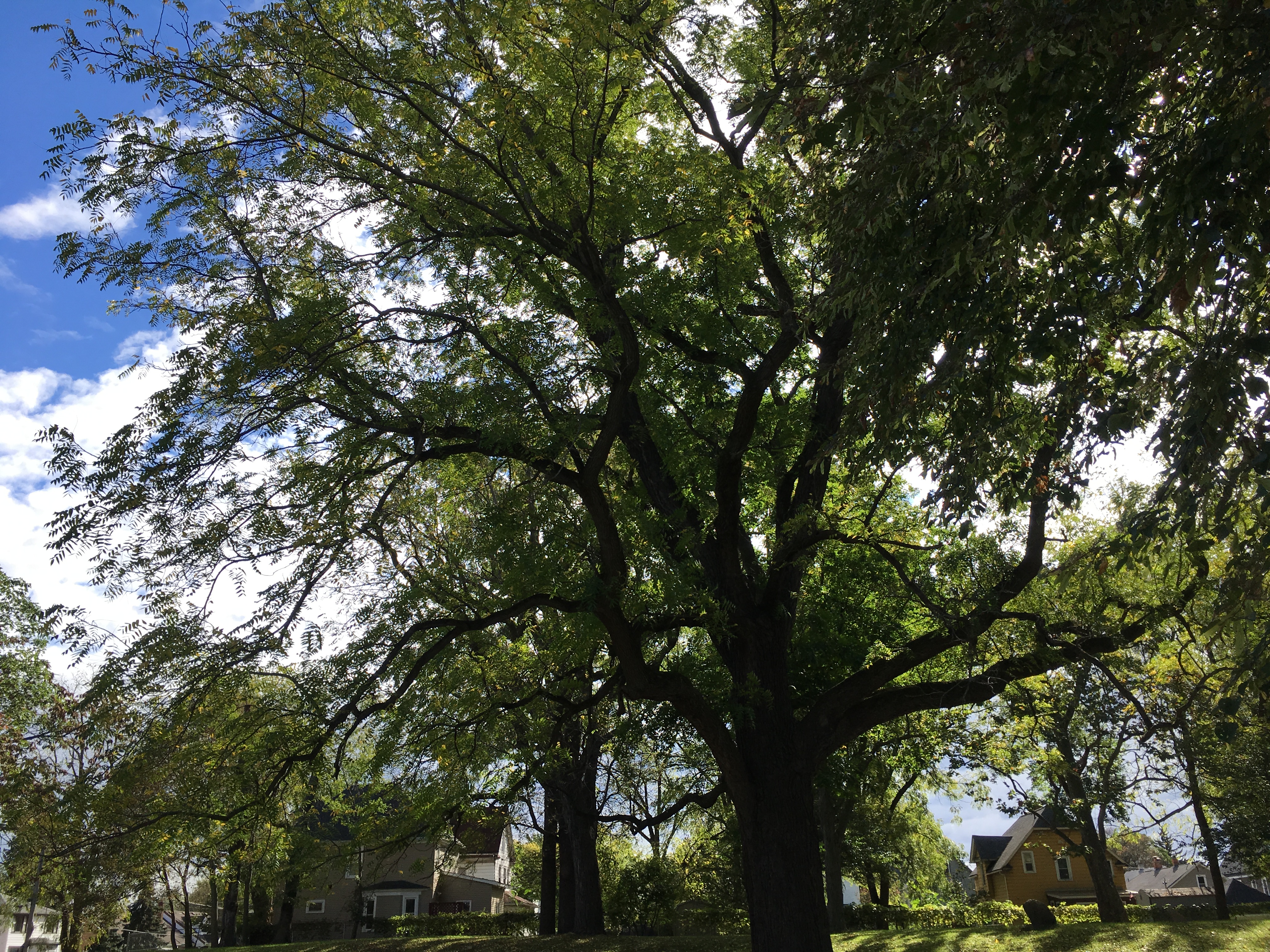
My stroll began in its usual direction, heading a block away from my home to the Seneca Indian Park on Buffum Street. This hundreds-of-years-old black walnut tree is a favorite of mine:
Directly across from the ancient Indigenous burial ground, set back a distance from Buffum, is the home of a friend of mine, always a welcoming sight. And, today her front yard was graced by five or six deer (I think one member of this four-legged clan scampered out before I could take the photo):

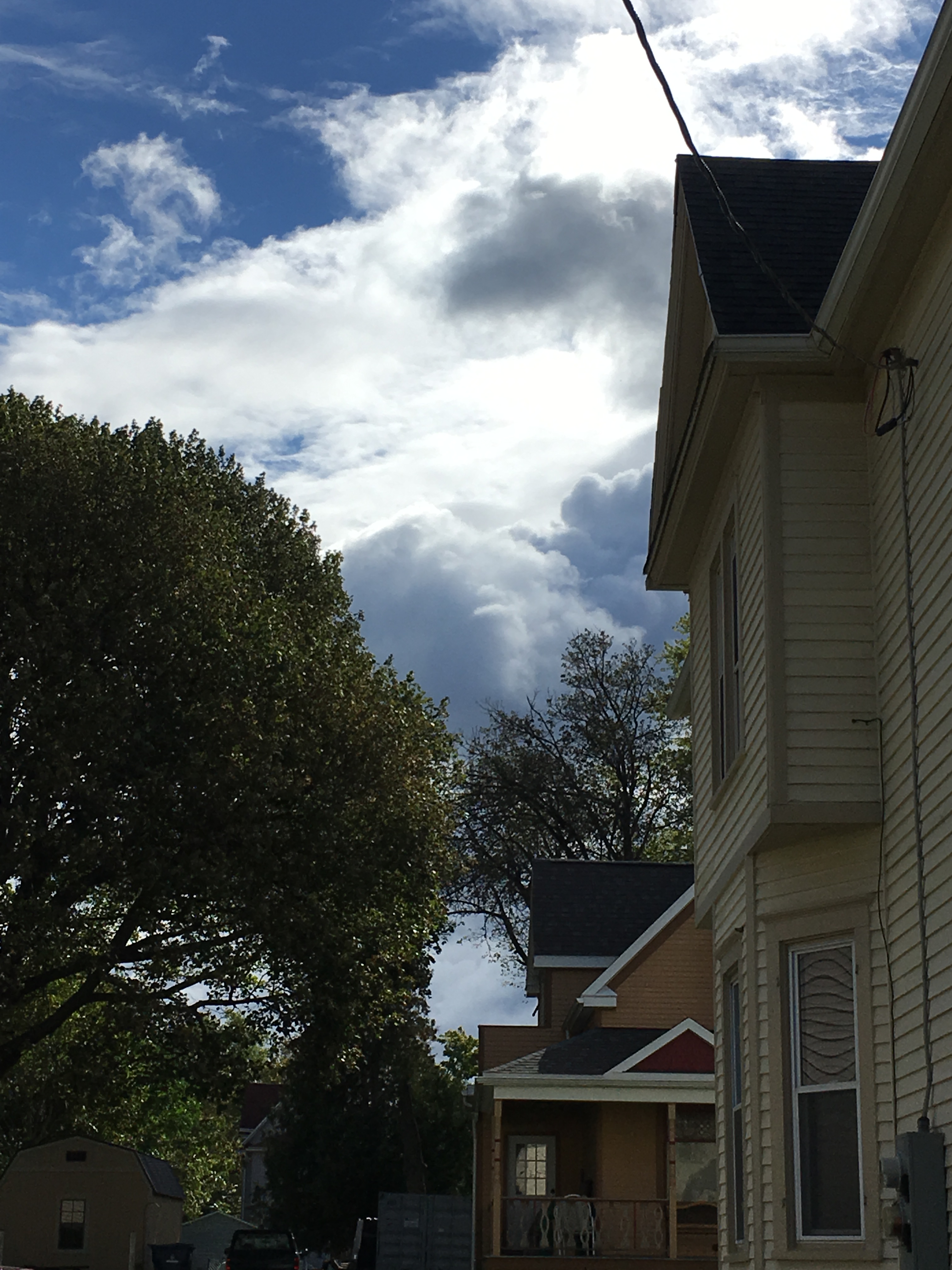
As I headed down Buffum towards Seneca Street, I couldn’t help notice the cloud formations beyond the roof lines::


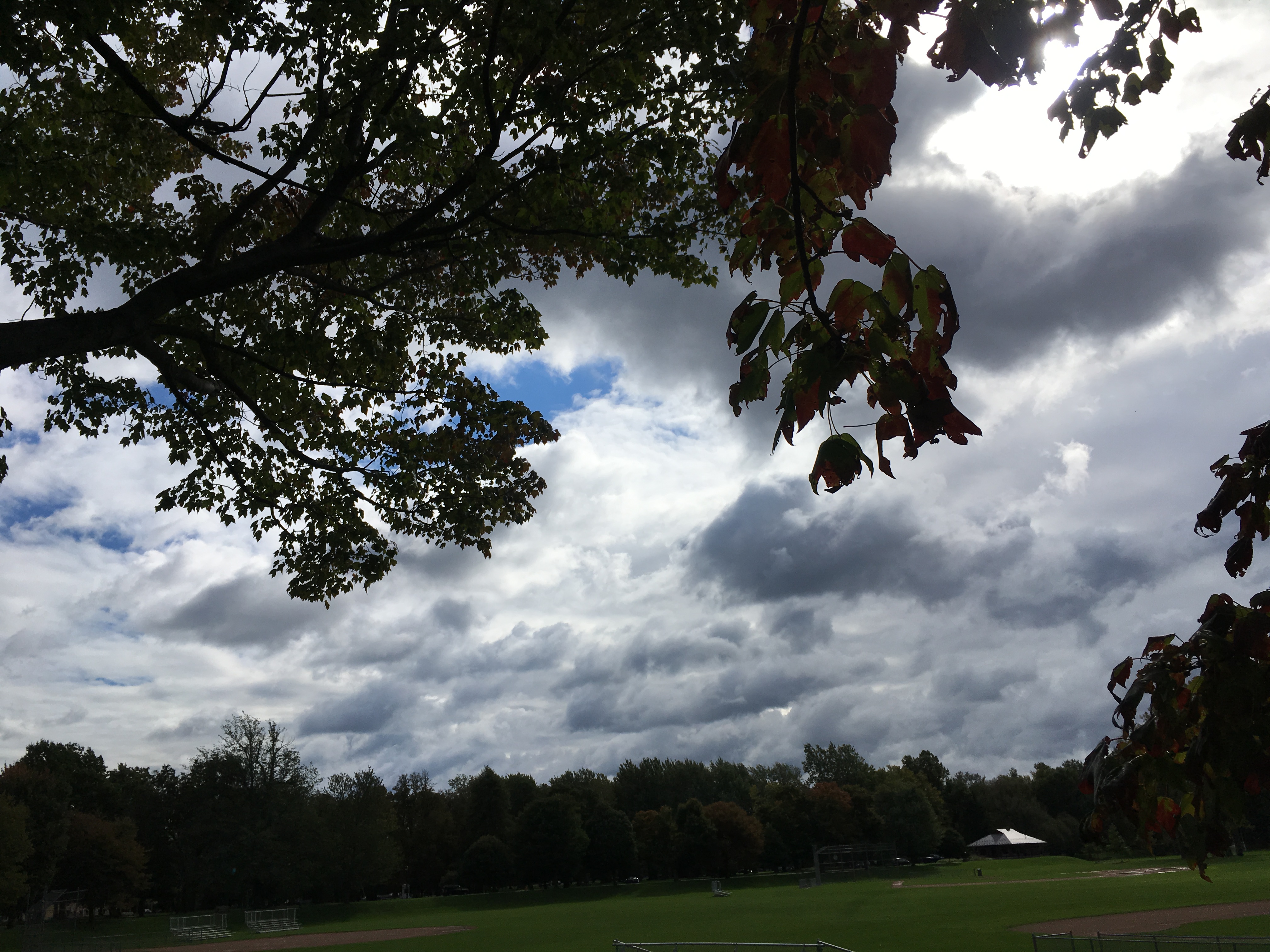
But houses aren’t required for me to appreciate the clouds enveloping Cazenovia Park:
As I headed towards the far (south) side of Caz Park, I crossed the Cazenovia Street bridge, and saw a lone fisherman in the distance:

But my head was soon back in the clouds (including a seemingly angry “mass of particles of condensed vapor”):


Although autumn colors are taking their time arriving in my neck-of-the-woods, I noticed some hints of fall:
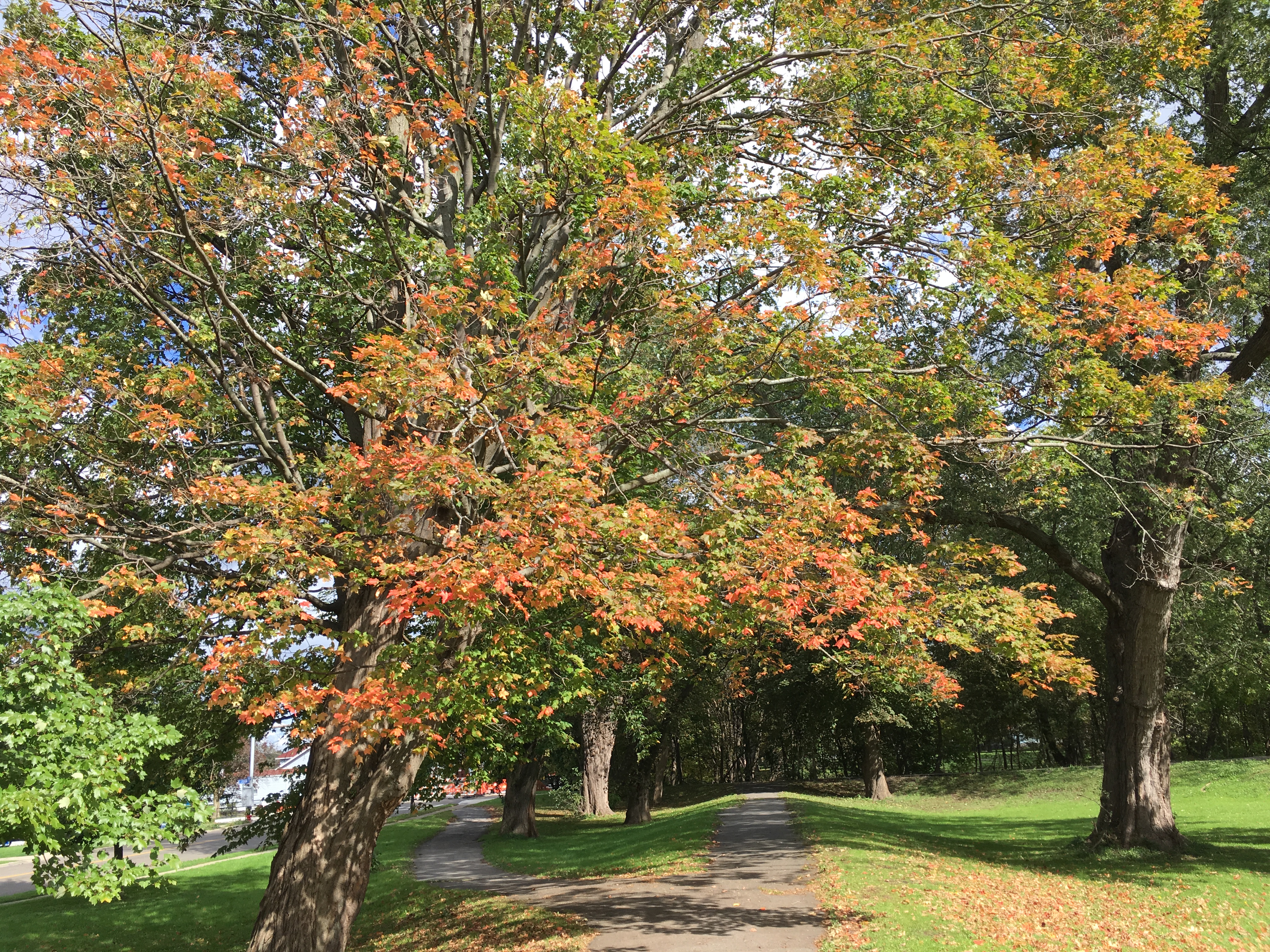

But here’s my favorite scene from today’s longer-than-expected walk:

Tomorrow I’ll do my best to walk at a steady pace and, perhaps, work up a sweat.
With All Due Respect,
Art Giacalone
On June 1, I wrote here about my concerns regarding plans to remove about 700 feet of asphalt pathway in Cazenovia Park – alongside and providing views of the Cazenovia Creek. On June 2, Stephanie Crockatt, Executive Director of the Buffalo Olmsted Parks Conservancy, replied by email to many of the issues that I raised concerning plans to remove the asphalt pathway and concrete steps at Cazenovia Park. Ms. Crockatt’s correspondence confirms BOPC’s plan to, in fact, eliminate that portion of the upper pathway starting at Warren Spahn Way. I share her correspondence below, and provide my initial response to her comments in brackets and bold print. Also, I am attaching a pdf containing a slide presentation, provided to me on June 3 by BOPC’s Director of Planning and Advocacy, Brian Dold, reflecting Caz Park history and BOPC’s current proposal for pathway reconstruction, etc. Caz Park – June 2021 slide presentation
*****************
From: “Stephanie Crockatt”
To: AJGiacalone@twc.com
Cc: “Andy Rabb”, “Greg Robinson”, “Councilmember Scanlon – South”
Sent: Wednesday June 2 2021 4:33:51PM
Subject: Cazenovia Paths/Stairs
Mr. Giacalone and Ms. ______________,
The Conservancy appreciates your outreach on the topic of the pathway reconstruction along the southern edge of Cazenovia Creek.
As you may know, these paths have been in rough condition for years, with numerous complaints from the community. Thankfully in working with the City and funding allocations, we were able to partner on a restoration project.
[AJG: Every person with whom I have spoken in Caz Park since May 27 is pleased to hear that the bumpy and uneven condition of the asphalt pathway, primarily found between Cazenovia St. and the northern set of concrete steps, will be removed and replaced. However, not one of the two or three dozen park-goers was aware of the plan to remove a 700-foot portion of the asphalt pathway that provides proximity and views of the creek.]
The project stems from our master plan’s five-year priority project update. You may recall the Conservancy held several public input sessions throughout 2018 and into 2019 in working to determine projects the communities around the Olmsted parks would like to see elevated in attention and improvement. Number 4 for Cazenovia Park is the pathways.
[AJG: I was in attendance at the Cazenovia Park public sessions in 2018-2019. Not once did I hear anyone from BOPC state or suggest that pathway attention and improvements would involve removal of approximately one-third of the existing asphalt pathway along the creek’s shore. The fact that South District Councilmember Christopher Scanlon – for whom pathway improvements is a very high priority – did not know on May 27 that any of the asphalt pathway would be removed and replaced by lawn reflects a failure by BOPC to keep our elected representative, much less the users of Caz Park, adequately informed.]
Yes, in this project there are areas where the path will be relocated to the correct historical alignment. This is due to the fact that the current high pathway (and the staircases) were part of a DPW project – maybe 30 or 40 years ago – which tried to address the flooding, ice damming and other creek impacts on the park.
[AJG: The original plans for Cazenovia Park included a 20-acre recreational lake as its centerpiece, separated into two sections by a carriage bridge and featuring two islands. As existing signage in the park describes, the original plan “allowed park-goers more access to the water than in other, larger parks.” Later changes in the park altered “the once pastoral landscape” by introducing an ice-skating rink, community center, and an indoor swimming pool, etc. The pursuit of “historic integrity,” by removal of a popular section of pathway that provides proximity and views of the creek not available from the “historic parallel route,” appears to be little more than a fanciful conceit attainable only at the expense of current park-goers (who now have the option of experiencing the contrasting ambience of either the high or low road).]
The high berm constructed along the southern shore was not part of the Olmsted alignment or topography, and some of those higher paths have actually become a safety hazard. The odd staircases are not historic and are not something the Conservancy would advocate to keep or even ask the City to continue for deferred maintenance expenses.
[AJG: The reality is that the high berm is not being eliminated and is, most likely, a permanent feature in the park and obstacle to any meaningful replication of the Olmsted alignment or topography. The berm, along with the concrete steps, are a testament to the unrealistic nature of the original Olmstedian plans. The “odd staircases” (which I believe have been there for more than a half-century) provide an excellent opportunity for educating the public about both the history of Caz Park and the difficulties of creating a park adjacent to a mighty creek. Olmstedians should embrace such an educational effort.]
The process the Conservancy follows in such planning and design decisions is to first vet with the public, which we did in 2018-2019. We then work with City parks and engineering on historic realignments, repairs or renovations in mapping out the project. We pass the designs through our Design Review Committee with the Conservancy which is a group of community volunteers and professionals. We then take final designs through to the Preservation Board for their approval, which also has a public input component.
[AJG: No matter BOPC’s intent, the vetting process as a means to educate and obtain the consensus of the public was extremely flawed. The Preservation Board process added to the misinformation. Not only was the subject line for the May 27 meeting devoid of any reference to removal-without-replacement of a significant section of asphalt pathway (“Reconstruct and realign asphalt pathways and remove concrete steps”), the publicly available documents lacked a narrative, and failed to include informative images of the actual plans.]
It is unfortunate that the project is causing you concern, but I can assure you that we take every project seriously in it’s historical context and integrity, public safety aspects, and sustainability as to further investment and/or anticipated aging and repairs.
[AJG: BOPC can demonstrate its commitment by: (a) asking the City to discontinue implementation of any aspect of the project other than removal and replacement of the asphalt pathway between Cazenovia Street and the northern concrete steps; and (b) conducting a well-advertised public forum at the Caz Park community center to allow the users of Caz Park the opportunity to learn about the final designs, and to express their preferences regarding the portion of the asphalt pathway commencing at Warren Spahn Way, and the other features of the proposed project.]
If you would like to speak with me directly or perhaps even meet out on site with our staff landscape architect, Greg Robinson, let me know.
[AJG: I would appreciate the opportunity to meet on site with you, Greg Robinson, and perhaps BOPC’s Brian Dold, as well as Councilmember Chris Scanlon. Thank you.]
Best,
Stephanie
Stephanie Crockatt
Executive Director, Buffalo Olmsted Parks Conservancy
716-838-1249×16 Office / http://www.bfloparks.org
With all due respect,
Art Giacalone

 With All Due Respect