With All Due Respect

Photos and musings by Arthur J. Giacalone

  • About The Author
  • About This Blog
  • Pre-WADR Archives

Will SolarCity be Buffalo’s 21st century mistake in the name of “progress”?

Posted by Arthur J. Giacalone on August 26, 2015
Posted in: Buffalo Billion, Buffalo News, City of Buffalo, Development, SEQRA, SolarCity. 1 Comment

** Buffalo News editorial concerning restoration of Frog Island underscores the “free pass” local media – with few exceptions – have given the RiverBend complex being constructed along the Buffalo River. **

Note:  Two noteworthy exceptions are InvestigativePost and WGRZ-TV.  For example, see a recent iP report, “Shenanigans beset Buffalo Billion“.

“In the name of progress, people can sometimes do careless things, even unknowingly.”  That truism is expressed in a cautionary opinion piece, published on August 26, 2015 in the Buffalo News, concerning the restoration of Frog Island in the Niagara River near the southern tip of Grand Island.

In fact, our government officials all-to-often knowingly do careless things in the name of progress and to further political careers.  [See a prior post here on this topic, Buffalo’s “Economic Rebirth” Provides a Dubious Lesson for Upstate New York.]  Unfortunately, in the rush to proclaim our region’s economic rebirth, the vast majority of Western New York’s publications and media outlets have refused to acknowledge the reckless and – from my perspective – illegal manner in which state officials hastened to approve the SolarCity project at the environmentally sensitive RiverBend site.

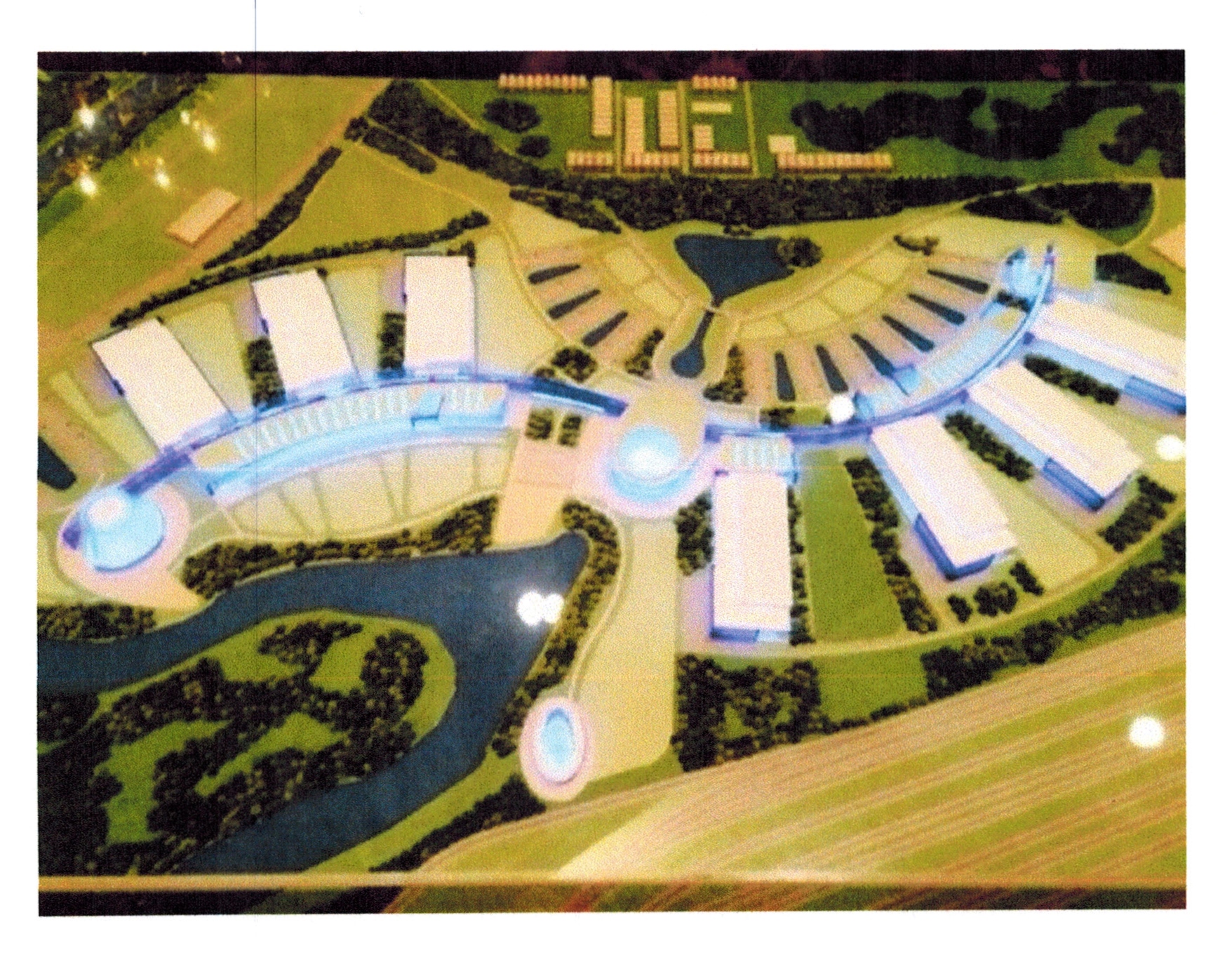
Model of

Model of “Innovation Hub” at RiverBend

According to the Buffalo News editorial staff, Frog Island “was sacrificed to the tyranny of mid-20th century road construction, when no need seemed greater than to serve the demands of the automobile.”  Today, the need that must be served – undoubtedly, a real and poignant one – is the creation of good-paying jobs.  Politicians know that nothing stirs the hopes of Western New Yorkers more than a project promising to create middle-class employment opportunities.

As described in the recent editorial, “Back then, environmental laws, where they existed, were weak. There was nothing to stop it from happening.”  Supposedly, things are different today.  After all, the State Environmental Quality Review Act (SEQRA) was enacted in the mid-1970s to ensure informed decisions by government officials and agencies.

SEQRA’s primary tool is the requirement that an Environmental Impact Statement (EIS) be prepared whenever a proposed project may result in a significant adverse environmental impact.  An EIS takes a “hard look” at potential adverse impacts, evaluates reasonable alternatives, and identifies appropriate mitigation measures.

The intent of SEQRA is to prevent government decisions that carelessly disregard potential environmental degradation in the name of “progress”.  A historical example is the past industrial pollution of the Buffalo River, a legacy that has resulted in decades-long remedial action in the vicinity of the RiverBend site to address contaminated river sediments, poor water quality, a lack of safe public access, and insufficient fish and wildlife habitat.

Under law, an EIS is presumed necessary whenever a project would physically alter 10 or more acres of land, or exceed construction of 240,000 square feet of non-residential facilities.  Nonetheless, the Cuomo administration knowingly circumvented the safeguards built into SEQRA by approving construction of a 90-acre, 1-million square-foot complex in a highly sensitive area in May 2014 without preparation of an EIS.

The decision to place RiverBend’s Innovation Hub along the Buffalo River prior to conducting the proper environmental review to determine if the site is appropriate for such activities was inexcusable.  The by-products of manufacturing solar panels at the RiverBend site have never been identified publicly.  We cannot rationally and responsibly research, develop, and manufacture “clean energy” products if the processes involved could harm the surrounding environs, including the fragile Lake Erie shoreline.

With All Due Respect,

Art Giacalone

Memo to the Buffalo News Editor: Fruit Belt Residents First, Period!

Posted by Arthur J. Giacalone on August 17, 2015
Posted in: B-N Medical Campus, Buffalo News, City of Buffalo, Development, Fruit Belt, Gentrification. Leave a comment

* Parking permits for Fruit Belt residents won’t mean much in the long-term if Buffalo’s leaders allow gentrification and medical campus expansion to eliminate the Fruit Belt neighborhood. *

Standing alone, the August 17th editorial in the Buffalo News appears sympathetic and encouraging:

On parking, residents first – New system must be enacted to avoid hardship on inhabitants of Fruit Belt

But alongside a prior opinion piece published by the Buffalo News editorial staff in July 2014, and the persistent failure of Western New York’s business and political leaders to plan a medical campus that would not result in gentrification of the historic neighborhood that adjoins the eastern border of the Buffalo Niagara Medical Campus, the editorial is both cynical and hypocritical.

A little over a year ago, the editors of Western New York’s major newspaper expressed the following sentiment regarding the impact of the medical campus growth on the nearby Fruit Belt neighborhood:

Development is also coming to the near East Side, and more is expected as land values rise elsewhere.  As a consequence, the line marking “the wrong side of the tracks” is moving further east. The downside is that people without means may also be squeezed out of their homes. Those are the advantages and consequences of gentrification, which is not only wholly desirable, but as inevitable as the laws of supply and demand. Still, it will be important to help ensure that as values rise, people aren’t left without acceptable options. [Emphasis added.]

This blog responded to the offensive Buffalo News editorial in a detailed posting titled, “Disregard of Fruit Belt Residents by Buffalo’s Leaders is Unjust and Unlawful.”  As noted in the August 3, 2014 post:

… The so-called “people without means” who may find themselves displaced by the gentrification process are the nearly 2,000 residents of the historic “Fruit Belt” neighborhood – thirty-six (36) blocks of mostly quiet residential streets located directly east of the Buffalo Niagara Medical Campus [BNMC], extending roughly from High Street on the north, Jefferson Ave. to the east, the Kensington Expressway to the south, and Michigan Ave. on its western edge.

The tree-lined streets, with names such as Maple, Mulberry, Lemon and Grape, are home to a predominately African-American population with an average household income of around $23,000 a year – less than half of the Buffalo area as a whole.  While approximately twenty percent (20%) of the Fruit Belt’s residential units are vacant, more than forty-percent of the occupied units are lived in by the property’s owner.  And the pride of ownership is readily apparent when walking passed a mixture of century-old and recently constructed houses…

As is also addressed in last year’s posting, the State Environmental Quality Review Act (SEQRA) placed an affirmative obligation on City of Buffalo, New York State agencies, and the institutions comprising the BNMC, to put into place effective and enforceable safeguards and mitigation measures to preserve the character of the Fruit Belt neighborhood and prevent displacement of local residents and businesses.  Regretfully, neither the letter, nor the spirit, of SEQRA has been complied with.

The past failure of Buffalo’s political and business leaders, including the Buffalo News, to demand compliance with the dictates of both the law and common decency underscores the hypocrisy in today’s editorial.  While the newspaper’s opinion piece characterizes the parking problem presently experienced by Fruit Belt residents as “a problem of success”, it is, in fact, a problem of neglect and poor planning – of a decade or more of intentional or reckless disregard for the quality of life of the non-affluent neighbors of the expanding medical campus.

It is ironic, at best, that the editorial makes the workers who utilize the adjacent residential streets appear as the culprits.  It is true that the Civil Service Employees Association (CSEA) sought to protect its members’ interests by opposing a parking permit system for Fruit Belt residents, calling the proposal a “shortsighted approach.”  But the very institutions listed in the opinion piece as “in agreement” with a parking permit solution – “the corporation developing the Medical Campus and its two biggest employees, Kaleida Health and Roswell Park Cancer Institute” – are the very entities which allowed this hardship to materialize.  This troubling fact is made even more painful for Fruit Belt residents when one realizes that the City of Buffalo’s Mayor and Common Council President sit as members of the Buffalo Niagara Medical Campus board of directors.

Today’s editorial suggests that the peaceful “park-in” demonstration – where local residents “claimed on-street parking spaces that have been routinely taken by Medical Campus employees” – “must have felt good” for the residents and their supporters.  Most likely, the opinion piece by the Buffalo News editorial staff also made its authors feel good – taking a righteous stand on behalf of the afflicted.

But the editorial will ring as a hollow and meaningless gesture if our region’s primary news publication does not retract its July 2014 proclamation – that squeezing people without means out of their homes is both “wholly desirable” and “inevitable” – and demand that local and state political leaders, and the institutions comprising the BNMC, take immediate and effective steps to comply with the laws intended to protect local residents and businesses.

After all, parking permits won’t mean much to Fruit Belt residents if they are “squeezed out of their homes.”

With All Due Respect,

Art Giacalone

South Buffalo ALIVE’s Garden Tour – An Excellent Excuse to Explore My New Neighborhood

Posted by Arthur J. Giacalone on July 20, 2015
Posted in: Cazenovia Park, City of Buffalo, Olmsted Parks, South Buffalo. Leave a comment

After nearly a ten-week hiatus, I’m gently easing back into my postings with a pictorial presentation.  On Sunday, July 19th, South Buffalo ALIVE, a “non-profit organization dedicated to improving the quality of life in the South Buffalo area,” held its 15th annual “Garden Tour” (note:  given its scale, only the hardiest would choose to actually “walk” it).

DSCN6393

From my perspective, the event could not have been more perfectly timed.  Less than three weeks have slipped by since I began the transition into the “next chapter” of my life, moving from East Aurora to my new residence in South Buffalo’s Cazenovia Park neighborhood.  Most of my boxes are unpacked, and the furniture has settled into their more-or-less permanent positions.  And I was restless to hop on my bike, explore the community, and meet some of my neighbors.  Starting in the busy, beautiful, Olmsted-designed Cazenovia Park, here’s some of what I experienced:

A pleasant Famer’s Market:

DSCN6379  DSCN6359

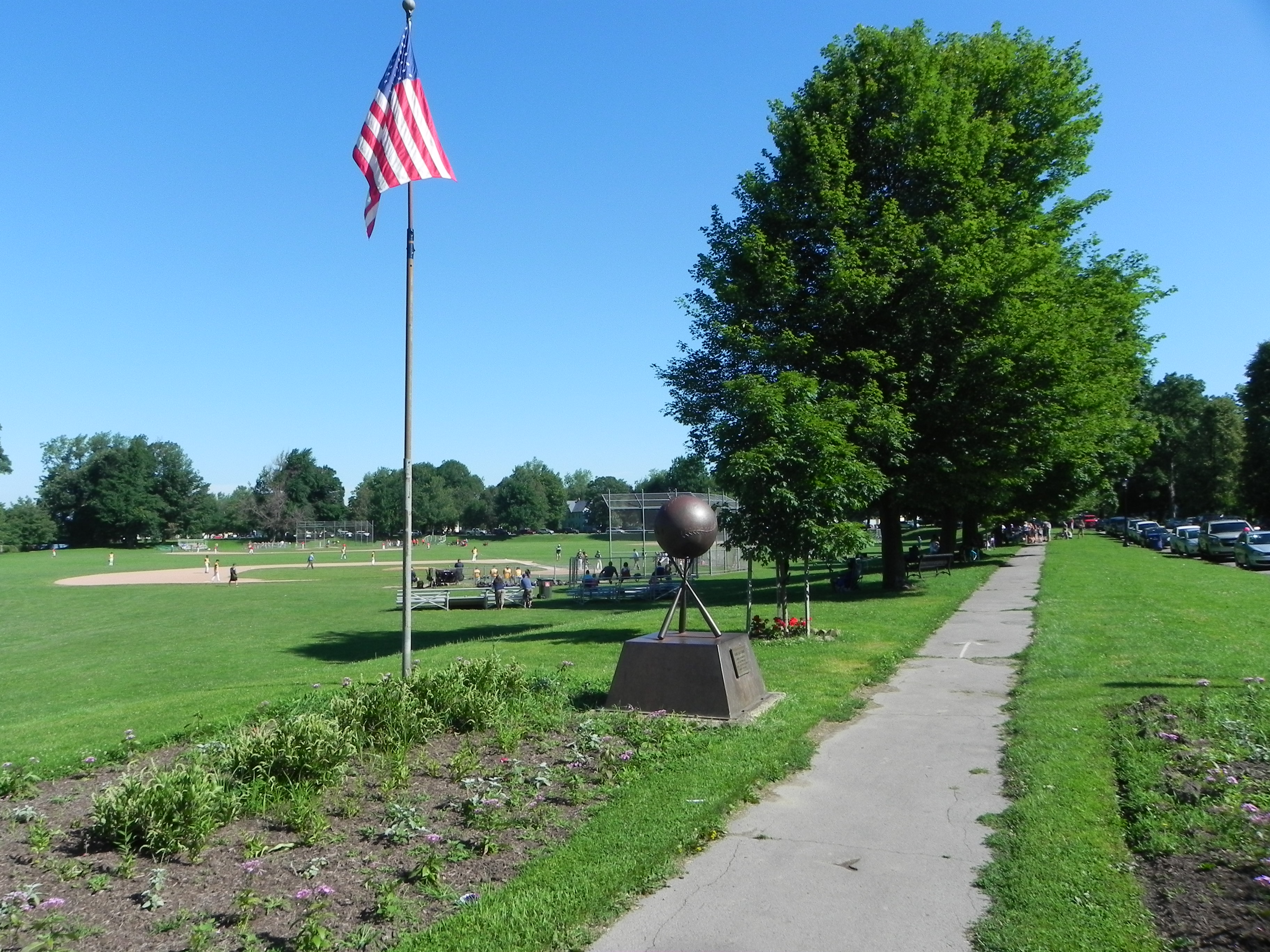
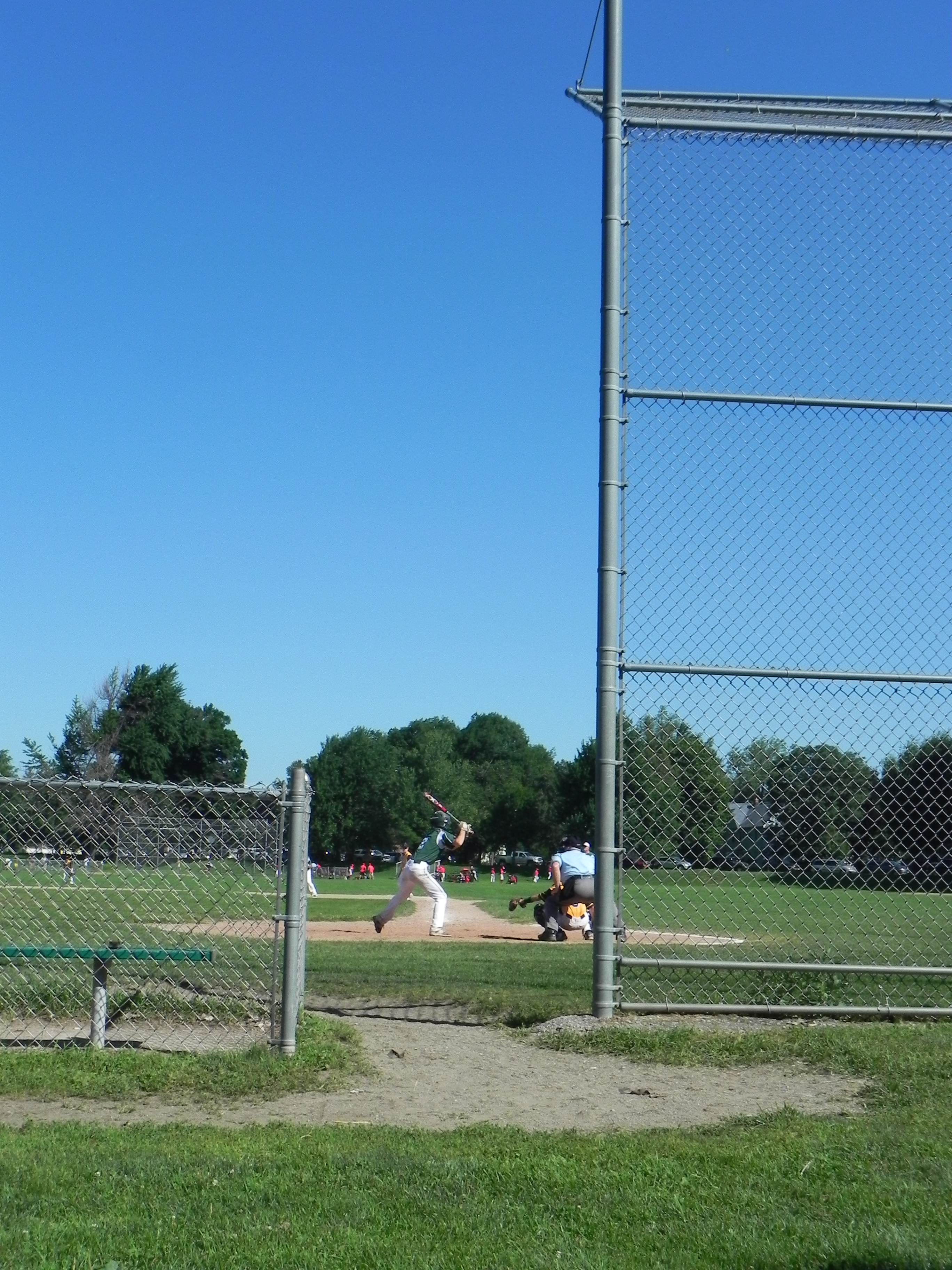
A perfect day to participate in a baseball tournament:

DSCN6362 DSCN6367

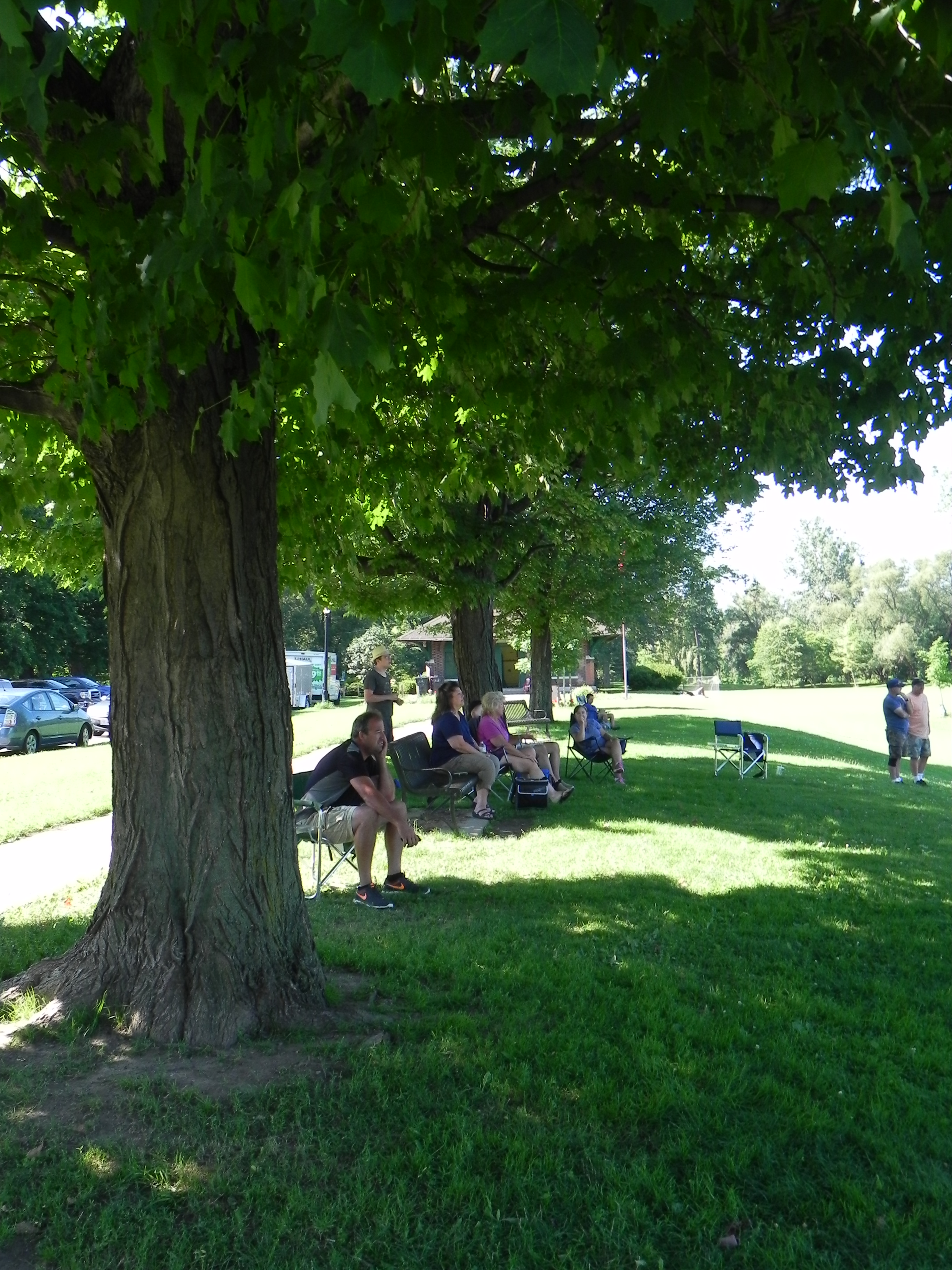
Or to just relax in the shade and watch our “national past-time”:

DSCN6371

It also was a perfect day to appreciate the natural beauty of a meandering Cazenovia Creek:

DSCN6376  

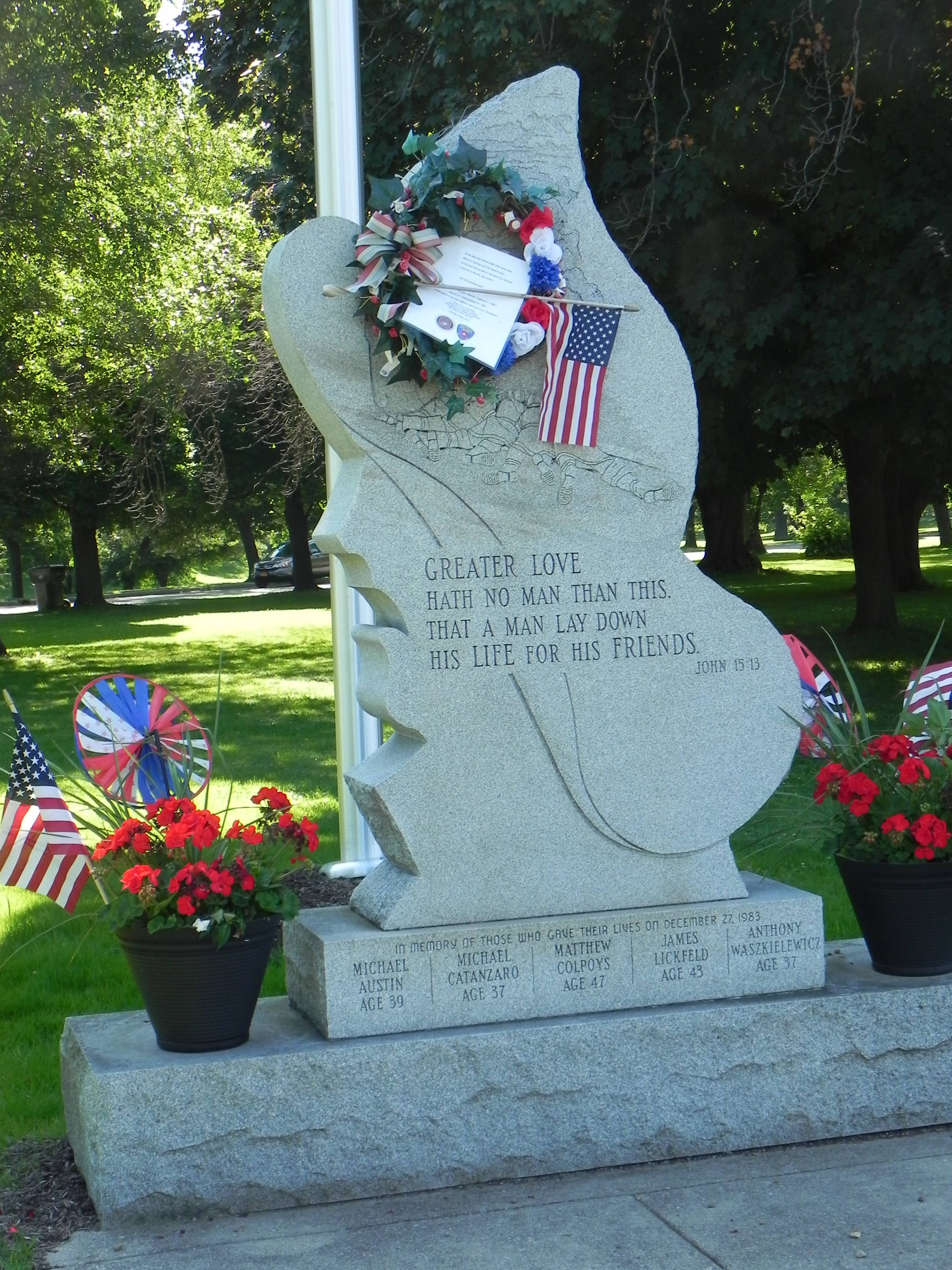
And, more solemnly, to honor the memory of five brave men, Michael Austin (39), Michael Catanzaro (37), Matthew Colpoys (47), James Lickfeld (43), and Anthony Wazkielewicz (37), who lost their lives on December 27, 1983:

DSCN6387

While waiting for the light to change at the busy intersection of Abbott Road and Warren Spahn Way (a parkway with an appropriate maximum speed of 15 M.P.H.), I couldn’t help but appreciate the difference between the urban setting one experiences when departing South Buffalo’s Olmsted Park and the sights and sounds one is subjected to alongside North Buffalo’s Scajaquada-split Delaware Park:

DSCN6378  DSCN6384

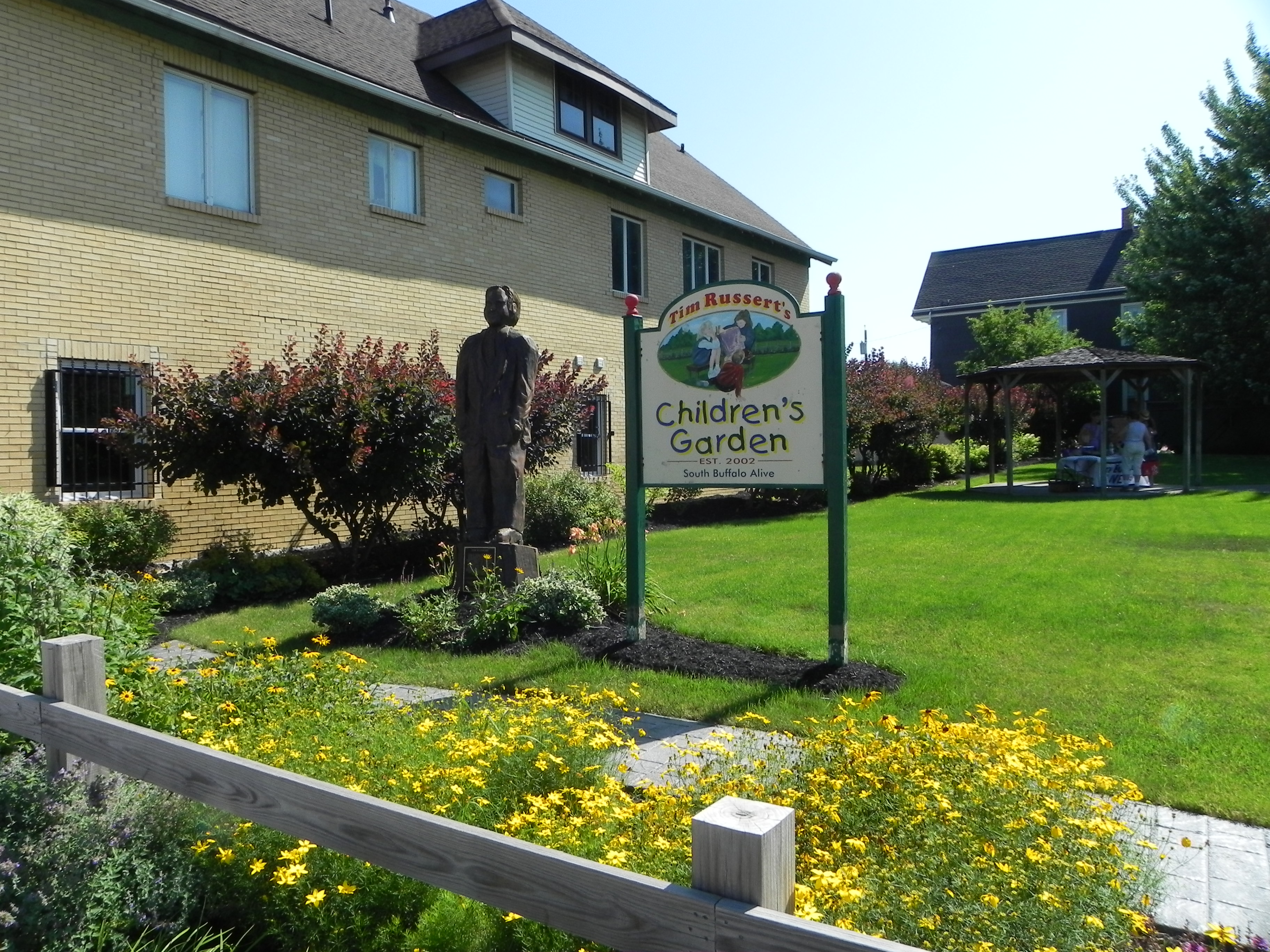
The official start of South Buffalo ALIVE’s Garden Tour is at the Tim Russert’s Children’s Garden at 2002 South Park (between Choate and Whitfield avenues and next to the Dudley Library):

DSCN6389 DSCN6394

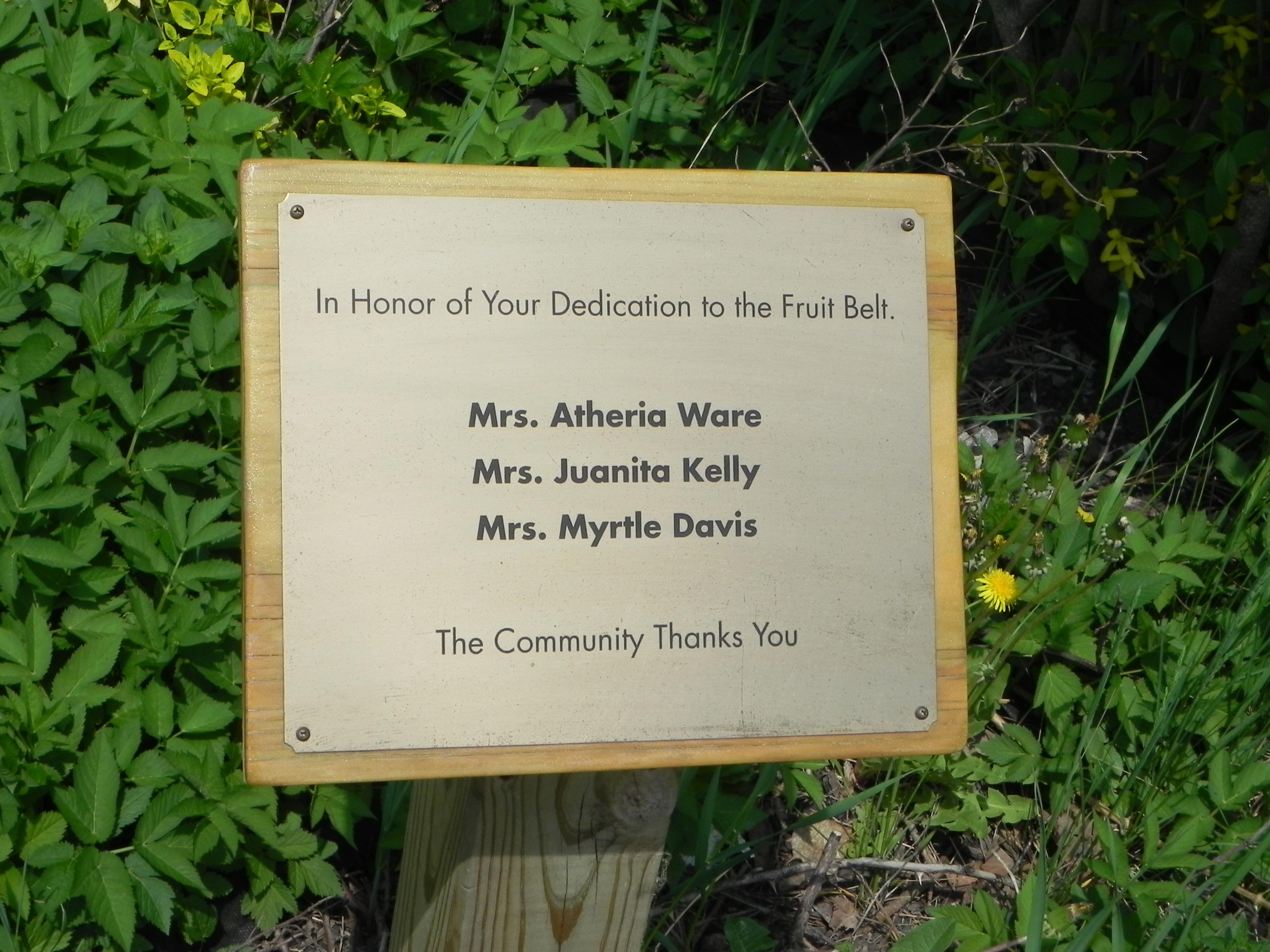
My bicycle tour lasted a bit more than two hours, cut short by hunger and some obligations back home.  To my chagrin, I only saw a fraction of the gardens available for viewing.  But I have little doubt that the 16th Annual Garden Tour will take place next July, and I’m already looking forward to it.  Here are photos of a few of the personal gardens graciously shared by South Buffalo residents with the public:

DSCN6401 DSCN6400

DSCN6405  DSCN6411

DSCN6414 DSCN6420

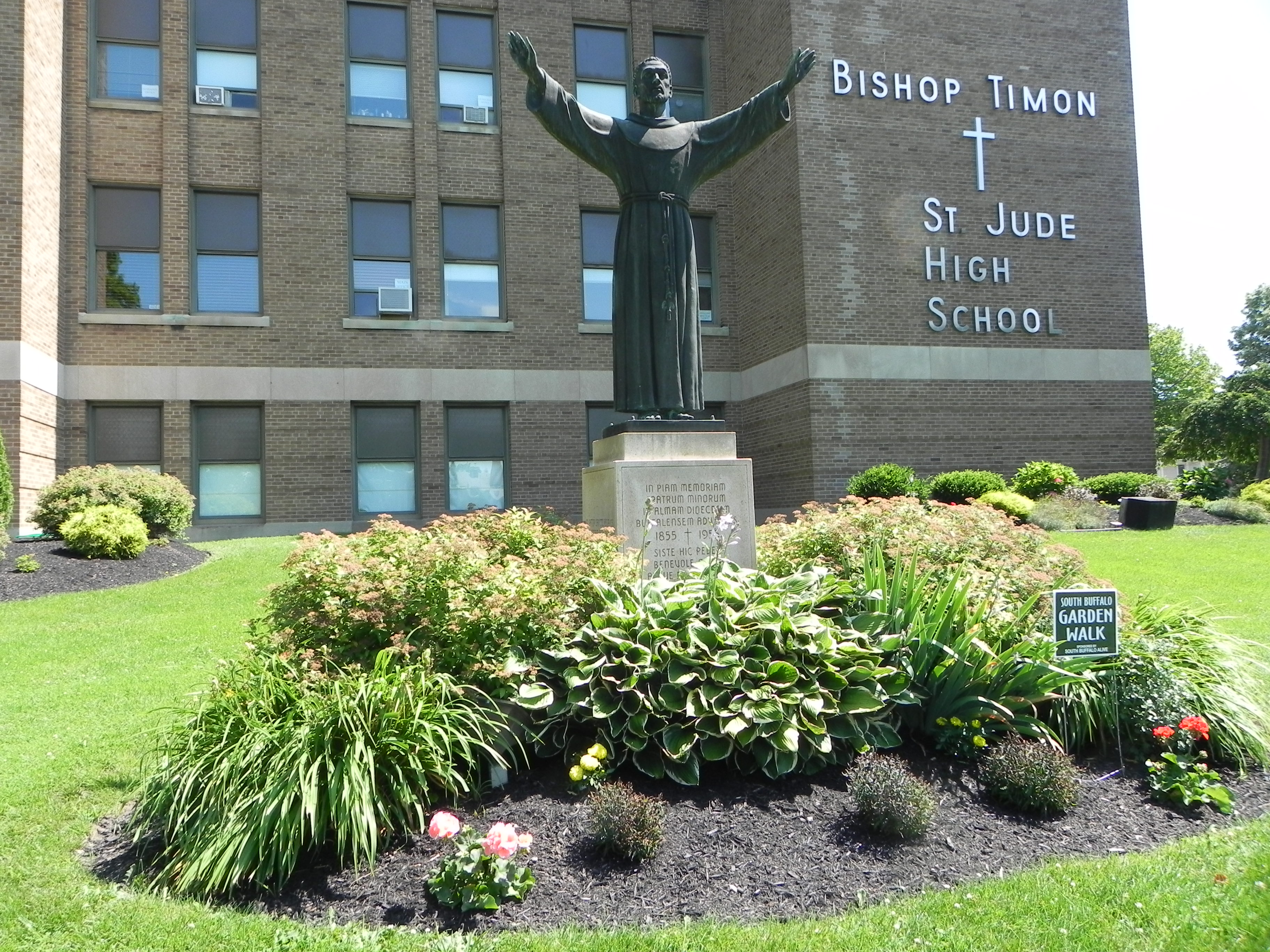
As well as an institutional garden:

DSCN6417

And two community gardens that I regularly enjoy on my morning walks around my new neighborhood: At the end of Teresa Place (off Seneca Street near Indian Church Road):

DSCN6423 DSCN6425

And at 2195 Seneca Street, the Seneca/Cazenovia Community Garden, conscientiously attended to by South Buffalo CREW and neighborhood residents:

DSCN6427 DSCN6428

With All Due Respect (and Appreciation)

Art Giacalone


New York’s Fractivists should Rejoice, but must stay Vigilant

Posted by Arthur J. Giacalone on May 15, 2015
Posted in: Fracking, SEQRA. Leave a comment

* The “final” decision not to allow hydrofracking in NYS could be undone in the future. *

NO FRACK

The New York State Department of Environmental Conservation (DEC) announced on May 13, 2015 that it has completed the “Final Supplemental Generic Environmental Impact Statement” (Final SGEIS) on its proposal to establish a permitting program for horizontal drilling and high-volume hydraulic fracturing (hydrofracking).  All that remains is the perfunctory issuance by the DEC of its Findings Statement pursuant to the State Environmental Quality Review Act (SEQRA).

The good news is that the DEC – concurring with the advice it received in December 2014 from the State’s Department of Health (DOH) – has reached the conclusion that hydrofracking should not proceed in New York State.  The two State agencies conclude that high-volume hydraulic fracturing may pose a serious threat to public health and the environment in a variety of ways:

1) air impacts that could affect respiratory health due to increased levels of particulate matter, diesel exhaust, or volatile organic chemicals;

2) climate change impacts due to methane and other volatile organic chemical releases to the atmosphere ;

3) drinking water impacts from underground migration of methane and/or fracturing fluid chemicals associated with faulty well construction or seismic activity;

4) surface spills potentially resulting in soil, groundwater, and surface water contamination;

5) surface water contamination resulting from inadequate wastewater treatment;

6) earthquakes and creation of fissures induced during the hydraulic fracturing stage; and

7) community character impacts such as increased vehicle traffic, road damage, noise, odor complaints, and increased local demand for housing and medical care.

The Final SGEIS validates the anti-fracking campaign that reverberated across New York State, and is rightfully a source of pride for “fractivists” and the legitimate scientific community. But, it must not lull anyone into a sense of complacency.

In a precarious world where SEQRA’s environmental review process can be manipulated by government officials, and politics is dominated by money, the dictionary definition of “final” – “not to be altered or undone” – may not apply. For the following reasons, environmentalists and ordinary citizens who care deeply about the protection of our natural resources and the public’s health must remain vigilant:

        First, the Final SGEIS repeatedly references the fact that the science underlying high-volume hydro-fracking’s impacts is still “developing,” and that “significant uncertainty remains” regarding “the level of risk to public health and the environment that would result from permitting high-volume hydraulic fracturing in New York, and regarding the degree of effectiveness of proposed mitigation measures.” As expressed by the DEC:

… [T]here is currently insufficient scientific information to conclude that [high-volume hydraulic fracturing] can be undertaken without posing unreasonable risk to public health, and to determine what mitigation measures provide a level of assurance that potential risks have been satisfactorily minimized. [Final SGEIS, Executive Summary, p. 24]

Implied in the Final SGEIS’s rationale is the reverse side of the coin: If and when sufficient scientific information becomes available demonstrating that hydrofracking can be undertaken without posing an unreasonable risk to public health and the environment, permission to engage in such activity may be granted.

        Second, as reflected by the multi-year review process that has now reached its completion, SEQRA expressly envisions that a lead agency – in this case, DEC – may “supplement” an environmental impact statement (EIS) in a number of circumstances: if changes are proposed for a project; when newly discovered information is available; or, where there is a change in circumstances related to the project. [See 6 NYCRR 617.9(a)(7).] Given the availability of the Supplemental EIS process, an administration determined to allow hydrofracking in New York State could easily conclude that new scientific information, or changes in hydrofracking technology, justify initiation of the Supplemental EIS process recognized in the SEQRA regulations.

        Third, if the DEC – following preparation of a Supplemental EIS – expresses the conclusion that it would be reasonably safe to allow hydrofracking in New York State, such a determination would be very difficult to overturn in court. The factual findings and conclusions relied upon by the agency would be given substantial deference by the judiciary. And, the courts would refrain from acting as a “referee” and choosing which scientific studies are more reliable than others. That determination would be left to the lead agency, DEC.

So the anti-fracking community should rejoice in a well-deserved victory, but never take the “final” decision for granted.

With All Due Respect,

Art Giacalone

Is “Gentrification with Justice” achievable?

Posted by Arthur J. Giacalone on May 4, 2015
Posted in: B-N Medical Campus, Buffalo News, Byron Brown, City of Buffalo, Development, Fruit Belt, Gentrification, Green Code, SEQRA. Leave a comment

This admirable goal will become a reality only if Buffalo’s East Side residents are able to identify influential partners whom they can trust, and effectively organize *

The Fruit Belt/McCarley Gardens Housing Task Force is sponsoring a town hall meeting with an impressive title:  “GENTRIFICATION WITH JUSTICE.”  The event takes place at the Moot Senior Center, 292 High Street, Buffalo, New York, on Tuesday, May 12, 2015 from 5:30 to 7:30 p.m.  Speakers will include the legendary George K Arthur, former City of Buffalo Common Council President; Betty Jean Grant, who currently serves as an Erie County Legislator; and John Washington, a Community Organizer with People United for Sustainable Housing (PUSH Buffalo).

DSCN4775

“Gentrification” is defined as “the process of renewal and rebuilding accompanying the influx of middle-class or affluent people into deteriorating areas that often displaces poorer residents.”  Veronica Nichols, the town hall meeting’s spokesperson, and fellow members of the Fruit Belt/McCarley Gardens Housing Task Force have spent years fighting to empower and preserve the rights and dignity of low-income families on Buffalo’s East Side.  There may no longer be the imminent threat that SUNY Buffalo will purchase the 15-acre McCarley Gardens site and displace the 150 mainly African-American and Hispanic families from the federally subsidized townhouse development.  But, as reflected in the forum’s flyer, the housing task force is determined that any changes to the neighborhoods adjoining the ever-growing Buffalo Niagara Medical Campus [BNMC] will be “based in respect, listening, cooperation, collaboration, [and] fairness.”

West side of Maple

DSCN5866

According to Veronica Nichols, the speakers – and, hopefully, the audience – at the May 12th town hall meeting will discuss a number of poignant topics, including:  How do you ensure that the poor benefit from, and are not displaced by, gentrification? What tools and strategies are available to create an environment where low-income residents are treated as business and real estate partners, not enemies?  How do you have a process that is mutually beneficial for the original residents and the wealthier newcomers?  Can steps be taken to:  assess who is facing eviction (the elders, the disabled, and those with the most limited incomes); stabilize existing renters; cap property tax assessment for long-time homeowners; and, organize the affected neighborhoods.

I’m looking forward to attending the May 12th event, and listening attentively to the perspectives and concerns of the speakers and, more importantly, the East Side residents.  What will concern me most, however, is determining which political, business, and institutional leaders – currently in power – can be trusted to truly protect and advance the interests of the less advantaged neighborhoods.

PS 37 - Futures Prep School DSCN4824

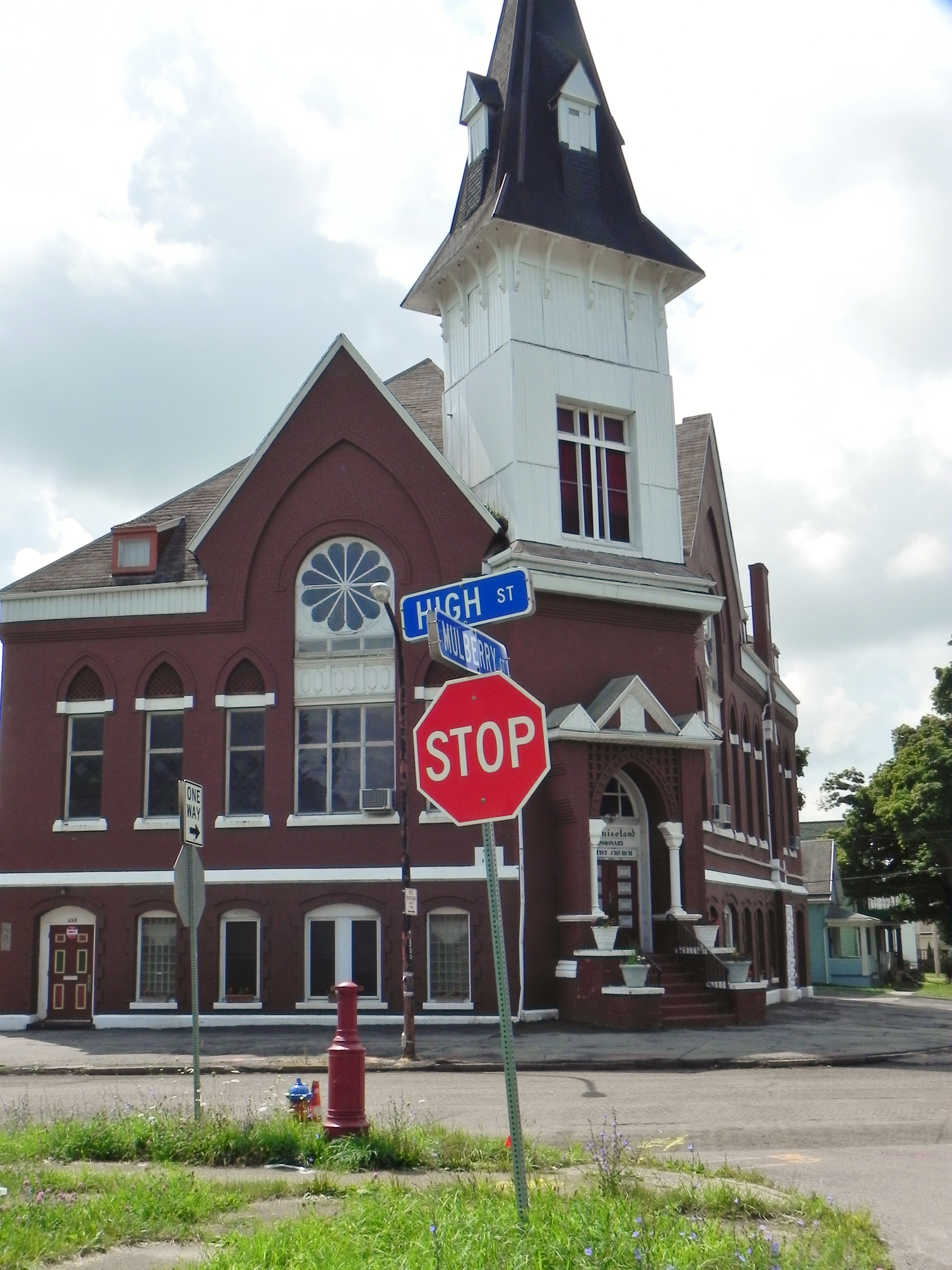
New Zion Missionary BCTeen Center

Here are some of the reasons that I’m skeptical:

City and State officials. As is addressed in detail in my August 8, 2014 posting, “Disregard of ‘Fruit Belt’ Residents by Buffalo’s Leaders is Unjust,” the State Environmental Quality Review Act (SEQRA) placed an obligation on the City of Buffalo and State of New York to protect the residents and neighborhoods adjoining the BNMC from the adverse effects of gentrification by objectively assessing “potential acceleration of the displacement of local residents and businesses” prior to approving or financing the many construction projects comprising the medical campus. To date, neither the City officials, nor the various State agencies involved in BNMC projects, have met their obligations to gather the pertinent information, and implement the necessary mitigation measures to minimize the adverse impacts associated with gentrification.

DSCN4793

DSCN4826

DSCN4777

My concerns regarding City of Buffalo officials – in particular, Mayor Byron Brown and the Office of Strategic Planning – go beyond the failure to comply with SEQRA.  The most recent draft of Mayor Brown’s proposed “Buffalo Green Code” (issued in May 2014) does not provide the 150 families living in the McCarley Gardens development, or the nearby Fruit Belt residents and homeowners, protection from displacement:

(a) While the draft zoning code classifies the McCarley Gardens development as a “Residential Campus” (“D-R”), it does NOT protect the current residents from being pushed out of their homes to make way for a new and totally different “Residential Campus.”  Not only does the Green Code – as currently written – not prevent demolition of the existing low-income residential development, it provides a major incentive for developers to demolish McCarley Gardens and replace it with an up-scale development that could include, for example:  large scale retail and service businesses, medical clinics, professional offices, residential care facilities, cultural facilities, government offices, frat houses, a hotel, restaurants, taverns, outdoor dining, a “solar farm,” cell towers, etc.

McCarley Gardens DSCN5904

(b) The draft Buffalo Green Code would not protect the Fruit Belt from encroachment by the Buffalo Niagara Medical Campus. While the draft Green Code provides an initial boundary for the medical campus, it does NOT – and cannot – guarantee that future rezonings will not expand the campus beyond the proposed boundary.  More importantly, the draft Green Code’s lengthy list of non-residential uses and sizeable buildings that would be allowed in the “residential” districts proposed for the vast majority of the East Side (that is, N-2E and N-2R zones) would fuel the speculative purchase of properties and the intrusion of non-residential development, hastening the displacement of the current homeowners and tenants, and gentrification of the Fruit Belt and other East Side neighborhoods.

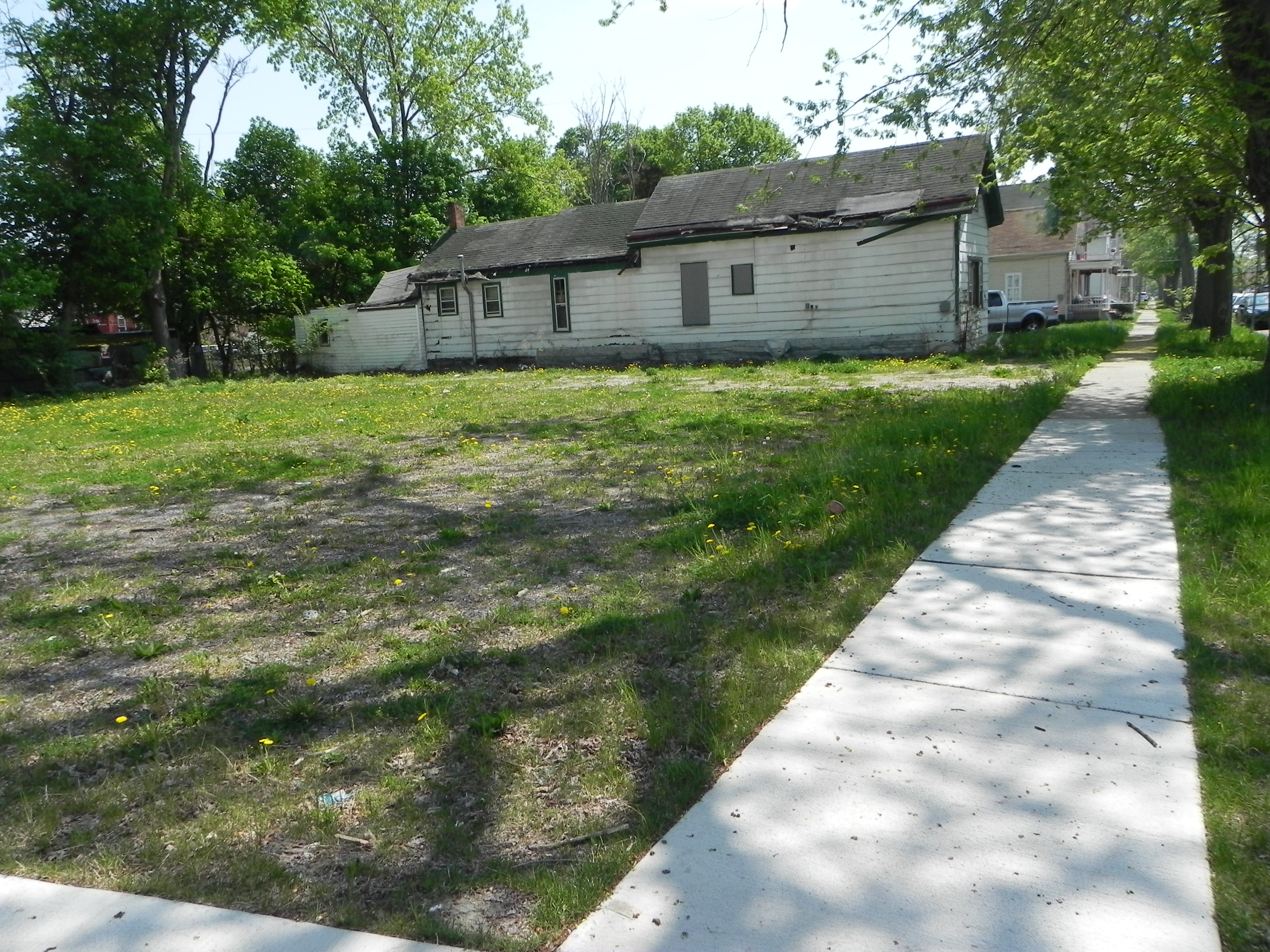
DSCN4758 Carlton-Maple Vacant Lot

The Buffalo News. The cavalier attitude towards gentrification expressed by the editorial board of Western New York’s most prominent daily publication in a July 29, 2014 opinion is, at a minimum, troubling and distasteful. The Buffalo News editorial proudly proclaims:  “New Buffalo – Development near the Medical Campus shows the city is shaking off its despair.”  The opinion piece praises the creation of wealth for developers, landowners, and business owners who “rush to take advantage of the multiple opportunities” created by the still-growing Buffalo Niagara Medical Campus.  According to the editorial, “It’s a thing of beauty.”  As expressed in an earlier post, I emphatically disagree.  What is not beautiful is the callousness shown by the Buffalo News editorial staff towards “people without means [who] may also be squeezed out of their homes” as “the line marking ‘the wrong side of the tracks’ is moving further east.”  According to the July 29th editorial:  “Those are the disadvantages and consequences of gentrification, which is not only wholly desirable, but as inevitable as the laws of supply and demand.”

DSCN5915

Rev. Michael Chapman, Pastor of St. John Baptist Church. McCarley Gardens is owned by the housing arm of St. John Baptist Church. According to the Buffalo News, St. John’s pastor, the Rev. Michael Chapman, “offered to sell the 15 acres on which McCarley Gardens sits to the University at Buffalo Foundation for $1 million an acre,” and “UB took Chapman up on the offer.” UB may have taken the deal off the table, but residents of the housing complex have good reason to fear what will happen when the next developer or speculator offers the good Reverend a similar deal.

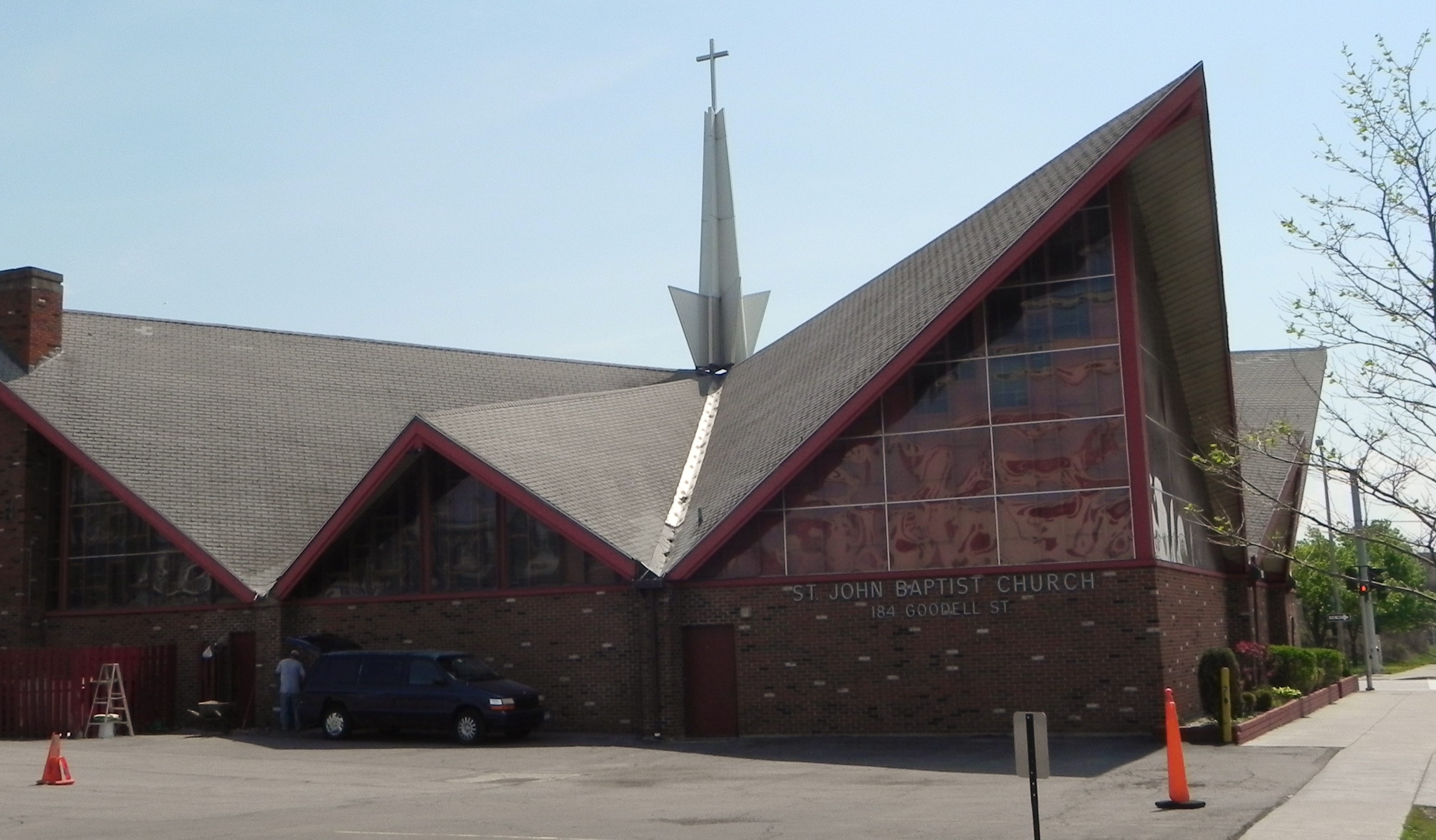
St. John Baptist Church St. John Tower

Buffalo Niagara Medical Campus Board of Directors. The BNMC-Master-Plan-Update adopted in 2010 by the Board of Directors of the Buffalo Niagara Medical Campus (which includes Mayor Byron Brown as a member) expresses the following sentiment in a section entitled “Fruit Belt Neighborhood Strategy”:

The transition between the medical campus and the Fruit Belt neighborhood must be carefully considered to take advantage of proximity while also mediating building scale, character and use. 

DSCN4810

DSCN5942

Although the master plan update does not expressly address the displacement effect of BNMC expansion on existing Fruit Belt and East Side residents, it does recognize the constructive role that SEQRA and the City of Buffalo could play in regulating future activities related to medical campus growth:

SEQRA would provide a neutral platform within which all the various agencies and proponents could contribute information and weigh development options and impacts in a public forum…  Ideally, the City of Buffalo would be the lead agency and would submit a full Environmental Assessment Form (EAF), cooperating with UB, Kaleida, RPCI, the BNMC and other agencies.

And the update plan includes – in its list of “Collaborative Opportunities for Moving Forward” – the following call for a comprehensive environmental review under SEQRA:

Create a campus-wide Generic Environmental Impact Statement (GEIS) in order to facilitate future campus development and assess the environmental, social, and economic impacts of growth. 

However, despite the passage of four-and-a-half years since the December 2010 Master Plan Update was adopted by the BNMC Board of Directors, there is no evidence that the proposed GEIS review process was ever commenced – much less diligently pursued – by the Board of Directors or the City of Buffalo.

While the term “Gentrification With Justice” may sound to some like an oxymoron, the residents of Buffalo’s East Side deserve nothing less than a just and inclusive decision-making and development process fully and fairly implemented by trustworthy partners.

Hopefully, a constructive and inspired crowd will be in attendance at the Moot Senior Center on May 12, 2015.

With All Due Respect,

Art Giacalone

Adam Zyglis – Pulitzer Prize Winner Pulls No Punches

Posted by Arthur J. Giacalone on April 21, 2015
Posted in: Adam Zyglis, Andrew Cuomo, Buffalo News, Peace Bridge. Leave a comment

* Buffalo News Editorial Cartoonist “comforts the afflicted” and “afflicts the comfortable”

It certainly is a shame that the editorial board of the Buffalo News fails to consistently embrace the adage adhered to by its Pulitzer Prize winning pictorial journalist, Adam Zyglis:  “The job of the newspaper is to comfort the afflicted, and afflict the comfortable.”  Here are but a few examples:

– While the newspaper’s editorial board increasingly minimized the ethical shortcomings of Andrew Cuomo as the November 2014 elections approached, and wholeheartedly endorsed New York’s governor for re-election, Adam’s July 25, 2014 cartoon depicted a politician unworthy of the job of governor – a reeking Andrew Cuomo as a janitor “CLEANING UP ALBANY” with a mop that had been soiled by a dip in the “Moreland Commission” bucket.

Note:  The headline for editorial published by the Buffalo News on the same day as Adam’s July 25th masterpiece expressed the appropriate tone:  “Same old same old – Shameful meddling by Cuomo’s office short-circuited corruption investigation.”  But a mere five days later, on July 30, 2014, the newspaper’s editorial board started its backpedaling, expressing the following sentiment:

… [Y]es, Cuomo really pushed some worthwhile changes.  But corruption remains a problem in New York, and a significant one.  The governor should do more, if nothing else for political self-protection…

By August 18, 2014, the Buffalo News editorial blamed Albany’s “culture of corruption” on “voter indifference,” reiterated Gov. Cuomo’s strenuous denial of any interference with the Moreland Commission, and proclaimed that “it is not fair to voters, taxpayers and all residents of New York to have even a faint cloud of doubt hanging out the head of their governor.”  

When it came time for the Buffalo News to announce its endorsement for the gubernatorial race, its editorial board unhesitatingly anointed the incumbent and gushed:  “New York has never seen a Democratic governor the likes of Andrew M. Cuomo… [H]e is surely the best friend Western New York has ever had in the governor’s office.”  Reference to the Governor’s ethical shortcomings was relegated to the second-last paragraph in an 831-word editorial:

“Yes , we wish he had handled the Moreland Commission issue better.  He should have left the anti-corruption panel in place instead of cutting it off, mid-investigation…”

If the Buffalo News truly desired a corruption-free Albany, it would have acknowledged the fact that Cuomo’s ethical breaches go well beyond the questions raised by the Governor’s handling of the Moreland Commission.  [See, for example, my August 21, 2014 post entitled, “Cuomo’s Approach to ‘Peace Bridge Expansion’ Reveals Pattern of Deception, Abuse of Power“.]  More importantly, its editorial board would have urged the voters not to re-elect a person who, to paraphrase the newspaper’s July 25, 2014 editorial, is more than willing to “swim in the same polluted waters as everyone else in Albany.”

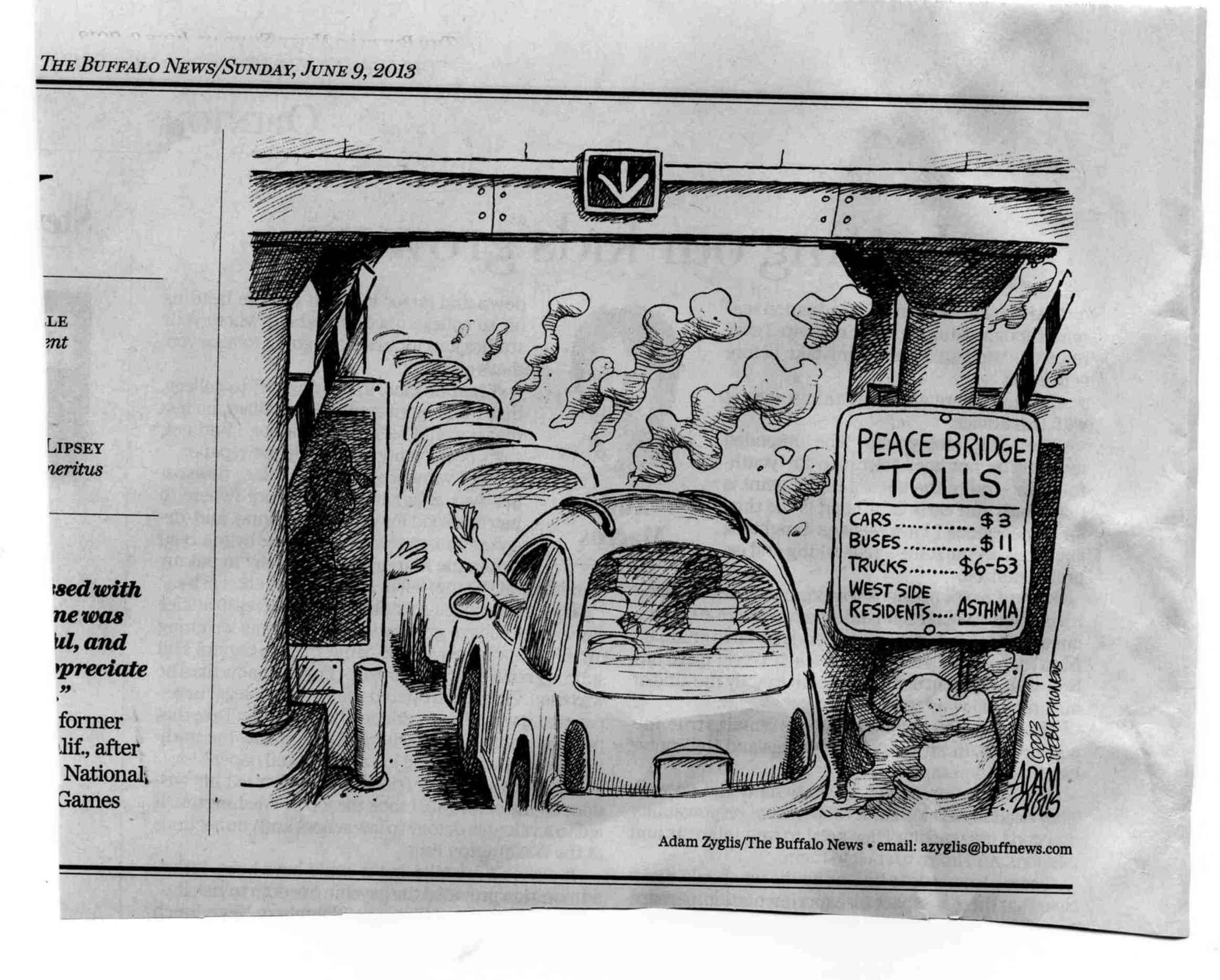
– The the Buffalo News editorial board has failed for years to fight for the families living near the Peace Bridge who are chronically sickened by the fumes that emanate from the trucks using the international crossing.  The goal of an iconic bridge or a new and expanded plaza has always taken precedence over human health and environmental justice.  In sharp contrast, the poignant June 9, 2013 cartoon penned by Mr. Zyglis told it like it is (amidst a cloud of vehicular exhaust):  “PEACE BRIDGE TOLLS: Cars $3; Buses $11; Trucks $6-53; WEST SIDE RESIDENTS – ASTHMA.”

Note:  Perhaps it is merely a coincidence, but Adam’s June 9, 2013 “Toll Booth” cartoon is not included in the Buffalo News collection of the Pulitzer Prize winner’s illustrations.  It’s absence is odd given the April 26, 2015 invitation from Mike Connelly, the Buffalo News Editor, “to view all of Zyglis’ cartoons, going back to his eight-grade [sic] contest winner, go to buffalonews.com/zyglis.”  [Nonetheless, for a view of a prime example of Adam living up to the above-quoted journalistic standard, click here.]     

– In contrast to the editors’ cheerleading in support of the threats and embarrassing hard-ball tactics used by Andrew Cuomo in his efforts to get his way with the Peace Bridge Authority’s Canadian members, Adam’s June 21, 2013 portrayal of Gov. Cuomo as a military general maneuvering his tanks and artillery across a “Peace Bridge” chess board accurately captured the New York governor’s “diplomatic style” for what it is, unrelenting bullying.  [And, here’s another example of Cuomo’s brand of diplomacy.]

Note:  Calling him “Governor Disruption,” the June 27, 2013 Buffalo News editorial embarrassingly praises Andrew Cuomo for his willingness “to disrupt long-standing patterns of behavior … by acquiring a crowbar – of the metaphorical kind – and being prepared to use it.”  Unfortunately, New York’s governor was willing to bully the Canadian members of the Peace Bridge Authority regardless of the legality or propriety of the methods being used.  See, for example, an op-ed piece that I wrote for ArtVoice entitled, “‘King Andrew’ – sixty years too late to control New York/Canadian border.“

– While the newspaper’s editorial board joined the media frenzy in full-throated support of the Verizon Wireless proposal for a massive data center in an unlikely and ill-suited farm field in Niagara County’s Town of Somerset, Adam’s November 19, 2010 editorial depicted a smirking, giant-sized Verizon agent loudly proclaiming, “CAN YOU HEAR ME NOW? GOOD.”, while his front pocket bulges with dollar bills and a “NY GOV’T” official giving the “thumbs up” sign.  [See former Buffalo News Staff Reporter James Heaney’s November 10, 2010 report, “Deep pockets help Verizon promote its interests – Company’s lobbying clout eyed as key to subsidy deal.]

Adam, congratulations, and thank you for never pulling your punches!

With All Due Respect (and, much is due)

Art Giacalone

Justice (and, even the appearance of justice) Eludes “Peace Bridge” Neighbors

Posted by Arthur J. Giacalone on April 9, 2015
Posted in: Andrew Cuomo, Environmental Justice, Health impacts, Judiciary, Peace Bridge, Sam Hoyt, SEQRA. 1 Comment

* Residents of Buffalo’s Lower West Side deserved a ruling on their legal challenge to the Peace Bridge “enhancement” projects that was prompt and addressed the crux of their legal claims – they got neither. *

My clients, six Columbus Parkway families whose homes are a short distance from the Peace Bridge and its persistent traffic, had one desire when they filed their lawsuit last September 2014 in State Supreme Court. [See, Mecca et al. v. Empire State Development et al., Supreme Court, Erie County, Index No. I 2014000160.] They clearly understood that there was no guarantee that their legal claims would prevail. All they wanted was a prompt, fair, and thoughtful review by the court of the legality of the decision-making processes used by two NY state agencies and the City of Buffalo regarding Peace Bridge-related projects that were being fast-tracked by the Cuomo administration. They wanted to feel as if justice was being done.

They never got to experience that feeling. While there was an encouraging court proceeding on October 2, 2014, where the Hon. John F. O’Donnell, Supreme Court Justice, listened attentively, asked informed questions relating to motions to dismiss filed by the State and City respondents, and promised a decision “as quickly as I can,” what followed was disheartening.

Note: According to John F. O’Donnell’s biography found at the NY court system’s website, His Honor has served as a judge since 1988, in Erie County’s Family Court from 1988 to 1995, and as a Supreme Court Justice since 1996. From 2003 to 2005, Justice O’Donnell served as Presiding Justice of Erie County’s Integrated Domestic Violence Part. As noted in a June 2014 article in the Buffalo News, Justice O’Donnell is married to Denise E. O’Donnell, Esq., who was nominated by New York’s senior U.S. Senator, Charles E. Schumer, to serve as a U.S. district court judge. If confirmed by the U.S. Senate, Ms. O’Donnell, who currently has a job at the U.S. Justice Department, would be the first woman to serve in that capacity in Buffalo, and she would replace U.S. District Judge William M. Skretny, who is moving to senior status. Sen. Schumer is a supporter of “improvements to the [Peace Bridge] plaza on the American side,” has been a staunch advocate for a new “signature span” to replace the existing international bridge, and is a vocal critic of delays caused by what he has characterized as “unnecessary environmental study of the bridge.”
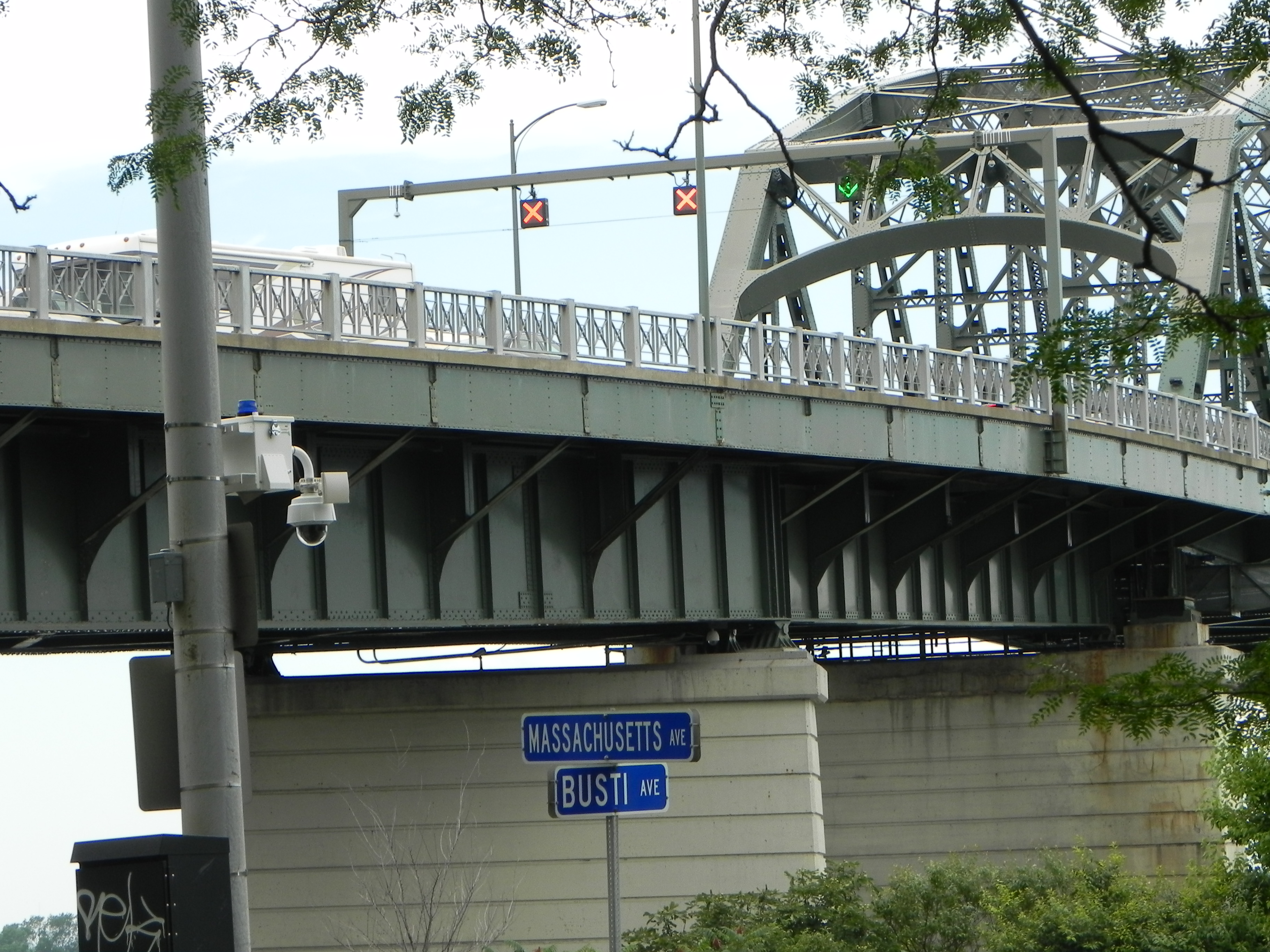
Corner of Busti & Massachusetts    

There was no “quick” decision. Despite a court rule [CPLR 2219(a)] that requires a judge to render a determination on a motion “within sixty days, after the motion is submitted for decision,” Justice O’Donnell’s “Memorandum” dismissing the residents’ “Article 78 petition” was issued on March 31, 2015 – just two days shy of the six-month anniversary of the October 2nd court proceeding.

If the court carefully considered the multiple legal claims asserted on behalf of the Columbus Parkway neighbors, the meager three-page written decision (with only two pages and less than 500 words of text) does not reflect it. Justice O’Donnell expresses his reasoning for dismissal of the residents’ 55-page petition (which included six distinct legal claims) in a scant three paragraphs:

…

             In reviewing a petition of this nature, the court’s role is limited to determining whether an agency identified the relevant areas of environmental concern, took a hard look at them and made a reasoned determination [legal citations omitted].

             Petitioners’ claims are generally conclusory and/or speculative. Little detail is provided that could lead a court to determine that respondents have not taken a hard look at environmental concerns and made reasoned determinations. In fact, respondents’ submissions lead to a different conclusion.

            Petitioners make much of the fact that certain members of respondents [sic] boards displayed an arrogance, a misunderstanding of the duties of public servants, and attempted to avoid transparency. While the court agrees those actions (and comments) were reprehensible, those alone are insufficient to conclude a few small minded individuals were able to avoid their principal’s lawful obligations.

                                                                                     …

Most troubling to my clients – and to me, as the lawyer who attempted to conscientiously set forth the legal and factual bases for the alleged violations of New York State and City of Buffalo laws – are the multiple issues and claims that are not mentioned or addressed in any fashion in the March 31, 2015 Memorandum. For example:

I.  Respondents’ “Strategems to avoid the required environmental review”

Central to the residents’ legal claims is the argument that state and city officials have steadfastly devised “strategems” to avoid examining the cumulative environmental and health impacts on the adjacent residential community of proposed bridge and plaza enhancement projects. That pattern was first observed fifteen years ago by then-State Supreme Court Justice Eugene M. Fahey (appointed in February 2015 to the state’s highest court) at the time a second international span was under consideration at the Peace Bridge.

In the words of Justice Fahey, the government decision-makers were engaged in “strategems to avoid the required environmental review,” and had “strained mightily to avoid the commonsense conclusion” that traffic flow over the Peace Bridge “is acutely dependent on traffic flow through the current or any proposed new plaza.” Accordingly, Justice Fahey found that New York’s Department of Environmental Conservation (DEC) and the Buffalo and the Fort Erie Public Bridge Authority – known informally as the “Peace Bridge Authority” (PBA) – had violated their obligations under SEQRA (New York State’s Environmental Review Act) to avoid the “segmentation” of the environmental review process, and to take a “hard look” at the cumulative impacts of the bridge and related plaza/connected roadways projects.

Note: Justice Fahey’s opinion was rendered in April 2000 in response to two consolidated cases, Matter of City of Buffalo v. New York State Department of Environmental Conservation et al., and Matter of Buffalo Olmsted Parks Conservancy, Inc. et al. v. Buffalo and Fort Erie Public Bridge Authority et al., 184 Misc.2d 243, 707 NYS2d 606 (Sup. Ct., Erie Co. 2000).

The pleadings dismissed on March 31st by Justice O’Donnell alleged that the April 25, 2014 actions and comments of Cuomo Administration appointees at a meeting of the board of the PBA board reflected the current version of the “strategems” criticized in Justice Fahey’s 2000 court decision. [See August 6, 2014 Buffalo News article, “Plotting at the Peace Bridge.”] The two main actors on behalf of Gov. Cuomo were Maria Lehman, P.E., who at that time held the title of “New York State Program Manager for the Peace Bridge,” and Sam Hoyt, who then served Andrew Cuomo as chairman of the PBA board and president of Empire State Development’s Western Regional Office.

The March 31, 2015 Memorandum appears to be referring to Ms. Lehman and Mr. Hoyt when it states:

       Petitioners make much of the fact that certain members of respondents [sic] boards displayed an arrogance, a misunderstanding of the duties of public servants, and attempted to avoid transparency. While the court agrees those actions (and comments) were reprehensible, those alone are insufficient to conclude a few small minded individuals were able to avoid their principal’s lawful obligations.

Restoring Trust - gray photo0001

What Justice O’Donnell does not mention is the context of what His Honor deems “reprehensible” actions and comments, or the connection between such conduct and petitioners’ contention that the respondents were once again engaged in strategems to avoid much needed environmental review. As alleged at paragraph “49” of the residents’ petition:

     49.  A spirited discussion dominated by the State’s Program Manager for the Peace Bridge, Ms. Lehman, during the aforementioned April 25, 2014 Peace Bridge Authority meeting details the stratagems implemented by the State of New York and respondent City of Buffalo to avoid the delays that would accompany demands that the City of Buffalo fully and objectively assess the cumulative impacts of the various Peace Bridge expansion and enhancement projects: keep the public uninformed of the decisions being made, and circumvent any member of the City of Buffalo Common Council who might demand a full environmental study.

Rather than viewing the transcript of the words uttered on April 25, 2014 (set forth at paragraph “50” of the Verified Petition) as the proverbial “smoking gun” confirming petitioners’ allegations, Justice O’Donnell inexplicably minimizes the role played by Ms. Lehman – New York’s “Program Manager for the Peace Bridge” – and Mr. Hoyt – who, as both chair of the Peace Bridge Authority board and head of WNY’s Empire State Development office, was often viewed as the Governor’s the governor’s “eyes and ears upstate”. No two individuals were in a better, more influential position to implement the Cuomo Administration’s policy to fast-track Peace Bridge projects, regardless of the human and environmental costs.

Note: As noted at the end of paragraph “50” of the residents’ petition, excerpts from the audio tape of the PBA’s April 25, 2014 board meeting – obtained by the Washington, D.C.-based advocacy group, Public Employees for Environmental Responsibility (PEER) – are available at https://www.youtube.com/watch?v=MKN-B8vtLww&feature=youtu.be and https://www.youtube.com/watch?v=o4vpPHZnEKk&feature=youtu.be.

II. The existence of a larger plan – Gov. Cuomo’s “Peace Bridge Understanding”

According to SEQRA regulations, a governmental agency is obligated to consider “cumulative impacts” of other simultaneous or subsequent actions “included in any long-range plan of which the action under consideration is a part.” [See 6 NYCRR 617.7(c)(2).] In other words, the decisive factor in determining whether the cumulative impacts of other pending or proposed development must be assessed “is the existence of a ‘larger plan’ for development.”  The Peace Bridge neighbors argue in their court papers that the “Peace Bridge Understanding” – announced by Gov. Andrew Cuomo on June 25, 2013 – constitutes such a “larger plan” for the Peace Bridge, its U.S. plaza, and the various roadways and ramps leading to it, and triggers an obligation under SEQRA for the State of New York and the City of Buffalo to objectively assess the “cumulative impacts” of the various expansion and “enhancement” projects on the environment and on the health of nearby residents.

Justice O’Donnell’s decision dismissing my clients’ lawsuit never mentions the “Peace Bridge Understanding,” or the issue of whether a larger plan exists mandating consideration of the cumulative impacts of the various Peace Bridge-related projects in progress or under consideration.  It is impossible to know whether the court was referring to this issue when it states: “Petitioners’ claims are generally conclusory and/or speculative.”  There is no doubt that the repeated assertions by respondent NYS Department of Transportation that its “New York Gateway Connections Improvements Project to the U.S. Peace Bridge Plaza” is not part of a larger plan, and by the Cuomo-dominated Empire State Development Corporation that there are “no current plans” to utilize the Episcopal Church Home site for plaza expansion, are conclusory.
DSCN3032

But Justice O’Donnell makes no effort to compare and contrast respondents’ assertions regarding “no larger plan” with the following facts set forth by the residents:

  1. The “Peace Bridge Understanding” expressly calls itself “a road map for the Peace Bridge,” and states that, “The Bridge performs as a single enterprise with a presence and operation on both the Buffalo (US) and Fort Erie (Canada) side, and to optimize the Bridge’s performance, both plazas must be developed and improved to the fullest.”
  2. Following a statement that, “[t]he development of the Buffalo side of the bridge will be prioritized to improve the US Plaza area,” the Peace Bridge Understanding provides details regarding three projects:

– “US Plaza Enhancement and Widening Project”:  “a plan for improving traffic flow, improving the Plaza, including widening…”

–  “Gateway Ramp Project”:  “designed to provide a direct connection from the Plaza to I-190 NB, eliminate the Plaza exit onto Baird Drive and remove Baird Drive from Front Park, and create a new entrance to the Plaza at Porter Avenue for all traffic coming from City streets.”

Porter Ave construction 02-04-15

– “ECH Property Acquisition”:  “The PBA and NYS will cooperate on the purchase of Busti Avenue by New York State for the purpose of creating a neighborhood buffer and potential other uses subject to further planning.”

3.  The existence of a larger plan is confirmed by a variety of press releases issued by Gov. Andrew Cuomo that pre- and post-date the June 2013 Peace Bridge Understanding, including, for example, the following:

(a) The governor’s August 15, 2012 press release , under the headline, “Governor Cuomo Announces Another Step Forward in Peace Bridge Plaza Improvement Project,” includes the following statement:

Governor Andrew M. Cuomo today announced another step forward in the state’s efforts to improve the U.S. Peace Bridge Plaza, as a crucial block of land that will be part of the transformed plaza is now well on the way to coming under state control…  

The block of land previously housed a nursing home, and has been vacant for seven years…

 “Today’s announcement is another win for the Peace Bridge plaza expansion project,” Governor Cuomo said…

(b) Gov. Cuomo’s August 24, 2012 press release, under the headline, “Governor Cuomo Announces Agreement to Secure Final Property for Peace Bridge Plaza Improvement Project,” includes the following statement:

Governor Andrew M. Cuomo today announced that the state has secured an agreement to acquire the final piece of property needed to advance the U.S. Peace Bridge Plaza enhancement project, breaking through years of paralysis that has impeded the new plaza’s progress… 

“Today’s announcement settles a long-standing obstacle and clears the path for a crucial block of land to be moved to state control, ensuring that the U.S. Peace Bridge Plaza enhancement project can move forward,” Governor Cuomo said… 

After nearly two decades of delays, Episcopal Church Home & Affiliates (ECH&A) reached an agreement with the state on acquiring its West Side campus on Rhode Island Street…

(c) A press release issued on August 7, 2013, under the headline, “Governor Cuomo Announces Beginning of Peace Bridge U.S. Plaza Improvements Project – Groundbreaking held on U.S. approach widening project following Canada and New York State agreement to prioritize Buffalo side of the bridge,” includes the following statement:

Governor Andrew M. Cuomo today announced the commencement of phase one of the Peace Bridge U.S. Approach Widening Project  .. which comes after Governor Cuomo’s announcement in June of an agreement between New York State and Canada regarding a series of improvement actions to be fast-tracked as part of the “Peace Bridge Understanding.”  …  Governor Cuomo announced an agreement on the Peace Bridge Understanding on June 26, 2012 with Canadian Ambassador Gary Doer, which outlined an aggressive, component project specific plan to move forward on the U.S. Plaza improvements…  

4.  The Final Environmental Impact Statement issued jointly by respondent NYS Department of Transportation and the Federal Highway Administration includes a discussion of the “Peace Bridge Understanding” in its review of projects and plans “that have gained public and private support and are currently funded or are planned.”

Therefore, despite the proof provided by the petitioners of the existence and contents of the “Peace Bridge Understanding,” neither the respondents, in the numerous affidavits and affirmations they submitted to the court, nor Justice O’Donnell, in his written decision, bothered to acknowledge its existence.

Note:  It was rather amusing to hear what Justice O’Donnell and Assistant State Attorney General Jane Cameron had to say, during oral argument on October 2, 2014, regarding the significance of Gov. Andrew Cuomo’s pronouncements concerning plans to expand the U.S. plaza and the importance of the “Peace Bridge Understanding”:

Judge O’Donnell:  “With respect to the Governor, can you believe everything, first of all, that you read in the newspaper?  And secondly, do you believe all politicians’ promises or assurances?  Didn’t this whole thing start under his father [the late Mario Cuomo] or before that?”  [See Transcript of 10/02/2014 proceeding, p. 22, l. 7-12.]

Jane Cameron, A.A.G.:  “… [I]t doesn’t matter what the governor says or appointees say about these projects…”  [See Transcript of 10/02/2014 proceeding, p. 39, l. 14-15.]

III. The Adverse Impact of Peace Bridge Traffic on Air Quality/Human Health

Justice O’Donnell’s Memorandum makes no reference of any kind to the primary reason for my clients’ decision to seek judicial intervention: the well-documented adverse effects of Peace Bridge traffic – especially truck traffic – on the air quality and health of Lower West Side residents. This is how that issue was asserted in the Verified Petition:

…

  1. SEQRA requires a lead agency to consider whether a proposed action is likely to have a significant adverse impact on, among other things, air quality, traffic levels, and human health.  [See 6 NYCRR 617.7(c)(1)(i), (vii).]
  2. SEQRA also mandates that when a lead agency makes its determination of significance it “must consider reasonably related long-term, short-term, direct, indirect and cumulative impacts, including other simultaneous or subsequent actions which are:  (i) included in any long-range plan of which the action under consideration is a part; (ii) likely to be undertaken as a result thereof; or (iii) dependent thereon.”  [See 6 NYCRR 617.7(c)(2).]
  3. Various stratagems employed by respondents have resulted in a failure to take the “hard look” mandated by SEQRA at the long-term, direct, indirect, and cumulative impacts of existing and future Peace Bridge traffic on the quality of air breathed by petitioners, their respective families, and their Lower West Side neighbors, and the effect of that air quality on the short-term and long-term health and wellbeing of petitioners, their respective families, and their neighbors.
  4. A number of the individual petitioners, as well as members of their immediate family, suffer significant health problems, including chronic asthma, bronchitis, sinus infections, environmental allergies, and other serious illnesses.
  5. As was reported in May of 2013 by Investigative Post (a non-profit investigative reporting center that focuses on issues of importance to Buffalo and the Western New York community), a strong body of evidence exists linking Peace Bridge traffic pollution, especially diesel fumes, with high asthma rates and other respiratory ailments among the residents in petitioners’ Lower West Side neighborhood.  A copy of Investigative Post’s report, entitled, “Asthma plagues Peace Bridge neighborhood – Scientific studies link bridge pollution, especially from diesel trucks, to high asthma rates on Lower West Side,” is attached hereto as Exhibit M.
  6. Studies have established the following:

– One-third of residences on the Lower West Side of Buffalo have at least one person with asthma.

– A quarter of the students at the school closest to the Peace Bridge have been diagnosed with asthma, the highest number in Buffalo.

– The number of respiratory cases decrease by as much as seventy-five percent (75%) when the 9/11 terror attacks resulted in a significant drop in Peace Bridge traffic.

  1. As a result of continued concerns regarding the quality of air in petitioners’ neighborhood, the New York State Department of Environmental Conservation (“DEC”) announced on August 28, 2014 that it has commenced a year-long air quality study in the Peace Bridge neighborhood that will gather data on volatile compounds (VOCs) – some of which are considered air toxics – and ultrafine particles, as well as seasonal changes in air quality associated with traffic patterns near the Peace Bridge.  One of the two air monitors is stationed about 100 feet from the Episcopal Church Home site at Busti Avenue and Rhode Island.  Attached hereto as Exhibit N is a copy of the DEC’s 08/28/2014 press release regarding the year-long air quality study, and a photograph of the DEC’s ambient air monitoring station with the Hutchinson Chapel in the background  

The court’s failure to acknowledge these concerns is troubling, at best.
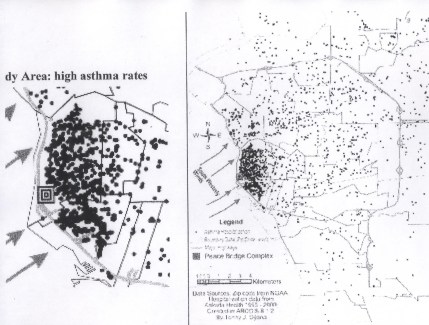
High asthma rate study area

DSCN5041

IV.  The Common Council’s violation of its own procedures and NY’s Open Meetings Law

The March 31, 2015 written decision reduces petitioners’ legal challenges to a one-sentence description:

“The essence of their complaints is that respondents have failed to comply with the letter and spirit of the New York State environmental review statutes.”

While the first three claims raised in petitioners’ court papers involve violations of SEQRA, their fourth and fifth claims have nothing to do with the environmental review process.  Overlooked or, perhaps, forgotten with the passage of nearly a half-year between the date of oral argument and the issuance of the “Memorandum,” are the petitioners’ allegations that the City of Buffalo Common Council adopted resolutions in furtherance of the DOT’s Gateway Project without first complying with procedures mandated by the City Charter, and in violation of the State’s Open Meetings Law.

By choosing to make no mention of the residents’ specific claims against their elected officials, Justice O’Donnell avoided a much-needed discussion concerning the connection between the non-transparent process utilized by the City of Buffalo and the “strategems to avoid the required environmental review” alleged by the Peace Bridge neighbors. As stated at paragraph “51” of the Verified Petition:

          51. Consistent with the words expressed by Maria Lehman at the PBA’s April 25, 2014 board meeting, procedures were followed by respondents NYSDOT and City of Buffalo that had the effect of limiting the information available to the public concerning the status of NYSDOT’s efforts to obtain ownership of Baird Drive and various easements needed to progress the Gateway Project, and of restricting the ability of any member of the City of Buffalo Common Council to oppose U.S. plaza expansion plans or demand a full environmental study.

V.  Empire State Development’s failure to timely publish its “Negative Declaration” in the State’s Environmental Notice Bulletin as required by SEQRA

Even if the court had reached a well-considered conclusion that the respondent state and city officials had complied with their substantive responsibilities under SEQRA – by identifying the relevant areas of environmental concern, taking a “hard look” at them, and making a reasoned elaboration of their determination – Justice O’Donnell was also obligated to determine whether the respondents had strictly complied with the procedural requirements of SEQRA. Our state’s highest court, the New York Court of Appeals, explains the importance of SEQRA and strict compliance with its procedural mandates in the following manner:

            More than 20 years ago the Legislature enacted SEQRA, and by so doing formally recognized that environmental concerns should take their proper place alongside economic interests in the land use decision-making processes of State and local agencies (see, ECL 8-0103[7]; 6 NYCRR 617.1[d] ). To insure that this laudable goal would be accomplished, the Legislature created an elaborate procedural framework requiring parties to consider the environmental ramifications of their actions “[a]s early as possible” (ECL 8-0109[4] ) and to “the fullest extent possible” (ECL 8-0103[6] ). The mandate that agencies implement SEQRA’s procedural mechanisms to the “fullest extent possible” reflects the Legislature’s view that the substance of SEQRA cannot be achieved without its procedure, and that departures from SEQRA’s procedural mechanisms thwart the purposes of the statute. Thus it is clear that strict, not substantial, compliance is required. 

             Nor is strict compliance with SEQRA a meaningless hurdle. Rather, the requirement of strict compliance and attendant spectre of de novo environmental review insure that agencies will err on the side of meticulous care in their environmental review. Anything less than strict compliance, moreover, offers an incentive to cut corners and then cure defects only after protracted litigation, all at the ultimate expense of the environment.

[See King v. Saratoga County Bd. of Supervisors, 89 NY2d 341 (1996).]

By issuing a “Negative Declaration” on June 30, 2014, rather than requiring preparation of an Environmental Impact Statement regarding plans to demolish the structures on the Episcopal Church Home parcel across the street from the Peace Bridge, respondent Empire State Development eliminated the public’s opportunity to participate in the environmental review process.  Then, consistent with the strategy expressed by the State’s Peace Bridge Program Manager, Maria Lehman, on April 25, 2014, the State agency successfully delayed the public’s knowledge of its decision not to prepare an Environmental Impact Statement by failing to promptly file its notice of non-significance (“Negative Declaration”) with the State’s DEC for publication in the “Environmental Notice Bulletin” (ENB).

The SEQRA regulations, found at 6 NYCRR 617.12(c)(1), required publication of Empire State Development’s notice of its Negative Declaration in the ENB.  On September 17, 2014, seventy-nine days after issuance of the Negative Declaration, Empire State Development had still not taken steps to comply with this requirement.  Given a lead agency’s obligation to strictly comply with SEQRA’s procedural mandates, this violation alone was adequate grounds for the court to nullify Empire State Development’s environmental review and approval to proceed with the Episcopal Church Home abatement and demolition project.

Justice O’Donnell’s written decision makes no mention of this issue, allowing the State respondent to flaunt its obligations to comply with the letter and spirit of SEQRA.

CONCLUSION

Buffalo’s Lower West Side has long suffered from its proximity to the Peace Bridge and the resulting air pollution that is generated by the traffic utilizing the international span.  Not surprisingly, given the percentage of this community’s residents who are members of a minority group, or who have household income below the federal poverty level, my clients’ neighborhood is designated a “Potential Environmental Justice Area” by the State of New York.  The Columbus Parkway residents I proudly represented in Mecca et al. v. Empire State Development et al. have long ago concluded that the local, state and federal officials who have the power to remedy the adverse health impacts associated with Peace Bridge traffic lack the will, courage, and/or compassion to objectively and effectively address the issues. They turned to the State court system in search of justice. They did not find it.

With All Due Respect,

Art Giacalone
Buffalo’s HarborCenter Did Not Need or Deserve Brownfield Tax Credits

Posted by Arthur J. Giacalone on April 2, 2015
Posted in: Buffalo News, Byron Brown, City of Buffalo, Corporate Welfare, Development, Terry Pegula. 1 Comment

* WNY Developers can be as Opportunistic & Undeserving as their NYC Counterparts *

Buffalonians deserve objectivity and accurate facts from the media, especially from their primary daily newspaper. The editorial board of the Buffalo News failed to meet this standard with its March 30, 2015 opinion on the state’s Brownfield Cleanup Program (BCP). [Also see the article in the April 2, 2015 edition of the Buffalo News under the headline, “Region dodges brownfield bullet – Restrictions apply only to New York City…”]

As lawyers for developers well know, a “brownfield” is a parcel of land that may be difficult to reuse or redevelop because of the presence or potential presence of contamination. As described by the State, the brownfields program provides tax credits to developers to encourage the voluntary cleanup of contaminated properties so that they can be reused and redeveloped, and to reduce development pressure on “greenfields”.

According to the recent Buffalo News editorial, “undeserving” and “opportunistic” downstate developers are scamming the program “to help fund projects in high-value areas … that would have been built without the tax credits.”  In contrast – when viewed through the BN’s conveniently rose-colored glasses – “this region has used the program responsibly, helping pay for … SolarCity at RiverBend and downtown’s HarborCenter, and other worthy projects.”

 Note: Despite prior remediation measures at the RiverBend site along the Buffalo River and Outer Harbor, an April 2, 2015 article in the Buffalo News, under the headline, “Radioactive material found at RiverBend, but work continues,” reports that the discovery of an iron ore kettle that set off radiation detection equipment when shipped to a landfill in Lewiston “has prompted a new wave of environmental testing at RiverBend.”

I am in no way excusing the manner in which brownfield-related tax credits have been used to subsidize New York City area projects.  But, when evaluated by the criteria utilized by the Buffalo News when criticizing “opportunistic downstate developers,” HarborCenter, the development being built by Terry and Kim Pegula on the Inner Harbor’s “Webster Block,” certainly appears undeserving of special tax relief.

First and foremost, as heralded in Mayor Byron W. Brown’s April 2012 press release soliciting proposals for the “Webster Block,” the former parking lot located directly across from the First Niagara Center was “the most sought after parcel of land in the Buffalo-Niagara Region … considered a prized downtown parcel due to its location in Downtown Buffalo, its proximity to Buffalo’s waterfront, two major sports venues, and the Peace Bridge.” [Also see Mayor Brown’s 08/29/12 announcement selecting the HarborCenter proposal for the Webster Block site.]  To suggest that the Pegulas needed the extra incentive of brownfield tax credits to proceed with their hockey-focused project – adjacent to the home of their Buffalo Sabres – is naïve, at best. Terry Pegula’s intention was to create a magnet for hockey lovers that would include the National Hockey League’s only three-rink complex by connecting the new facility with First Niagara Center. No other location would accomplish his goal, and existing green space in the Buffalo area was not threatened by the HarborCenter proposal..

Second, there is scarcely anything in the official records to suggest that protection of the public health and the environment mandated special treatment and cleanup of the “Webster Block” site, given the proposed plans to construct a 19-story mixed-use facility with a hotel, two NHL-sized hockey rinks, and other commercial uses. Although the former parking lot had been used for warehousing and manufacturing prior to 1980, it was not a “Superfund” site or widely known or thought to be highly contaminated.  Contrary to the Buffalo News portrayal of a typical brownfield site, the HarborCenter parcel could not fairly be characterized as a heavily contaminated property where substantial cleanup and construction costs outweighed the future value of the project

As described in a February 2013 Buffalo News article, the Pegulas planned to spend $8.7 million to clean up the HarborCenter site, and anticipated receiving $20 million in state brownfield tax credits.  That tidy profit is on top of the nearly $37 million incentive package the billionaire couple received from the Erie County Industrial Development Agency (ECIDA) in real property and sales tax relief.

One could easily conclude that WNY developers can be as opportunistic and undeserving as their downstate counterparts.

With All Due Respect,

Art Giacalone

[A version of this post appears as a letter-to-the-editor in the April 2, 2015 weekly edition of ArtVoice under the title “WNY Developers as Opportunistic & Undeserving as NYC Counterparts” at http://artvoice.com/issues/v14n13/letters_to_artvoice/developers.] 

NY’s Top Court Rules in Favor of Landowners with Expired Fracking Leases

Posted by Arthur J. Giacalone on April 1, 2015
Posted in: Fracking. Leave a comment

* Rejects Energy Companies’ argument that the State’s 2008 Moratorium extended termination date *

An effort by oil and gas companies to keep gas leases with various New York landowners from expiring was rejected by New York State’s highest court, the New York Court of Appeals.

In a March 31, 2015 decision in Beardsley v. Inflection Energy, LLC, written by Associate Judge Eugene F. Pigott, Jr., New York’s top court concludes that the expiration date expressed in the contracts was not extended by the moratorium set in place in July 2008 by then-Governor Paterson when he requested additional study of the adverse impacts of the combined use of high-volume hydraulic fracturing and horizontal drilling [“fracking”].

An uncorrected copy of the Court of Appeals’ opinion is available here.

With All Due Respect,

Art Giacalone

Dear “Park District” Voters, Please Don’t Re-elect Carl Paladino in 2016.

Posted by Arthur J. Giacalone on March 25, 2015
Posted in: Buffalo's Schools, Carl Paladino, City of Buffalo. Leave a comment

* Paladino’s Bullying & Vitriol Poison the Public Arena and Make Progress Impossible * 

Just in case Carl Paladino is deluding himself and thinks that it’s only African American clergypersons who wish that he would resign from Buffalo’s board of education, I have news for him. THIS ITALIAN-AMERICAN LAWYER FEELS THE SAME WAY.

The good people of the “Park District” gave the erratic developer nearly 80% of the vote in March 2013 and elected him to the City of Buffalo’s School Board. What were they thinking? The responsibilities of a board of education member is serious business, not “reality TV.”

Mr. Paladino’s antics three years earlier – during his unsuccessful bid for New York State governor – were embarrassing and disheartening to anyone who values civil discourse and rational behavior from its public servants. The last thing that Buffalo’s public school students needed was the hostility and dictatorial personality that Carl would bring to the already-charged board of education table.

Carl’s latest demand – that interim Superintendent Donald A. Ogilvie be fired immediately – is merely the latest example in an endless stream of ill-conceived and unnecessary confrontations by the board of education’s Park District representative. Whether he is threatening a civil rights expert to “get out of the way,” or berating school board members or employees who disagree with his proposals, Mr. Paladino appears to lack an internal thermostat to regulate his words and actions. While he might “thrive on confrontation,” a board of education does not.

Of course, no one should be surprised by Carl Paladino’s ill-tempered, immature, and inappropriate behavior. Who can forget Paladino’s scuffle with a New York Post reporter, Fredric U. Dicker, during his 2010 gubernatorial campaign, and the accompanying threat, “I’ll take you out”? Or the fact that “impulsive” Carl gave the same columnist “the finger” while passing him in the State Capitol building a couple years later? And, of course, there’s Mr. Paladino’s admission back in 2010 that he had forwarded to a group of friends emails described as “pornographic and racially degrading.”

This is not the type of behavior that elected school board members owe to their constituents, especially the school district’s children.

The Gates - Central Park 02-2005 072

Unless the inconceivable happens and Carl Paladino resigns his seat, we can only hope that Buffalo’s school board will overcome Mr. Paladino’s presence the next 15 months [his current term ends on June 30, 2016], and that the voters in the “Park District” will recognize that the City of Buffalo’s children will be best served if Carl Paladino were not a member of the Buffalo board of education.

With All Due Respect,

Art Giacalone

Posts navigation

← Older Entries
Newer Entries →
  • CATEGORIES

  • March 2026
    M T W T F S S
     1
    2345678
    9101112131415
    16171819202122
    23242526272829
    3031  
    « Nov    
  • DISCLAIMER

    This blog is provided for general informational purposes only. It should not be construed as legal advice and is not intended to be a substitute for legal counsel. Persons requiring legal advice should retain a properly licensed lawyer. No attorney-client relationship will be formed based on use of this site and any comments or posts to this blog will not be privileged or confidential. *************** This blog's author, Arthur J. Giacalone, does not intend or consider the communications at this blog to be ATTORNEY ADVERTISING. The primary purpose of the communication is not for the retention of Mr. Giacalone's legal services. [See definition of "Advertisement" at Part 1200, Rules of Professional Conduct, Rule 1.0(a).] Nonetheless, in case the proper authorities choose to treat this web site as ATTORNEY ADVERTISING, the street address, phone number and email address of the law office of Arthur J. Giacalone are: 17 Oschawa Avenue, Buffalo, New York 14210; (716) 436-2646; AJGiacalone@twc.com.
Blog at WordPress.com.
With All Due Respect
Blog at WordPress.com.
  • Subscribe Subscribed
    • With All Due Respect
    • Join 62 other subscribers
    • Already have a WordPress.com account? Log in now.
    • With All Due Respect
    • Subscribe Subscribed
    • Sign up
    • Log in
    • Report this content
    • View site in Reader
    • Manage subscriptions
    • Collapse this bar
 

Loading Comments...