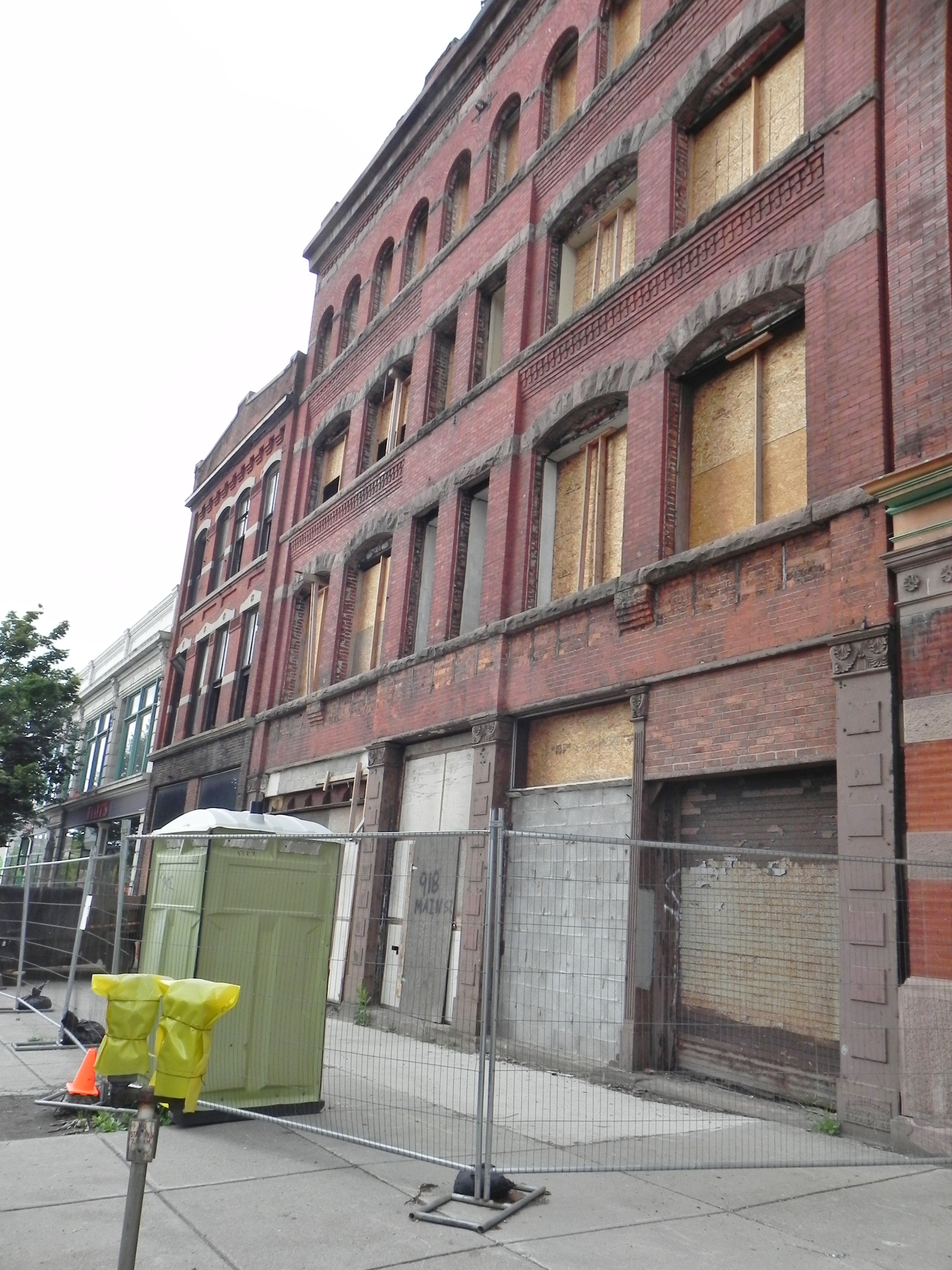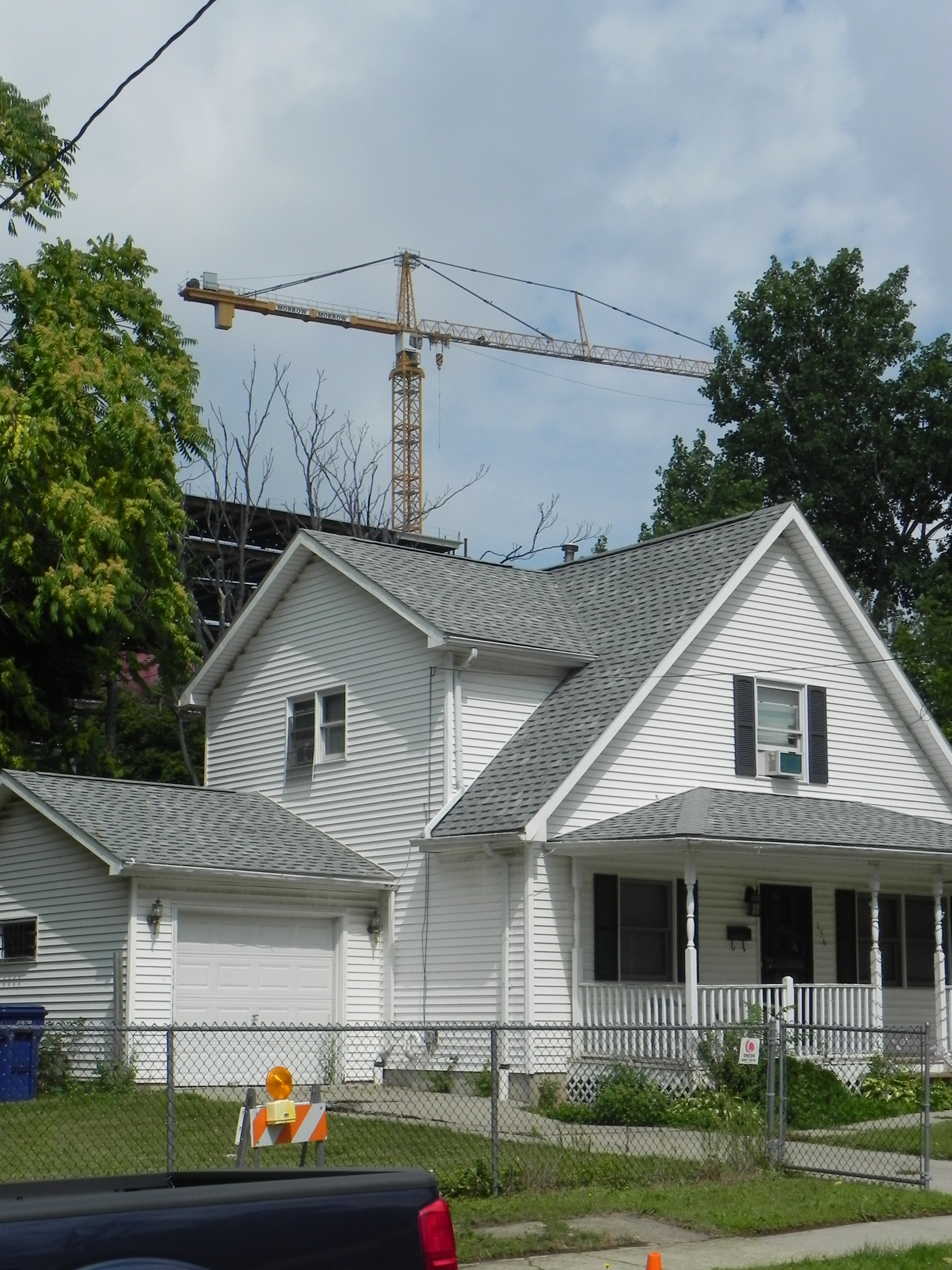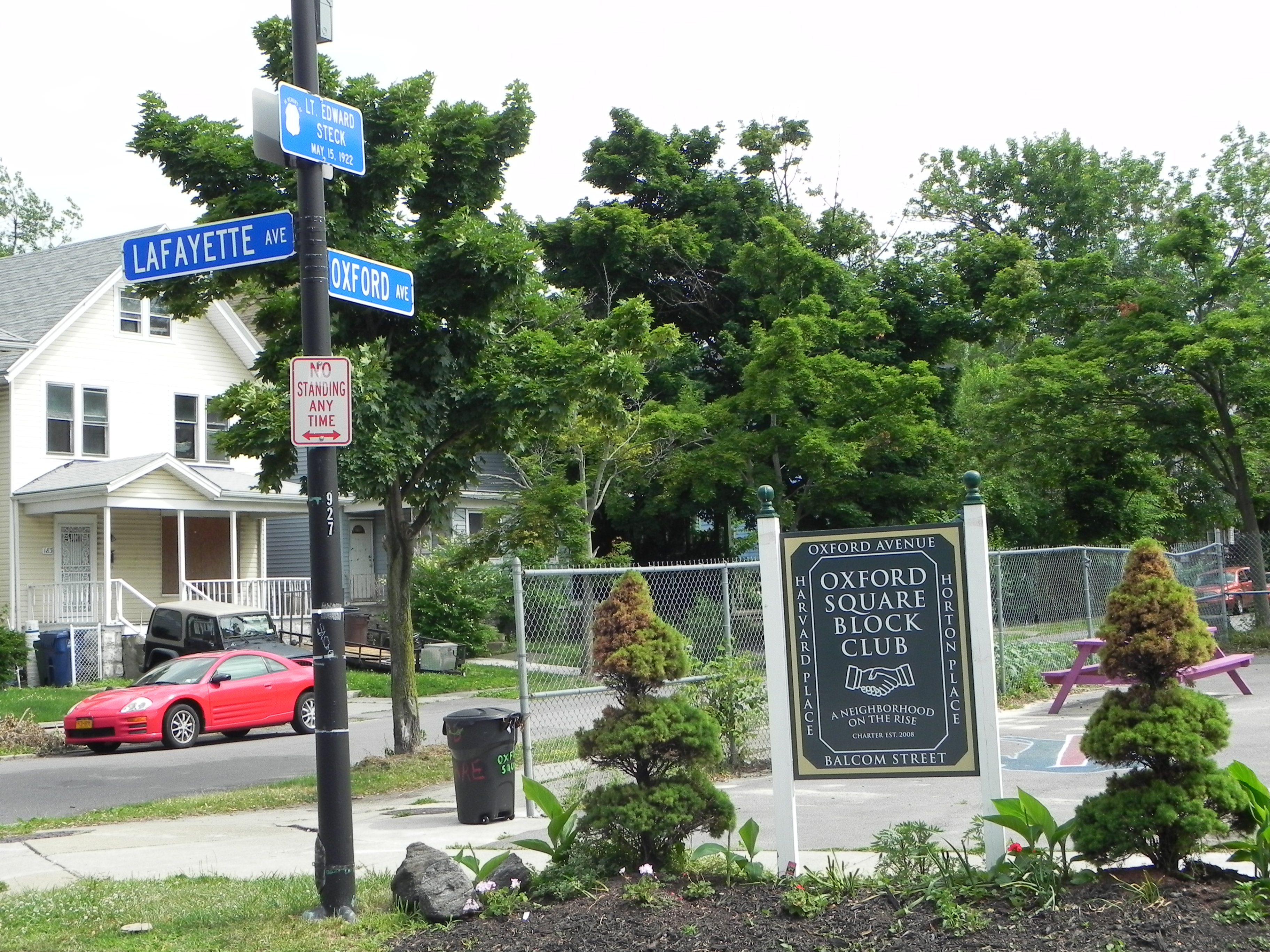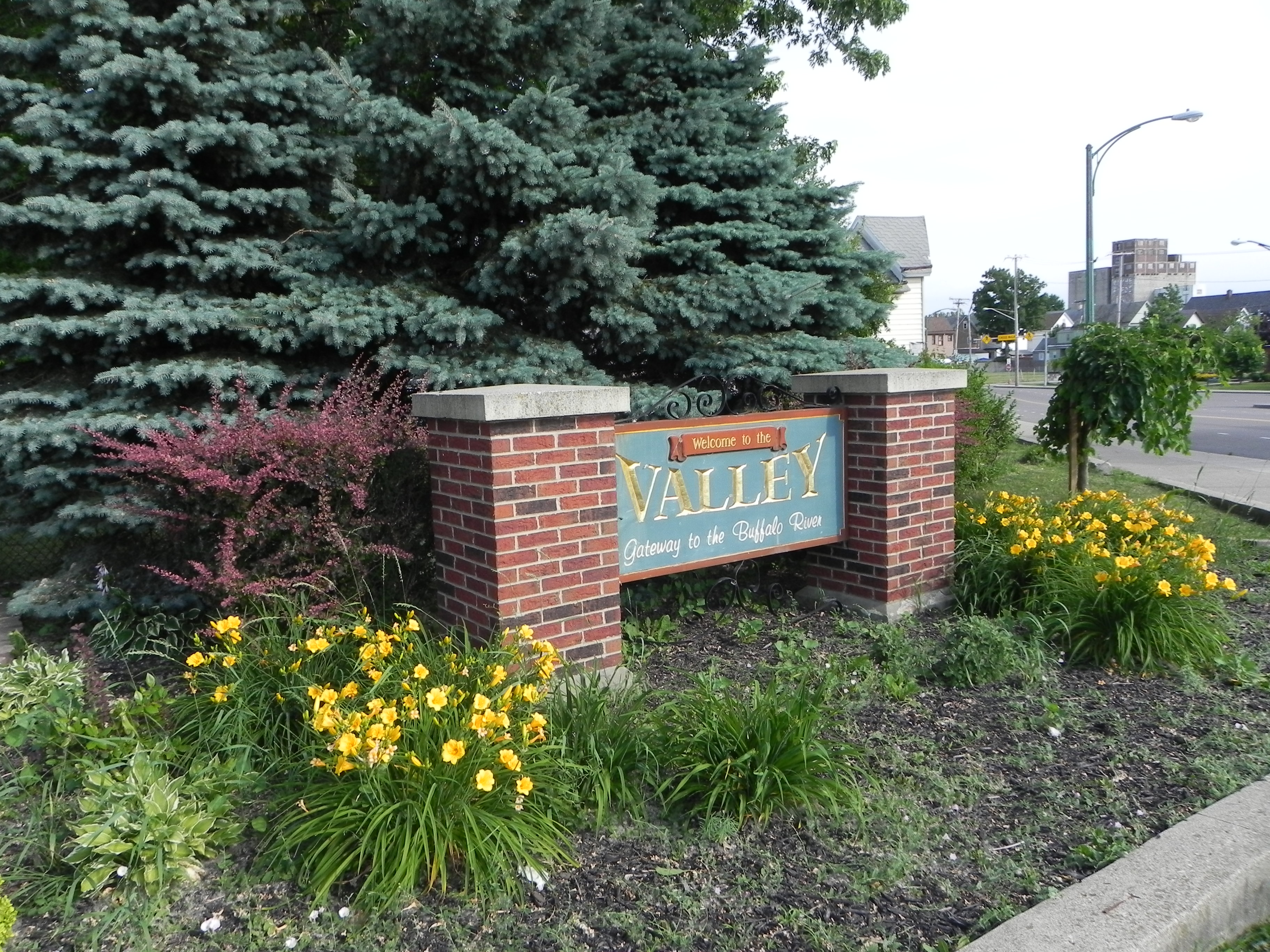
With All Due Respect

Photos and musings by Arthur J. Giacalone

  • About The Author
  • About This Blog
  • Pre-WADR Archives

What Mayor Brown’s “Green Code Team” Doesn’t Want the Common Council (or, the Public) to Know

Posted by Arthur J. Giacalone on October 15, 2014
Posted in: B-N Medical Campus, Byron Brown, City of Buffalo, Development, Fruit Belt, Green Code. 1 Comment

   – When you look beyond the bells-and-whistles, you have a proposed zoning and land use law that empowers developers at the expense of the City’s residents –

Mayor Byron W. Brown’s Office of Strategic Planning [OSP] is now putting the finishing touches on an updated version of the “Buffalo Green Code” – a document the Mayor has humbly described as “a historic revision” of Buffalo’s land use and zoning policies. It is the intention of Mr. Brown’s “Green Code Team” to present the finished product to the nine-member Common Council – the body empowered by the State of New York to approve, modify or deny the proposed zoning and land use law – in the very near future.

I would like to share with the Common Council and the public ten observations about the May 2014 draft of the Green Code, a perspective that Buffalo’s legislative body and citizenry will almost certainly not be hearing from the Green Code Team or Western New York media. My comments are informed by a quarter century of representing City of Buffalo homeowners and tenants at administrative hearings and in court proceedings concerning zoning, land use, and environmental matters, and the two decades of living in Buffalo:

  1. Despite the many information meetings and workshops held by the Green Code Team, the typical Buffalonian – and, perhaps, Common Council member – is still not in a position to readily determine how the proposed zoning code would impact their homes and neighborhoods.

The Green Code Team has participated in many “outreach” activities since the May 2014 draft of the Green Code was made public. Despite that fact, the general public has found it extremely difficult to accurately assess how the Green Code will affect what is most valuable to them – their homes and neighborhoods.

No matter how well-intentioned the Green Code Team is, their presentations have always been influenced by the desire “to sell” the proposed code. On the one hand, the attendees – including Common Council members – have been given large quantities of information, too large to digest at one time. On the other hand, the public has repeatedly been told in a multitude of ways: “Old zoning law bad. Green Code good!”

Participants at the outreach events have been shown lengthy PowerPoint presentations, but they have not been provided easy access to what the vast majority of residents are most interested in and can best assess: a proposed land use map clearly showing what zoning district their block and neighborhood is in, and a table of uses to allow them to easily see what activities would be permitted near their homes. Without this basic information, residents of the City of Buffalo have been deprived of a meaningful picture of the proposed Green Code.

         2.  The draft Green Code would bring more uncertainty – not less – to Buffalo’s residential neighborhoods.

The Mayor’s propaganda machine promised a new land use code that would bring “clarity and predictability” to the zoning process, allowing neighbors to have “certainty about what can and cannot be built next door.” Unfortunately, the proposed Green Code does just the opposite. By creating the potential for a wide variety of non-residential uses in residential neighborhoods through overuse of the “special use permit” process, residents on the vast majority of Buffalo’s residential streets – whether homeowners or renters – will be burdened with the possibility of living next door or down the block from unwanted commercial activities.

  1. The draft Green Code would allow commercial and non-traditional residential activities on virtually every residential street.

The Green Code Team is enamored with the concept of “mixed use” neighborhoods where everything residents need is theoretically within easy walking distance of their homes. But the Mayor’s OSP staff has gotten carried away with that concept by writing a land use code that would make every block a potential “mixed use block.”

As currently proposed, whether your home is in the University District, Parkside neighborhood, the West Side, the East Side, South Buffalo, the Fruit Belt or the Elmwood Village – unless you are one of the privileged few living on one of Buffalo’s exclusive streets – the following activities could end up on the corner of your street if a special use permit is granted:

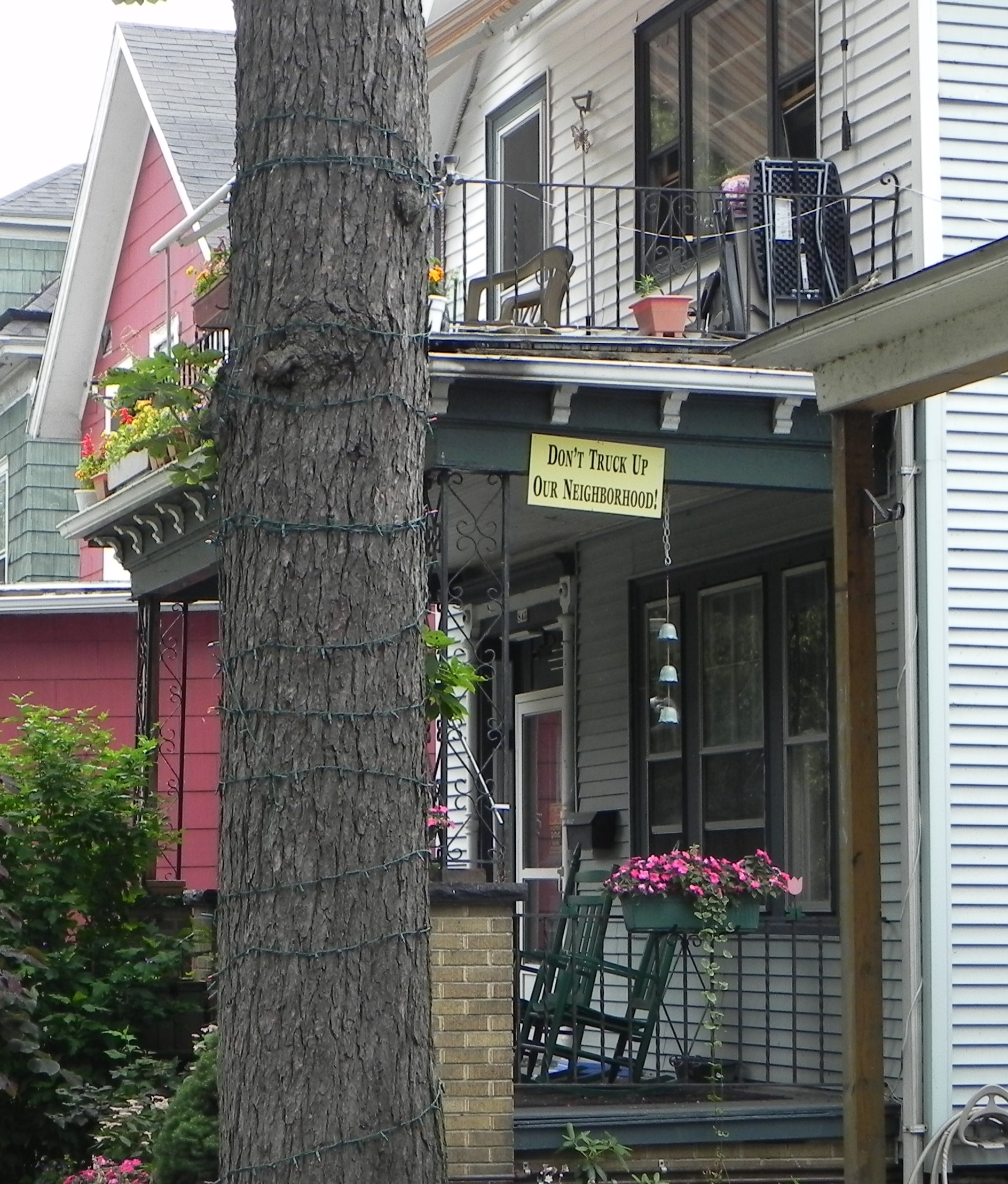
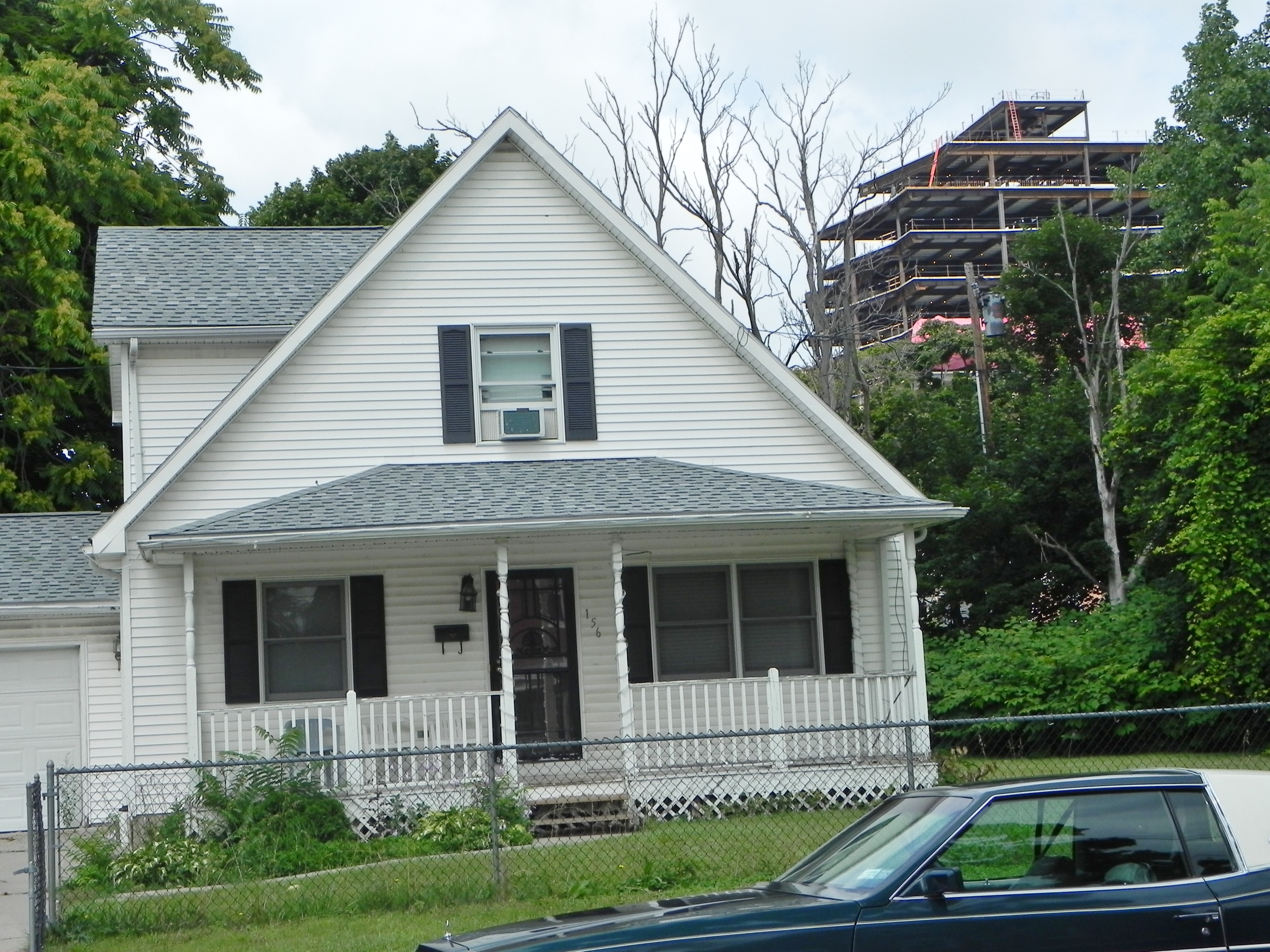
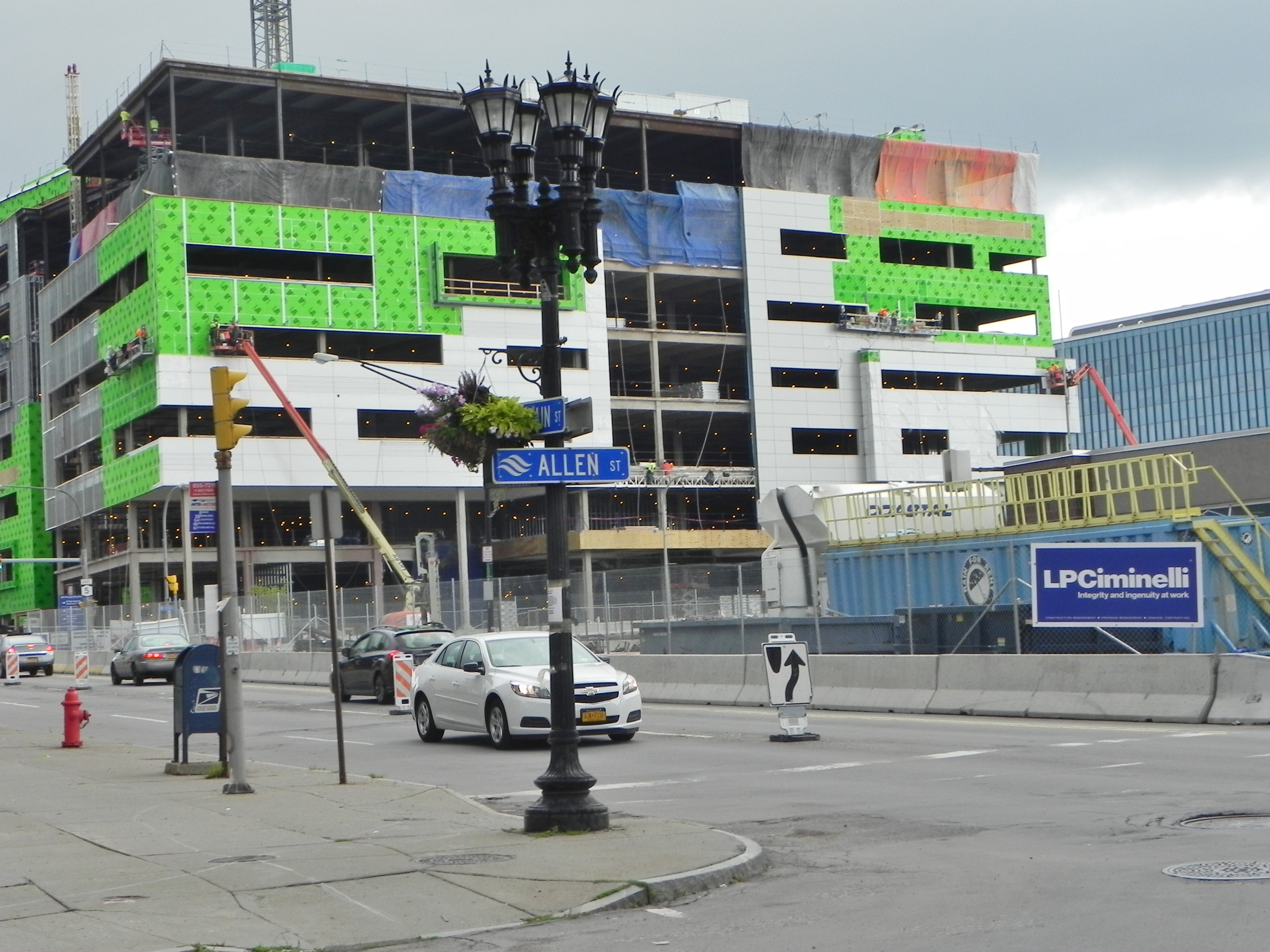
* restaurants and taverns, including outdoor dining; live entertainment; retail stores and service establishments; lodges and private clubs; government offices; professional offices; healthcare clinics; funeral services, including a crematory; day care centers; nursing homes; a “neighborhood” parking lot *

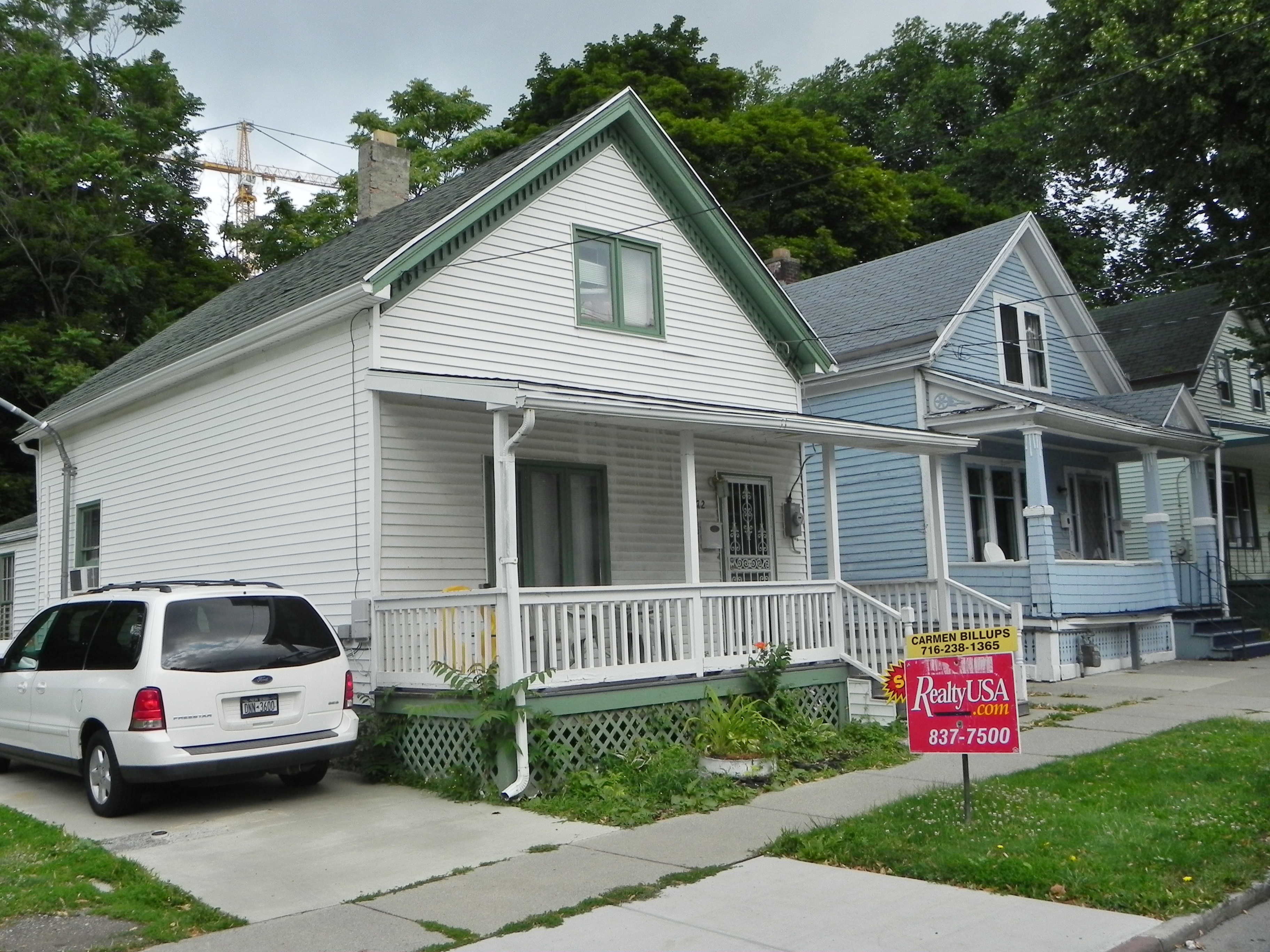
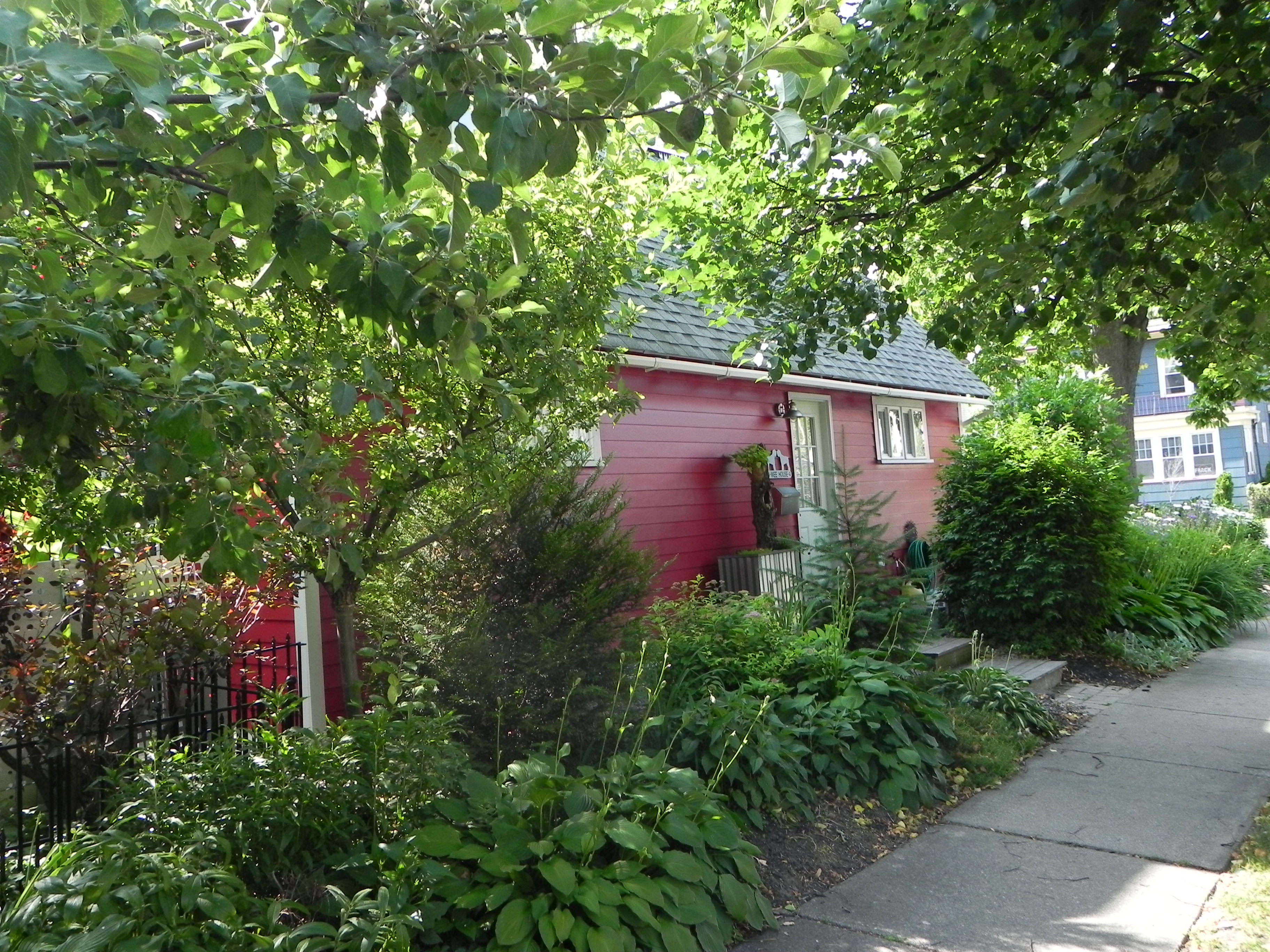
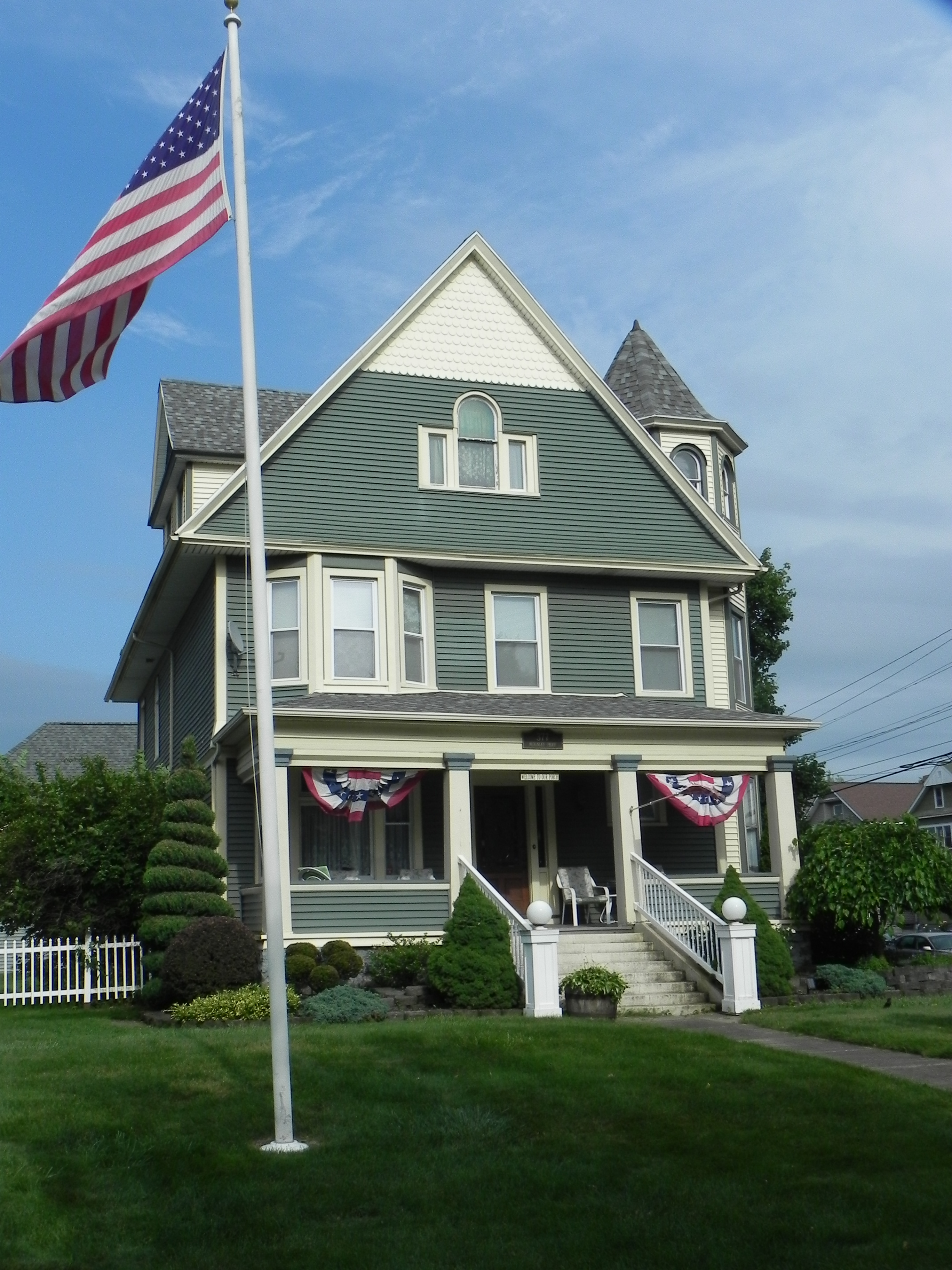
DSCN4336   DSCN4318  DSCN4339

And the following uses would be allowed “by right” (that is, with no approval needed) on any lot: a group home for unrelated persons with disabilities (including those who have undergone treatment for alcohol or drug addiction); a bed-and-breakfast, with up to 10 guests; a “day care home” servicing up to six children or six elderly; “public safety facilities”; and, a “market garden” open to the general public. Additionally, fraternity and sorority houses, including recreational facilities for college students, would be allowed on any lot with a special use permit.

  1. Under the proposed Green Code, even Buffalo’s most exclusive streets and neighborhoods would experience encroachment by non-residential uses and non-traditional residential activities.

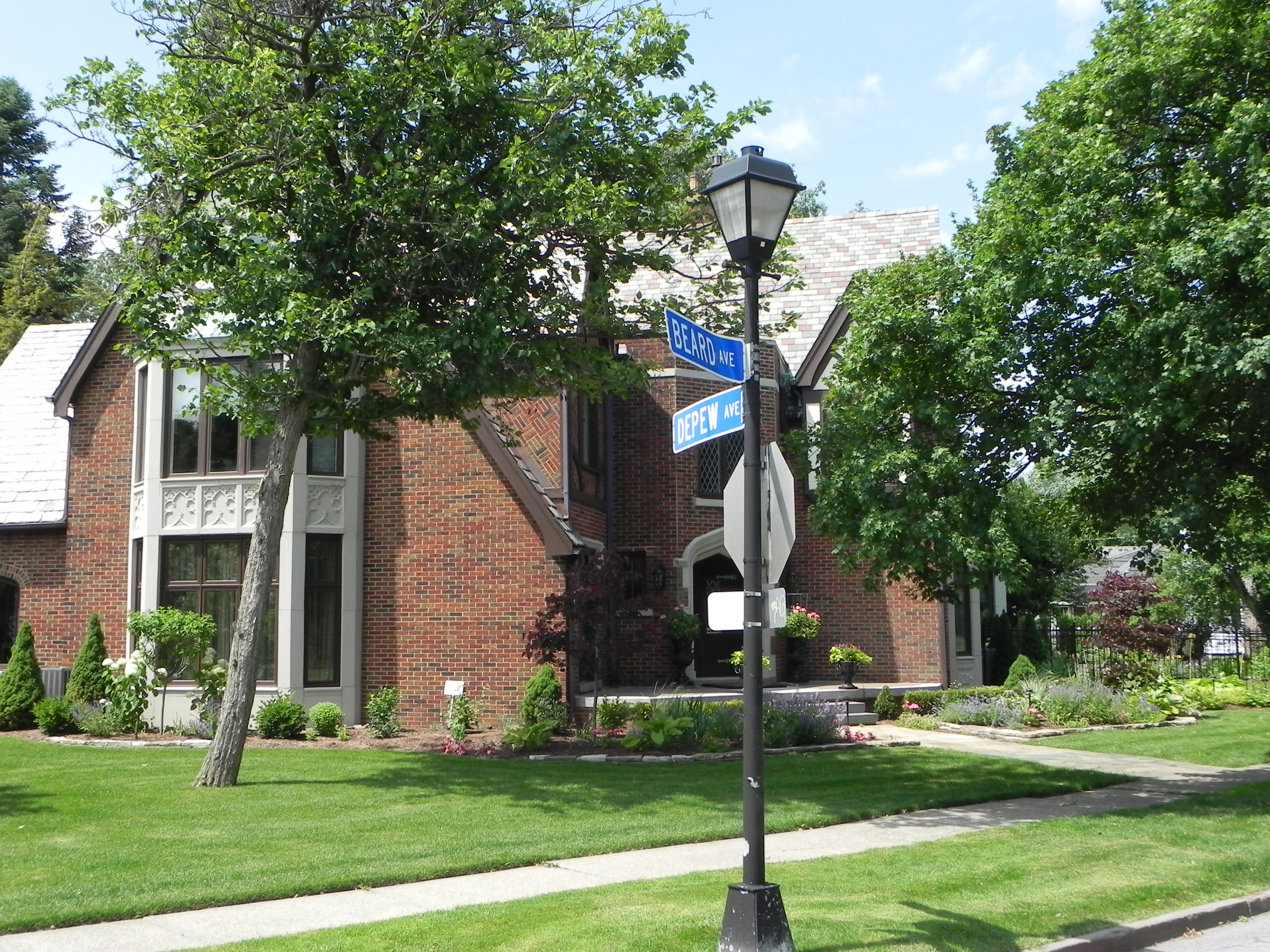
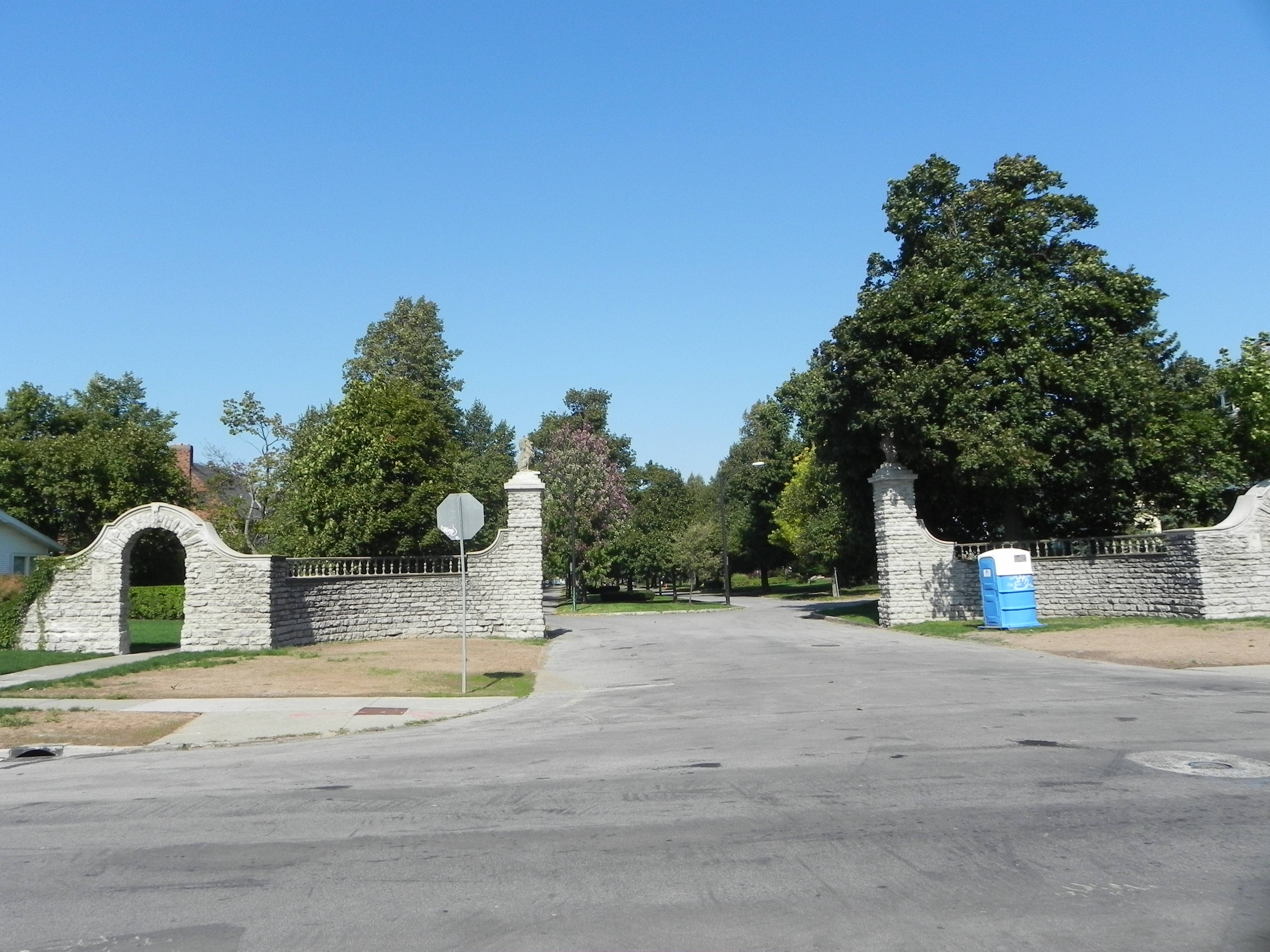
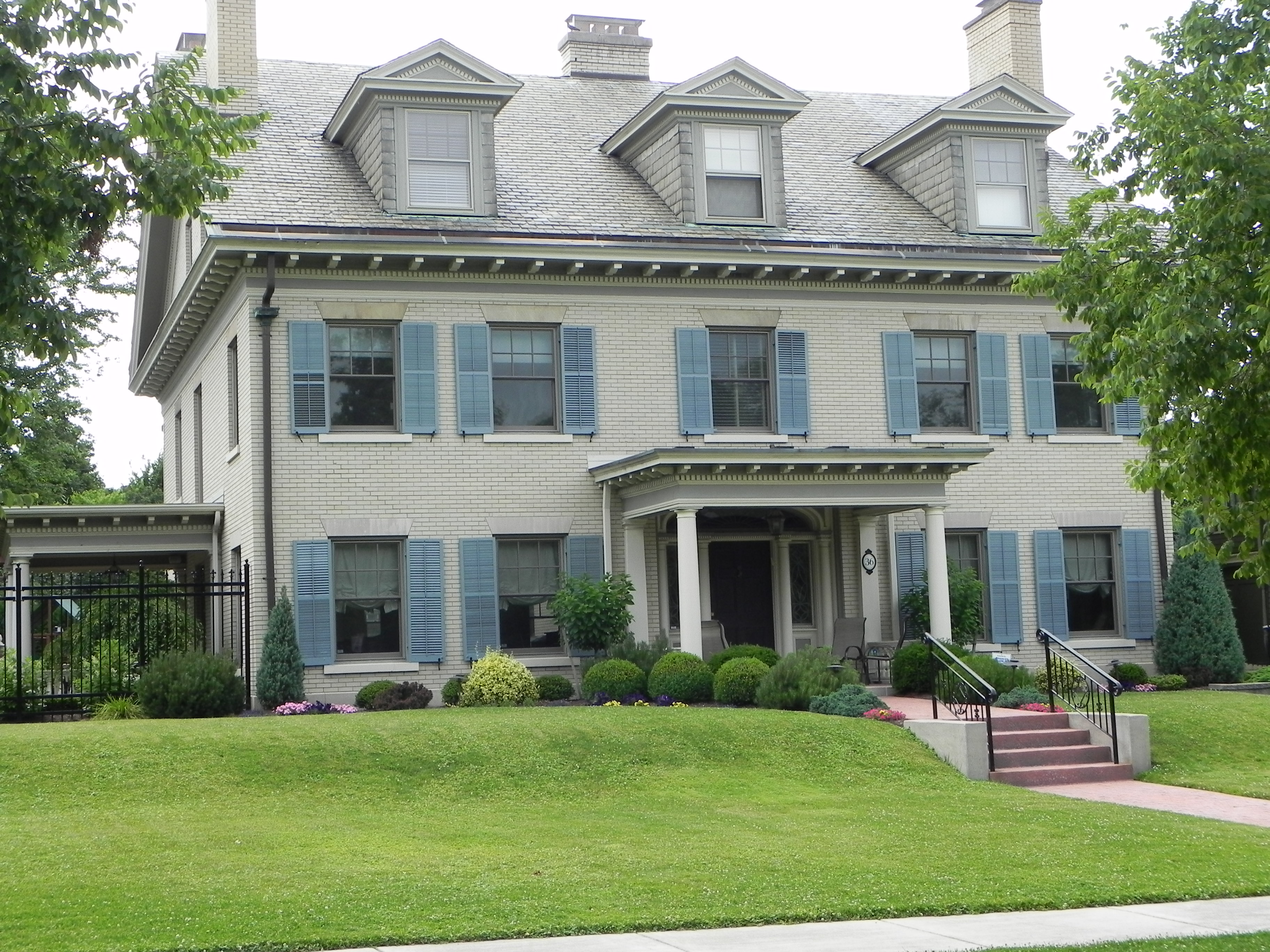
When compared to the vast majority of Buffalonians, the fortunate few who reside in the mansions on Lincoln Parkway, Rumsey Road, or Chapin Parkway, the gracious homes on McKinley Parkway, Coolidge Road, Depew, Morris or Cleveland avenues, or on a few dozen other popular streets (such as Argyle Park, Tillinghast Place or Admiral Road), would come away relatively unscathed if the draft Green Code were adopted by the Common Council. But even the residents of Buffalo’s most prized streets have reasons to be concerned.
DSCN4351

DSCN4348

DSCN4390

The May 2014 draft Green Code allows, “by right”, the following activities in the “N-4” zones encompassing Buffalo’s most exclusive streets: group homes, day care homes, community gardens and market gardens, and public safety facilities (including emergency medical services substations, border control and military facilities, and interim incarceration facilities). Additionally, the “N-4” zones include bed & breakfast establishments, community centers, and wireless communications towers and facilities as special use permit activities.

  1. The “Special Use Permit” provides much less protection to nearby residents and property owners than zoning amendments and variances.

As currently proposed, the “Principal Uses” table in the draft Green Code depicts the “Special Use” symbol more than two hundred forty (240) times. It also includes the “Special Use, Corner Only” symbol thirty-two (32) times. Not only would this widespread use of the special use permit create uncertainties for nearby property owners and residents, it provides little protection and a false sense of security.

The current draft of the Green Code envisions a process where a property owner or someone authorized by a property owner (for example, a prospective business owner) applies for a special use permit, the City Planning Board reviews the application and recommends to the Common Council whether the request should be approved or disapproved, and then the Common Council, following a public hearing, approves, approves with modifications, or disapproves the special use permit.

Correspondence sent by the Green Code Team to the Common Council in July, outlining the comments City Hall has received about the draft Green Code, mentions that questions have been raised on whether the Common Council, the Planning Board, or the Zoning Board of Appeals [ZBA] should have the authority to approve or deny special use permits. Various commentators trust one body more than another (or, to be frank, distrust one body less than another).

But the issue the Common Council – and the public – needs to consider is more basic: Should the City of Buffalo be making such extensive use of the Special Use Permit process when it provides so little actual protection for nearby property owners and residents?

New York’s courts have long held that when a legislative body – such as the Common Council – includes a use in a zoning law as an allowed activity if a special use permit is granted, it is making a finding that the use is in harmony with a community’s general zoning plan and will not adversely affect the neighborhood. This explains why developers and the business community generally support the widespread utilization of the special use permit process. An applicant possesses a much greater chance of obtaining a special use permit than it does a zoning amendment from the Common Council, or a variance from the ZBA. Special use permits are the easiest type of zoning approvals to obtain, and the hardest approval for an aggrieved neighbor to overturn in court.

  1. The Green Code Team fails to adequately explain why the proposed new law emphasizes “Form” – the types of buildings – over “Function” – how the buildings will be used.

           The authors of the draft Buffalo Green Code have chosen to push aside the traditional approach to zoning and land use regulations – which emphasizes how land and buildings are used – and, without adequate justification, have proposed a “form-based code” where emphasis is on the type of buildings that are allowed, rather than the activities that are taking place in the building.

Hand-in-hand with the “form-based” approach taken by the Mayor’s Office of Strategic Planning is an effort to equate the physical look of a neighborhood or street with its “character.” While the “form” of buildings – especially their size and proximity to neighboring parcels – affects the character of a neighborhood or community, it is the type of activities which occur within and around that structure that has the greatest impact on nearby properties and uses – especially nearby residences.

  1. The draft Green Code allows large commercial buildings with little or no setbacks on residential street without providing any meaningful protection for nearby residents.

Substantial portions of Buffalo’s residential neighborhoods would be designated either “N-2R (Residential)” or “N-3R (Residential)” under the draft Green Code. Despite the inclusion of the term “Residential” in the names of these zoning districts, two decidedly non-residential “forms” would be allowed on the residential streets that are home to the vast majority of Buffalonians:

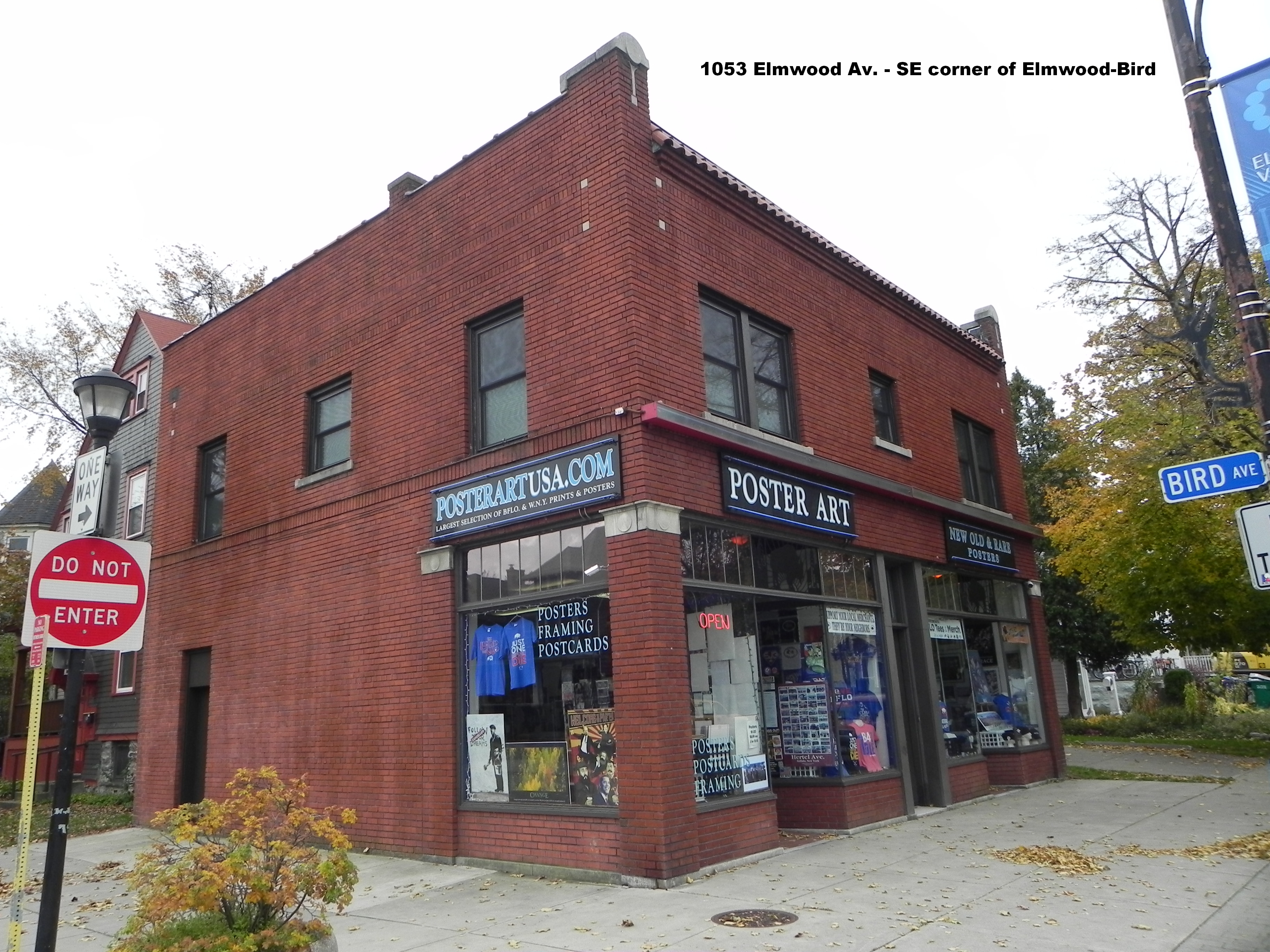
          A Commercial Block building – a structure of two or more stories designed to facilitate pedestrian-oriented retail or office uses on the ground floor, with upper floors typically designed for residential, hospitality, or employment uses.

BGC- Commercial Block formBGC Stacked Units dark0001

          A Stacked Units building – a structure of two or more stories that facilitate multiple units connected with one or more shared entries, and are typically designed for residential, hospitality or office uses.

           The May 2014 version of the Green Code would allow a 4-story “Commercial Block” structure on corner lots in “N-2R” districts (which include much of the West Side and also the Fruit Belt neighborhood), and 3-story “Commercial Block” buildings on corner lots in “N-3R” districts (which include much of the East Side, South Buffalo, and significant portions of North Buffalo and the University district). In either N-2R or N-3R zones, a Commercial Block” building would be allowed to cover 100% of the lot, that is, there would be no yards and no setbacks from neighboring homes.

The latest draft of the Green Code would allow a 4-story “Stacked Units” building on any lot in “N-2R” districts, and 3-story ”Stacked Units” structure on any lot in “N-3R” districts. A “Stacked Units” building would be allowed to cover up to 90% of the lot, and can be as close as three feet from the principal building (including a residence) on an abutting lot.

Given the potential scale and extensive lot coverage of Commercial Block and Stacked Units buildings, the proposed Green Code provides woefully inadequate safeguards to protect the privacy and quality of life of nearby residents.

  1. The Mayor’s Green Code Team has broken its promise to the residents of the Elmwood Village to preserve the character of neighborhoods and encourage development consistent with prevailing patterns.

            The Mayor’s Green Code Team is determined to “fix what’s not broken” – the special zoning district provisions enacted by the Common Council in 1977 for the “Elmwood Avenue Business District” [“EB”].  After all, there are good reasons why as attractive and livable a community as the Elmwood Village was recognized in 2007 by the American Planning Association as one of the ten “Great Neighborhoods in America.”

            The proposed new zoning code would eliminate the very features of the current zoning ordinance that have reinforced and preserved the historic fabric of the Elmwood Village and nurtured the balance between residential and non-residential uses – the EB District’s limits on the intensity and scale of commercial uses on Elmwood Avenue. By allowing “Commercial Block” buildings up to 5-stories in height, on lots as wide as 225 feet, the draft Green Code would encourage speculators to purchase rows of century-old residential structures – the essence of the Elmwood Village’s character – demolish them, and replace them with out-of-scale commercial buildings that could exceed 150,000 square feet in total area, generating more traffic and overwhelming the adjacent residential neighborhood.
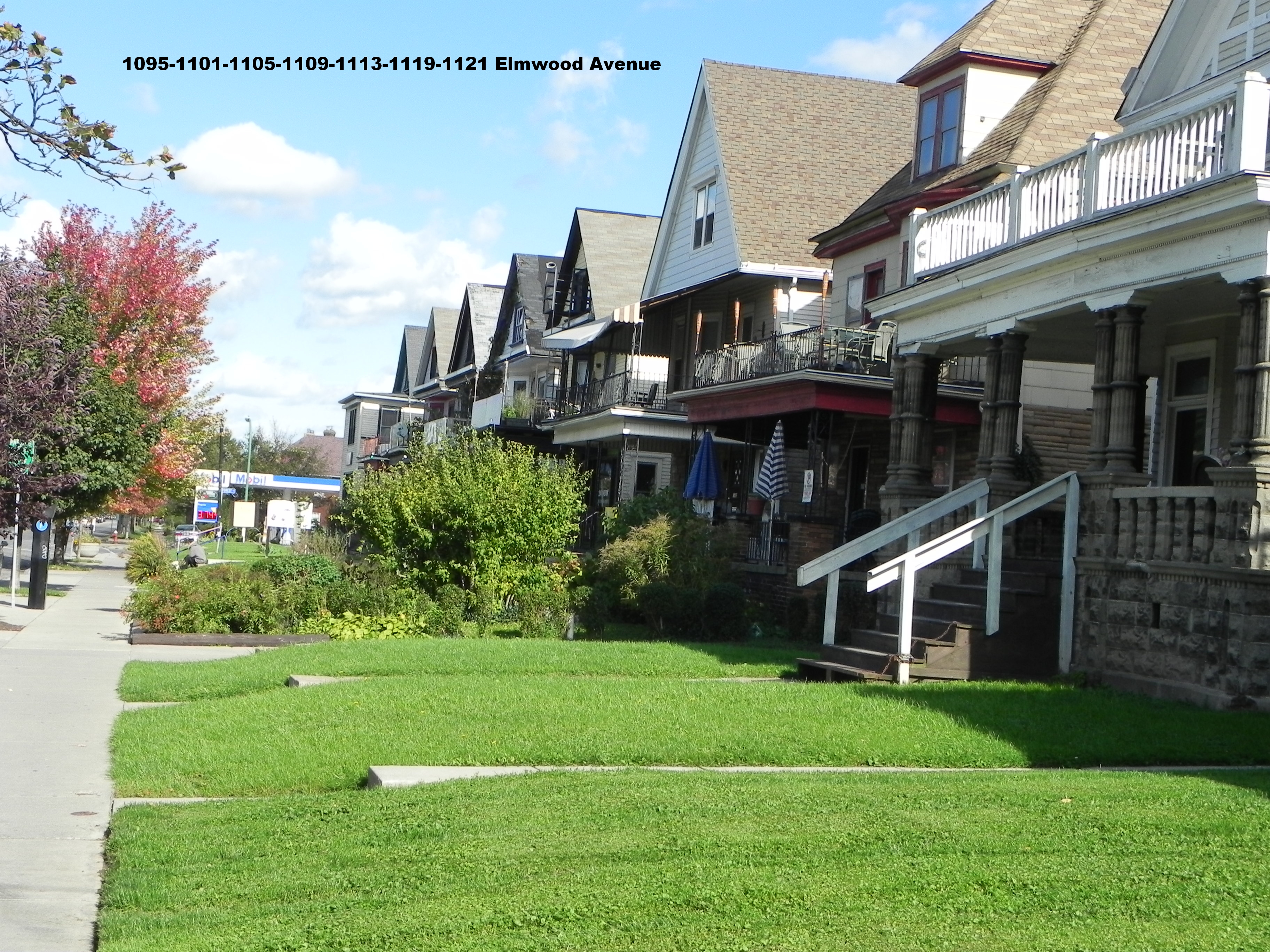
Exh 76 - Front yards 1095-1121 Elmwood

            Note: To place a 5-story, 150,000-square-foot building into context, Casa-Di-Pizza occupies a two-story building on a 64-foot wide lot, and has a total gross floor area of under 11,500 square feet. The two-story iconic building that Café Aroma shares with Talking Leaves book store at the southeast corner of Elmwood and Bidwell Parkway has 7,500 sq. ft. of floor area. And, Mr. Goodbar’s night spot occupies a 2-story building with a total of 6,930 sq. ft.
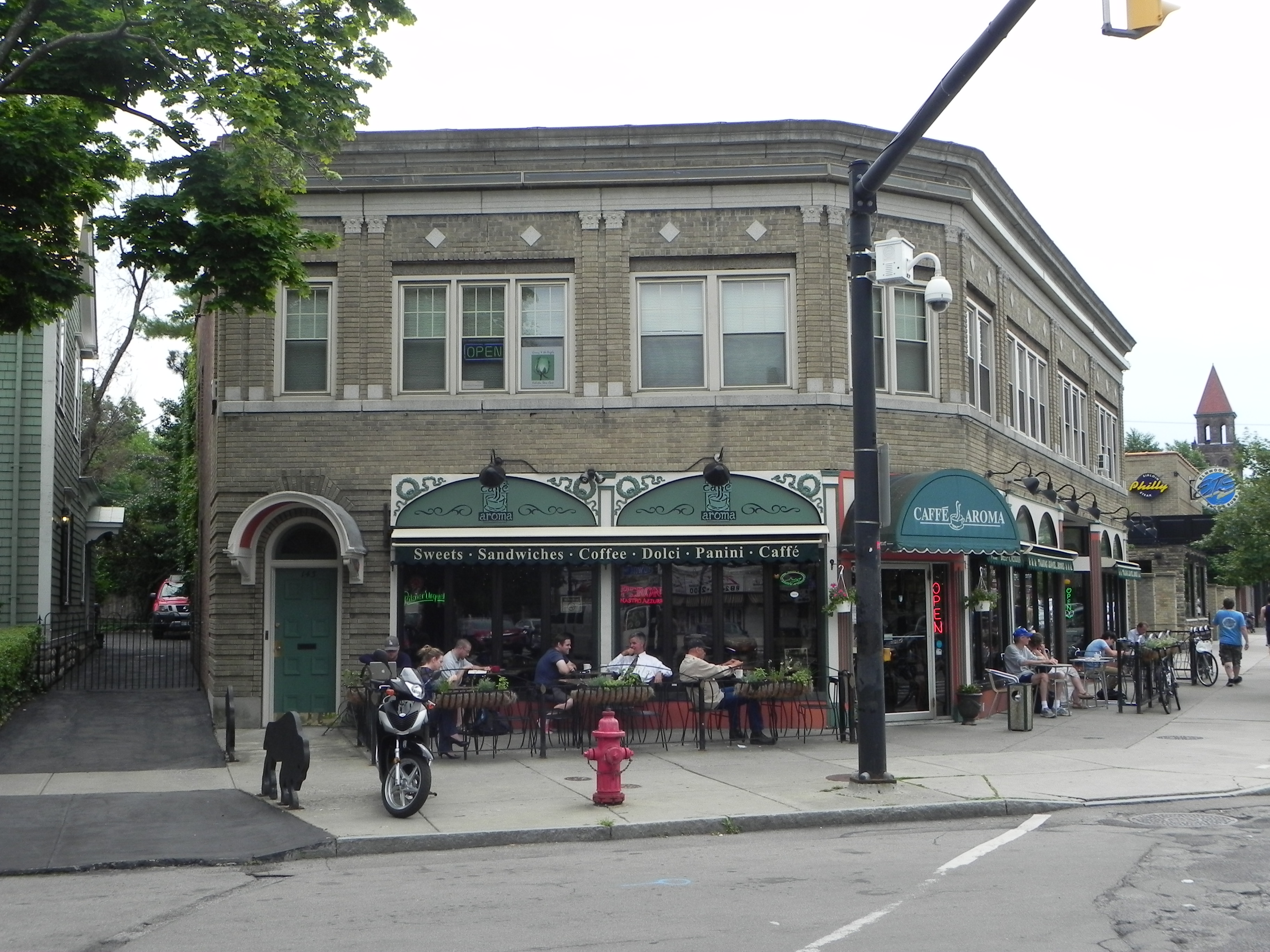
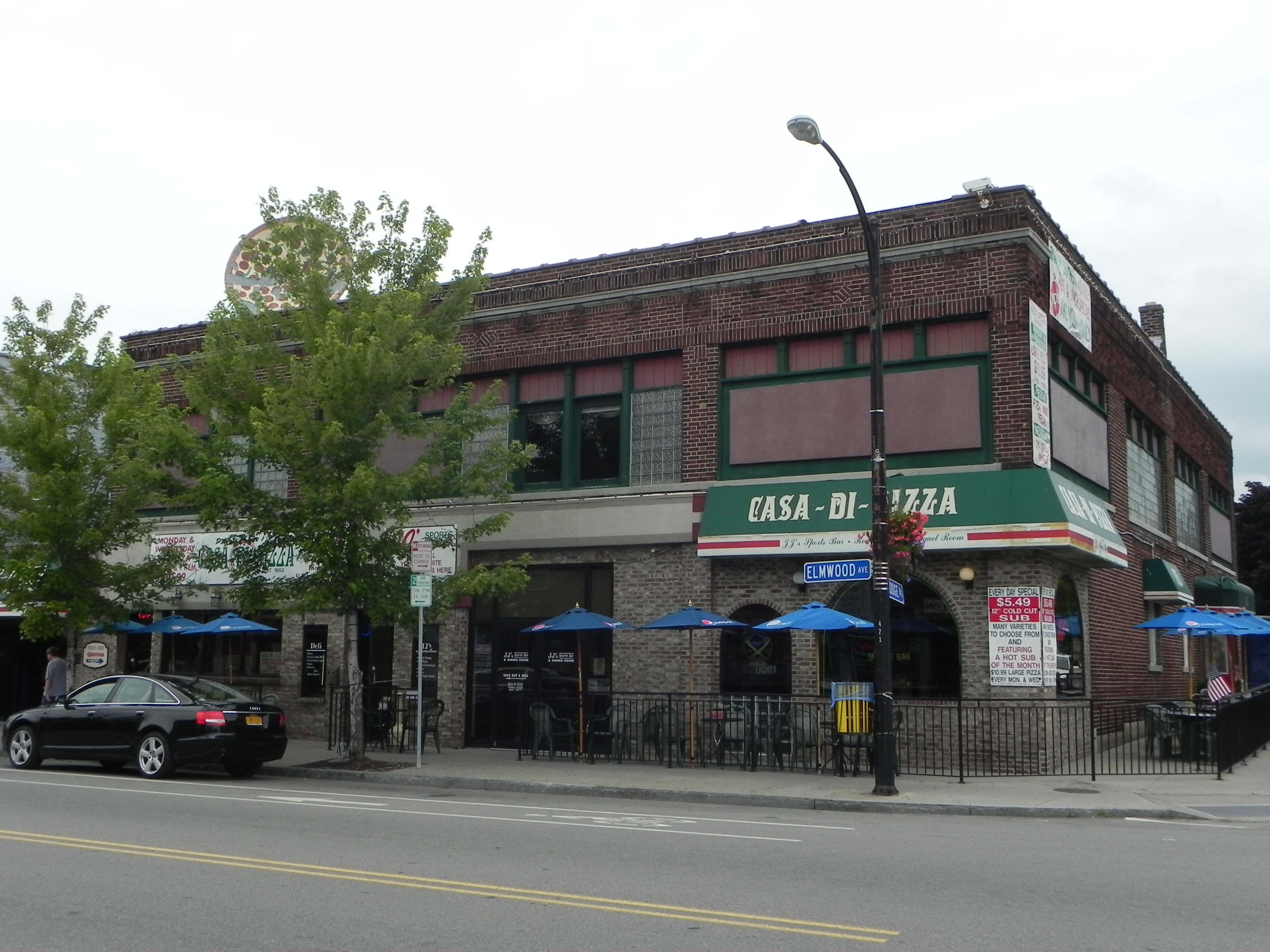
Cafe Aroma-Talking Leaves 141 Bidwell Casa-Di-Pizza Exh 33 - 1108 Elmwood Ave. 11-06-13

  1. Rather than protect the low-income residents of McCarley Gardens and the Fruit Belt neighborhood from encroachment by the Buffalo Niagara Medical Campus, the draft Green Code would increase the threat and pace of displacement and gentrification.

Although the draft Green Code classifies the McCarley Gardens development as a “Residential Campus,” it does nothing to protect the current residents from being pushed out of their homes in order to make way for new and profitable development.  To the contrary, by virtue of the types of uses that would allow on a so-called “Residential Campus,” it provides a major incentive for developers to eliminate McCarley Gardens and replace it with an up-scale project that could include medical clinics, professional offices, hotels, restaurants, taverns, outdoor dining, retail and service businesses, and residential care facilities.

BNMC and Fruit Belt A0001

Additionally, the draft Green Code’s lengthy list of non-residential uses and sizeable buildings permitted alongside the medical campus and on the predominately residential streets of the Fruit Belt neighborhood will fuel the speculative purchase of properties and gentrification – the displacement of the current homeowners and tenants.

DSCN4749     DSCN4752

10.  The proposed elimination of all minimum parking requirements is unfair to existing businesses and nearby residential neighborhoods.

            The Green Code Team has chosen to eliminate all minimum off-street parking requirements. The Mayor’s OSP staff calls this a “market based approach,” based on the fiction that developers wishing to construct a new building, or expand an existing one, will always make certain that their tenants and customers have adequate parking facilities.

In the real world, however, developers are often tempted to skimp on off-street parking if given the opportunity, preferring to construct larger buildings that will provide additional revenue. When that happens, tenants and customers are compelled to park on the street. In areas where parking is already at a premium, existing businesses suffer when their lots are used by someone else’s customers, or their own customers can no longer find on-street spaces nearby. Worse of all, the excess parking spills over to neighboring residential streets, bringing with it noise, loss of privacy, and inconvenience.

            I would gladly continue this discussion with Common Council members, their staff, or the Green Code Team.

With All Due Respect,

Arthur J. Giacalone                                                                  

A version of this post appears in print as the cover story in the October 16, 2014 weekly edition of ArtVoice, and at http://artvoice.com/issues/v13n42/green_code.

ArtVoice cover 10-16-14 Mixed-Up Use

Buffalo Green Code: Please send your comments by October 6, 2014!!!

Posted by Arthur J. Giacalone on October 4, 2014
Posted in: City of Buffalo, Development. Leave a comment

I AM INSERTING BELOW A PORTION OF A MESSAGE THAT THE CITY’S “BUFFALO GREEN CODE” TEAM EMAILED EARLIER THIS WEEK INDICATING THAT OCTOBER 6, 2014 IS THE DEADLINE FOR PUBLIC COMMENTS ON A PROPOSED NEW LAW THAT WILL IMPACT LAND USE, DEVELOPMENT, AND THE QUALITY OF LIFE IN THE CITY OF BUFFALO FOR DECADES TO COME.    IF YOU HAVE NOT YET SENT YOUR COMMENTS TO THE CITY REGARDING THE “DRAFT BUFFALO GREEN CODE” – OR YOU FEEL THE NEED TO SUPPLEMENT YOUR EARLIER COMMENTS –  I ASK THAT YOU SCROLL DOWN MY BLOG’S HOME PAGE AND READ A NUMBER OF POSTS EXPRESSING MY MAJOR CONCERNS WITH THE PROPOSED LAW.  IF YOU AGREE – OR DISAGREE – WITH ANY OF MY CONCERNS, PLEASE LET THE CITY KNOW WHERE YOU STAND.  THANK YOU.

With All Due Respect,

Art Giacalone 

Buffalo Green Code: Please send your comments by October 6, 2014!!!

… 

If you have written comments that have not been delivered already, please send them to OSP by October 6, 2014, to be considered for the updated Draft Green Code that will be submitted to the Common Council.

 Once the Council accepts the Draft Green Code documents, they will initiate the formal public comment period under the State Environmental Quality Review Act (SEQRA).

Again, please provide your comments for the Draft Buffalo Green Code in writing no later than October 6, 2014. Comments can be submitted as follows:

By email:

info@buffalogreencode.com 

By US Postal Service:

Buffalo Green Code Mayor’s Office of Strategic Planning

920 City Hall
Buffalo, NY 14202

For information on the Buffalo Green Code and its components, please go online to www.buffalogreencode.com. If you have any questions, please contact us at info@buffalogreencode.com or call (716) 851-4769.


WARNING: Your License Plate may be Unlawfully “OBSTRUCTED” in Violation of NY’s Vehicle & Traffic Law

Posted by Arthur J. Giacalone on September 25, 2014
Posted in: White Privilege. 10 Comments

– At least in the Town of Wayland, if you happen to be providing free advertising for an auto dealership or your favorite team or school –

 There are plenty of “obstructions” to worry about as one gets older. I discovered a new one today:  My license plate.

According to the Hon. Richard C. Tweddell, Wayland Town Court, my “RAY LAKS” license plate frame violates Section 402 of New York’s Vehicle & Traffic Law. That provision requires every motor vehicle driven or parked on a public highway to have “distinctive” number plates that are not “obstructed” by any part of the vehicle or by anything carried on the vehicle.

I have nothing against the Town of Wayland’s rolling hills and farms. After all, it is “home to the Gunlocke Company, Loon Lake and the Potato Festival.”

And I harbor no ill will of any kind towards the State Trooper who figured I was being “given a break,” after being pulled over on I-390 on a pleasant July evening, when I was only charged with the violation of “NO DISTINCTIVE PLATE/OBSTRUCTED.”

Wayland - AJG's rear plate 07-13-14

As I drove the 66 miles or so back to East Aurora, my inquisitive mind was compelled to ask itself: “Arthur, if your license plate violates V&T § 402(1)(b), doesn’t that mean that the license plates of perhaps 40% or 50% of all cars, SUVs, and trucks traveling (or, parked along) a street in New York State are also in violation?”

And, if all those vehicles do violate VTL 402(1)(b) – even though the offending plastic frame merely obscures the “Empire State” motto, not the color of the plate, or the “distinctive” license plate number – couldn’t the driver be pulled over AT ANY TIME by an officer who doesn’t like the way the driver, a passenger, or even the vehicle looks?

Call me paranoid, but I find this situation troubling. I can still recall how often I was pulled over 40+ years ago for no other reason than the way I looked:

AJG Summer '71

But let me get back to “my day in Court” before Justice Weddell. His Honor was unmoved by my testimony that seven or eight cars sitting in the parking lot to the rear of Wayland’s court house had plates “obscured” in the same manner as mine. And he would not accept into evidence this photo collage:

Wayland Town Court - rejected exh20001

 or this one:

Wayland Town Court - rejected exh10001

Silly me, not wishing to identify other potential scofflaws, I had altered each license plate to obscure the distinctive license plate number, making the photographs, from Justice Tweddell’s perspective, inadmissible.

I am now a full $168.00 poorer:

Wayland Town Court Receipt 09-25-20140001

Fortunately, my little Honda Fit gets great mileage when you set cruise control at 65 mph. And, I am, after all, semi-retired, so I had the time to meander on a beautiful early autumn day out Rte. 20A, along the Town of Sheldon wind turbines, through the hamlet of Varysburg, around the village of Warsaw, and eventually, down Main St. in lovely Mt. Morris to I-390 and beyond.

At this point, all I have left to do is decide whether or not to contact the kind State Trooper who started this whole thing to share the scene that greeted me as I departed the Wayland court house:

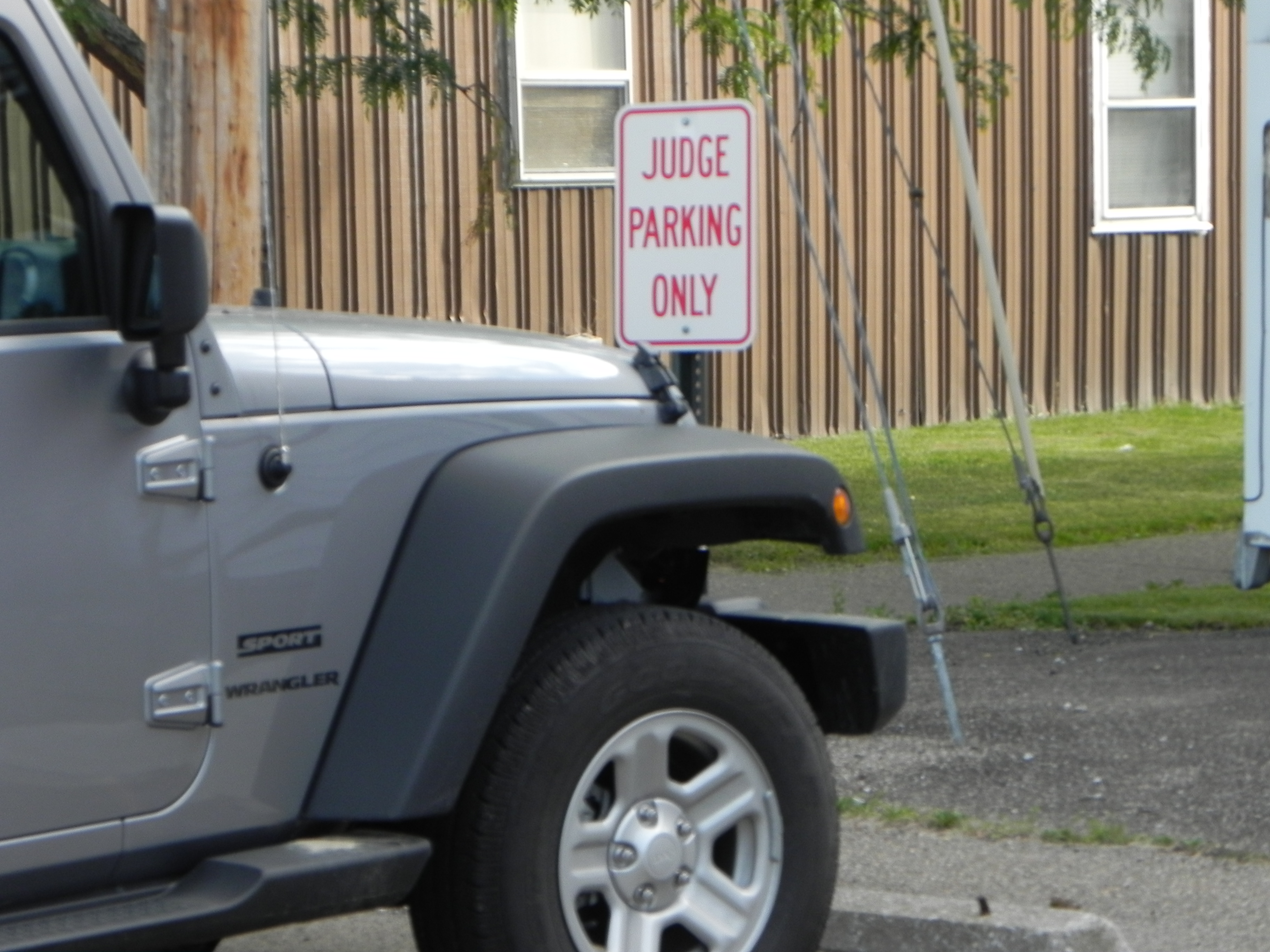
DSCN5166

Wayland - Judge Parking Only - Front Plate

I wonder if the offending vehicle’s owner, the Hon. Richard C. Tweddell, would get ticketed for an obstructed plate?

With All Due Respect,

Art Giacalone

P.S.  Scott Greenfield was kind enough to write about my saga at his excellent Criminal Defense blog Simple Justice: http://blog.simplejustice.us/2014/09/26/an-unobstructed-view/

Mayor Brown’s Representatives Attempt to Hijack Alternative “Green Code” Discussion

Posted by Arthur J. Giacalone on September 22, 2014
Posted in: B-N Medical Campus, Byron Brown, Carl Paladino, City of Buffalo, Elmwood Village, Fruit Belt, Gentrification, Green Code. Leave a comment

– But Buffalo’s residents and Common Council members aren’t served by misleading sound bites; they need specifics about the potential impacts on their homes and neighborhoods –

The thought that community members might hear an alternative view about the zoning implications of the city’s proposed Buffalo Green Code was apparently too much for Mayor Byron Brown. “His Honor” dispatched not one, but two members of the City’s Executive Department to attend and – it seems – do their best to commandeer the discussion: Nadine Marrero, the Mayor’s newly appointed Director of Planning [not to be confused with the Mayor’s Office of Strategic Planning], and Oswaldo Mestre Jr., the Mayor’s Director of the Division of Citizen Services.

The alternative “Green Code” discussion was organized by two Buffalonians who care deeply about the well-being and future of their fellow residents – Lorna Peterson and Veronica (Ronnie) Nichols. The event – sponsored by the Fruit Belt/McCarley Gardens Housing Task Force – took place this past Thursday evening, September 18, at the Moot Senior Center at 292 High Street, in the heart of Buffalo’s Fruit Belt community.

I was asked to talk about the implications of the draft Green Code’s rezoning provisions for Buffalo’s East Side residents, but found myself frequently interrupted by Ms. Marrero (who at least was apologetic) and Mr. Mestre (who tried desperately to mention his boss each time he spoke). There also was a rogue “civilian” sniper in attendance, intent on attacking me personally rather than engaging in an intelligent dialog regarding the accuracy of my statements [I’ll do him a favor and not mention his name]. Here are my thoughts on a number of questionable comments and issues raised by the Mayor’s Buffalo Green Code defenders:

  1. Director of Planning Marrero mentioned off-handedly that the Green Code is “more concerned about what a building looks like than what is happening inside.” That skin-deep approach to development may work well for the casual visitor, or someone merely interested in lunch or a shopping spree. But it is wholly inadequate for the people living in the neighborhood. While the “form” of buildings – especially their size and proximity to neighboring parcels – affects the character of a neighborhood or community, it is the type of activities which occur within and around that structure that has the greatest impact on the quality of life of nearby residents. The authors of the Draft Buffalo Green Code appear oblivious to this reality.
  2. It is possible to have “mixed-use” neighborhoods – as called for by the Green Code – without allowing commercial and non-residential uses on virtually every single residential block. The home is where the vast majority of people retreat for peace, quiet and privacy. Protecting the quality of life of city residents should be the top priority of any land use ordinance. The Green Code, as currently proposed, suggests a far different agenda when it provides business interests the opportunity to place restaurants, taverns, outdoor dining, live entertainment, professional offices, retail establishments, healthcare clinics, etc., etc., at the corner of residential streets.
  3. The City-sponsored presentations and workshops on the May 2014 version of the Draft Buffalo Green Code – which always include a lengthy PowerPoint presentation – have NOT included either a slide or other visual depicting the proposed land use map, or a discussion of the many non-residential uses proposed for virtually every residential street in the City of Buffalo. Perhaps, as Director of Planning Marrero insists, one of the presenters may have had a map at his or her table. But neither the public, nor any Common Council Member in attendance, was provided basic information needed to accurately assess the pros and cons of the zoning proposals.    BGC UDO May Map 20140001
  4. The authors of the Draft Green Code have NOT adequately justified their decision to ELIMINATE ALL MINIMUM PARKING REQUIREMENTS in the City of Buffalo. References are made to the current zoning code requiring too many off-street spaces, and the supposed wisdom of a “market-based” approach that trusts businesses to provide the number of off-street spaces their own customers will need. The “zero requirement” approach flies in the face of the many complaints the city receives from both its residents and existing businesses concerning the current lack of adequate on-street parking spaces. As proposed in the Draft BGC, new or expanding businesses will be tempted to construct larger buildings and skimp on off-street parking, compelling more and more vehicles to park on nearby residential streets.
  5. I understand that the current version of the Buffalo Green Code is merely a “draft” that will be modified before it is submitted to the Common Council Members for their review and eventual vote on whether or not to enact it into law. I also recognize that the BGC authors have acknowledged some mistakes when confronted by a stunned or angry audience. But I still do not fully trust that the folks who will be deciding what version of the Green Code to submit to the Common Council will ultimately place the quality of life of residents over the desire of the business community to maximize profits. For example:

(a) If the BGC draftspersons truly cared about the character of existing residential neighborhoods, and understood the potential adverse impacts that can result from large-scale commercial activities, they would never have issued the May 2014 version of the BGC. As currently proposed, developers would be allowed to build a mixed-use facility, five-stories in height and 225-feet in length, with zero off-street parking requirements, in the Elmwood Village – monstrously large structures backing up to century-old residences on the adjoining streets.

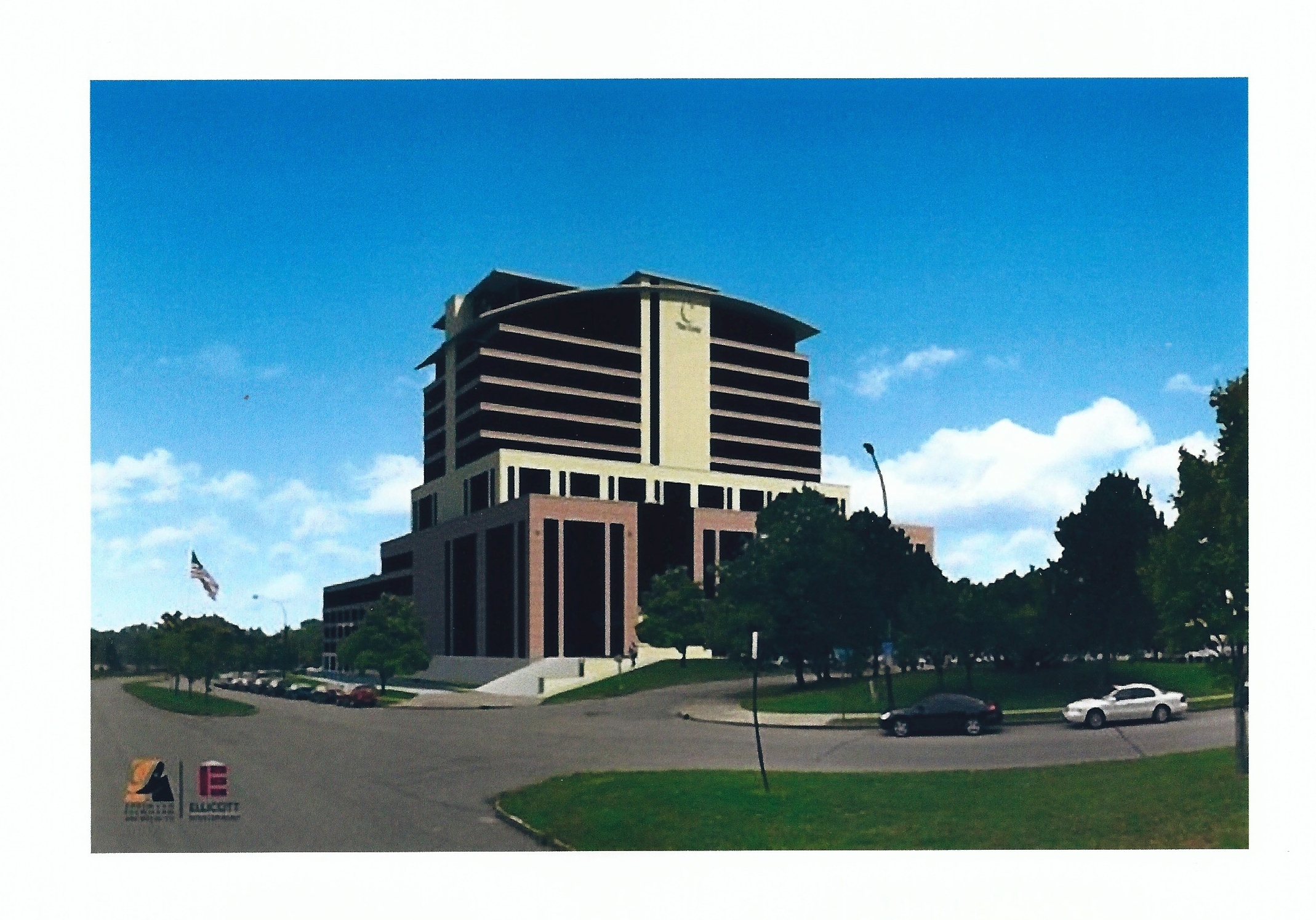
(b) If quality of life and the environment were top priorities, rather than say – Mayoral politics – the May 2014 version of the draft BGC would not have included a significant change from the Green Code draft issued in the spring of 2012. The earlier version of the draft Green Code would NOT have allowed Carl Paladino’s Ellicott Development Co. to construct a stand-alone, 14-story hotel/office/condominium project on prime waterfront property. Buildings at this location were conceived in the 2012 draft as “connected, moderate-scale mixed-use buildings with pedestrian-oriented frontages.” The current version, however, without any justification or discussion, added “towers” as one of the “building types” that would be allowed in the zoning district where Mr. Paladino plans to construct “The Carlo” tower.   The Carlo rendering

  1. The “rogue ‘civilian’ sniper” at this past week’s alternative Green Code meeting boldly proclaimed that, unlike the City’s current zoning code, the Draft BGC protects McCarley Gardens, the low-income housing development located at the edge of the expanding Buffalo Niagara Medical Campus. Mayor Brown’s emissaries said nothing while sitting in the midst of Fruit Belt residents at an event sponsored by the Fruit Belt/McCarley Gardens Housing Task Force. In fact, while the draft Green Code may classify the McCarley Gardens development as a “Residential Campus” [“D-R”], it does NOT protect the current residents from being pushed out of their homes to make way for a new and totally different “Residential Campus.”  Not only does the BGC not prevent demolition of the existing low-income residential development, it provides a major incentive for developers to remove McCarley Gardens and replace it with an up-scale development that – as currently written – could include, for example:  residential care facilities, cultural facilities, government offices, frat houses, a hotel, restaurants, taverns, outdoor dining, retail and service businesses [including “large scale”], medical clinics, professional offices, a “solar farm,” cell towers, etc.
  2. The Mayor’s representatives also remained silent when “Mr. Rogue” proclaimed that the draft Buffalo Green Code would protect the Fruit Belt from encroachment by the Buffalo Niagara Medical Campus. While the draft Green Code may provide an initial boundary for the medical campus, it does NOT – and cannot – guarantee that future rezonings will not expand the campus beyond the proposed boundary.  More importantly, the draft Green Code’s lengthy list of non-residential uses and sizeable buildings that would be allowed in N-2E and N-2R zones will fuel the speculative purchase of properties and the intrusion of non-residential development, hastening the displacement of the current homeowners and tenants, and gentrification of the Fruit Belt neighborhood.   Welcome to Mulberry Street sign
  3. The City of Buffalo’s existing zoning code had nothing to do with the unfortunate decision in the 1950s to build the Kensington Expressway, despite Mr. Mestre’s suggestion of a connection. The zoning laws neither called for, nor enabled, that determination.
  4. Lastly, the comment by Ms. Marrero that Buffalo’s current zoning laws reflect an effort to follow the Town of Amherst’s suburban pattern of development seems to overlook an important fact: when the city’ enacted its existing zoning code in the early 1950s, Amherst was predominantly rural in character and years away from its current personification of ‘suburban sprawl.”

Members of the City’s Buffalo Green Code team have confirmed that they do confer with Buffalo’s business community in private sessions regarding the BGC. [We certainly wouldn’t want the business elite compelled to justify their positions concerning future development at a public forum.] As I have stated in my written communications with the BGC team, and as I told Director of Planning Nadine Marrero at the close of our alternative Green Code meeting, I would gladly sit down with her and the Executive Director of the Mayor’s Office of Strategic Planning, Brendan Mehaffy, to share my resident-oriented perspective on the Green Code.

With All Due Respect,

 Art Giacalone

Sam Hoyt’s Apology for his “Brainwash” Comment raises Questions for his Boss – Gov. Andrew Cuomo

Posted by Arthur J. Giacalone on August 29, 2014
Posted in: Andrew Cuomo, Peace Bridge, Sam Hoyt. 1 Comment

*After all, the audio tape of an April 25, 2015 Peace Bridge Authority meeting reveals a concerted effort by the Cuomo Administration to keep plaza expansion opponents uninformed*

Question No. 1: Governor, you must have been very upset with Peace Bridge Authority Chair William B. (“Sam”) Hoyt III when you learned of the August 6, 2014 article in the Buffalo News, “Plotting at the Peace Bridge.”  How would you rate your anger toward Sam on a scale from “zero to ten” if “ten” equals the way you felt this week when the New York Times editorial board refused to endorse you over your challenger in the September 9th Democratic primary, Fordham Law School professor Zephyr Teachout, and then selected Ms. Teachout’s running mate, Tim Wu, a Columbia University law professor, rather than your choice for lieutenant governor, Kathleen C. Hochul?

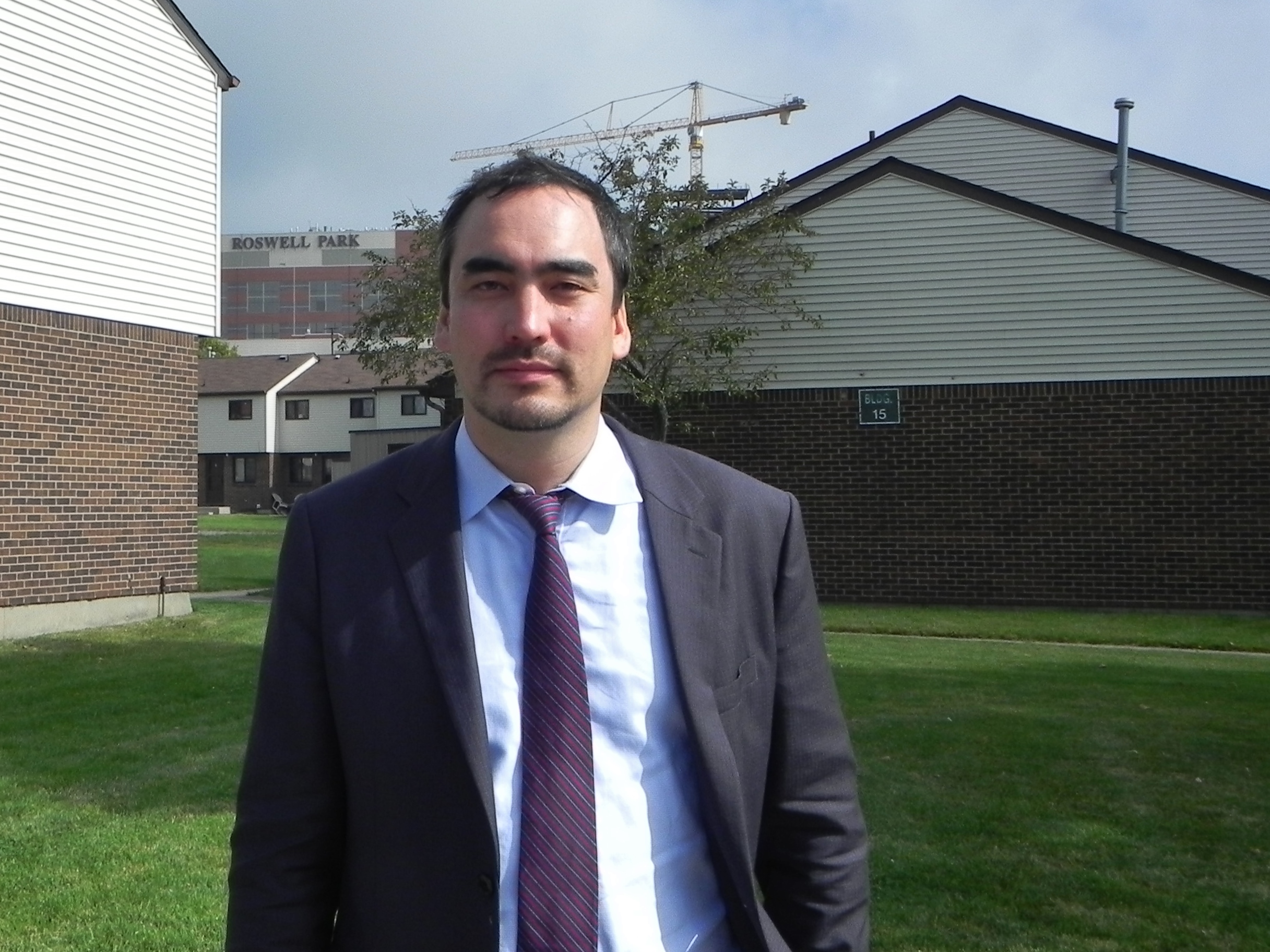
DSCN4686Tim at McC Gardens with crane Cropped

Question No. 2: You appeared at a press conference in Niagara Falls the day after the “Plotting at the Peace Bridge” article hit the newsstand. When asked about Sam Hoyt’s use of the term “brainwash” regarding efforts to build support for projects at the Peace Bridge, you said: “I don’t know the context it was used in. My understanding is the person said it was a misuse of, misspoke, and we all do that once in a while. I know I do that every once in a while.” Governor, did you actually forget the name of Sam Hoyt, the person who, thanks to you, is Chairman of the  Peace Bridge Authority and a high-ranking official with the Empire State Development Corporation? Or were you still too upset to mention him in public?

Question No. 3: By the way, do you think that Sam Hoyt “wears too many hats” and, for that reason, has real conflict-of-interests problems? After all, even Sam seems unable to keep his roles straight. The “apology” letter that he sent on August 14, 2014 to North District Councilmember Joe Golombek used “Empire State Development” letterhead, despite the fact that Sam signed it in his capacity as “Chairman, Buffalo & Fort Erie Public Bridge Authority.”

  SAM HOYT'S APOLOGY LETTER 08-14-140001

Question No. 4: Mr. Cuomo, did you and Mr. Hoyt discuss the content of the “apology letter” before he sent it out to Mr. Golombek and other members of Buffalo’s Common Council?  I noticed that, for the first time since you became governor of our fine state, a communications regarding Peace Bridge expansion plans did not include multiple references to you and how determined you are to obtain “results” for Western New York.

Question No. 5: Governor, as an advocate for transparency and accountability, were you appalled when you heard that a member of your administration, project manager Maria C. Lehman, took conscious steps to keep potential opponents in the dark about NYSDOT environmental studies and the State’s efforts to gain City of Buffalo approval for necessary easements and land transfers?   Or was Ms. Lehman just following orders?

Question No. 6: In an August 23, 2104 editorial, the Buffalo News places the blame for the “very sneaky” and “duplicitous” efforts to deceive the public regarding Peace Bridge expansion plans squarely on the shoulders of Ms. Lehman.  As Governor (and future King), don’t you believe that responsibility for what occurred before, during, and following the April 25, 2014 PBA board meeting should be borne by the officials in a position to set the tone, that is, PBA Chair Sam Hoyt and you, his boss?

Question No. 7: Governor, you weren’t surprised, were you, by the poor judgment shown by Mr. Hoyt, both in developing (or, at a minimum, acquiescing to) deceptive strategies to ensure prompt results at the Buffalo end of the Peace Bridge, and in using the term “brainwash”? After all, prior to selecting him to be such an influential member of your administration in Western New York, you were certainly aware that Sam had demonstrated the ability to exercise extremely poor judgment while serving as a member of the New York State Assembly.   

Question No. 8: So, after all this, is it still fair to think of Sam Hoyt as Andrew Cuomo’s “eyes and ears” in Western New York?  Some people, you know, are getting the impression that he has morphed beyond that limited role and now reflects his boss’s “heart and soul,” arrogant and acting as if he’s above the law.

With All Due Respect,

Art Giacalone

Cuomo’s Approach to “Peace Bridge Expansion” Reveals Pattern of Deception, Abuse of Power

Posted by Arthur J. Giacalone on August 21, 2014
Posted in: Andrew Cuomo, Peace Bridge, SEQRA. 1 Comment

      * The international span between Buffalo, NY & Ontario, Canada serves as a useful measuring stick when gauging Gov. Cuomo’s integrity *

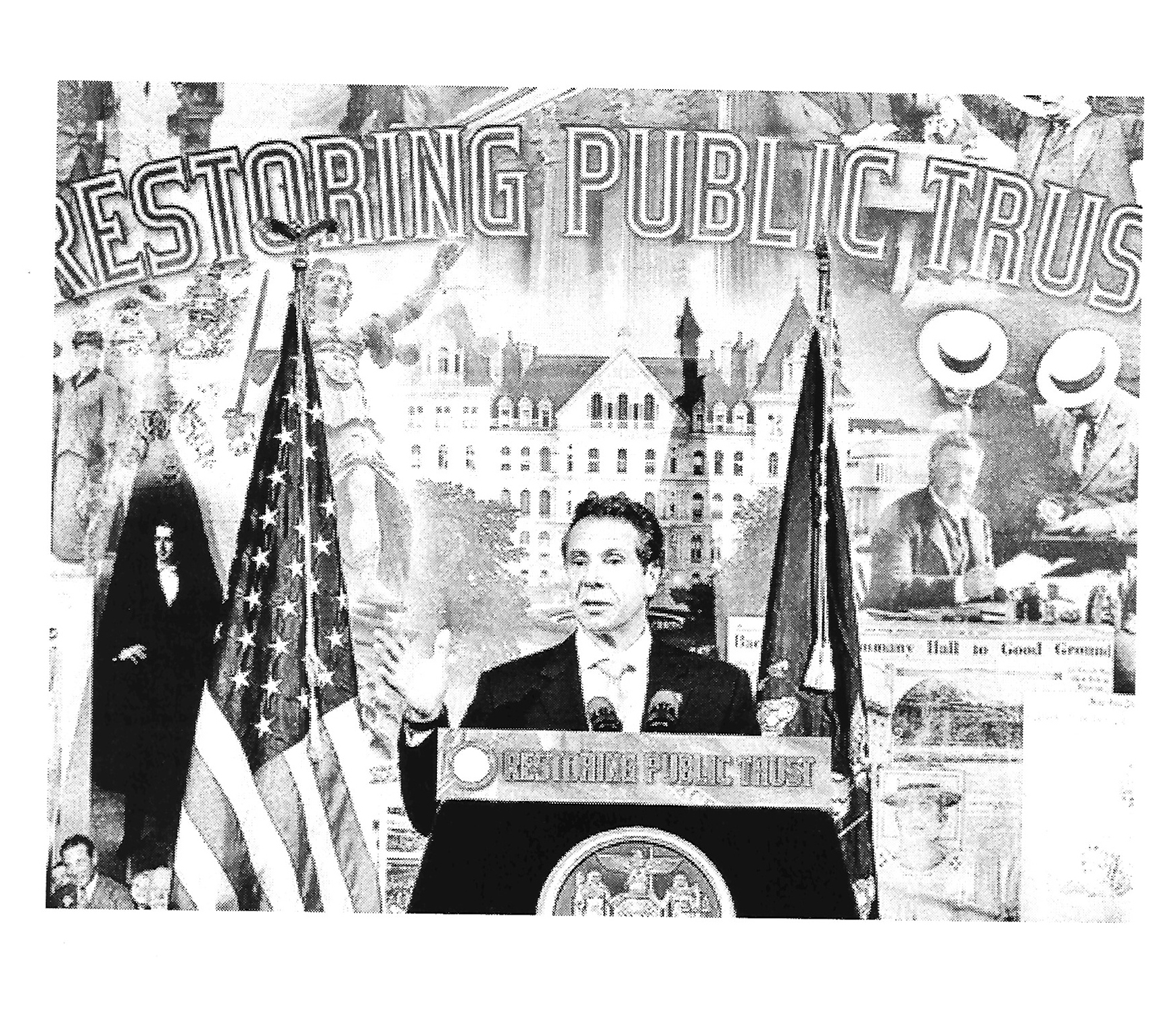
Many New Yorkers understandably view Gov. Andrew Cuomo’s conduct regarding the Moreland Commission as grounds to question his integrity – from its sudden and premature dismantling, to the Governor’s delayed and unconvincing response to the July 24 New York Times report of his top aide’s repeated interference with the workings of the ethics commission.  

Restoring Trust - gray photo0001

A close examination of the Cuomo Administration’s actions regarding the second busiest border crossing between the U.S. and Canada raises similar concerns.

Photo from Sept. 2007 Peace Bridge Expansion Project DEIS cover

Photo from Sept. 2007 Peace Bridge Expansion Project DEIS cover

* The April 2014 audio tape – a reflection of Cuomo’s disdain for opposing points of view and procedural impediments *

An example of the Cuomo administration’s subterfuge is described in the August 6, 2014 Buffalo News article, “Plotting at the Peace Bridge.”  The audio of the April 2014 Peace Bridge Authority meeting paints an unflattering picture of the deceptive tactics used by Gov. Cuomo’s cronies to implement his expansion plans.  The words of PBA chairman Sam Hoyt (the governor’s “eyes and ears upstate”), project manager Maria Lehman, and former Buffalo mayor Anthony Masiello, reflect a disdain for anyone who questions the governor’s plans, and for any procedures that might slow down the process. More specifically:

        – Peace Bridge Authority Chairman Sam Hoyt explains how state officials had “brainwashed” potential opponents of plaza renovations at the bridge in order to win their support.

        – The state’s Peace Bridge project manager, Maria Lehman, describes her conscious decision to keep the environmental approval of an expansion project quiet in order “not to kick sleeping dogs” [nearby residents?] who might otherwise challenge the adequacy of the environmental review in court.

        – PBA member and former Buffalo mayor, Anthony Masiello, expresses his agreement with Lehman’s suggestion that the city’s sale of property for Peace Bridge expansion should be combined with “a whole lot of transactions” and brought directly to the full Common Council for approval, thereby circumventing the normal process of having the transactions reviewed by the Council’s Real Estate Committee – a subcommittee of the Community Development Committee, which is chaired by one of the most vocal opponents of Peace Bridge expansion, North Council Member Joseph Golombek Jr.

[Hear state official Maria Lehman explain the “conscious decision not to kick sleeping dogs that otherwise might not be paying as close attention,” and PBA chair Sam Hoyt say state officials “brainwashed – no, work closely with, nudged – those sleeping dogs and brought them over to our side”: https://www.youtube.com/watch?v=MKN-B8vtLww&feature=youtu.be.]

[Hear Ms. Lehman discuss plans to circumvent of the Common Council’s Real Estate Committee to speed up the city’s approval of property transactions needed for Peace Bridge expansion: https://www.youtube.com/watch?v=o4vpPHZnEKk&feature=youtu.be.]

But the audio tape is merely one instance.

* The “no current plan” ploy regarding the Episcopal Church Home site – Cuomo’s stratagem to avoid the required environmental review *

SEQRA, the state’s environmental review law, places an obligation on agencies to examine “long-term, short-term, direct, indirect and cumulative impacts” of an action, including land purchases or demolition of buildings.  [6 NYCRR 617.7(c)(2)]  To circumvent this mandate, the Cuomo-dominated Empire State Development Corporation has insisted that there are “no current plans” to utilize the Episcopal Church Home site for plaza expansion.

The disingenuous nature of the “no plan” claim is underscored by statements made by the PBA and Gov. Cuomo.  A May 2012 PBA resolution lists potential plaza projects including the “redesign and relocation of the existing Duty Free Store to a larger, more functional area on the property currently occupied by the vacant Episcopal Church Home.” And the governor’s August 15, 2012 press release announcing steps to acquire the ECH property refers to the parcel as “a crucial block of land that will be a central part of the transformed plaza.”  Additionally, in a moment of refreshing candor, April 2013 court papers executed by the head of the Episcopal Church Home organizations seeking judicial consent to sell the ECH campus to Empire State Development, assert:  “ESD intends to develop the Downtown Campus property as part of an expanded Peace Bridge Plaza.” 

Don't Truck Up Our Neighborhood!

Don’t Truck Up Our Neighborhood!

 * Cuomo’s questionable use of State funds to finance the purchase of the Episcopal Church Home property *

To ensure the governor could claim he kept his promise to move aggressively to improve the U.S. side of the international border crossing, the Cuomo administration paid $4.7 million in July 2013 to purchase the ECH site, despite its appraised value of $1.7 million.  The ESD President/CEO’s February 2013 memorandum had described the State’s proposed acquisition agreement in the following manner, identifying the NY Works Fund as the funding source for the purchase:

        “Upon approval by the Directors, the [ESD] Corporation will enter into a contract of sale with the Owner [ECH] for acquisition of the Property for the purchase price not to exceed $4,731,500… Funding for the acquisition costs and immediate maintenance/ stabilization will be provided by the New York Works Fund (“Fund”). The $75 million dollar fund is contained in the 2012-2013 State Budget and was included by the Governor to assist ESD and other State entities in advancing economic development and infrastructure related projects.

      The Property is currently assessed at $3.4 million and appraisals set the value at $1.862 and $1.65 million…”

Gov. Cuomo’s August 24, 2013 press release announcing finalization of the acquisition of the Episcopal Church Home property also makes reference to the role funds from the “New York Works Initiative” would play in the transaction (as well as the connection between the purchase and plaza expansion):

      “In his 2012 State of the State Address, Governor Cuomo proposed improvements for the U.S. Peace Bridge plaza. As part of the NY Works Initiative that was passed in the 2012-2013 state budget by the New York State Legislature, $15 million was allocated for the expansion of the U.S. Peace Bridge plaza and related enhancements, including community projects…”

It is difficult to reconcile the State’s proclaimed purpose for its purchase of the ECH parcel, that is, to ensure that the “asset” is “properly secured, maintained and readily available” for some unspecified future economic development plan, with either the expressed goal of the NY Works Initiative, “to coordinate a statewide infrastructure plan that will more effectively and strategically allocate New York’s capital investment funding,” or the Cuomo administration’s description of the purpose for the New York Works Task Force:  “Governor Andrew M. Cuomo and legislative leaders launched the New York Works Task Force in May 2012 to put an economic growth strategy in place and to expand the State’s capital investment and execution capability with a combination of smart procurement policies, great project execution, and innovative financing options.”  Justification of the acquisition of the ECH property is made even more difficult when one considers the fact that the State paid three million dollars more for the “asset” than its appraised value.

Allowing the Episcopal Church Home site to be acquired with moneys obtained through the NY Works program makes the Initiative appear to be little more than a slush fund to be used by Governor Cuomo to further his own political agenda.

DSCN3189

An equally troubling aspect of the State’s purchase of the ECH property, from a legal perspective, is the reference in the ESD’s President’s February 2013 memo to “various State Department of Health (“DOH”) liens totaling $711,000.”  It appears that, as part of the ESD’s agreement with the Episcopal Church Home entities, the State of New York waived $711,000 of DOH liens on the ECH properties.  A strong argument can be made that such action constitutes an unconstitutional “gift” of State money to a private corporation, prohibited by Article VII, Section 8(1) of the Constitution of the State of New York. In relevant part, that section of the State Constitution declares: “The money of the state shall not be given or loaned to or in aid of any private corporation or association, or private undertaking.”  [Note: For purposes of the “no gift or loan” provision, money passed by the State of New York to the Empire State Development Corporation, a public benefit corporation, “cannot be subject to the Article VII, Section 8(1) prohibition gifting or loaning state money as such money is no longer in control of the State.” See, Bordeleau v. State, 18 NY3d 305 (2011).]

* Cuomo’s abuse of the legislative process *

Most troubling of all is Gov. Cuomo’s coercive use of the legislative process. In 2013, a number of Cuomo allies in the State Legislature enacted a law aimed at dissolving the Peace Bridge Authority.  [Some accounts have indicated that Cuomo was infuriated when Canadian members of the PBA balked at overpaying for a piece of land adjacent to the U.S. end of the plaza.] Gov. Cuomo refused to veto the deeply flawed law, despite its factual inaccuracies and disregard of the PBA as the product of an international compact between sovereign nations. Instead, Mr. Cuomo dishonored the legislative process by treating it as a negotiating ploy to win concessions from the Canadian bridge authority members – holding the threat of dissolution over their heads.

So much for integrity.

With All Due Respect,

Arthur J. Giacalone

P.S.  Just how wide is Governor Andrew Cuomo’s credibility gap these days? About as wide as the Peace Bridge is long –  3,580 feet in length from abutment to abutment, a distance of just over two-thirds of a mile. That’s the approximate gap, from my vantage point, between what Gov. Cuomo and his administration say and the truth – with one exception.  Sam Hoyt was quoted in an April 4, 2012 Buffalo News article announcing the Cuomo administration’s commitment to aggressively pursue expansion of the U.S. plaza at the Peace Bridge:  “We will do everything we can to make it happen quickly.”  That is one statement that I have no trouble believing.


Disregard of “Fruit Belt” Residents by Buffalo’s Leaders is Unjust and Unlawful

Posted by Arthur J. Giacalone on August 3, 2014
Posted in: B-N Medical Campus, City of Buffalo, Development, Fruit Belt, Gentrification, SEQRA. 3 Comments

– To allow displacement of the less affluent as a consequence of medical campus expansion will violate SEQRA and the health profession’s precept, “first, do no harm” –

Welcome to Mulberry Street sign

A July 9, 2014 editorial in the Buffalo News proudly proclaims:  “New Buffalo – Development near the Medical Campus shows the city is shaking off its despair.”  The opinion piece praises the creation of wealth for developers, landowners, and business owners who “rush to take advantage of the multiple opportunities” created by the still-growing Buffalo Niagara Medical Campus.  According to the editorial, “It’s a thing of beauty.”  [See BuffNews editorial 07-29-14 re BNMC-desirability of gentrification.]

What is not beautiful is the callousness shown by the Buffalo News editorial staff towards “people without means [who] may also be squeezed out of their homes” as “the line marking ‘the wrong side of the tracks’ is moving further east.”  According to the July 29th editorial:  “Those are the disadvantages and consequences of gentrification, which is not only wholly desirable, but as inevitable as the laws of supply and demand.”

I beg to differ.  Displacement of the population that lives adjacent to the eastern edge of the growing Buffalo Niagara Medical Campus is unjust and unlawful, and – metaphorically – makes a mockery of the healthcare profession’s maxim, “first, do no harm.”

The so-called “people without means” who may find themselves displaced by the gentrification process are the nearly 2,000 residents of the historic “Fruit Belt” neighborhood – thirty-six (36) blocks of mostly quiet residential streets located directly east of the Buffalo Niagara Medical Campus [BNMC], extending roughly from High Street on the north, Jefferson Ave. to the east, the Kensington Expressway to the south, and Michigan Ave. on its western edge.

BNMC and Fruit Belt A0001

The tree-lined streets, with names such as Maple, Mulberry, Lemon and Grape, are home to a predominately African-American population with an average household income of around $23,000 a year – less than half of the Buffalo area as a whole.  While approximately twenty percent (20%) of the Fruit Belt’s residential units are vacant, more than forty-percent of the occupied units are lived in by the property’s owner.  And the pride of ownership is readily apparent when walking passed a mixture of century-old and recently constructed houses.

DSCN4757

183 Mulberry - SE corner Carlton

DSCN4752

Gentrification – considered “wholly desirable” and “inevitable” by the Buffalo News – is defined by Merriam-Webster as “the process of renewal and rebuilding accompanying the influx of middle-class or affluent people into deteriorating areas that often displaces poorer residents.”  A good summary of the “displacement” phenomena associated with the gentrification process can be found at Wikipedia:

“Displacement in the context of gentrification is defined in The Gentrification Reader as ‘forced disenfranchisement of poor and working class people from the spaces and places in which they have legitimate social and historical claims.’ …  What is generally agreed upon … is that those displaced are primarily minority, elderly, and transient groups, and they are nearly always driven out in areas where gentrification occurs. Studies have also shown that there seem to be two waves of displacement of these original residents. In the early stages, renters are largely driven out because of the changing incentives of landlords. With the rising interest in a particular neighborhood, they have no motive to retain their current tenants over the new, more affluent rent seekers. As the process continues, owners of single residential units are strained with the surge in property values that translates to increased tax assessments. Often their incomes cannot continue to cover these increased living costs. Those who are ‘gentrified’ not only lack the economic resources to compete with these changes, but stereotypically lack political power, are easily exploited by landlords and developers, and eventually are simply forced to leave due to these inabilities to resist the gentrification process.”

No doubt, where market forces are allowed unfettered rein, the displacement of poor and working-class people from their neighborhoods is quite inevitable.  After all, we can hardly expect “the big three” developers who have been “reaping many of the benefits” of the BNMC’s establishment and growth – Paul Ciminelli, Carl Paladino, and Carl Montante Sr. – to unilaterally and voluntarily take steps to prevent displacement of the long-time residents of the Fruit Belt if – in doing so – the bottom-line is adversely affected.

DSCN4703

DSCN4710

But what excuse do Buffalo’s elected officials and bureaucrats have for their failure – for more than a decade – to take steps to prevent the inequities and personal burdens that will accompany gentrification of the neighborhood adjoining the ever-growing medical campus?  Why wasn’t a sense of decency and compassion sufficient motivation to compel the City’s politicians to seek effective mechanisms to buffer and protect Fruit Belt homeowners and tenants from the radiating effects of the BNMC expansion?  Why didn’t the obligation to comply with the law, more specifically, with SEQRA, New York’s State Environmental Quality Review Act, lead to meaningful action?

I don’t have answers.  But I do know that SEQRA requires every local and state agency asked to approve or help finance a construction project to consider potential adverse impacts that might result from that project.  Not only should there have been an objective and thorough assessment of the adverse environmental impacts likely to occur as a result of the medical campus growth and expansion, SEQRA placed an obligation on the involved agencies to avoid or reduce the identified adverse impacts “to the maximum extent practicable,” and to incorporate practicable mitigation measures as conditions to any approval or financing of a project.

Significantly, the term “environment” is broadly defined in SEQRA to include – not only physical conditions – but also “existing patterns of population concentration, distribution, or growth, and existing community or neighborhood character.”

Nearly three decades ago, our State’s highest court, the New York Court of Appeals, in a case called Chinese Staff and Workers Association v. City of New York, 68 NY2d 359 (1986), held that “population patterns and neighborhood character are physical conditions of the environment under SEQRA” and must be given consideration “regardless of whether there is any impact on the physical environment.”

The Chinese Staff decision went on to rule that “potential acceleration of the displacement of local residents and businesses” is an effect on population patterns and neighborhood character that must be analyzed pursuant to SEQRA not only for the actual property involved, but for the community in general.  And these socio-economic impacts must be considered whether the proposed project may effect these concerns “primarily or secondarily or in the short term or long term.”

DSCN4749

DSCN4826

DSCN4779

In short, the environmental review mandated by SEQRA placed an obligation on city and state officials to protect Fruit Belt residents from the adverse effects of gentrification.  In effect, SEQRA provided a mechanism to objectively gather pertinent data, and to incorporate enforceable mitigation measures that would help ensure that expansion of the medical campus would, first and foremost, “do no harm” to the residents of the nearby Fruit Belt neighborhood.

DSCN4763

It is important to note that SEQRA requires that consideration of environmental factors occur “at the earliest possible time” in the planning and decision-making process.  [6 NYCRR 617.1(c)]  In the context of the medical campus, an objective assessment and identification of potential adverse impacts on “existing patterns of population concentration, distribution, or growth, and existing community or neighborhood character” should have been conducted a decade or more ago, at a time when substantial flexibility existed in the planning process.  In failing to do so, Buffalo’s leaders – political, business, and institutional – ignored their legal obligation to protect the Fruit Belt neighborhood and the people who reside there.

An opportunity to remedy that failure was presented to the City of Buffalo in 2010.  A Master Plan Update commissioned by the Board of Directors of the Buffalo Niagara Medical Campus was issued in December 2010.  That document included a so-called “Fruit Belt Neighborhood Strategy” which expressed the following sentiment:

 The transition between the medical campus and the Fruit Belt neighborhood must be carefully considered to take advantage of proximity while also mediating building scale, character and use. DSCN4810

Although the master plan update did not expressly address the displacement effect of BNMC expansion on existing Fruit Belt residents, it did recognize the constructive role that SEQRA and the City of Buffalo could play in regulating future activities related to medical campus growth:

SEQRA would provide a neutral platform within which all the various agencies and proponents could contribute information and weigh development options and impacts in a public forum…  Ideally, the City of Buffalo would be the lead agency and would submit a full Environmental Assessment Form (EAF), cooperating with UB, Kaleida, RPCI, the BNMC and other agencies.

To that end, the master plan update’s ten recommendations – labeled “Collaborative Opportunities for Moving Forward” – included the following call for a comprehensive environmental review under SEQRA:

Create a campus-wide Generic Environmental Impact Statement (GEIS) in order to facilitate future campus development and assess the environmental, social, and economic impacts of growth. 

The lateness of the BNMC’s call for a Generic Environmental Impact Statement – underscored by the update’s observation that by 2013, “over 2.3 million square feet of new construction and renovated space will have taken place since the campus first emerged” – made a prompt and committed effort by City officials and all involved stakeholders imperative.

Despite that fact, Buffalo’s leaders have once again failed to protect the Fruit Belt neighborhood and its residents.  Forty-four months after the December 2010 Master Plan Update was adopted by the BNMC Board of Directors, there is no evidence that the proposed GEIS review process was ever commenced – much less diligently pursued – by the City of Buffalo.

This failure to act occurred even though the BNMC Board of Directors includes Buffalo Mayor Byron W. Brown and the President of the City’s Common Council (at the time of the master plan update, Richard Fontana).

It is time for Western New York’s leaders – local and state officials, the business community, and the institutions comprising the Buffalo Niagara Medical Campus – to put into place effective and enforceable safeguards that will preserve the character of the Fruit Belt neighborhood and prevent the displacement of its residents.  The law – and common decency – demand no less.

With All Due Respect,

Art Giacalone

Buffalo’s Block Clubs Show Signs of Neighborhood Pride

Posted by Arthur J. Giacalone on July 30, 2014
Posted in: City of Buffalo. 2 Comments

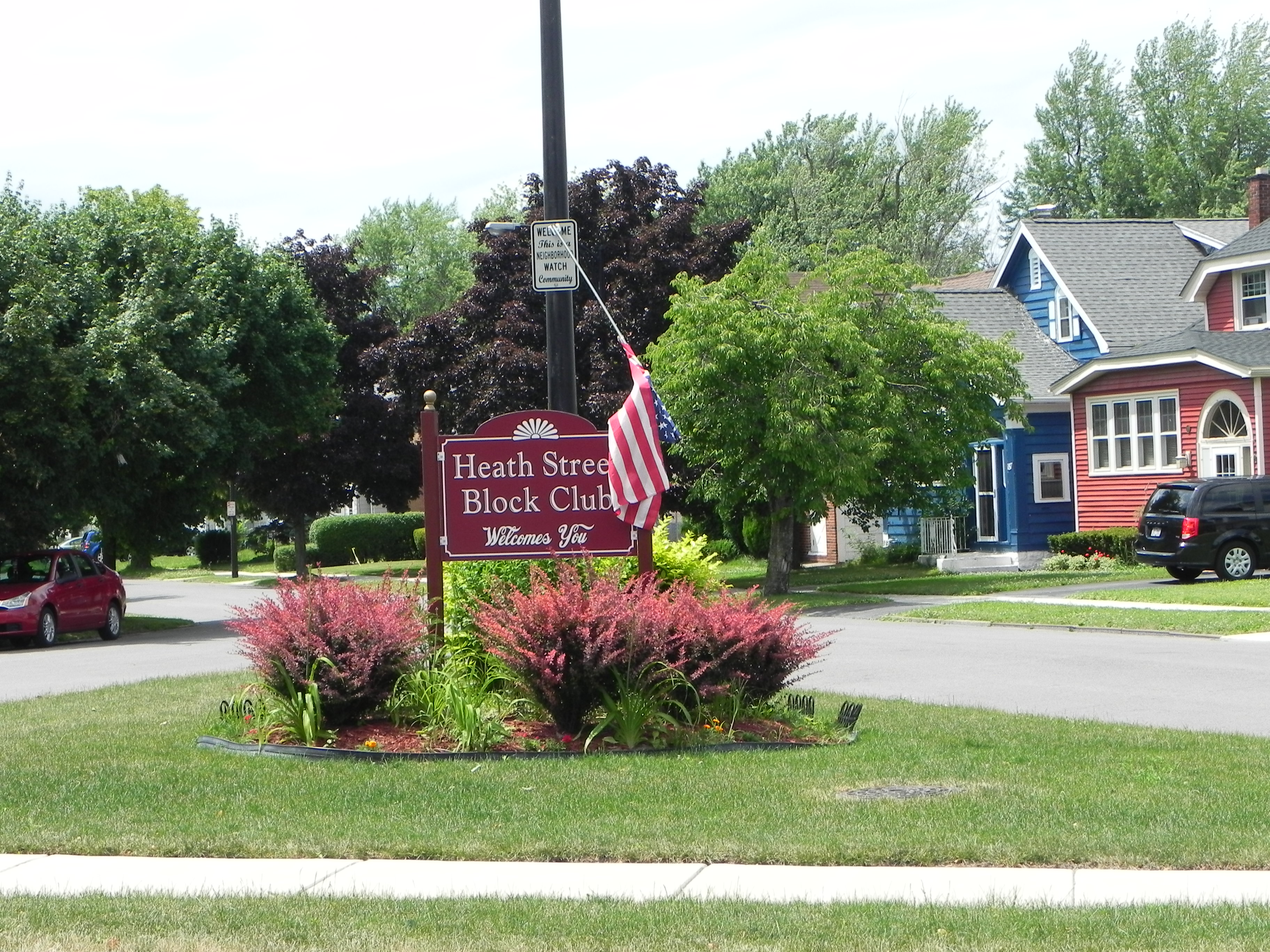
As we experience the initial hints that summer 2014 may be waning in Western New York (after all, the Erie County Fair is just over the horizon), I thought I’d share some photos that I took on July 1st while driving around Buffalo in preparation for a posting soon thereafter.  The images reflect the spirit and pride Buffalonians feel for their neighborhoods throughout the Queen City – neighborhoods that deserve to be nourished and protected.

The images below are certainly just the tip of the iceberg – dozens of other block clubs and neighborhood groups undoubtedly have their own displays that are meant to beautify the streets and represent the self-respect of the men, women and children living nearby.  Please let me know where else I should be looking.

Thanks.

DSCN4318

DSCN4321

DSCN4336DSCN4339

DSCN4343

DSCN4359

DSCN4386

DSCN4401

While they may not depict “block club signs,” I’d like to share a few additional images that I enjoyed while traversing the streets of Buffalo, NY on July 1, 2014: 

DSCN4371

DSCN4398

DSCN4347

With All Due Respect,

Art Giacalone  


BUFFALO GREEN CODE: NUMBERS SPEAK LOUDER THAN WORDS

Posted by Arthur J. Giacalone on July 17, 2014
Posted in: City of Buffalo. 1 Comment

– Profits, not the protection of neighborhoods, is Green Code’s bottom line –

 When Mayor Byron Brown announced the Buffalo Green Code back in 2011, city residents were promised a land use plan that would preserve the character of neighborhoods and encourage future development that was consistent with the prevailing patterns. Residents were told that the historic fabric in a neighborhood – typical lot sizes, scale of existing buildings, and the intensity of development – would provide the foundation for future growth. To date, the authors of the Green Code have allowed these lofty principles to be supplanted by a competing set of interests: the desire of developers to maximize profits.

 Nowhere is this reality more obvious than in the announced plans for Elmwood Avenue and the residential streets throughout the Elmwood Village and West Side. Three numbers – 225, 5, and 0 – tell a numerical tale about the priorities of the Mayor’s Buffalo Green Code [BGC] team.

 Two hundred twenty-five feet (225’) – the maximum lot width in N-2C zones

 Virtually the entire Elmwood strip, from Bryant St. north to Forest Ave., is classified as an “N-2C” (Mixed-Use Center) zoning district under the current version of the BGC. As described in the draft plan, “The N-2C zone addresses mixed-use, walkable centers of Buffalo’s most compact neighborhoods, many of which were fully developed before the automobile became prominent.”

 There are two primary “forms” or “building types” identified for future development on Elmwood Ave. between Bryant and Forest: The “commercial block” building:

BGC- Commercial Block form    Exh 17 - 1053 Elmwood 11-06-13

and the “Shopfront house”:

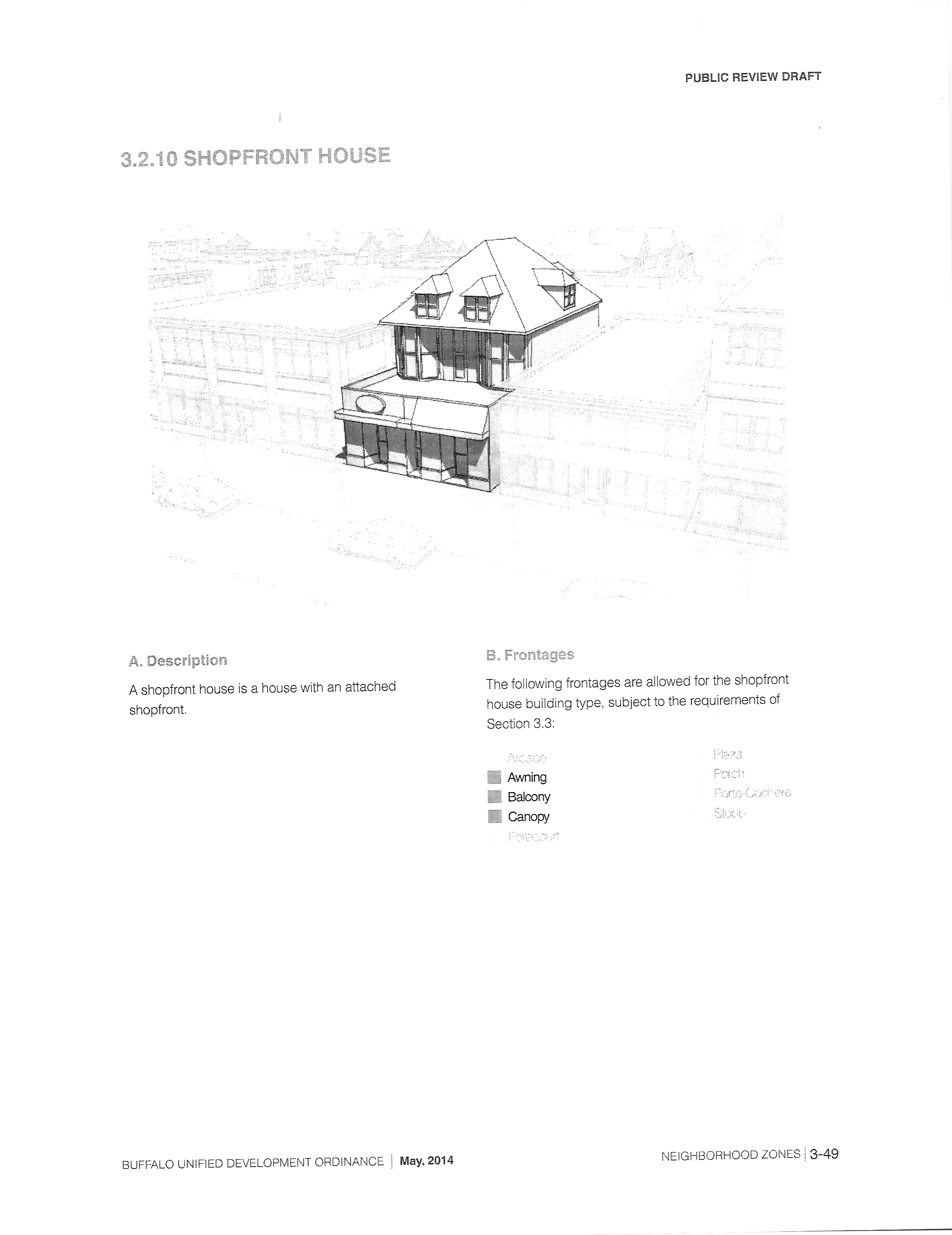
 BGC Shopfront Bldg dark0001  Abraham's Jewelers plus 798 Elmwood

According to the “Property Information” data available at the City of Buffalo website [insert link], there are nineteen (19) parcels of land on Elmwood Ave. in the two-block area between the north side of Bryant St. and the south side of W. Utica St. The stretch includes landmarks such as Hodge Liquor and Casa-Di-Pizza, as well as the 2008 Bank of America branch building. The average width of the lots between Bryant and W. Utica is seventy-two feet (72’). The narrowest parcels are 28 feet (28’) wide. The two widest – one containing a gas station/convenience store, the other the Elmwood Square residential tower – are 200-feet (200’) wide.

Hodge Liquor-Habibi  Casa-Di-Pizza

 While the lots between Bryant and W. Utica range in width from 28’ to 200’, the typical parcel on this stretch of Elmwood Ave. is less than 72’ wide, with eight of the nineteen parcels measuring less than 50-feet in width.

The “Elmwood Village” extends northerly down its namesake roadway to Forest Avenue. The last block – beginning at Bird Avenue – has 29 parcels which include such popular eating spots as Pano’s, Vasili’s and Coles, as well as Mr. Goodbar. The average width of the lots on the Elmwood Village’s northernmost block is only forty-four feet (44’). Nearly eighty percent (80%) of the parcels – 23 of 29 – are less than the average width, while the most expansive lot, measuring one hundred forty-three feet (143’) wide, accommodates Pano’s restaurant and its on-site parking lot(s).     

Exh 13 - 1081 Elmwood Ave. 11-06-13

 Given the typical lot widths on Elmwood Avenue, a fan of the unique character and ambience of the Elmwood Village might expect that the Buffalo Green Code would limit the maximum lot width for future development to somewhere between 40 and 75 feet. After all, the Brown Administration and its consultants promised to preserve the historic fabric of the city’s neighborhoods. Incredibly, the May 2014 Draft Buffalo Green Code – without any explanation – calls for a maximum lot width of two hundred twenty-five feet (225’). That dimension is more than three times the average width of the lots between Bryant and W. Utica, and five times the average width of parcels between Bird and Forest.

Coincidentally, the Elmwood Village Association’s office is located on Elmwood just north of Bird Avenue. At a recent meeting to discuss the proposed BGC, a representative of the EVA – an association that functions more as a junior “Chamber of Commerce” than a grassroots organization – recommended that the maximum lot width in the proposed land us plan be reduced from the bloated 225-feet proposed by the BGC authors to a svelte one hundred fifty feet (150’).

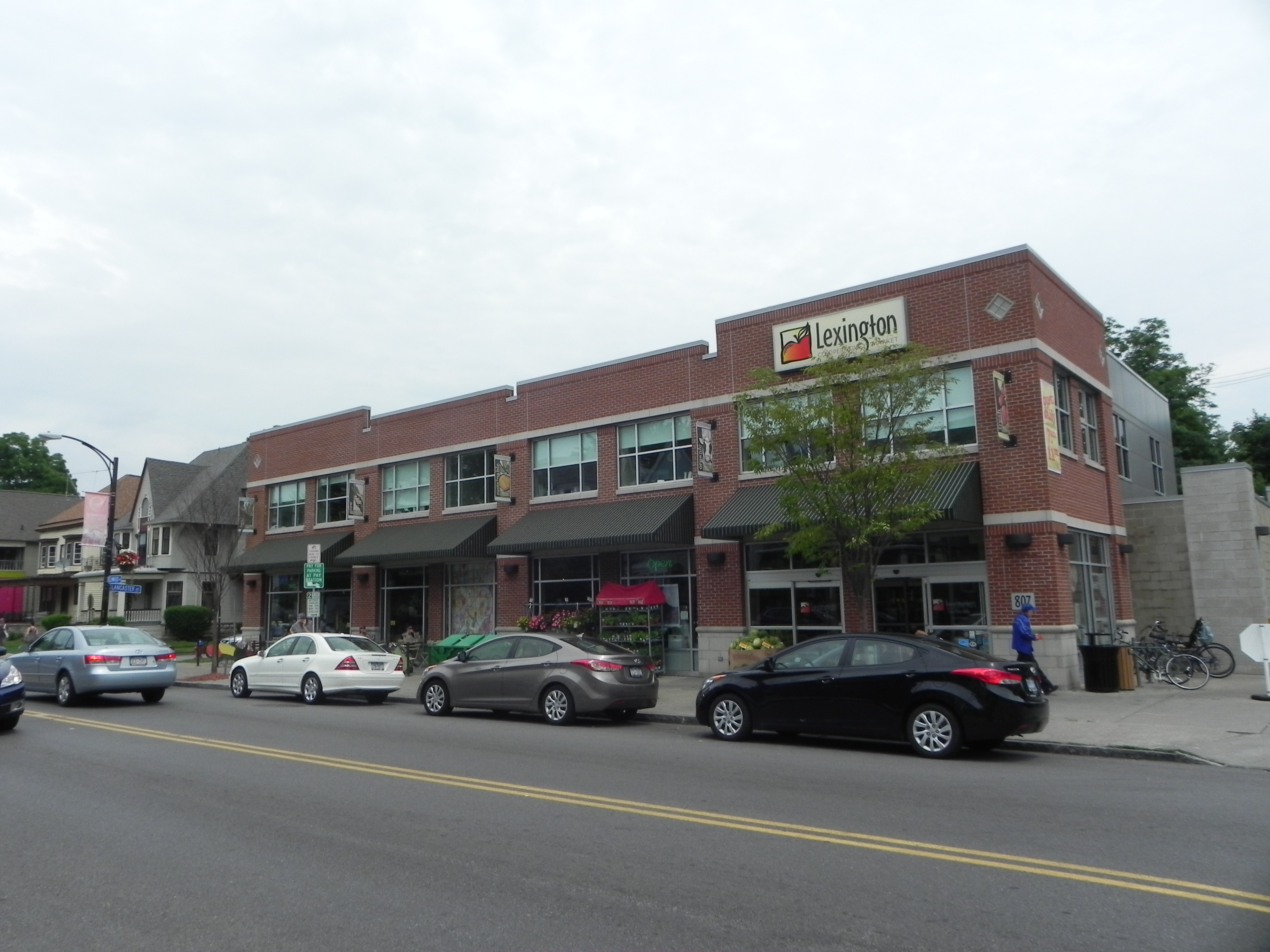
 It appears that the EVA staff and board members do not grasp the fact that the popularity of the Elmwood Village is predicated on its small-scale, bohemian atmosphere.  Although one-third narrower than the city’s current proposal, the EVA’s 150-foot recommendation is wider than the existing “champ” on the Bird-to-Forest block (that is, Pano’s restaurant), and nearly three-and-a-half times the width of that block’s average dimension. It is also wider than the Lexington Co-op’s expansive lot several blocks to the south at the corner of Elmwood and Lancaster.

 Lexington Coop Elmwood at Lancaster

Five – the maximum number of stories for “Commercial Block” buildings in N-2C zones

In 2009, the Buffalo Common Council enacted design standards for the Elmwood Village which accurately describe “the predominant height of buildings” on Elmwood Avenue as “between two and 2 ½ stories.”  The city’s legislators, intent on preserving the character of one of the City of Buffalo’s most attractive and livable communities, mandated that “new buildings shall maintain the predominant scale of other buildings nearby.”

With one major aberration – the 12-story Elmwood Square residential tower on the southeast corner of Elmwood and W. Utica – no building on Elmwood Ave. between Bryant and W. Utica exceeds three stories in height. The vast majority of the structures are either one or two stories tall.

Coffee Culture-448 Elmwood at Bryant    Bank of America

Similarly, none of the buildings on the Elmwood Village’s northernmost block reaches even three-stories in height.

Exh 34 - 1116 Elmwood Ave. 11-06-13    Exh 76 - Front yards 1095-1121 Elmwood

 Nonetheless, the proposed Buffalo Green Code would allow a developer – as of right – to construct a five-story “commercial block” building anywhere in the proposed N-2C zone on Elmwood Avenue. It would not matter if a two-story residence were next to, or across the street from, or immediately to the rear of the new “mixed use” structure. Adding insult to injury, the proposed code would also allow construction of “commercial block” buildings – up to four-stories in height – on corner lots of residential streets throughout the Elmwood Village and West Side.  

 ZERO – setback requirements and number of required parking spaces in N-2C zones

Given the overly generous lot-width and building-height dimensions in the draft Buffalo Green Code, and the presence of homes on Elmwood Avenue and the abutting residential streets, one might think that the so-called “commercial block” buildings in the Elmwood Village would be required to have substantial side and rear yards. Just the opposite is true. As currently proposed, commercial block buildings would be permitted to cover one hundred percent (100%) of a parcel in the N-2C zones – that is, such structures would not be required to have any front, side, or rear yards, and could cover the entire lot.

The one-hundred-percent-lot-coverage provision is made possible by inclusion of another ZERO in the draft BGC: “The provision of off-street vehicle parking is not required.” Despite the paucity of parking spaces on Elmwood Avenue, businesses would be allowed to provide ZERO off-street parking spaces. While some commercial property owners might decide that it is in their best interest to offer clientele the convenience of off-street parking spaces, others will maximize the square-footage of buildings by providing no or grossly inadequate parking. If the ZERO off-street parking provision is not modified, existing Elmwood Avenue shops and businesses will be at the mercy of future developers who may or may not feel obliged to offer on-site parking facilities.

Customers of Elmwood Avenue businesses already find it necessary to park on adjacent residential streets, complicating the lives of homeowners and tenants who lack their own off-street parking. The city’s elimination of any requirement for new (or expanding) businesses to provide on-site parking spaces would exacerbate the situation, pushing even larger numbers of Elmwood Avenue visitors onto congested and narrow side street, and further impacting the privacy, convenience, and quality of life of nearby residents.

In another instance of “adding insult to injury,” while Elmwood Avenue business will not be required to provide any off-street parking spaces, the proposed Green Code would allow the city or a non-profit organization to construct so-called “neighborhood parking lots” on residential streets by way of a “special use permit.” Given the developed nature of the Elmwood Village and West Side neighborhoods, such parking lots would most likely require the demolition of one of more existing homes, and would subject adjoining residents to the noise, fumes, and loss of privacy that accompanies a parking facility.  

 157,500 sq. ft. – the potential size of a “commercial block” building on Elmwood Ave.

There is a fourth number that should be considered in order to fully appreciate the pro-developer perspective of the proposed Buffalo Green Code. That number is 157,500 square feet, the gross floor area of a commercial block building that could be constructed on Elmwood Avenue “by right” if the City’s Common Council adopts the proposed BGC without drastic changes. It is an extremely large number when compared to the typical buildings on Elmwood Avenue.

Here is a possible scenario: A developer pieces together six or seven narrow Elmwood Avenue parcels to create a lot that is 140-feet deep and 225-feet wide, demolishes the existing residences and small shops, and constructs a 5-story “commercial block” building that covers the entire parcel. The resulting structure would contain 157,500 square feet of space [5 x 225 ft. x 140 ft. = 157,500 sq. ft.].      

The comparison of the scale of a 157,000-square-foot structure with several well-known Elmwood Village buildings is instructive:

             * Casa-Di-Pizza occupies a two-story building on a 64-foot wide lot, and has a total gross floor area of under 11,500 square feet.

             * The two-story iconic building that Café Aroma shares with Talking Leaves book store at the southeast corner of Elmwood and Bidwell Parkway has 7,500 sq. ft. of floor area.

 Cafe Aroma-Talking Leaves 141 Bidwell

            * The Lexington Co-op’s building contains 8,880 square feet.

           * The one-story structure that houses Spot Coffee, Agave Mexican restaurant, and Panera Bread totals 11,954 square feet.

Spot Coffee 765 Elmwood at Cleveland

            * Mr. Goodbar’s night spot occupies a 2-story building with a total of 6,930 sq. ft.
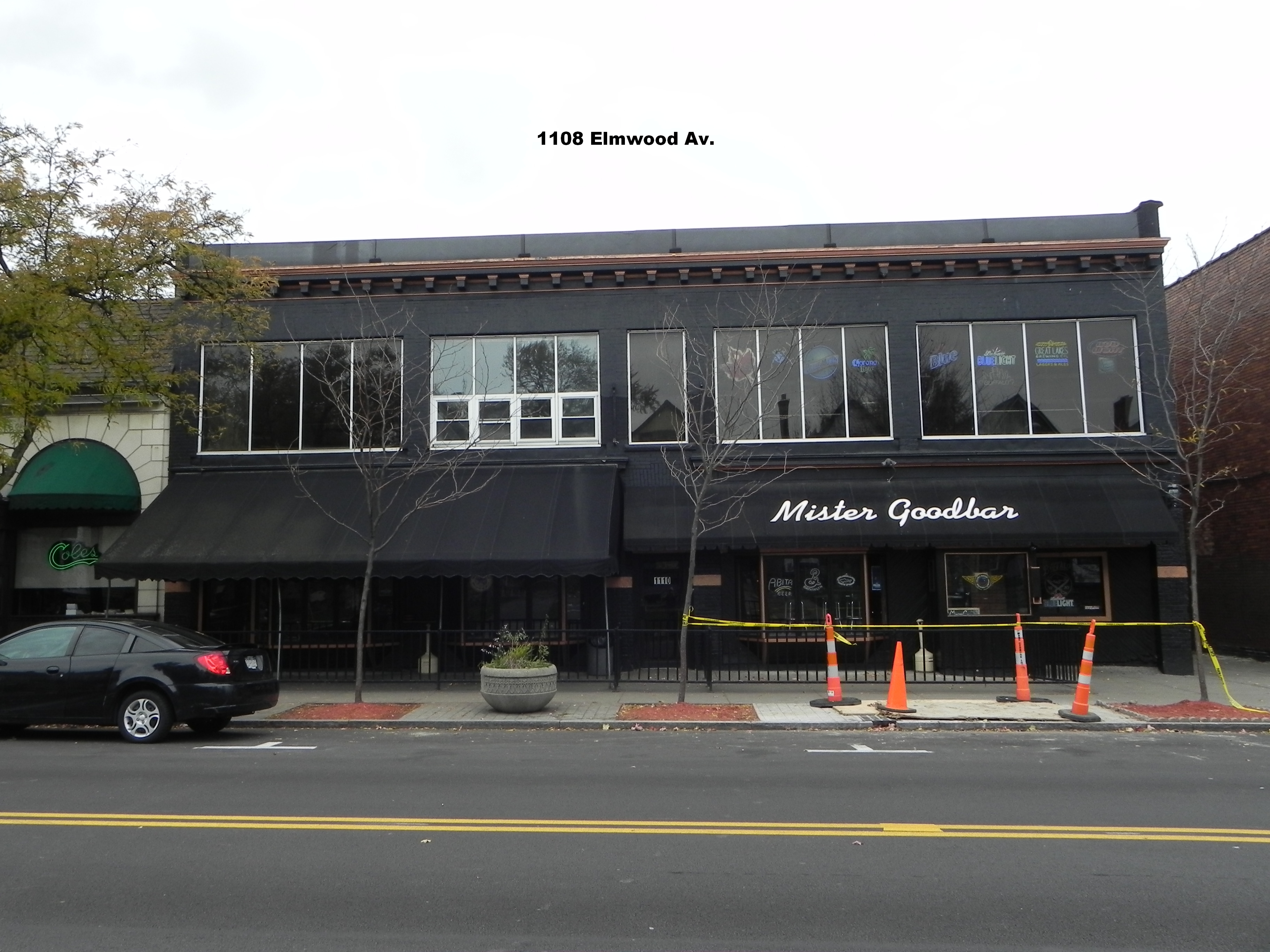
Exh 33 - 1108 Elmwood Ave. 11-06-13

 The hypothetical 157,500 square foot building would be so large and out-of-scale with the typical Elmwood Village buildings that it would contain nearly 50,000 additional square feet than the 12-story Elmwood Square apartment and retail tower on the southeast corner of Elmwood and W. Utica. The Elmwood Square project totals 107,512 square feet of space, 98,197 sq. ft. of apartments, and 9,315 sq. ft. of retail shops. Even a building constructed in compliance with the Elmwood Village Association’s recommended 150-foot-wide standard would be grossly out-of-scale with existing Elmwood Village fixtures, and would contain approximately the same square footage as the 12-story Elmwood Square tower: 5 X 150 ft. X 140 ft. = 105,000 sq. ft.  

 BOTTOM LINE: MAYOR BROWN’S ADMINISTRATION NEEDS TO DELIVER WHAT IT PROMISED. Residents deserve a Land Use Plan that preserves neighborhood character, not a code that generously fulfills developers’ desire for the largest buildings and greatest profits.

With All Due Respect,

Art Giacalone


Buffalo Green Code: Only the privileged few will be protected from commercialization

Posted by Arthur J. Giacalone on July 2, 2014
Posted in: City of Buffalo, Green Code. Leave a comment
– Proposed zoning law brings commercial uses, uncertainty, and inadequate safeguards to the vast majority of Buffalo’s residential neighborhoods –

Proponents of the proposed Buffalo Green Code [BGC] proclaim that Buffalo’s new zoning and development ordinance will bring clarity and predictability to the land use process.  According to BGC advocates, neighbors will know with certainty what can and cannot be built next door, and will no longer fear development due to inadequate safeguards.  In truth, if the Common Council enacts the current version of the Green Code  without major revisions, these promises will only be true for the privileged few who happen to live in the Queen City’s most exclusive neighborhoods.  The vast majority of city residents will face uncertainty, commercialization of their residential streets, and wholly inadequate protection from incompatible new development.

BGC UDO May Map 20140001

There will be “winners.”  Adoption of the Green Code will bring few, if any, noticeable changes for the fortunate few who reside in a mansion on Lincoln Parkway, Rumsey Road, or Chapin Parkway, a gracious home on McKinley Parkway, Depew, Morris or Cleveland avenues, or on a few dozen other popular streets (such as Argyle Park, Tillinghast Place, Admiral Road or Coolidge Road).  Detached single-family homes will remain the norm.  And they will not directly experience the increased noise, loss of privacy, or traffic that accompanies commercialization of a quiet residential street.

Image  DSCN4324

Image

There will be many more “losers.”  For the vast majority of Buffalonians – whether they live in the University District, Parkside neighborhood, the Elmwood Village, the West Side, the East Side or South Buffalo – the draft Buffalo Green Code will bring the threat of commercialization with little, if any, meaningful protections.

Image

Image

Image

Image

Image

Image

Image

Image

Image

To understand the problematic nature of the changes proposed in the BGC, it helps to be reminded of the framework found in the existing City of Buffalo zoning ordinance.  Most residential neighborhoods currently fall within two zoning districts:

 A.  Today, the “R1 One-Family District” is the most restricted zoning category.  As the name implies, “R1” areas consist primarily of detached single-family dwellings on relatively large urban lots with front, rear and side yards.  While houses of worship and schools are allowed, commercial uses are prohibited with one exception:  a physician or dentist may have an office in her or his home.

B.  Today, the “R2 Dwelling District” permits any use allowed in the “R1” district, as well as two-family dwellings, “multifamily or row dwellings” not more than 200 feet in length, college or university facilities, the office of a nonprofit civic, religious or charitable organization, and hospitals.  As in the R1 district, all lots must have front, rear and side yards.  In addition to physicians and dentists, other resident professionals, such as psychologists, lawyers and engineers, are allowed to have an office located wholly within his or her dwelling.  Also, certain “home occupations” are allowed within the dwelling, and a residential beauty parlor (limited to two chairs) is permitted after a public hearing and Common Council approval.

The Draft Buffalo Green Code replaces the current “R1” one-family dwelling district with three “Single Family” zones differentiated by the size and width of the lots: “N-4-30,” “N-4-45” and “N-4-60” [the “N-4” zones].  The fortunate folk residing in these restricted neighborhoods actually gain a new layer of protection from a number of non-residential uses, such as houses of worship, or primary or secondary schools.  While these uses are permitted “as of right” in the current zoning ordinance, under the proposed BGC, a “special use permit” – approved by the Common Council after a public hearing – would be required.

But even more significantly, as currently proposed, the “N-4” zone enclaves would NOT be exposed under the Green Code to potentially problematic types of building “forms” – such as “commercial block” and “shopfront house” – which are being proposed for a huge portion of the City of Buffalo [discussed below].  And, the privileged few residing on “N-4” streets, with limited exceptions,* would NOT be subjected to the non-traditional residential activities, lodging, or retail and service uses proposed for the areas of the City of Buffalo where the vast majority of its citizens reside.
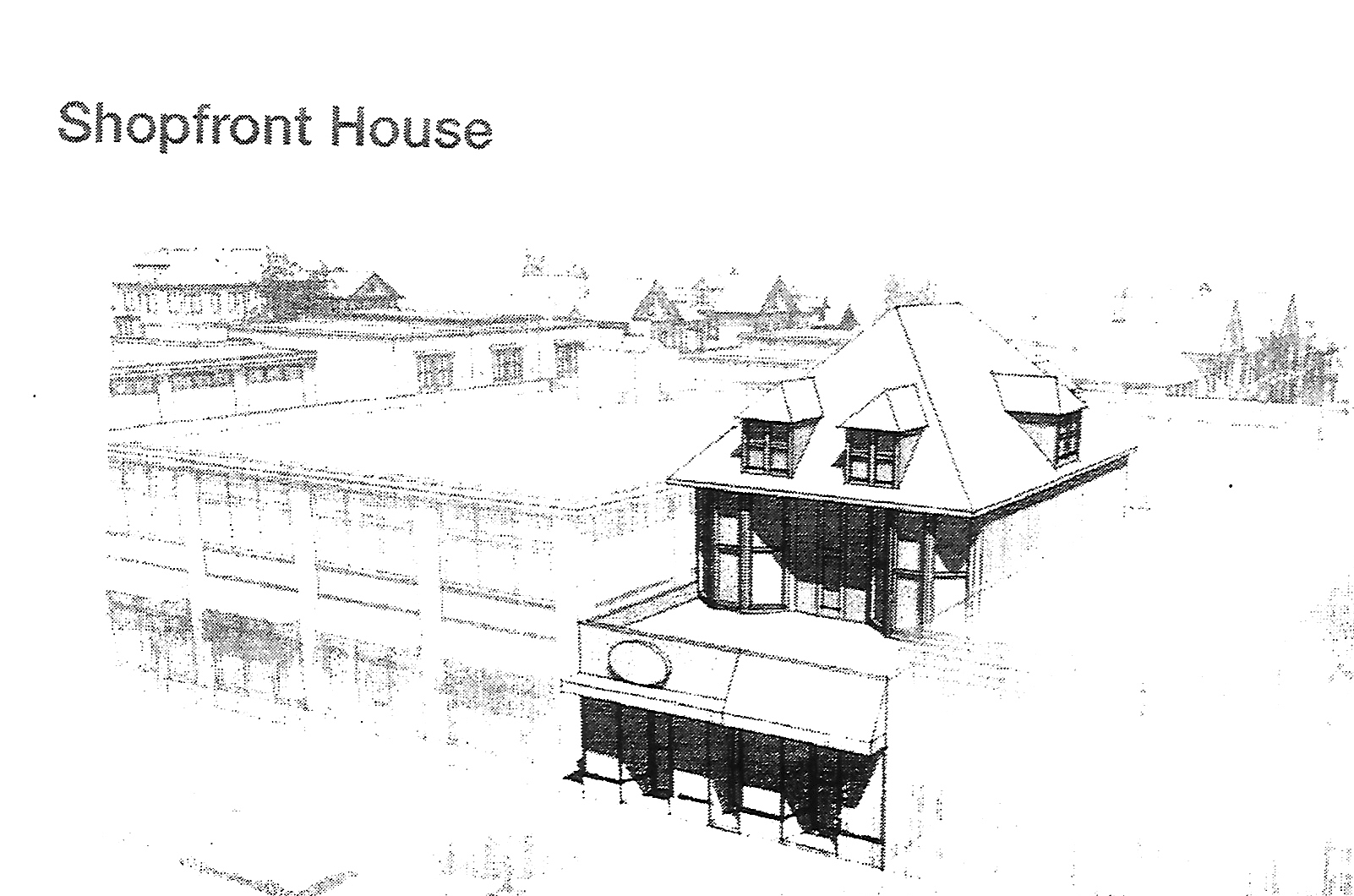
*Note:  The exceptions in the proposed “N-4” neighborhood include “Group Home”, “Day Care Home”, and “Public Safety Facility” as “as of right” uses, and “Bed & Breakfast” (with as many as 10 guests at a time) as a “special use permit” activity allowed with approval by the Common Council.  Of course, a corner lot in an N-4 zone that is across the street from, or adjoins, one of less-advantaged zones, or an N-4 parcel that backs into a less fortunate zone, may find itself indirectly impacted by the commercialization activities encouraged by the proposed Buffalo Green Code.
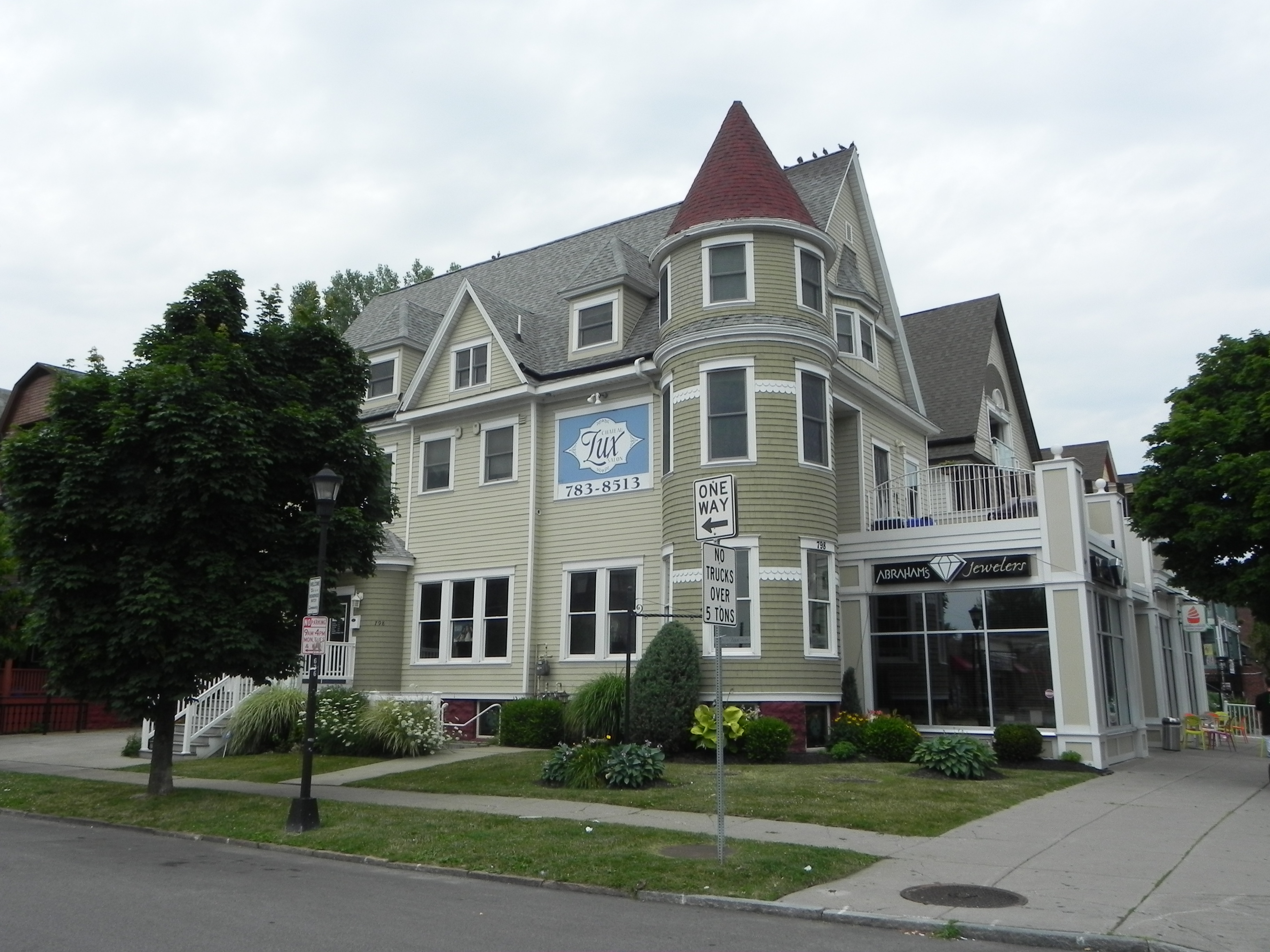
Image  Image

In sharp contrast to the exclusive neighborhoods favored with “N-4” status, a much harsher reality will face most Buffalonians if the Common Council enacts into the law the current version of the proposed zoning and development ordinance.
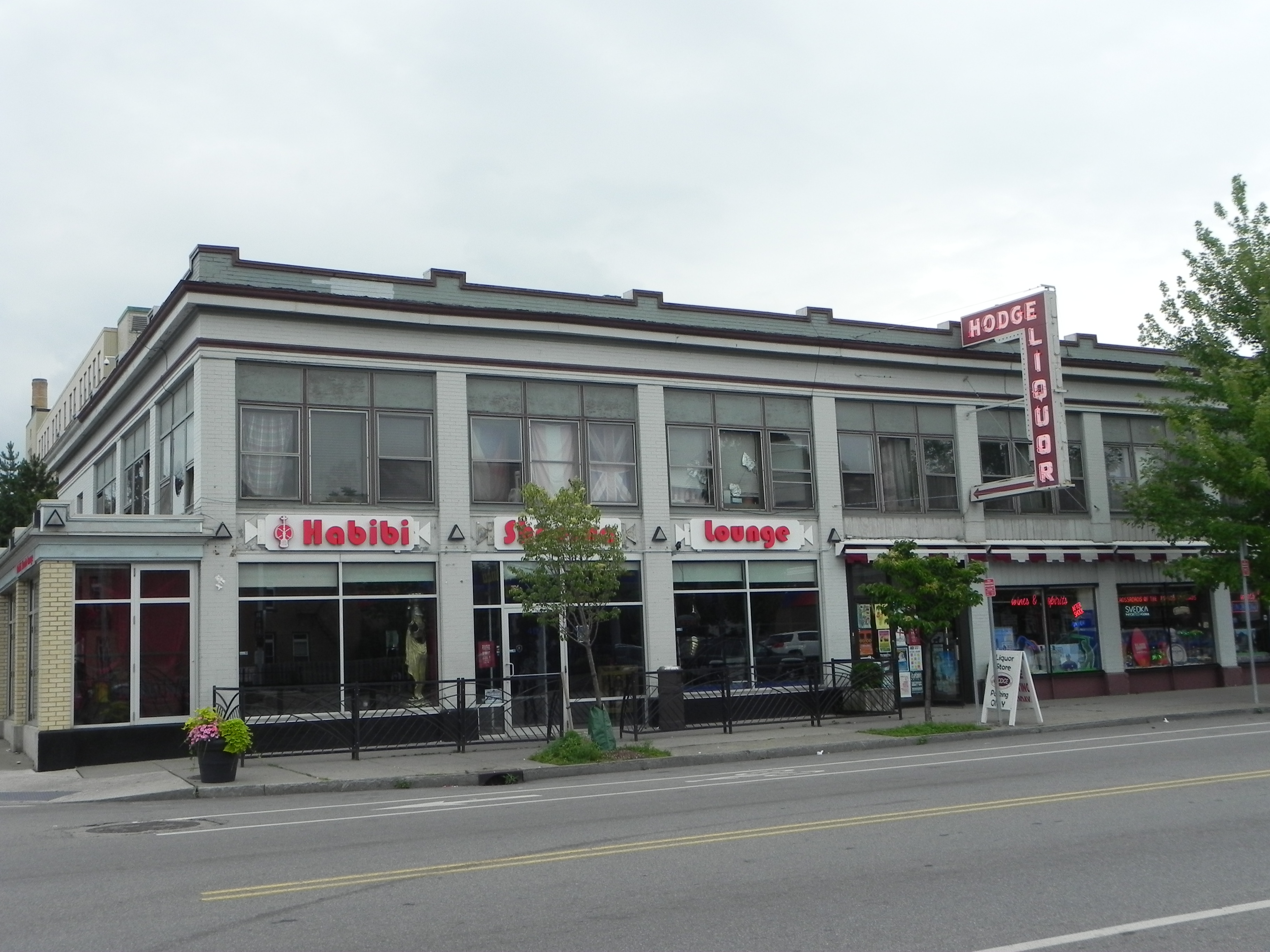
Substantial portions of Buffalo’s residential neighborhoods will be designated either “N-2R (Residential)” [primarily areas west of Main St. and south of the Scajaquada Expressway (Rte. 198), including the Elmwood Village and most of the West Side], or “N-3R (Residential)” [including large portions of the city east of Main St. and in south Buffalo].  Despite their “Residential” designation, two inherently commercial “forms” – “commercial block” and “shopfront house” – would be allowed on corner lots throughout the “N-2R” and “N-3R” zones if the Common Council approves a “special use permit” for the property.

The Draft Buffalo Green Code provides the following descriptions for these structures:

          A commercial block is a structure of two or more stories designed to facilitate pedestrian-oriented retail or office uses on the ground floor, with upper floors typically designed for residential, hospitality, or employment uses.

Image

          A shopfront house is a house with an attached shopfront.

Image

As currently proposed, a “commercial block” building could be 4-stories in height in an “N-2R” zone, and three-stories tall in an “N-3R” zone. In either zone, a “commercial block” building would be allowed to cover 100% of the lot, that is, no front, rear or side yards of any kind would be required. In an “N-2R” zone, the lot could be as miniscule as 900 square feet in area. In an “N-3R” zone, the minimal lot area is doubled to 1,800 square feet, but is still a remarkably small parcel. The minimum lot area requirements for a “shopfront house” are the same as for the “commercial block” building, but the “shopfront house” is required to have a rear yard encompassing 10% of the parcel. The maximum height allowed for a “shopfront house” is a half-story shorter than for a “commercial block.”

What is most disconcerting for residents in the proposed N-2R and N-3R zones is the long list of uses that are NOT currently allowed in Buffalo’s “R2” zoning districts, but which could be developed in residential neighborhoods under the draft Buffalo Green Code:

        A. Uses Permitted-by-Right. The following uses not currently allowed in an R2 zone would be “permitted by-right” if the draft BGC is enacted:

– Public Safety Facility (for example, police and fire stations, emergency medical services substations, and military facilities)

– Bed & Breakfast (with up to ten guests at any one time)

– Day Care Home (where a permanent resident provides licensed care for up to 6 children or functionally impaired adults for less than 24 hours per day)

– Market Garden (a place where food or ornamental crops are cultivated or processed for sale or donation to the general public).

Note: Although a use permitted-by-right removes uncertainty from the zoning and development process, more significantly, it eliminates the ability of neighbors to have any meaningful input on what uses will occur next door or down the street.

        B. Uses requiring a Special Use Permit. Another group of uses not currently allowed in an R2 zone could be built anywhere within an N-2R and/or N-3 zone if the Common Council grants a “special use permit”:

– Cultural Facility (such as museums, cultural centers, historical societies, and libraries operated by a government or non-profit organization)

– Residential Care Facility (such as nursing homes, assisted living facilities) [in N-2R zone]

– Government Offices [in N-2R zone]

– Lodge or Private Club [in N-2R zone]

– Professional Offices (without the requirement that the professionals reside in the home) [in N-2R zone]

– Neighborhood Parking Lot (operated by a government or nonprofit organization as a service to the public – may NOT be operated on or extended to a corner lot).

          C. Uses requiring a Special Use Permit & limited to corner lots only. A third category of uses requires a “special use permit” from the Common Council but is limited to corner lots only:

– Animal Care Establishment (including veterinary offices for treatment of domestic animals; pet boarding and grooming facilities)

– Commercial School

– Day Care Center (for children or adults)

– Funeral Services (may include chapels, crematoriums, and showrooms for the sale of caskets, etc.)

– Live Entertainment (including music or disc jockey performance, live theater, stand-up comedy, dance, etc.)

– Medical Clinic (where patients are treated on an outpatient basis)

– Restaurant

 – Tavern

 – Outdoor Dining (that is, an outdoor seating area for a restaurant or tavern)

– Retail & Service, General (a business that provides goods or services directly to the public with a gross floor area of less than 10,000 square feet)

– Industrial, Artisan (a manufacturing use involving small-scale production or assembly with little or no noxious byproducts, and may include a showroom or ancillary sales of products)

– Bicycle Parking Station (a structure designed for use as a long-term bicycle parking facility, and which may include ancillary uses such as bicycle repairs and showers or lockers for bicycle commuters).

– Residential Care Facility (such as a nursing homes, assisted living facilities) [in N-3R zone]

– Government Offices [in N-3R zone]

– Lodge or Private Club [in an N-3R zone]

– Professional Offices (without the requirement that the professionals reside in the home) [in N-3R zone]

Post No. 11 - Table Comparing USES 07-07-2014

Note:  The many and varied uses requiring a special use permit from the Common Council raise two very important issues:

First, they create substantial uncertainty for neighbors. As long as the uses are part of the new zoning code, the possibility will exist that a current or potential property owner will apply for the permit.

Second, a special use permit has long been considered the easiest “discretionary” approval for an applicant to obtain. New York’s courts have long held that the inclusion of a use in a zoning law as a special permit use is equivalent to a legislative finding that the permitted use is in harmony with a community’s general zoning plan and will not adversely affect the neighborhood. In other words, an applicant’s burden of proof is a relatively light one.

It appears that the authors of the draft BGC have forgotten a quote, attributed to Austrian-born architect Christopher Alexander, that prominently adorns earlier documents disseminated in support of “Buffalo’s New Zoning,” and was referenced by a City Hall staffer at a recent Buffalo Green Code workshop:

            “Every increment of construction must be done in such a way as to heal the city.”

Healing?  The Buffalo Green Code – if not drastically altered – will inflict wounds to the body and spirit of most City of Buffalo neighborhoods for decades to come.

With All Due Respect,

Art Giacalone

Posts navigation

← Older Entries
Newer Entries →
  • CATEGORIES

  • March 2026
    M T W T F S S
     1
    2345678
    9101112131415
    16171819202122
    23242526272829
    3031  
    « Nov    
  • DISCLAIMER

    This blog is provided for general informational purposes only. It should not be construed as legal advice and is not intended to be a substitute for legal counsel. Persons requiring legal advice should retain a properly licensed lawyer. No attorney-client relationship will be formed based on use of this site and any comments or posts to this blog will not be privileged or confidential. *************** This blog's author, Arthur J. Giacalone, does not intend or consider the communications at this blog to be ATTORNEY ADVERTISING. The primary purpose of the communication is not for the retention of Mr. Giacalone's legal services. [See definition of "Advertisement" at Part 1200, Rules of Professional Conduct, Rule 1.0(a).] Nonetheless, in case the proper authorities choose to treat this web site as ATTORNEY ADVERTISING, the street address, phone number and email address of the law office of Arthur J. Giacalone are: 17 Oschawa Avenue, Buffalo, New York 14210; (716) 436-2646; AJGiacalone@twc.com.
Blog at WordPress.com.
With All Due Respect
Blog at WordPress.com.
  • Subscribe Subscribed
    • With All Due Respect
    • Join 62 other subscribers
    • Already have a WordPress.com account? Log in now.
    • With All Due Respect
    • Subscribe Subscribed
    • Sign up
    • Log in
    • Report this content
    • View site in Reader
    • Manage subscriptions
    • Collapse this bar
 

Loading Comments...