With All Due Respect

Photos and musings by Arthur J. Giacalone

  • About The Author
  • About This Blog
  • Pre-WADR Archives

Wounded Knee Medals of Dishonor stain WNY

Posted by Arthur J. Giacalone on May 1, 2021
Posted in: Uncategorized. Leave a comment

[Note:  A version of this post was published in the May 1, 2021 print version of the Buffalo News “Everybody’s Column” under the headline, “Congress, Niagara Falls must remove Sgt. Toy’s name.”  Here’s a link to the on-line letter:

https://buffalonews.com/opinion/letters/letter-congress-niagara-falls-must-remove-sgt-toy-s-name/article_c305a660-a778-11eb-b5d9-33f3c726d3db.html]

The massacre by the U.S. Army at Wounded Knee, South Dakota, occurred 130 years ago and more than 1,100 miles from the Niagara Frontier. But the repercussions of that infamous slaughter of hundreds of Lakota Sioux, including unarmed women and children, are felt right here in Western New York.

Twenty Medals of Honor – meant to recognize “conspicuous gallantry and intrepidity at the risk of life above and beyond the call of duty” – were awarded to troops involved in the violent actions at Wounded Knee. One of the recipients, Frederick E. Toy, was born and worked in Buffalo, and settled with his family in Niagara Falls subsequent to his retirement from the Army.

Toy was a First Sergeant at the time of the tragic events. His commander, Capt. Winfield Scott Edgerly, used the following words when recommending the Buffalo native for the Medal of Honor: “The fight was unexpected and I saw the sergeant deliberately aim at and hit two Indians who had run into the ravine; his coolness and bravery exciting my admiration at the time.”

Sgt. Toy is one of eight residents of the Cataract City with individual monuments as Medal of Honors winners at the American Veterans Monument in the city’s Hyde Park. Nationally, members of the Lakota tribe are lobbying Congress to enact the “Remove the Stain” bill to rescind all 20 medals awarded to Wounded Knee participants. Locally, Paul Winnie, a member of the Tonawanda Seneca Nation, and Niagara Falls Councilman Bill Kennedy, Jr., would like to see Sgt. Toy’s name removed from the Hyde Park monument. As Kennedy has stated, “There is no honor in genocide.”

Congress and Niagara Falls’ Council must demonstrate respect for the Lakota – and the medal – by removing the stain.

With All Due Respect,

Arthur Giacalone

Good Day Sunshine from Cazenovia Park

Posted by Arthur J. Giacalone on April 19, 2021
Posted in: Cazenovia Park, Olmsted Parks, South Buffalo, WNY Photos. 1 Comment

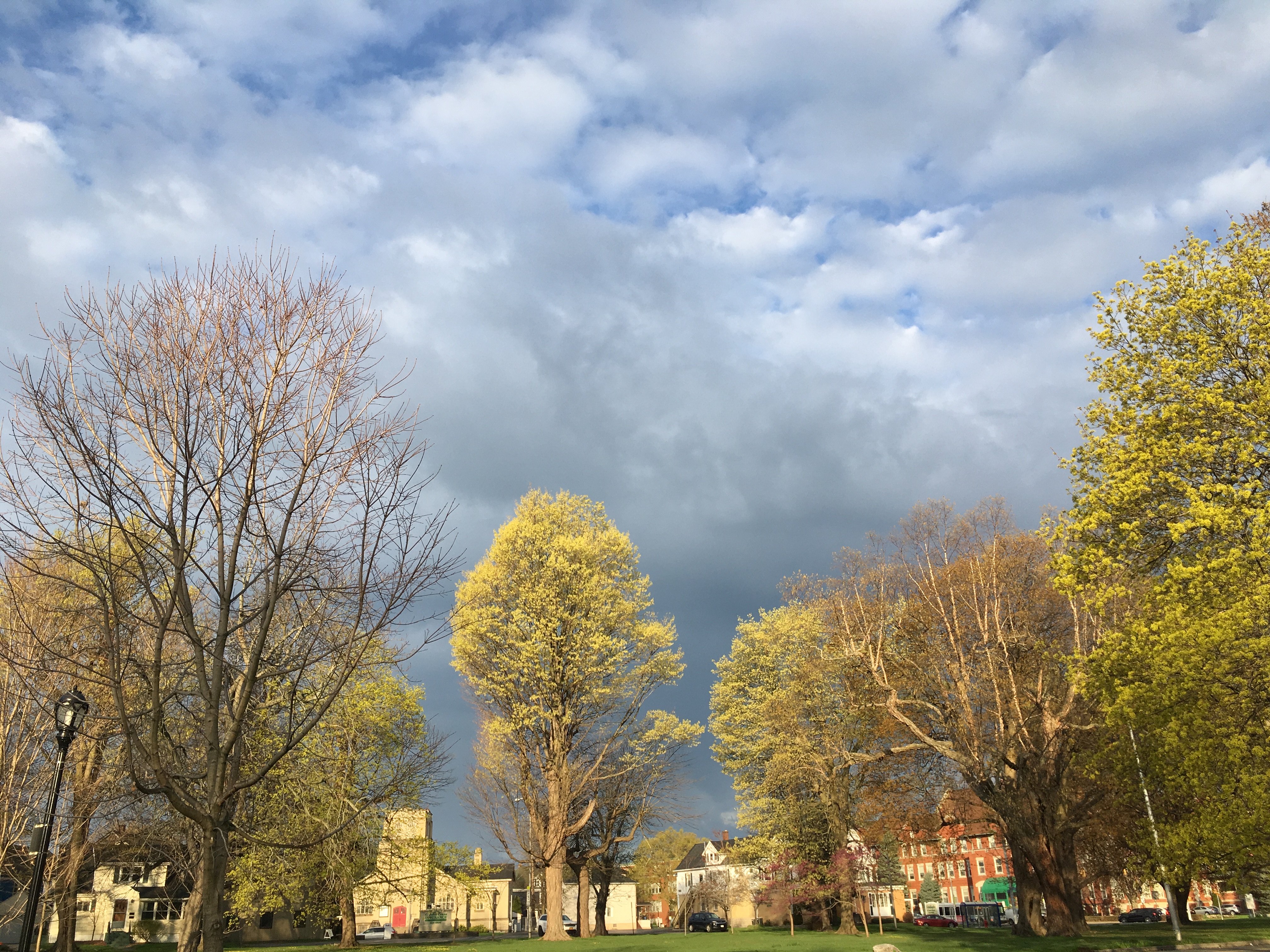
The sunlight had a remarkable (otherworldly?) quality to it during my early-morning walk today through South Buffalo’s Olmsted gem, Cazenovia Park.  I’ll let the pictures do the talking.

[Click on an image to enlarge it.]

With All Due Respect,

Art Giacalone

Buffalo’s Common Council has the same rights as any other client

Posted by Arthur J. Giacalone on April 14, 2021
Posted in: City of Buffalo, Professional Ethics. Leave a comment

When a member of the City of Buffalo’s Corporation Counsel’s Office represents the City of Buffalo Common Council in a court proceeding, or is asked for legal advice and guidance by the Common Council or one of its members, she or he is engaging in an attorney-client relationship with the Common Council.  On each such occasion, the attorney – the Corporation Counsel or the designated lawyer – owes to the client – the Common Council or its members – the same duties and responsibilities as any other attorney owes to her or his client.

In other words, Buffalo’s legislative body and the duly elected legislators have the same rights as any other client when being represented or advised by the City’s Corporation Counsel’s Office.

So it came as no surprise to this lawyer when I saw the following headline in the April 12, 2021 Buffalo News:  “Council seeks an independent attorney.”  It goes without saying that every client is owed an independent attorney.  The issues expressed by Council President Darius G. Pridgen, University Council Member Rasheed N.C. Wyatt, and Majority Leader David A. Rivera – delays in performance of tasks, conflicts of interest between the Common Council and Mayor Byron W. Brown (who appoints the Corporation Counsel), and confidentiality of information – are legitimate and problematic.  And, they bring to mind the following rights, in particular, found in the official “Statement of Client’s Rights” that every New York State lawyer, including a lawyer in a government law office, owes his or her client:

From STATEMENT OF CLIENT’S RIGHTS

– You are entitled to your lawyer’s independent professional judgment and undivided loyalty uncompromised by conflicts of interest.

– You are entitled to have your questions and concerns addressed promptly and to receive a prompt rely to your letters, telephone calls, emails, faxes, and other communications.

– You have the right to privacy in your communications with your lawyer and to have your confidential information preserved by your lawyer to the extent required by law.

– You are entitled to have your legitimate objectives respected by your attorney…

– You are entitled to be kept reasonably informed as to the status of your matter and are entitled to have your attorney promptly comply with your reasonable requests for information, including your requests for copies of papers relevant to the matter. You are entitled to sufficient information to allow you to participate meaningfully in the development of your matter and make informed decisions regarding the representation.

– You are entitled to have your attorney handle your legal matter competently and diligently, in accordance with the highest standards of the profession. If you are not satisfied with how your matter is being handled, you have the right to discharge your attorney and terminate the attorney-client relationship at any time…

[Click here for the full Statement of Client’s Rights, codified at 22 NYCRR 1210.1.]

It is true that the City of Buffalo’s Charter, when listing the duties and powers of the Corporation Counsel, states, “The corporation counsel shall prosecute and defend all actions and proceedings brought by or against the city or any of its officers, departments, commissions, board, or other agencies…”  However, the Charter cannot overrule an attorney’s obligation to afford her or his client the rights and ethical behavior mandated in New York State’s “Rules of Professional Conduct.”  The Charter indirectly acknowledges this reality when it also lists the following amongst the Corporation Counsel’s duties and powers:  “When necessary, the corporation counsel shall have the power to designate the need for counsel outside of the law department to deal with conflicts of interest or special circumstances.”

I would argue that the City’s “top lawyer” is under the duty to “designate the need for counsel outside of the law department” whenever its client, the Common Council, expresses its belief that a conflict of interest or special circumstances exists.  It is the client’s right to express such concerns, and to have those concerns respected by its attorney.

The Common Council deserves independent legal representation and advice.  The existence of an independent attorney, dedicated solely to the needs and preferences of the Common Council, would not only improve its efficiency and effectiveness.  It would strengthen the City’s legislative branch by reinforcing its independence from the executive branch.  That would serve the best interests of the Common Council’s constituents, the residents of the City of Buffalo.

With All Due Respect,

Art Giacalone

Buffalo’s Common Council must fully utilize SEQRA when assessing cannabis cultivation facilities

Posted by Arthur J. Giacalone on April 12, 2021
Posted in: Cannabis, City of Buffalo, Development, SEQRA, South Buffalo, Waterfront. Leave a comment

[CAVEAT:  When this post was initially written, I incorrectly believed that the City of Buffalo Common Council had not rezoned land at the Buffalo Lakeside Commerce Park in furtherance of the subject cannabis cultivation facility.  In fact, on May 14, 2019, Buffalo’s Common Council did approve Zephyr Partners’ request to rezone four parcels of land on Laborer’s Way from D-C (“Flex-Commercial”) to D-IL (“Light Industrial”).  On March 30, 2021, when I investigated the zoning status of 15, 51, 87 and 125 Laborer’s Way, in preparation for writing this series of posts, the City of Buffalo’s on-line “Property Information” site incorrectly listed the zoning status of each of the four parcels as “D-C.”   I regret any confusion this post may have caused regarding the Common Council’s action in May 2019 in furtherance of Zephyr Partners’ plans.]  

[UPDATE:  What was a theoretical threat when I wrote this post this past April was become a reality.  Zephyr Partners has applied for a Major Site Plan Review for Phase 1 of its proposed 1.375 million square-foot cannabis cultivation/processing/ distribution facility at the Buffalo Lakeside Commerce Park on Buffalo’s Outer Harbor.  The City of Buffalo Planning Board will conduct a virtual public hearing during its October 25, 2021 meeting (which starts at 4 PM) to allow the public an opportunity (most likely its only opportunity) to address the proposed project.  It appears on the agenda as 15 Laborers Way and 310 Ship Canal Parkway.  The applicant’s submissions in support of its request can be found at pages 144-162 of the Planning Board’s 10/25/2021 Journal (the SEAF is at pp. 147-149).  Note:  The Common Council rezoned 15 Laborers Way and three adjoining parcels from D-C to D-IL on May 14, 2019.  [The papers before the Common Council at that time can be found at pages 819-1,022 of the “Proceedings” for the May 14, 2019 regular meeting.]   

[Note: This posting is the third in a three-part series regarding the development of cannabis cultivation facilities in Buffalo, NY, and will discuss how SEQRA provides the investigatory tools to assist Buffalo’s Common Council in assessing the potential environmental impacts of a  marijuana grow facility. The first post, titled “South Buffalo Cannabis Facility is not in the Public Interest, ” provides my concerns regarding a marijuana cultivation-processing-shipping facility proposed in 2019 for the southern end of Buffalo’s Outer Harbor by Zephyr Partners (and, that is expected to be resurrected now that NYS has an adult-use marijuana law). The second, “Buffalo’s Green Code Prohibits Cannabis Cultivation Facilities,” explains how I reached the conclusion that the City of Buffalo’s zoning ordinance does NOT currently  permit a cannabis “grow” facility within its borders.]

Zephyr Partners applied in early 2019 to rezone about 15 acres of land at the Buffalo Lakeside Commerce Park [BLCP] in South Buffalo as part of its larger plan for a 47-acre, 1.375 million square-foot cannabis cultivation, processing, and shipping facility a short distance from the Lake Erie shoreline.  The developer proposed rezoning four parcels from D-C Flex Commercial to D-IL Light Industrial.  [CORRECTION:  On May 14, 2019, Buffalo’s Common Council did approve Zephyr Partners’ request to rezone 15, 51, 87 and 125 Laborer’s Way from D-C (“Flex-Commercial”) to D-IL (“Light Industrial”) in furtherance of the project.]

I do not doubt the good intentions of the Common Council or its staff when they reviewed the proposed project two years ago and attempted to assess its potential environmental impacts.  But,  I assume that no one involved in the review is an environmental scientist, licensed engineer, or architect.  In effect, this complex and critical task – concerning what is for Buffalo a new and unregulated industry – was performed with a proverbial mask over their eyes and arm tied behind their backs.  In essence, the scope of the environmental review was defined by Wendel, the engineering and architectural firm hired by Zephyr, and virtually all of the information the Common Council and its staff relied upon when assessing potential impacts came from the folks least likely to be objective and totally forthcoming, the project sponsor’s consultants. 

Without adequate tools, the Common Council members unanimously adopted, a “Determination of Non-Significance” or “Negative Declaration” under the State Environmental Quality Review Act [SEQRA].  That document, which was approved on May 14, 2019, declared that the proposed 1.375 million-square-foot cannabis cultivation facility “will not have an adverse impact on the quality of the environment,”  and ended environmental review by concluding that “a Draft Environmental Impact Statement [DEIS] will not be prepared.” 

Here are principles and factors I urge the City of Buffalo to keep in mind if and when the recent enactment of New York’s  Cannabis/Marijuana Regulation & Taxation Act (MRTA) motivates Zephyr Partners to revive its dormant project:

1.  There is a presumption under SEQRA that the proposed facility – a “Type 1 action” – “is likely to have a significant adverse impact on the environment and may require a DEIS” (Draft Environmental Impact Statement). [See 6 NYCRR 617.4(a)(1).] Zephyr’s massive cannabis cultivation/processing/shipping facility does not just barely meet SEQRA’s thresholds for a “Type 1 action.”  It obliterates those standards: 

      (a) The proposed 1,375,000 square-foot facility is nearly six times the footprint of the 240,000 square feet of gross floor area for non-residential construction that triggers SEQRA’s Type 1 status in a city the size of Buffalo.  [Zephyr’s March 5, 2019 letter of intent does not mention this category of Type 1 actions.]

      (b) The plan to physically disturb 47.6 acres of the site is nearly five tines SEQRA’s 10-acre threshold for a Type 1 action. 

Additionally, the fact alone that the proposed cannabis facility is “substantially contiguous to any publicly owned or operated parkland, recreation area or designated open space” – that is, immediately abuts the Ship Canal Commons – makes it a Type 1 action carrying with it the presumption that it is likely to have a significant adverse impact on the environment.  [Zephyr’s March 5, 2019 letter of intent also does not mention this category of Type 1 actions.]

2.  The obligation of a lead agency to issue a Positive Declaration and require the project sponsor to prepare a DEIS is triggered by “a relatively low threshold” – that is, the DEIS is needed if the action MAY have a significant effect on any one or more aspects of the environment. [See 6 NYCRR 617.7(a)(1), 617.1(c).]  Under SEQRA, the Common Council has the obligation – as “stewards of the air, water, land and living resources” – to not shy away from requiring a DEIS, and to not rationalize why a Negative Declaration should be issued.  SEQRA mandates that a Positive Declaration be issued whenever a proposed project may have a significant adverse impact on any aspect of the environment (including aesthetic resources or neighborhood character).

3.  The Environmental Impact Statement is “the heart of SEQRA”. SEQRA has designed the Draft EIS and Final EIS process to ensure that the lead agency undertakes a full review of the adverse environmental effects of a project, provides the public with access to the review and the ability to assist the agency in the decision-making process, considers alternatives to the project, and carefully considers meaningful and practicable mitigation measures.  [See, for example, Miller v. City of Lockport, 210 AD2d 955 (4th Dept. 1994).]  It is an effective tool to help guarantee an informed decision whether to approve or deny a proposed action.

4.  As lead agency, the Common Council has the authority under SEQRA to hire environmental, engineering, or planning consultants to review the project sponsor’s DEIS, and to charge the applicant a fee to recover the actual costs of that review. SEQRA anticipates that members of a lead agency often may lack the technical expertise needed to fully assess the potential impacts pf a proposed project.  It is for that reason that the SEQRA regulations not only require a lead agency to inform other interested agencies of a proposed action and solicit their input, but also empowers the lead agency to hire consultants with the requisite expertise, and to pass on the expense to the project sponsor.  [See 6 NYCRR 617.13(a), (c).] 

Application of these principles to Zephyr Partners’ proposed facility demonstrates the important role of the DEIS process.  Here are several examples:

A.  Odors.

As noted in my April 6, 2021 post, Zephyr’s engineering consultant mentions in its Full Environmental Assessment Form [FEAF] that there are “odors associated with processing” cannabis – an accessory use at the site – but they say nothing about the strong skunk-like odor associated with the growth of the plant, the primary activity to be conducted 24/7 throughout the entire year.  The pervasive and offensive nature of the odors resulting from marijuana cultivation (acknowledged by Public Health Ontario, and the Air-Conditioning, Heating and Refrigeration industry, and even in the Cannabis Industry Times) mandates a “hard look” that goes beyond the self-serving, anecdotal, non-scientific claim in Zephyr’s supporting papers that a California marijuana facility where Chlorine Dioxide is used for odor mitigation reports no complaints.  Given the fact that the City of Denver’s 2018 “Cannabis Environmental Best Management Practices Guide” (BMP) strongly recommends the use of carbon filtration, not ClO2, as the best odor-control technology for cannabis cultivation, the DEIS process would allow an assessment and comparison of alternative mitigation measures by experienced engineering professionals.  This is especially needed given Zephyr’s plans to construct multiple “greenhouses” immediately adjacent to the walking/biking/nature trails of the Ship Canal Commons, and in close proximity to the existing companies at the Buffalo Lakeside Commerce Park (Sonwil Distribution, CertainTeed, and Cobey, Inc.).

B.  Impacts on Aesthetic Resources, Parkland, and Existing Character.

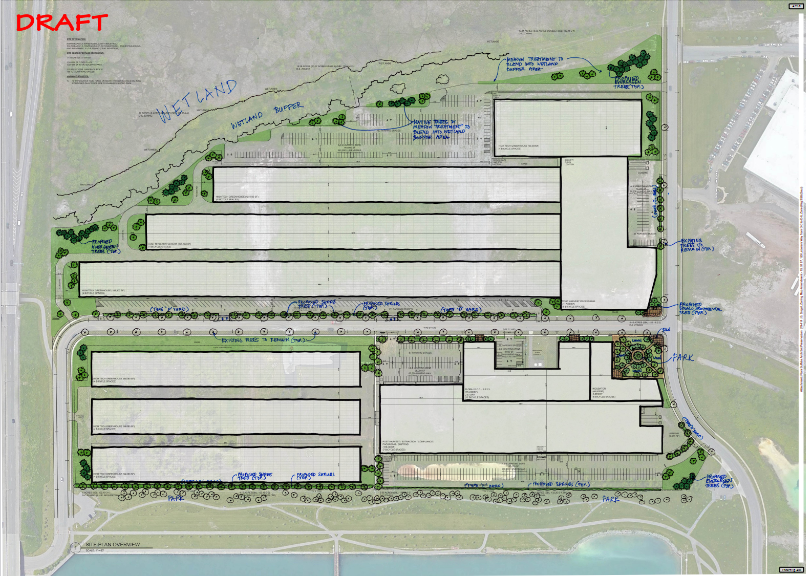
As also noted in my April 6th posting, the proposed project is not an idyllic “pot farm.”  Zephyr plans a massive industrial facility, with seven “high tech greenhouses” 30 feet tall, and ranging from 94,000 to 168,500 square feet in area.  This project would not only reside across Tifft Street from the Tifft Nature Preserve, and be visible from the Seaway Trail (a national scenic by-way), its southern boundary would adjoin the Ship Canal Commons – a public park and nature trail.  SEQRA considers a proposed project’s location that is “substantially contiguous” to a public park, recreation area, or open space, to be of such potential concern that it makes it a “Type 1 action” as long as it “exceeds 25 percent” of its designated Type 1 thresholds.  The southernmost cannabis cultivation (“grow”) facility alone, at 94,080 square feet, is 50% larger than the 60,000-square-foot minimum needed to trigger the Type 1 status when a project is adjacent to a public park/recreation area/open space. 

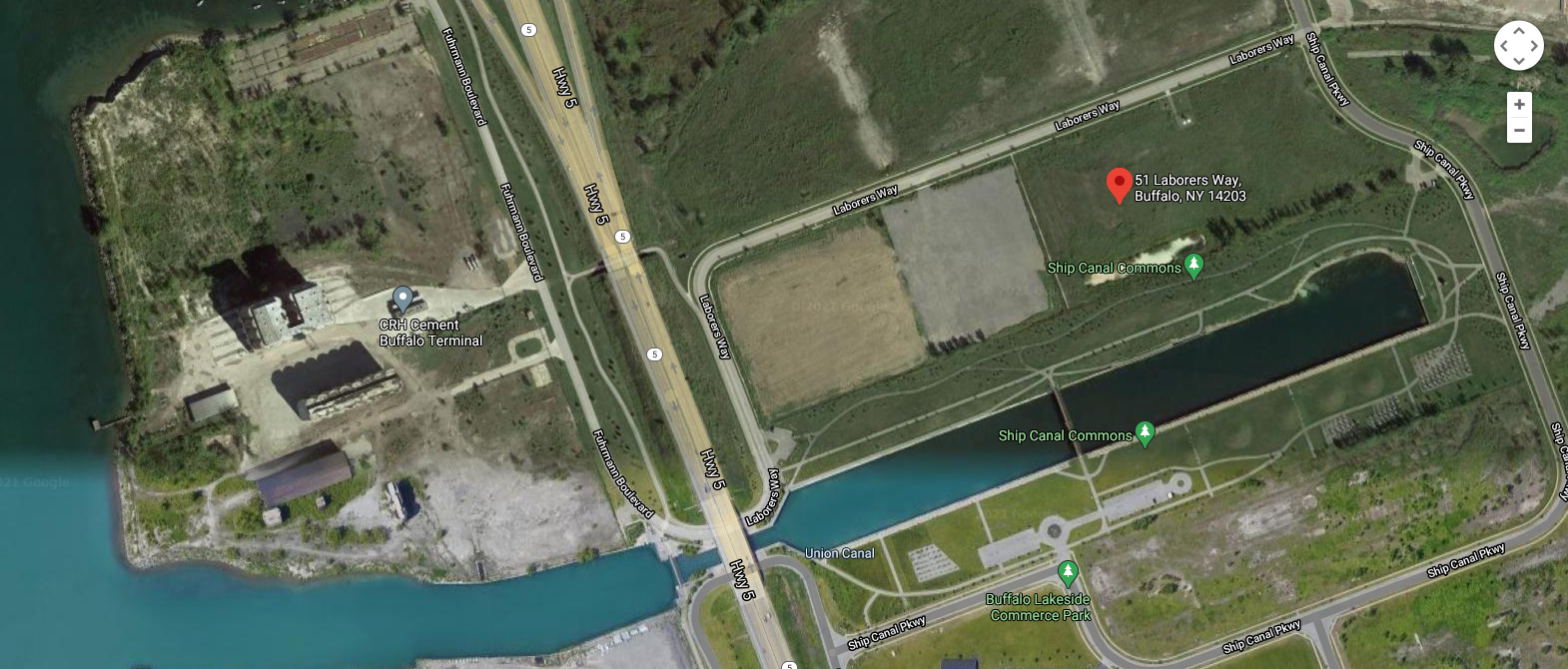
When the Common Council issued its March 2019 Negative Declaration, concluding that the proposed action would not have a significant adverse impact on aesthetic resources, open space or recreational resources, or existing neighborhood character, the determination of non-significance incorrectly stated that “properties that are industrial in nature border the new development on the south…”  This characterization contrasts starkly with two descriptions of the adjacent Ship Canal Commons found at the website of Wendel, Zephyr’s engineering consultant:  “a 22-acre interpretive greenspace” and “a pastoral passive activity space.”  With the issuance of a Positive Declaration, the lead agency would be in a position to require the project sponsor to provide objective evidence of the potential impacts of 30-foot tall, 94,080-square-foot and larger greenhouses located immediately to the north of this 22-acre public park and open space.  That evidence could include, for example, “view shed analysis” and computer-generated images.  With such documentation, the Common Council and the public would be in a position to reach fully-informed conclusions regarding the project’s potential adverse impacts on aesthetics, parkland, and neighborhood character.         [Click on an image to enlarge it.]

C.  Impacts on Human Health.

The creation of a hazard to human health is one of the “indicators of adverse impacts on the environment” found in the SEQRA regulations.  [See 6 NYCRR 617.7(1)(vii).]  When addressing this criterion, both Zephyr’s 2019 submission in support of its rezoning request, and the Common Council’s Negative Declaration, are silent on the topic of worker health at a cannabis cultivation facility.  However, had a Positive Declaration been issued in 2019, members of the public would have been in a position to advise Buffalo’s legislative body of an article prepared by the American Institute of Architects’ risk-management arm, AIA Trust, entitled, “Guide to Marijuana Facilities Design.”   That document attributes to “grow facilities” temperature and humidity comparable to indoor swimming pool centers, conditions that expose employees to fungi and other undesirable results. Moreover, under the subheading, “Worker Safety,” the AIATrust article states: “At marijuana grow facilities, workers are also subject to chemical exposure from fertilizers and pesticides, from sulfur dioxide as a result of fumigation, and from carbon dioxide asphyxiation.”  [See AIATrust Guide-Marijuana-Facilities-Design.] 

Given Zephyr’s claim that its facility would ultimately employ 500 to 1,000 workers, the human health implications of the proposed cannabis cultivation complex is an important topic for consideration under SEQRA.

D.  Conflict with Official Goals and Plans.  There are a number of significant ways in which the proposed action contradicts the March 2019’s conclusions that the proposed action is “consistent with the current Land Use Plan and the goal of further developing the Industrial Park,” and “with the character of the neighborhood”:

(1) The zoning map adopted by the Common Council in December 2016 is nuanced.  It places the land to the south of Laborers Way and immediately adjacent to the Ship Canal Commons – a public park zoned D-OG – in the less intrusive, less dense D-C Flex Commercial zone.  The land to the north of Laborers Way is zoned D-IL.  The proposed rezoning would do away with that rational distinction.

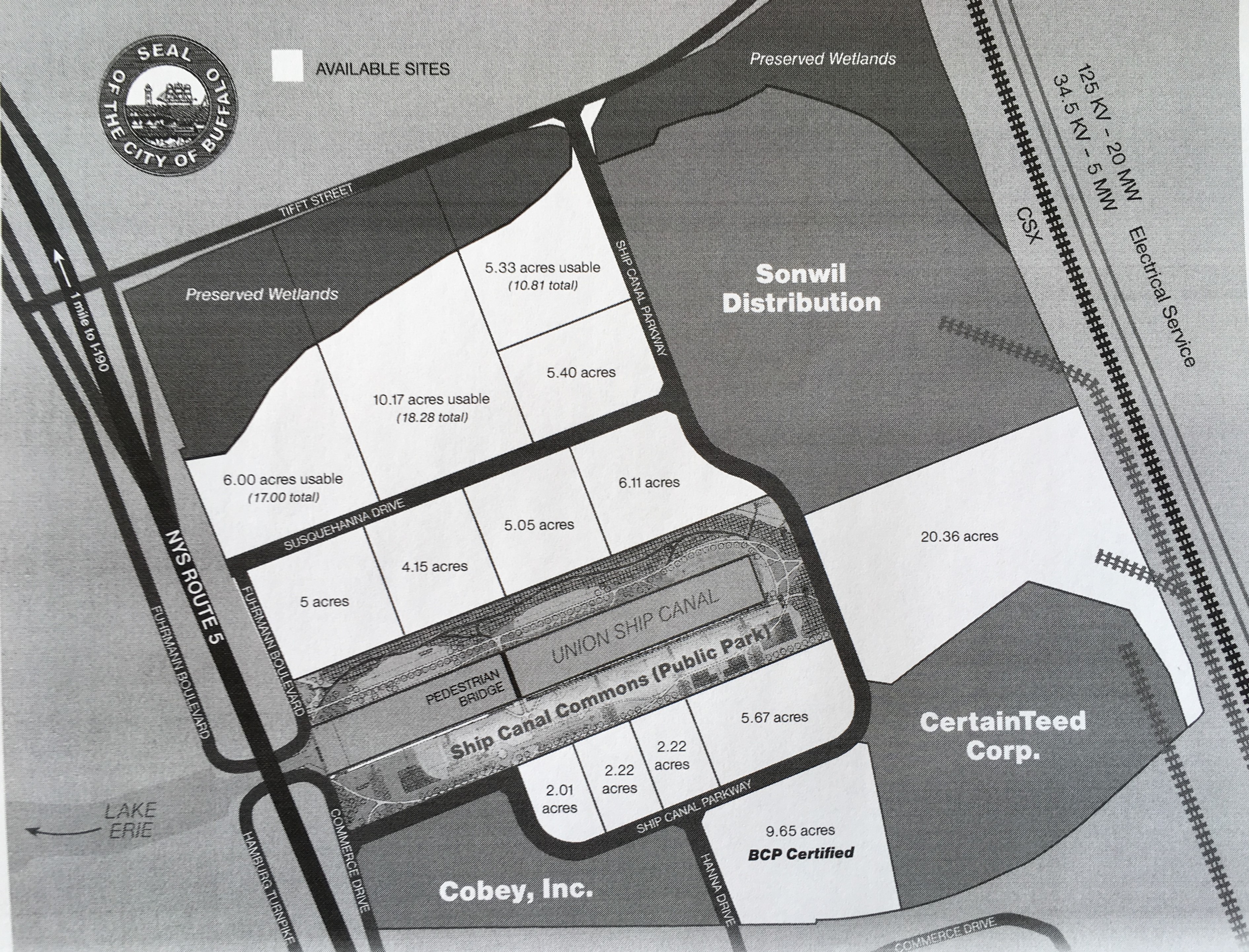
(2) The goal expressed by the Buffalo Urban Development Corporation when Laborers Way and surrounding infrastructure was completed was not merely to further develop the Industrial Park, but the specific goal of “attracting green companies to the City of Buffalo.”  As addressed below in “Impacts on Energy,” a cannabis cultivation project is anything but “green.”  Additionally, the BUDC divided the 47-acres adjoining Laborers Way into eight (8) medium-sized parcels, referred to as “Available Sites,” not one large assemblage serving one company.
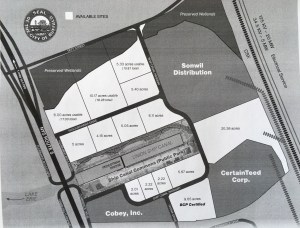
(3) The proposed project, with 1,375,000 square feet of development on 47.6 acres, has a developed density of 28,888 square feet per acre.  That proposed density is greatly out-of-character with the existing businesses at the Buffalo Lakeside Commerce Park:  Sonwil Distributor consists of 300,000 square feet of structures on 52 acres, for a density of 5,769 square feet per acre; CertainTeed has 270,000 square feet on 25 acres, or 10,800 square feet per acre; and, Cobey’s building contains 90,000 square feet (which is a smaller footprint than Zephyr’s smallest greenhouses) on 12 acres, with a density of 7,500 square feet per acre.

(4) The adopted plans and maps envision the existence of a public right-of-way, Laborers Way (which was constructed with taxpayers’ money).  Zephyr Partners’ plan eliminates Laborers Way.

E.  Impacts on Energy.

Zephyr Partners states in its FEAF that its facility would generate an estimated annual demand of 25 MW of electricity.  Currently the site uses none.  When the infrastructure was installed (at taxpayer expense) for the portion of the Buffalo Lakeside Commerce Park where the proposed cannabis cultivation project would be located, the Buffalo Urban Development Corporation expressed its goal of “attracting green companies to the City of Buffalo.”  According to Denver’s 2020 Best Management Practices guidelines, the cannabis cultivation industry is far from a “green” industry.  It is a “resource intensive process,” largely due to energy demands for lighting, HVAC and dehumidification, which are a leading driver of greenhouse gas emissions, and result in the industry’s sizeable environmental footprint.  The DEIS process would allow the gathering of objective data so that the Common Council can compare the proposed project’s impact on energy with that of “green companies.”   

The above list of environmental concerns relating to cannabis cultivation facilities is not meant to be exhaustive.  Nonetheless, as long as any of these areas of adverse environmental impacts “may” be considered significant, the Common Council is obligated under SEQRA to issue a Positive Declaration and require preparation of a Draft Environmental Impact Statement.

With All Due Respect

Art Giacalone
Outer Harbor – Inner Harmony

Posted by Arthur J. Giacalone on April 10, 2021
Posted in: Uncategorized. 1 Comment

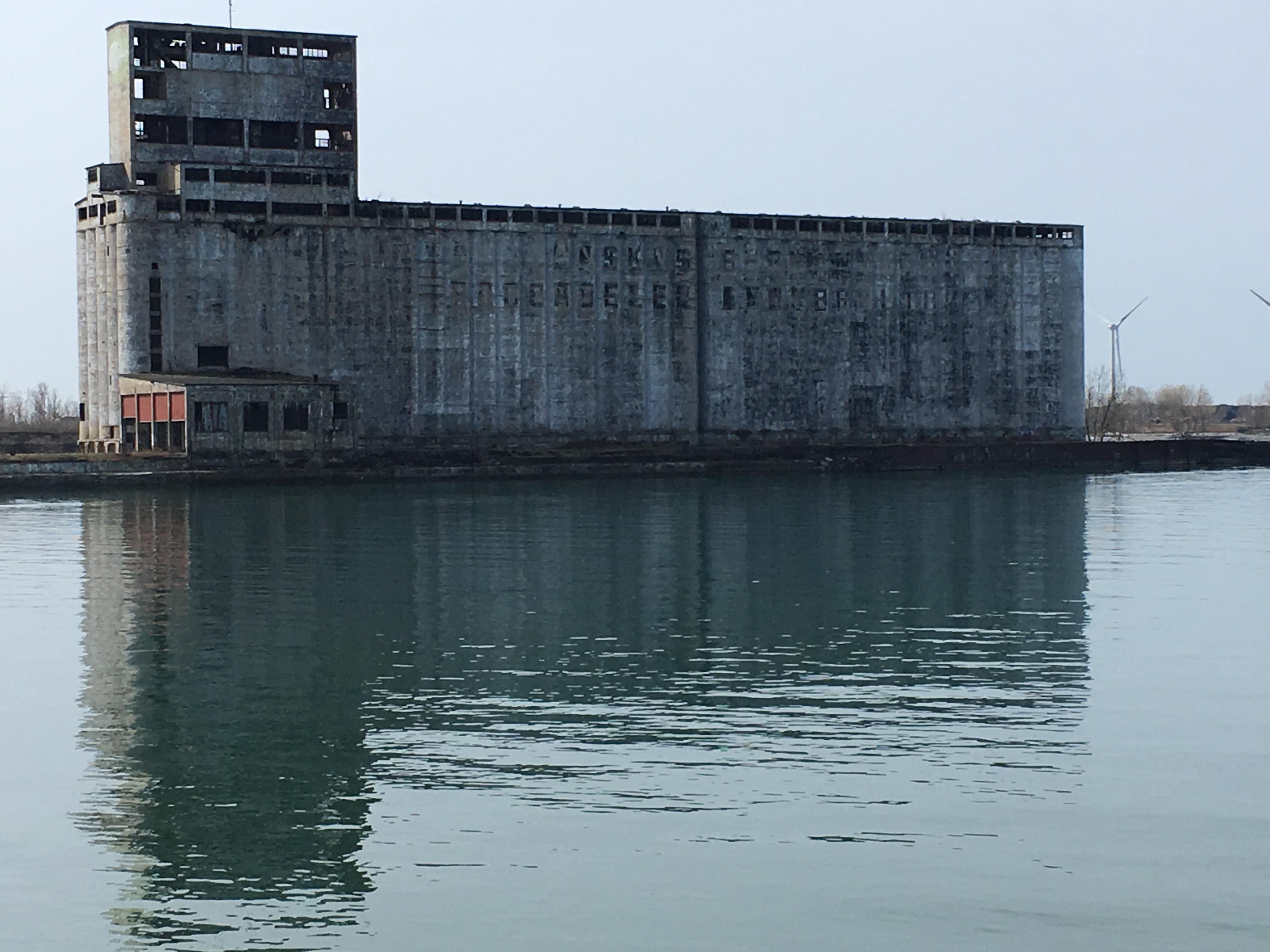
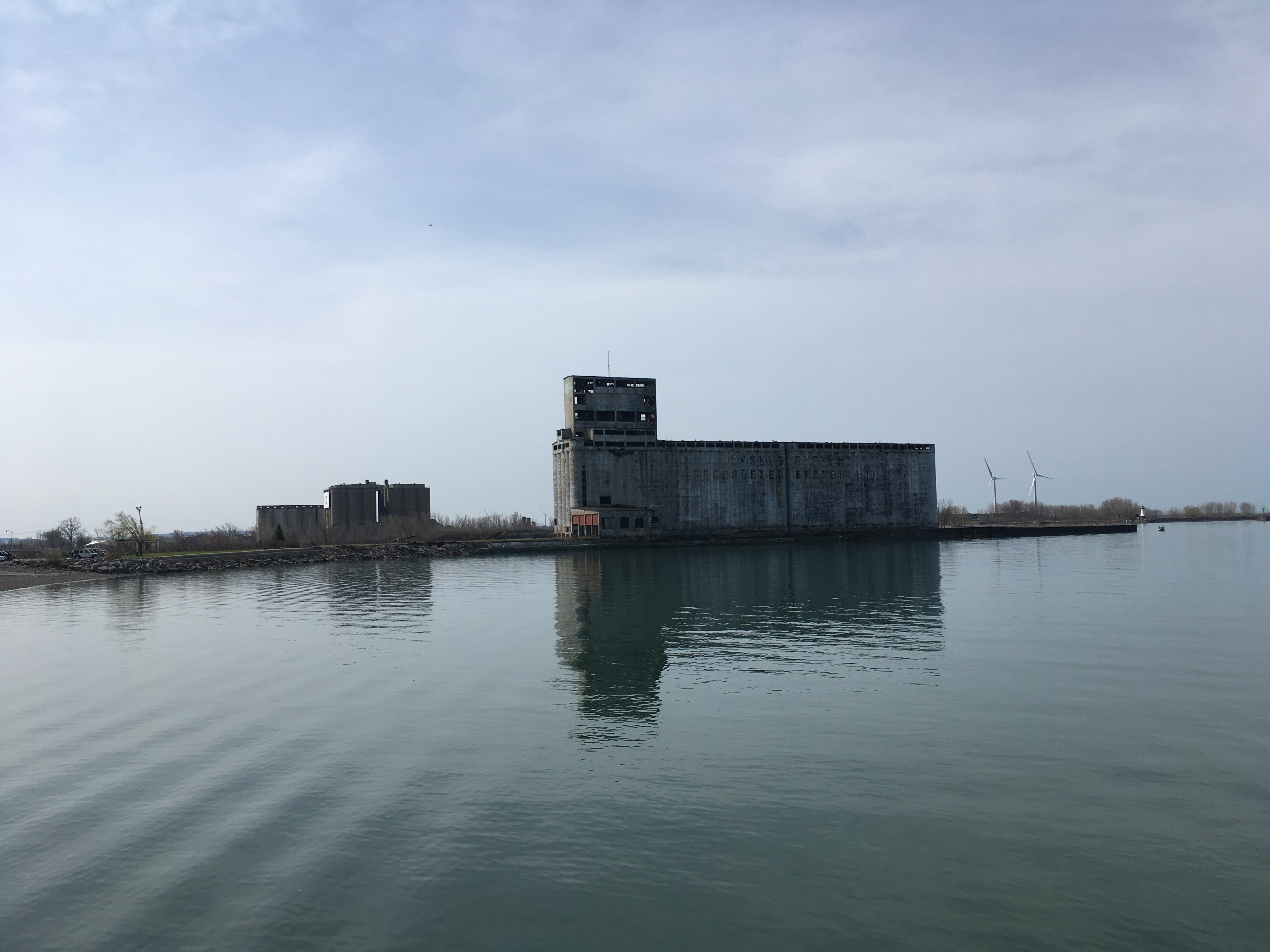
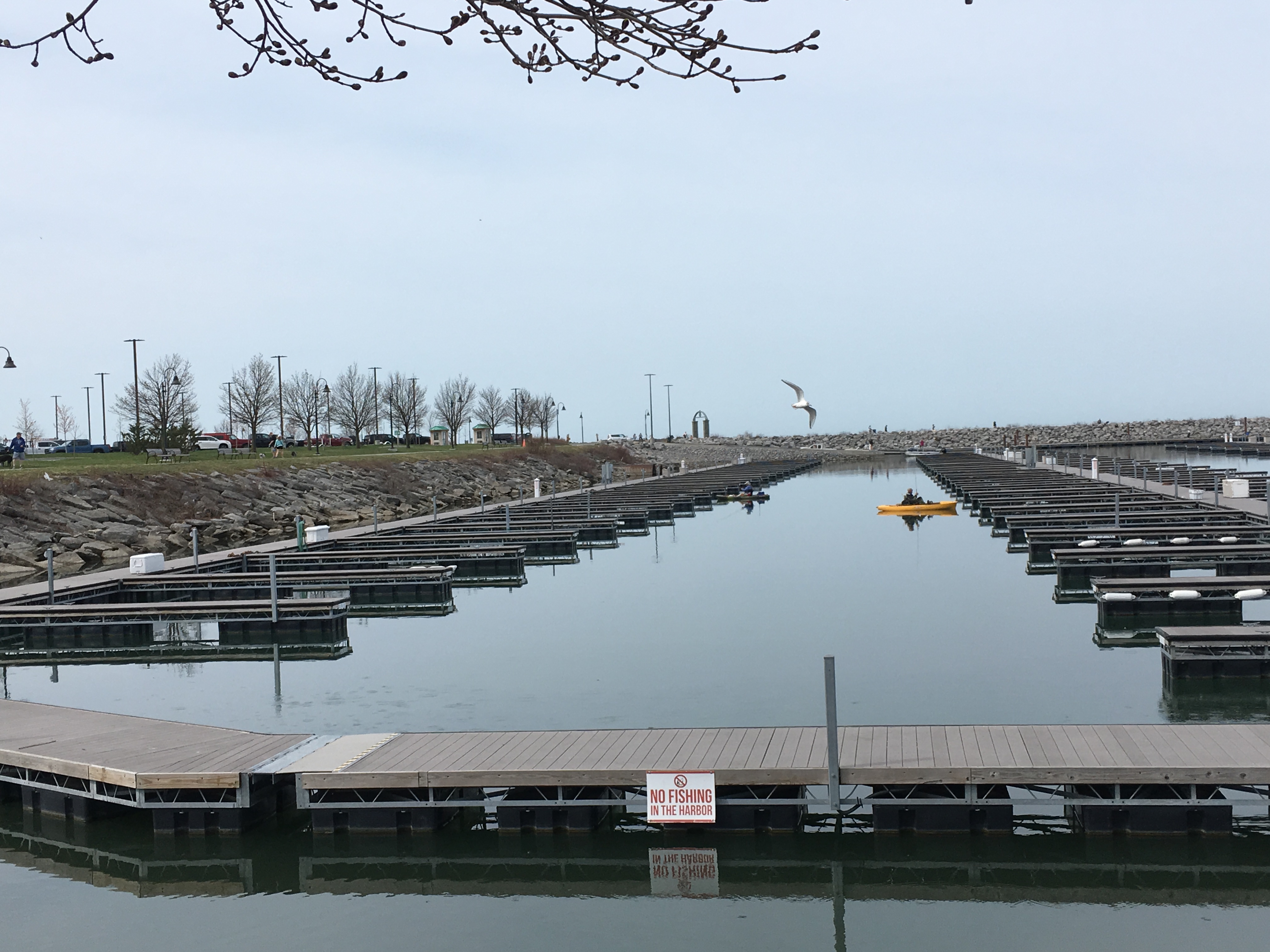
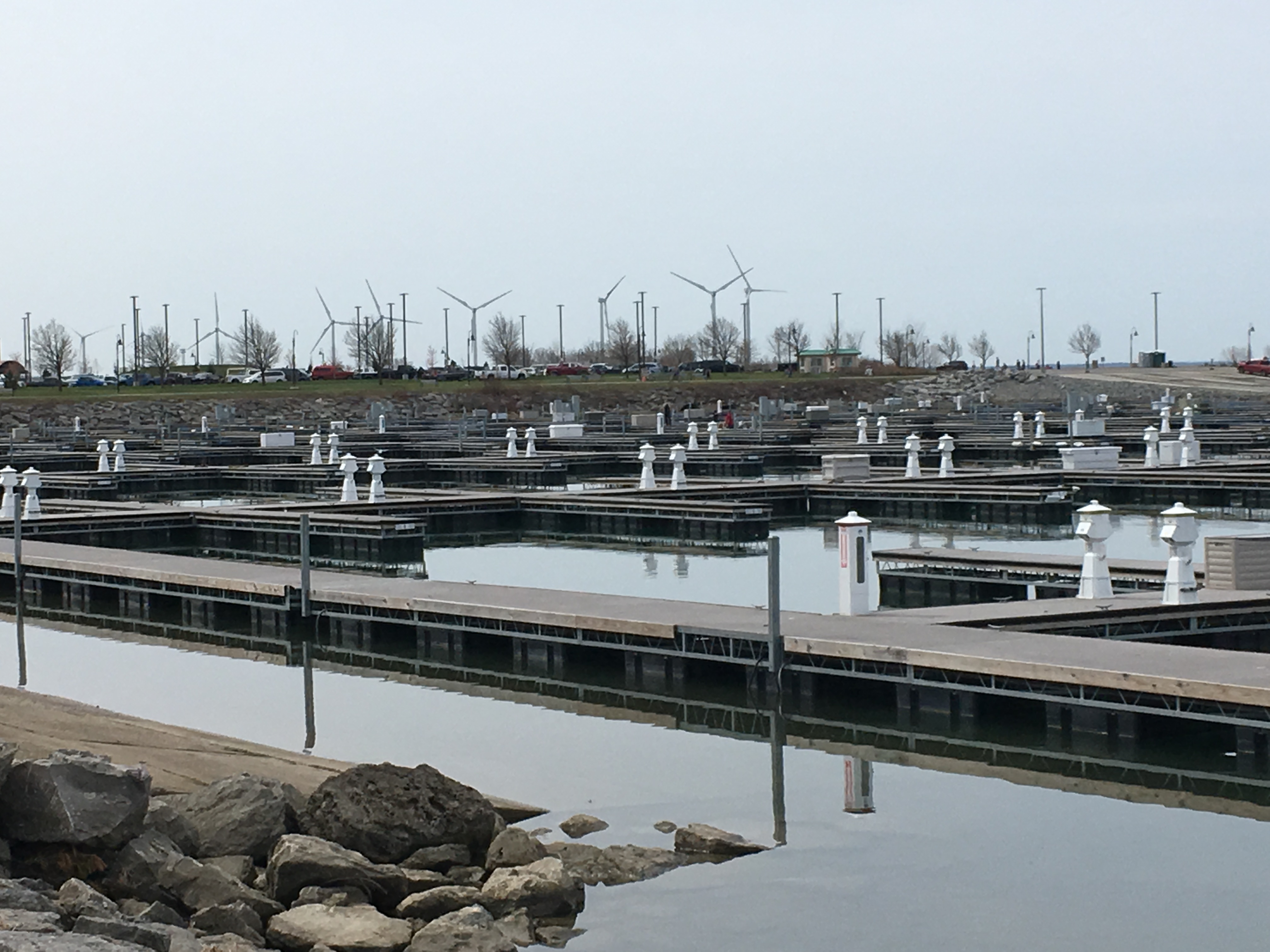
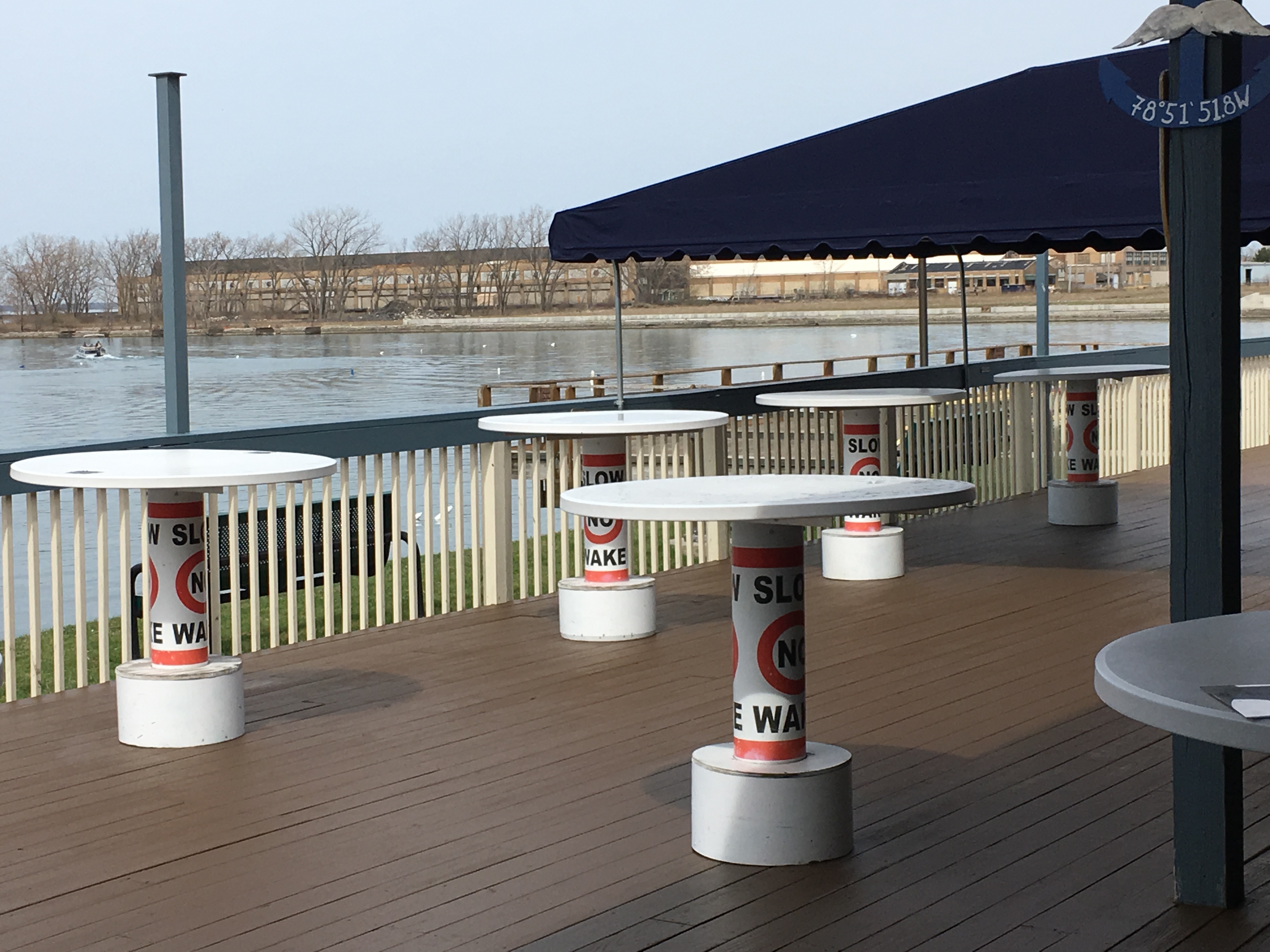
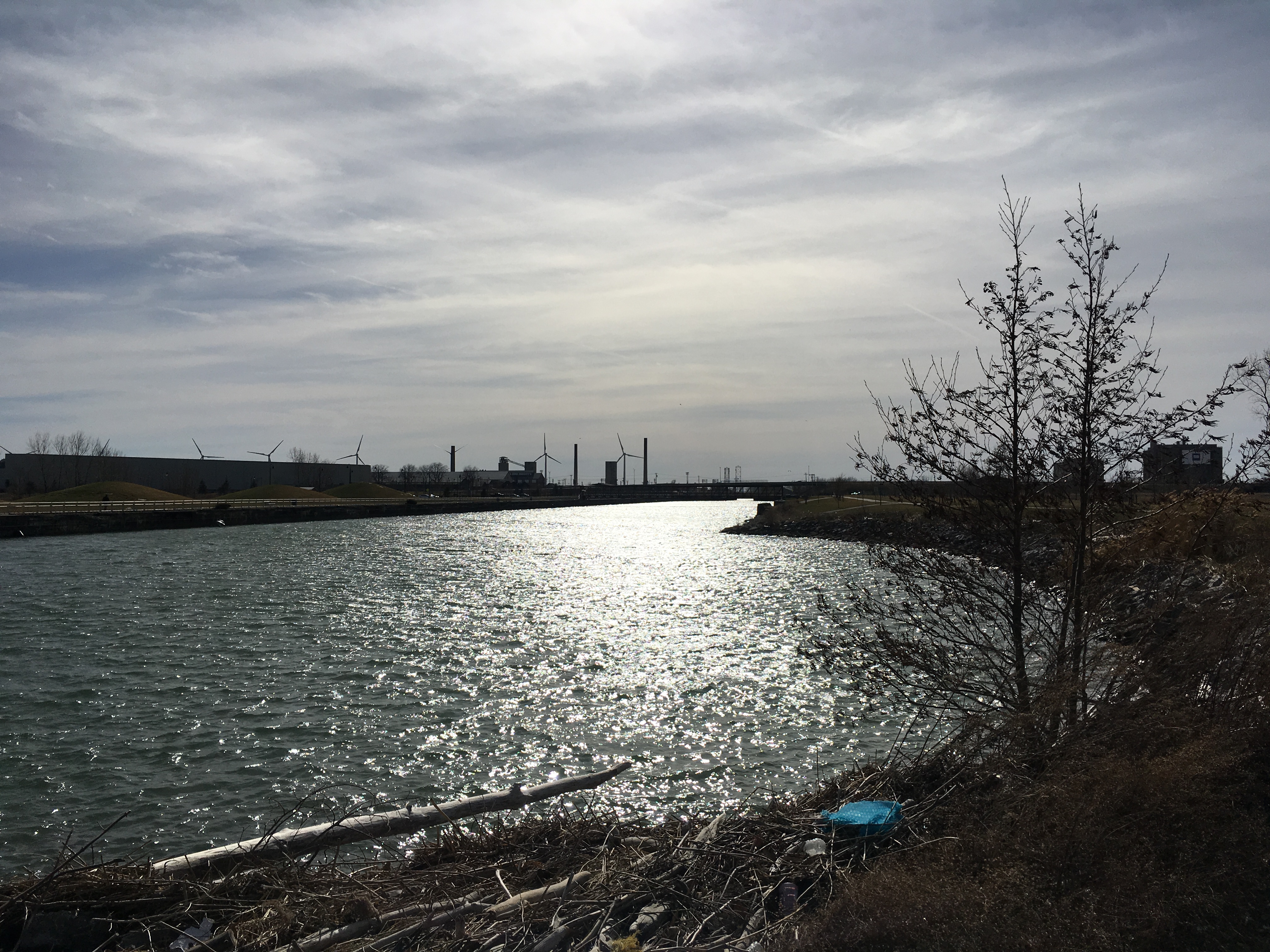
I can’t imagine a calmer, more placid mid-April morning along an urban portion of the shore of Lake Erie than what I experienced today.  So I thought I’d share some images of the “human-made” objects at Buffalo’s Outer Harbor.  I hope you enjoy the stroll.

[Click on image to enlarge it.]

With All Due Respect,

Art Giacalone

Buffalo’s Green Code Prohibits Cannabis Cultivation Facilities

Posted by Arthur J. Giacalone on April 8, 2021
Posted in: Cannabis, City of Buffalo, Development, Green Code, South Buffalo, Waterfront, Zoning Law. 1 Comment

[CAVEAT:  When this post was initially written, I incorrectly believed that the City of Buffalo Common Council had not rezoned land at the Buffalo Lakeside Commerce Park in furtherance of the subject cannabis cultivation facility.  In fact, on May 14, 2019, Buffalo’s Common Council did approve Zephyr Partners’ request to rezone four parcels of land on Laborer’s Way from D-C (“Flex-Commercial”) to D-IL (“Light Industrial”).  On March 30, 2021, when I investigated the zoning status of 15, 51, 87 and 125 Laborer’s Way, in preparation for writing this series of posts, the City of Buffalo’s on-line “Property Information” site incorrectly listed the zoning status of each of the four parcels as “D-C.”  I regret any confusion this post may have caused regarding the Common Council’s action in May 2019 in furtherance of Zephyr Partners’ plans.]  

[Note: This posting is the second in a three-part series regarding the development of cannabis cultivation facilities in Buffalo, NY.  The first post, titled “South Buffalo Cannabis Facility is not in the Public Interest, ” provides my concerns regarding a marijuana cultivation-processing-shipping facility proposed in 2019 for the southern end of Buffalo’s Outer Harbor by Zephyr Partners (and, that is expected to be resurrected now that NYS has an adult-use marijuana law). Today I explain why I have reached the conclusion that the City of Buffalo’s zoning ordinance does NOT currently  permit a cannabis “grow” facility within its borders.]   

Zoning ordinances are an attempt by cities, villages and towns to protect and promote the public health, safety and welfare by establishing standards intended to ensure the orderly and compatible use of land.  These local laws divide a municipality into geographical areas called zones or zoning districts, and spell out the uses, and scale of buildings and lots allowed in each zone. [For a basic overview of land use and zoning laws, see the citizen’s guide that I helped to write, published by Partnership for the Public Good, Buffalo, in December 2018: click here.]   

The City of Buffalo’s zoning ordinance is officially called the Unified Development Ordinance (UDO), and is unofficially known as the “Green Code.”  It was adopted by the city’s legislative body, the Common Council, in late 2016, and went into effect in early 2017.  The UDO contains twenty-two zones, and spells out the activities or uses that are allowed in each zone.   The UDO/Green Code’s list of permitted uses is found at ”Table 6A, PRINCIPAL USES,” and identifies eighty-six (86) categories of uses, organized under eight (8) subheadings:  Residential, Civic, Lodging, Retail & Service, Employment, Agriculture, Transportation, and Infrastructure.

[Click on an image to enlarge it.]

The term “principal use” refers to the main or primary use or uses conducted on a lot or within a building; in contrast, an “accessory use” is a use located on the same site as a principal use that is incidental or subordinate to the principal use.  Buffalo’s zoning ordinance allows a site to have more than one principal use, as long as each principal use is permitted in the zone. 

The UDO’s “Principal Uses ” table divides uses into two categories:  “permitted uses,” which are uses permitted “by right” in the particular zone, that is, that are in compliance with the UDO and may be processed administratively by the city without the need for a public hearing; and, “special use” uses, which are activities considered to have increased potential for incompatibility in a zone, and, for that reason, require the approval of a “special use permit” by the Common Council – after a public hearing – before being allowed in the zone.    

Under the UDO/Green Code, a land owner or developer who wishes to conduct an activity at a particular site needs to first identify the zone within which the site is located (by checking out the UDO/Green Code’s Citywide_Zoning_Map_January2017, or by going to the Property Information tab at the City’s website).  If the use is listed as a “permitted use” on the UDO’s Table 6A, it is allowed “by right” in the zone.  Additionally, if an activity is not included as a permitted use in any of the twenty-two zones, but the City’s “Zoning Administrator” concludes that it is “similar in nature and impact” to a use listed in Table 6A, the activity may be treated as a permitted use.  On the other hand, “If a use is not listed and cannot be interpreted as similar in nature and impact to a use that is listed in Table 6A, the use is deemed prohibited.”  [See, UDO, Section 6.1.1(B), (D) & (E).] 

With this understanding of the UDO, we can apply these rules to Zephyr Partners’ March 2019 proposal for a cannabis cultivation project on eight parcels of land on Laborers Way in South Buffalo. 

Zephyr’s design team provided the following “Project Description” in its March 5, 2019 correspondence to the Common Council:

The proposed action is to develop 1.375 million square feet of cannabis cultivation facilities along with processing, quality control, extraction, research, and shipping/ receiving facilities.  The proposed development makes use of eight existing sites to the north and south of Laborers Way in the City of Buffalo (north of Union Ship Canal in the Lakeside Commerce Park). Roughly 65% of the built structures will house the growing facilities while the other 35% will house the accessory functions.  Protected wetlands are immediately north of the site and the Union Ship Canal is to the south across a public park.

Four of the eight parcels – located on the north side of Laborers Way – are zoned “D-IL Light Industrial,” and total about 27 acres  The four parcels on the south side of Laborers Way are in the “D-C Flex Commercial” zone, and comprise roughly 20.5 acres.  With its March 5, 2019 submission, Zephyr asked the Common Council to rezone the four D-C Flex Commercial parcels to D-IL Light Industrial, claiming that their proposed cannabis production facility was permitted by right in the D-IL zone, and with a special use permit in the D-C zone.  [CORRECTION:  On May 14, 2019, Buffalo’s Common Council rezoned 15, 51, 87 and 125 Laborer’s Way from D-C to D-IL.]

I can find no evidence in the public record that City Hall administrators – or the Common Council – ever questioned the project sponsor’s assertion that a cannabis cultivation facility is a permitted use in the D-IL and D-C zones.  As explained below, I have concluded that Zephyr’s assertion is incorrect.  The growing or cultivation of marijuana envisioned by Zephyr – its principal use – neither fits into any listed permitted use in the D-C or D-IL zones (or, any of Buffalo’s 22 zones), nor can be reasonably treated as similar in nature and impact to a permitted use.

At first glance, the terminology used for two of the UDO/Green Code broad categories of “principal uses” – Agriculture and Employment – might appear as potential candidates for allowing marijuana cultivation activities.  But the integrity of the zoning process mandates that the City’s zoning administrators look beyond Table 6A’s subheading when treating a proposed activity as a permitted use. 

“Cannabis cultivation facility” is not expressly listed as a permitted activity in the UDO.  That’s not a surprise given the illegality of cannabis usage by the general public when the Green Code was adopted in late 2016.  Consistent with the urban character of the City of Buffalo, there are only two activities – and both limited in scope – permitted as an “Agriculture” use in the UDO:  “Community Garden” and “Market Garden.”  Neither category envisions a massive, for-profit, commercial farm within the city limits, and neither can be reasonably thought of as a commercial-scale marijuana “grow” facility.  Here is what the Green Code provides:

6.1.7   Agriculture

A.  Community Garden.  A site where food, ornamental crops, or trees are grown for group, shareholder, or lessee use, or for donation.

      1.  Seed, fertilizer, and feed must be stored in sealed, rodent-proof containers.

      2.  No equipment, process, or other practice may be employed at a community garden that creates dust or odors detectable off the property, or any other effect determined by the Commissioner of Permit and Inspection Services to be detrimental to the public health, safety, or welfare.

B.  Market Garden.  A site where food, ornamental crops, or trees are grown for sale to the general public.

1. A special use permit for a market garden may be granted in an N-4-30 or N-4-50 zone only
if located east of Jefferson Avenue, south of Best Street/Walden Avenue, west of Bailey
Avenue, and north of Clinton Street.

2. Seed, fertilizer, and feed must be stored in sealed, rodent-proof containers.

3. No equipment, process, or other practice may be employed at a market garden that
creates dust or odors detectable off the property, or any other effect determined by
the Commissioner of Permit and Inspection Services to be detrimental to the public
health, safety, or welfare.

4. Agricultural products, plants, eggs, and honey grown or produced on or within the
subject property or within the City of Buffalo may be sold on the premises if the market
garden use is the only use of the subject property or occupies at least 50% of the area
of the property. In addition, foods prepared on site or off site may be sold if the principal
ingredients are grown or produced on the subject property or within the City of Buffalo.

5. On-site sales within an N-2R, N-3R, N-4-30, or N-4-50 zone must comply with the following:
a. No structure or building except for a maximum of one market stand may be
used to sell produce or other goods. b. On-site

The massive quantity of marijuana Zephyr plans to grow at the South Buffalo site certainly is not the “food, ornamental crops, or trees” envisioned in the UDO’s description of “Community Garden.”  And, under New York’s newly enacted adult-use marijuana law – the Cannabis/Marijuana Regulation & Taxation Act (MRTA) – licensed growers and processors are prohibited from owning retail stores that sell their product directly to the consumer.  In light of MRTA’s restrictions, one could not logically treat the proposed cannabis growing facility as a site selling its crop to the general public.    

Given the pervasive skunk-like odors associated with cannabis crops, and the energy-intensive nature of the business (see the discussion and links in “South Buffalo Cannabis Facility is not in the Public Interest”), it would be  arbitrary and irrational to interpret cannabis cultivation operations as similar in nature and impact to either a community garden or market garden. 

While a cannabis grow facility will generate jobs, it is not an activity that falls within the uses in the UDO/Green Code’s “Employment” category.  None of the Employment listed uses involve the growing of crops.  And, as the following description of “Industrial, Light” demonstrates, a non-manufacturing activity such as the growing of crops was not what the Common Council considered “light industrial” when the UDO was enacted:

6.1.6 Employment

                                                …

  1. Industrial, Light. The processing or manufacturing of finished products or parts from previously prepared materials including processing, fabrication, assembly, treatment, and packaging of such products, and incidental storage, sales, and distribution of such products, provided that all manufacturing processes are contained entirely within a fully enclosed building.  Any heat, glare, dust, smoke, fumes, odors, or vibration are confined to the building.  A light industrial use may include a showroom or ancillary sales of products related to the items manufactured on-site.

While the various “accessory functions” included in Zephyr Partners’ project description – processing, quality control, extraction, research, and shipping/receiving facilities – may be permitted uses in the D-IL and D-C zones, the proposed “primary use” – over 800,000 square feet of marijuana cultivation facilities – is neither listed as a permitted use or special use in any of the Green Code’s 22 zoning districts, nor can be reasonably treated as similar in nature and impact to a permitted use.

To quote UDO Section 6.1.1(D)(2), “If a use is not listed and cannot be interpreted as similar in nature and impact to a use that is listed in Table 6A, the use is deemed prohibited.” 

With All Due Respect

Art Giacalone

South Buffalo Cannabis Facility is not in the Public Interest

Posted by Arthur J. Giacalone on April 6, 2021
Posted in: Cannabis, Development, Waterfront. Leave a comment

[CAVEAT:  When this post was initially written, I incorrectly believed that the City of Buffalo Common Council had not rezoned land at the Buffalo Lakeside Commerce Park in furtherance of the subject cannabis cultivation facility.  In fact, on May 14, 2019, Buffalo’s Common Council did approve Zephyr Partners’ request to rezone four parcels of land on Laborer’s Way from D-C (“Flex-Commercial”) to D-IL (“Light Industrial”).  On March 30, 2021, when I investigated the zoning status of 15, 51, 87 and 125 Laborer’s Way, in preparation for writing this series of posts, the City of Buffalo’s on-line “Property Information” site incorrectly listed the zoning status of each of the four parcels as “D-C.”  I regret any confusion this post may have caused regarding the Common Council’s action in May 2019 in furtherance of Zephyr Partners’ plans.]  

[Note No. 1: The Buffalo News published an abbreviated version of this post in its April 5, 2021 “Another Voice” column, which expresses my first impressions of a marijuana cultivation-processing-shipping facility proposed by Zephyr Partners for the southern end of Buffalo’s Outer Harbor.  You can read it on-line at https://buffalonews.com/opinion/another-voice-south-buffalo-cannabis-facility-not-in-public-s-interest/article_f3402e72-93e6-11eb-99ba-171d122736f3.html.  The newspaper’s version does not include what I had intended as the op-ed’s next-to-last paragraph concerning what I consider an ironic coincidence.  My post below includes the omitted paragraph, adds a brief discussion on worker safety, and inserts links and images not included in the Another Voice article.]

[Note No. 2: Today’s posting will be the first in a series of at least three pieces I plan to share this week regarding the development of cannabis cultivation facilities in Buffalo, NY.  The second in the series will explain why I have concluded that the City of Buffalo’s zoning ordinance does NOT permit a cannabis “grow” facility within its borders.  If things go as planned, the third post will discuss how SEQRA provides the investigatory tools to assist the City of Buffalo both in making an informed decision whether or not to add such an activity to its list of permitted uses, and to adequately assess the potential environmental impacts of a particular marijuana grow project.]

Now that New York has enacted its Cannabis/Marijuana Regulation & Taxation Act (MRTA), we can expect Zephyr Partners to revive its application to rezone about 15 acres of land at the Buffalo Lakeside Commerce Park [BLCP] in South Buffalo as part of its larger plan for a 47-acre, 1.375 million square-foot cannabis cultivation, processing, and shipping facility.  [CORRECTION:  On May 14, 2019, Buffalo’s Common Council did approve Zephyr Partners’ request to rezone 15, 51, 87 and 125 Laborer’s Way from D-C (“Flex-Commercial” to D-IL (“Light Industrial”).]  

[Click on an image to enlarge it.] 

Buffalo’s Common Council will face a major decision with long-term environmental, ecological, aesthetic and social justice impacts.

The proposed project is not an idyllic “pot farm” or attractive “cannabis campus.”  Zephyr plans a massive industrial facility.  Seven of its buildings would be “high tech greenhouses” 30 feet tall and ranging from 94,000 to 168,500 square feet in area.  (A football field covers a mere 57,600 square feet.)  This project would loom over the Ship Canal Commons – a public park and nature trail –– reside across Tifft Street from the Tifft Nature Preserve, and be visible from the Seaway Trail, a national scenic by-way.

Unfortunately, Zephyr’s engineering consultant, Wendel, has downplayed the adverse impacts of this project.   

Wendel admits that there are “odors associated with processing” cannabis, and claims that Chlorine Dioxide will “neutralize” any unpleasantry.  They say nothing, however, about the strong skunk-like odor associated with the growth of the plant.  The pervasive and offensive nature of the odors resulting from marijuana cultivation has been acknowledged by entities as diverse as Public Health Ontario, the Air-Conditioning, Heating and Refrigeration industry,  and the Cannabis Industry Times. To address this pervasive problem, the City of Denver’s Cannabis Environmental Best Management Practices Guide (BMP) strongly recommends the use of carbon filtration, not ClO2, as the best odor-control technology for cannabis cultivation.  [See, in particular, pages 49-50 in Denver’s October 2018 BMP.]

While Zephyr’s engineers state that, “there will be an increase in electrical demand,” they fail to acknowledge that cannabis cultivation is a very energy-intensive process.  According to Denver’s BMP, the energy demands for lighting, HVAC and dehumidification are a leading driver of greenhouse gas emissions, and result in the industry’s sizeable environmental footprint.  [See Denver’s BMP, pages 9 et seq.]  To allow Zephyr to develop this energy-intense complex would contradict an express goal announced by Buffalo Urban Development Corporation and Buffalo Lakeside Commerce Park at the time construction of the roadway and infrastructure the cannabis facility proposes to use was completed:  “attracting green companies to the City of Buffalo.” 

The brief discussion of impacts on human health provided to the city on behalf of Zephyr was silent on the topic of worker safety.  In contrast, an article prepared by the American Institute of Architects’ risk-management arm, AIA Trust, entitled, “Guide to Marijuana Facilities Design,” describes “grow facilities” as having temperature and humidity comparable to indoor swimming pool centers, exposing employees to fungi and other undesirable results.  Under the subheading, “Worker Safety,” the article states:  “At marijuana grow facilities, workers are also subject to chemical exposure from fertilizers and pesticides, from sulfur dioxide as a result of fumigation, and from carbon dioxide asphyxiation.”  See AIATrust Guide-Marijuana-Facilities-Design.]

Coincidentally, Wendel was the landscape architect for the Ship Canal Commons. The firm’s website describes the Commons as “a 22-acre interpretive greenspace” located “at the southern end of Buffalo’s burgeoning Outer Harbor park system.”  It characterizes the park’s trails that would adjoin the cannabis facility as “a pastoral passive activity space.”  Nonetheless, Wendel’s submission to the City contends, incredibly, that the existence and operation of the massive cannabis facility would not affect the aesthetic or recreational resources at the Ship Canal Commons. 

A primary motivating force behind New York’s enactment of a comprehensive law to regulate the adult-use of marijuana is a desire to create a social and economic equity program to assist individuals disproportionately impacted by cannabis enforcement that want to participate in the industry.  Allowing Zephyr Partners – headed by Brad Termini, son of developer Rocco Termini – the huge competitive advantage of operating such a massive cannabis production facility would neither further MRTA’s goal, nor enhance our environment.

With All Due Respect,

 Arthur J. Giacalone

Soothing shades of brown on an early spring day

Posted by Arthur J. Giacalone on March 22, 2021
Posted in: Uncategorized. Leave a comment

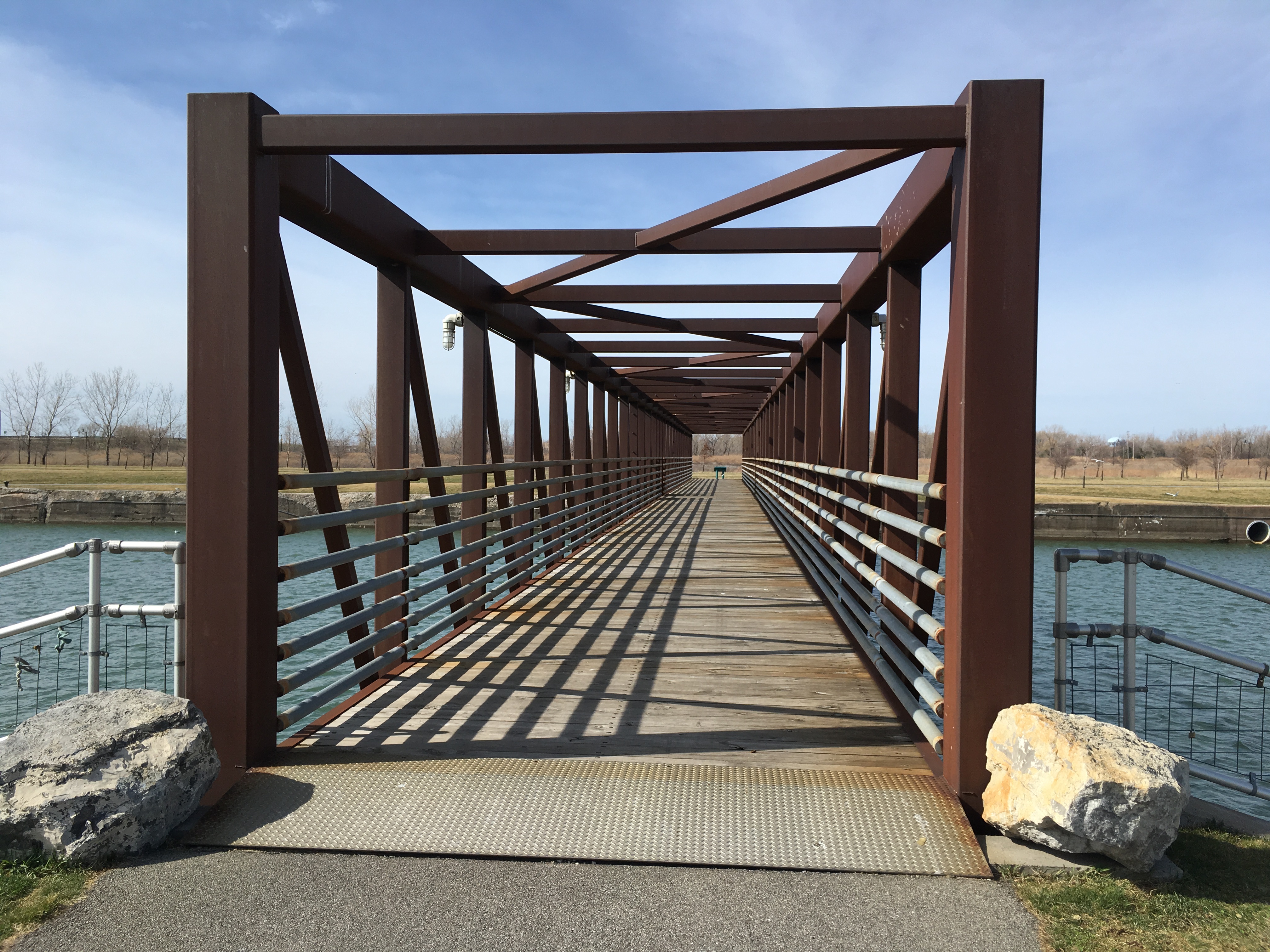
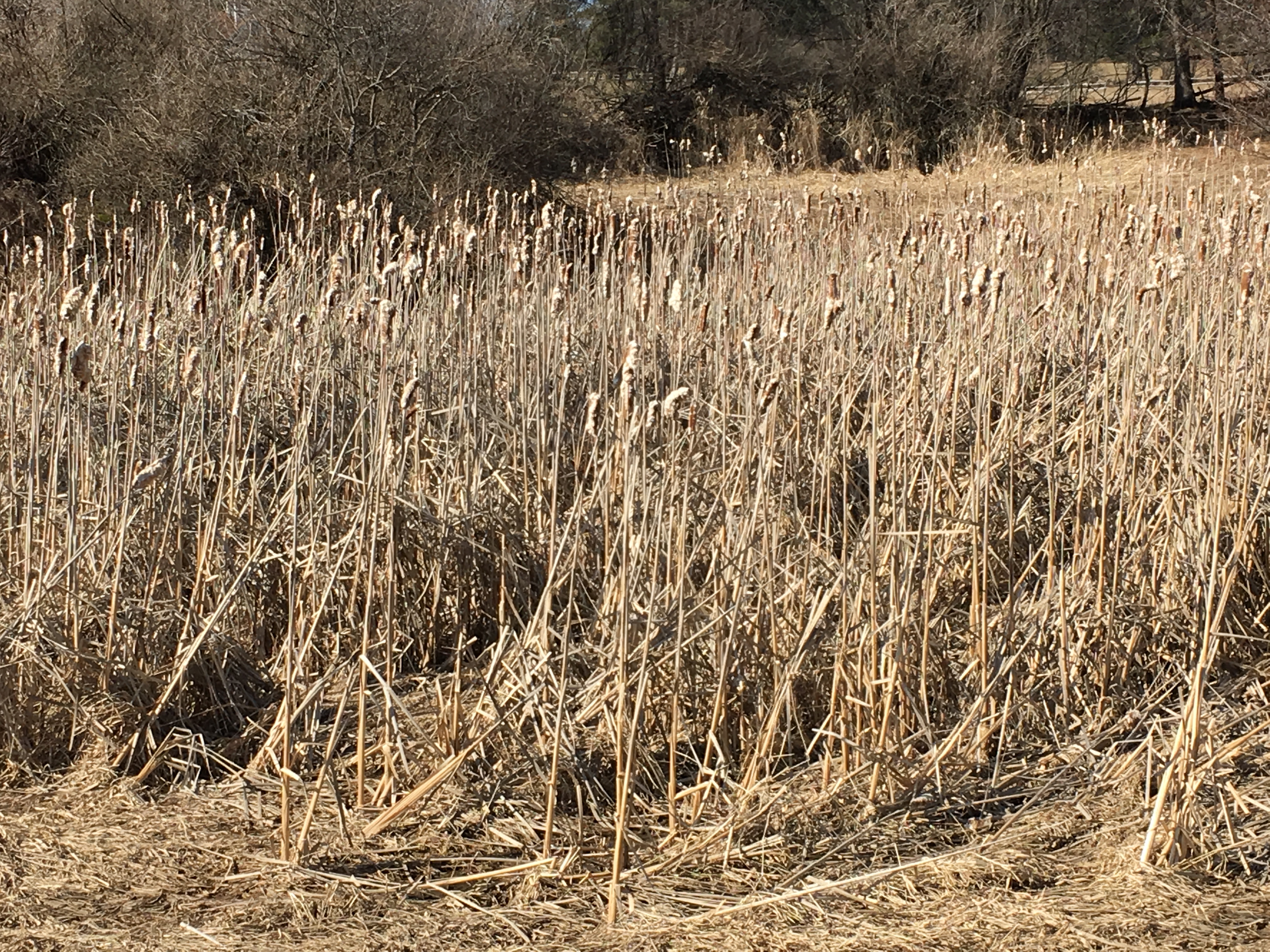
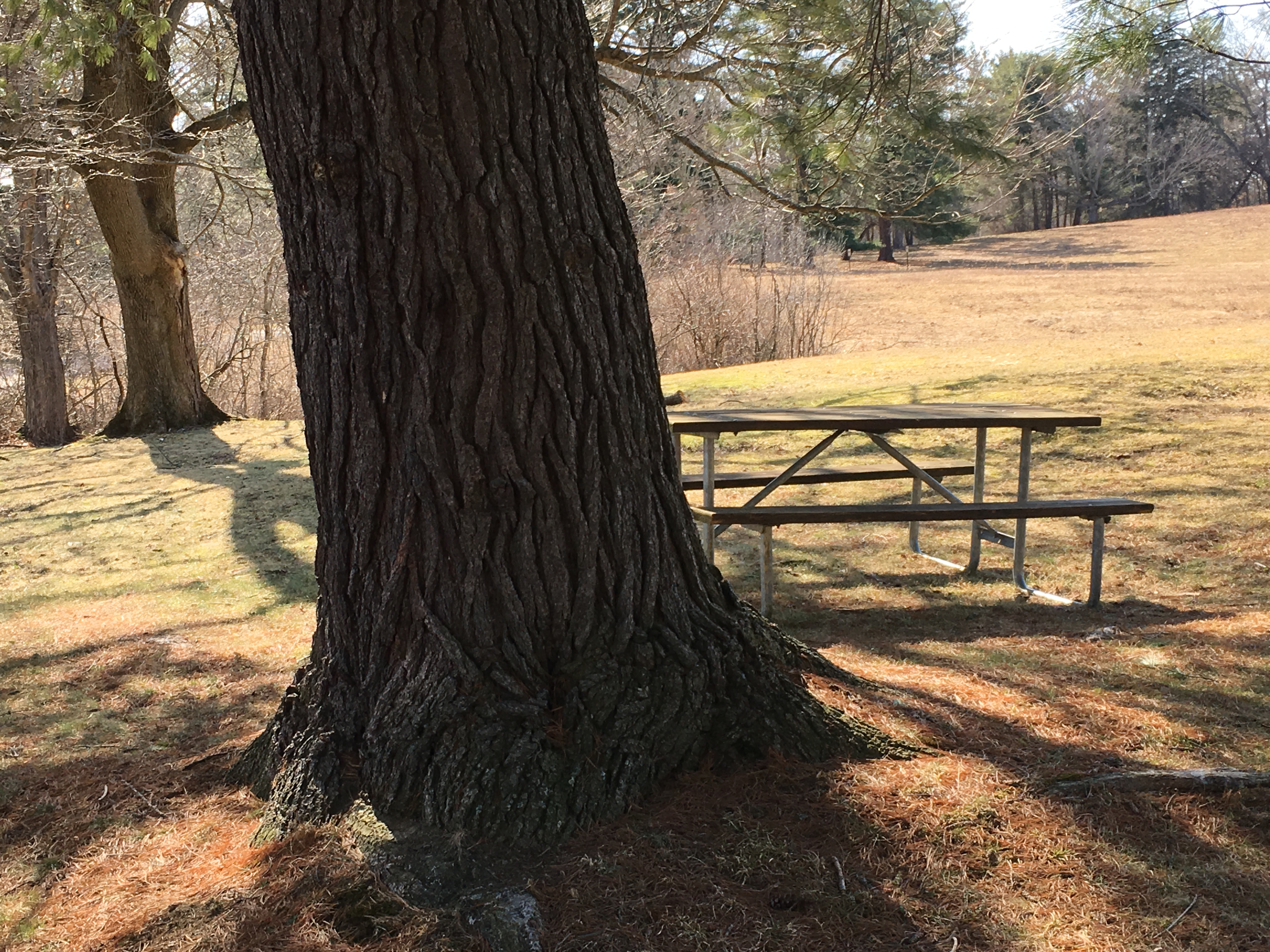
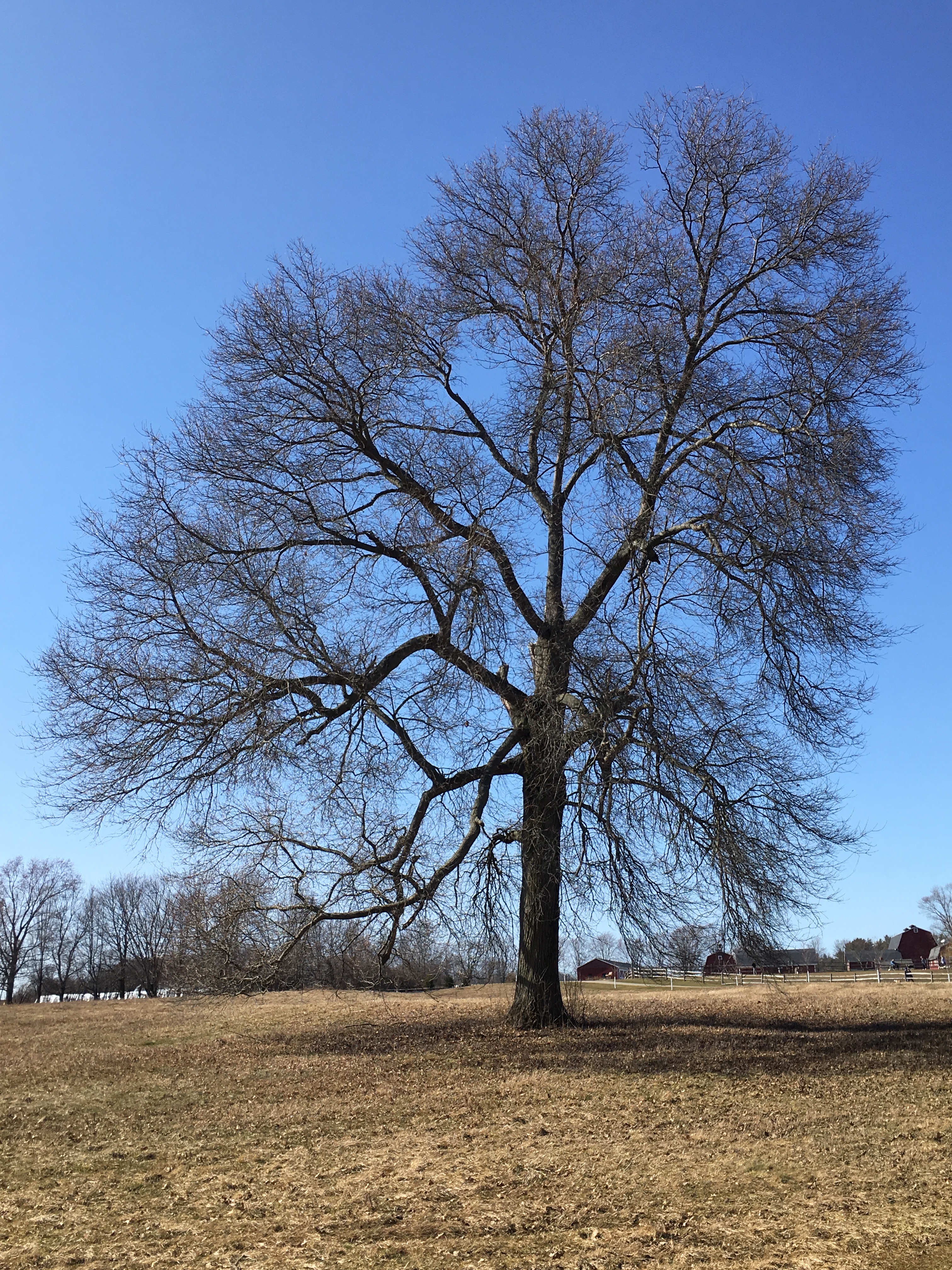
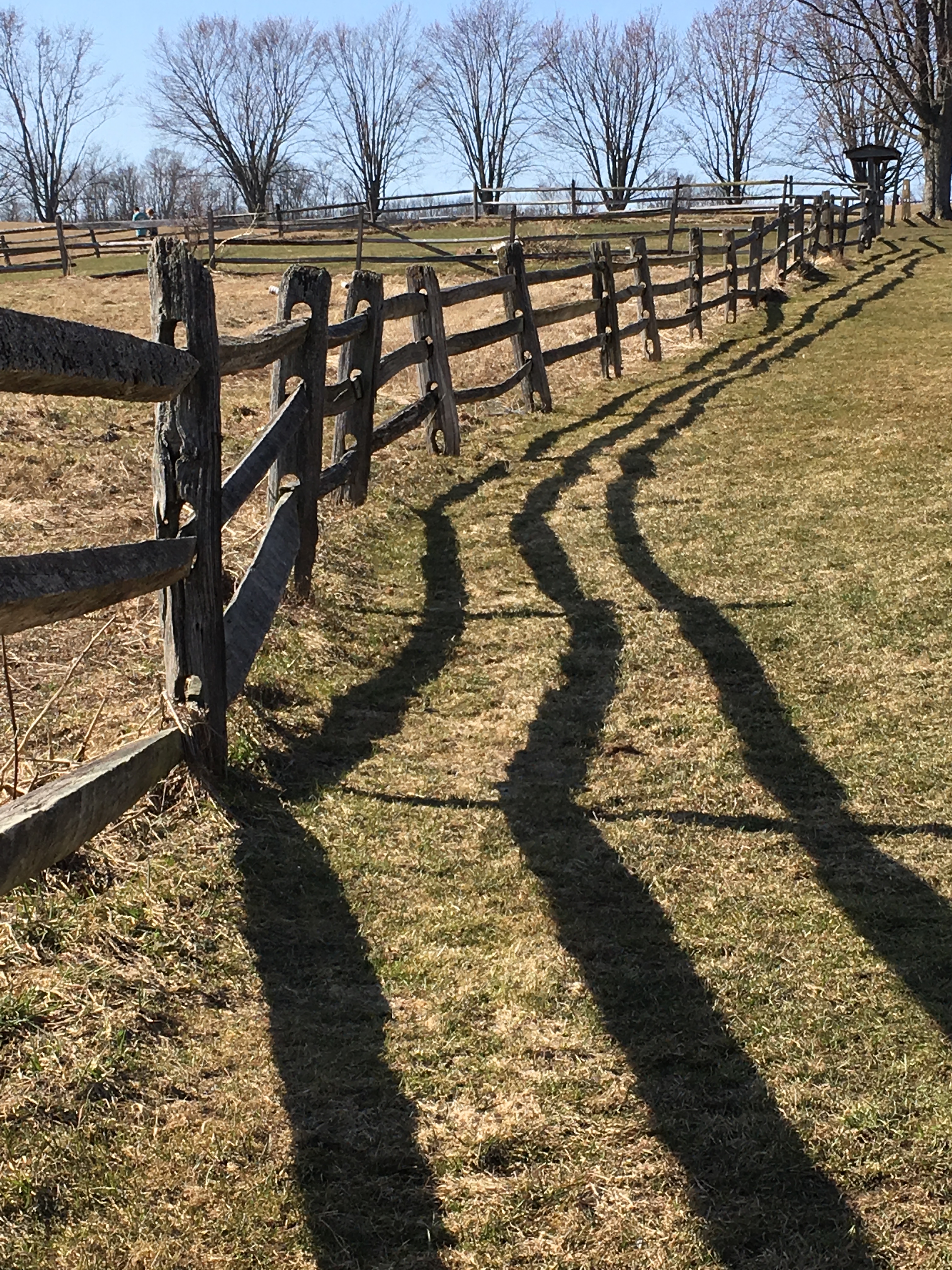
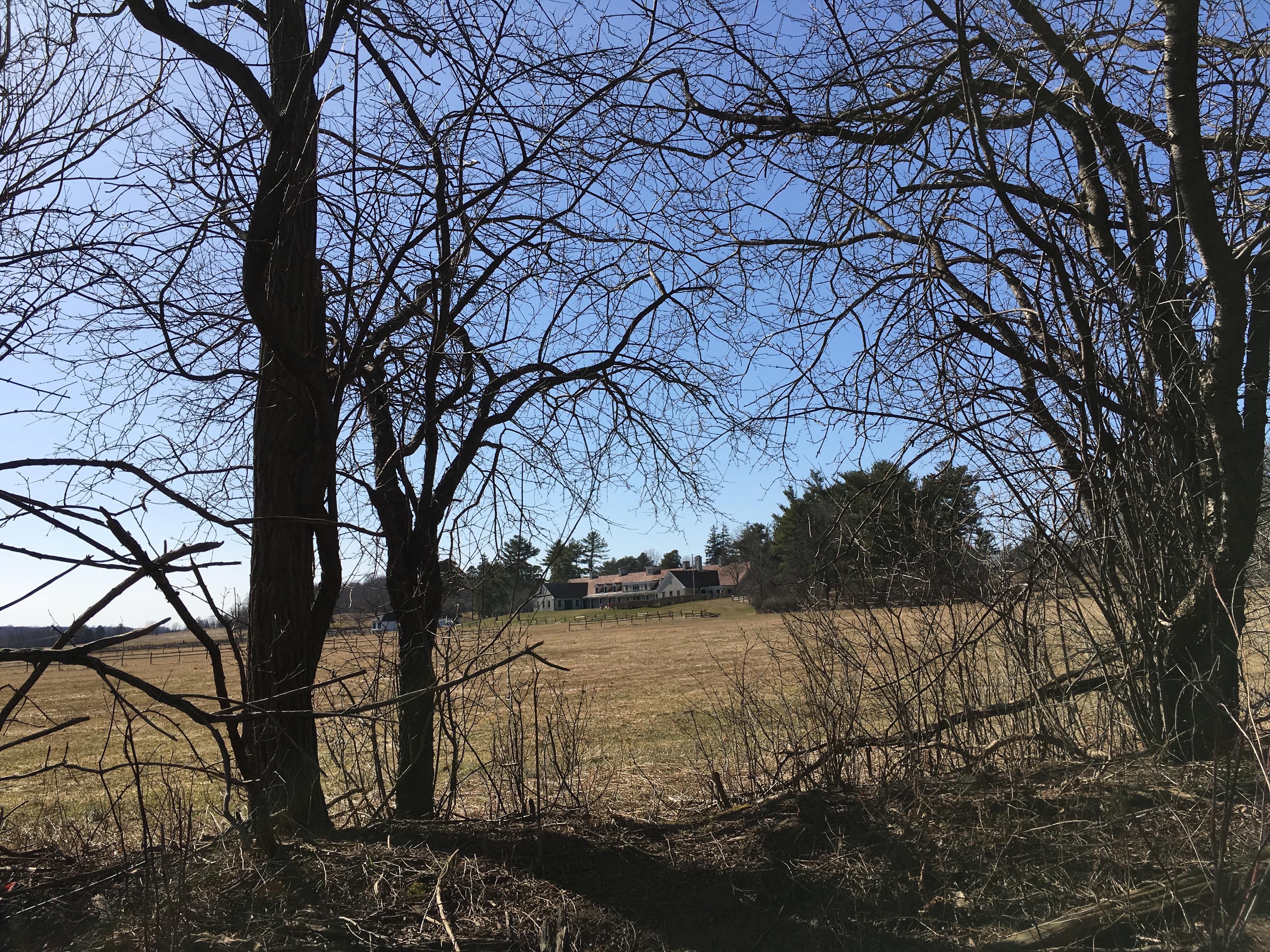
I realized on Sunday, while meandering through and around East Aurora’s Knox Farm State Park, that nature in Western New York needn’t exhibit stunning shades of green to please one’s eye. [Perhaps I was subjected to a bit more St. Paddy’s Day greenery this past week than my senses could handle.] I captured a handful of quite images, mostly subtle browns and gray, to share with you. Hope you enjoy them.

IMG_7350

IMG_7353IMG_7355IMG_7357IMG_7356IMG_7361IMG_7362IMG_7366

IMG_7370IMG_7372IMG_7375IMG_7379IMG_7380

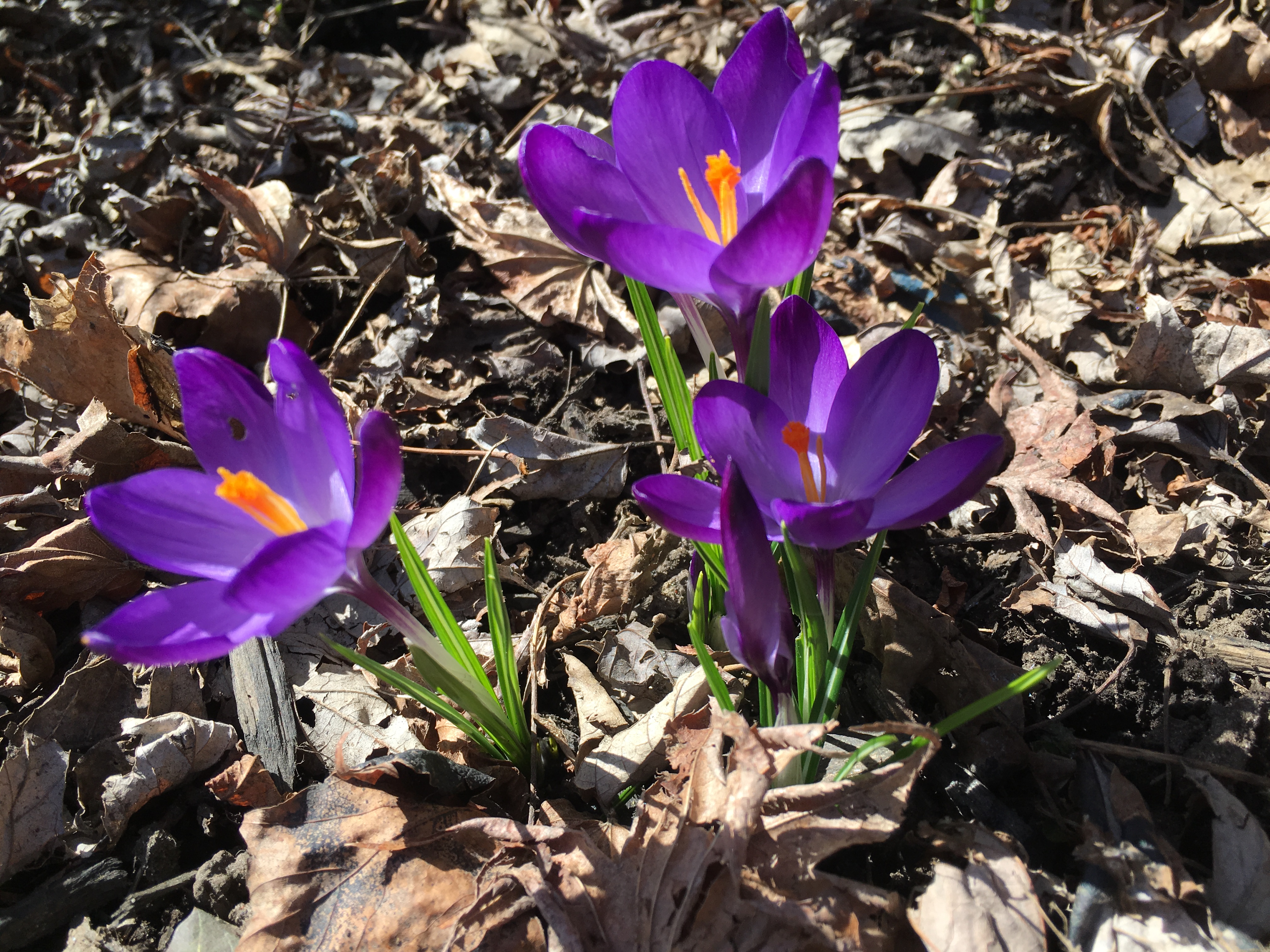
I’m going to cheat here, and add two photos that I took the morning after my hike through Knox Farm.  These welcoming signs of spring were poking out of the decaying leaves in my South Buffalo front yard.  They brightened my Monday!

Crocuses 03-22-21

IMG_7387

With All Due Respect,

Art Giacalone


Buffalo’s Common Council must fully develop its vision for the Outer Harbor before rezoning any of it

Posted by Arthur J. Giacalone on February 6, 2021
Posted in: City of Buffalo, Development, Green Code, South Buffalo, Waterfront, Zoning Law. 1 Comment

[Update: At its February 8, 2021 public meeting, the City Planning Board “tabled” the application of RCR Yachts, Inc., to rezone 9 & 11 City Ship Canal – the site of RCR’s marina and boat sales, storage an dockage business – from N-3E to D-IL. In response to questions from Planning Director Nadine Marrero, RCR agreed to the tabling of its requested zoning map amendment while it seeks variances on February 17, 2021 from the City’s Zoning Board of Appeals. RCR’s pending application at the ZBA requests area variances from N-3E’s building setback and transparency requirements to allow construction of a 4,300-square-foot boat storage and display building. At the 2/8/2021 meeting, the Planning Board did approve, with no substantive discussion, RCR’s Coastal Consistency Application. Note: Don’t quote me, but I presume that RCR’s rezoning application will not be considered at the Common Council’s February 9, 2021 Legislation Committee.]

An application currently pending at Buffalo City Hall to rezone a 14-acre site at 9 & 11 City Ship Canal has highlighted an issue that I believe needs to be addressed by Buffalo’s legislative body: The Common Council must comprehensively consider and publicly express its long-term vision for the Outer Harbor, with and without the Skyway.

The Outer Harbor as depicted in a map of open space resources included in the City’s Local Waterfront Revitalization Program (LWRP)

By necessity, the Common Council’s analysis should include reconsideration of what I believe is an arbitrary limitation in the UDO/Green Code’s definition of the “Outer Harbor boundaries.” As currently delineated, the “Outer Harbor Review Area” [OHRA] abruptly ends at the southern boundary of the former NFTA Terminal buildings. As a result, the current zoning/development ordinance precludes from the protections provided by the OHRA standards all the shoreline properties extending southerly from the former Freezer Queen site (where the 23-story Queen City Landing tower was proposed) to the Lackawanna city line.

The rezoning application for 9 & 11 City Ship Canal was filed by RCR Yachts, Inc. , which describes itself as “an active business providing sales, storage, dockage and service to the recreational community on the waterfront.” RCR seeks to alter the property’s zoning classification from N-3E (Mixed-Use Edge) to D-IL (Light Industrial).

The D-IL zoning district allows “by right” many uses and activities not permitted in the N-3E zone, including solar farm, major utilities facility, light and heavy industrial use, heliport, freight and passenger terminals, drive-thru facility, and outdoor amusement facility. While pondering this list, note that the subject parcel is located along the west shore of the City Ship Canal, to the east and in close proximity to Outer Harbor land and shoreline zoned D-OG (Green) and D-ON (Natural), and “developed” as open space, park, and ecologically sensitive preserves. [RCR’s zoning application refers to the Outer Harbor parcels as “undeveloped green space and then Lake Erie.”] Only Fuhrmann Blvd. separates RCR’s 14-acre property from the D-OG and D-ON zones.

RCR’s N-3E property is part of the narrow strip of beige-colored land running north-to-south in this zoning map excerpt:

The need for a clear understanding of the Common Council’s vision for the Outer Harbor is underscored by the criteria the Common Council (as well as the City Planning Board, in its advisory capacity) is obliged to consider when presented with a request to amend the UDO/Green Code’s zoning map. Those approval standards include whether the proposed rezoning “corrects an error” or “reflects a change in policy” by the Common Council, whether the proposed zoning map amendment is “compatible with existing form, pattern, use and zoning of nearby property,” and whether the proposed rezoning is “consistent with the trend of development, if any, in the general area of the property.”

The Planning Board’s February 8, 2021 agenda includes its consideration of the proposed rezoning of 9 & 11 City Ship Canal. That issue is also on the February 9, 2021 agenda of the Common Council’s Legislation Committee. I am not certain when the rezoning application will be back before the entire Common Council for a vote, but I assume it will be soon. I am inserting below an email message that I sent on February 6, 2021 to the City Planning Board (by way of the Planning Director, Nadine Marrero), and to each of the nine Common Council Members. I’ll include the email addresses, and urge you to contact the City of Buffalo decision-makers if the issue raised in either this posting or my email correspondence are important to you.

With All Due Respect,

Art Giacalone

From: “Arthur Giacalone”
To: “cscanlon@city-buffalo.com”, “nmarrero@city-buffalo.com”, “jferoleto@city-buffalo.com”, “darivera@city-buffalo.com”, “dpridgen@city-buffalo.com”, “mnowalkowski@city-buffalo.com”, “jgolombek@city-buffalo.com”, “uwingo@city-buffalo.com”, “rwyatt@city-buffalo.com”, “bbollman@city-buffalo.com”
Cc: “mshea@city-buffalo.com”
Sent: Saturday February 6 2021 11:12:58AM
Subject: Deny Rezoning of 9-11 City Ship Canal from N-3E to D-IL

Dear Common Council Members and Planning Board Members:

I request that this correspondence be made a part of the record of the Planning Board’s February 8, 2021 meeting, the Legislation Committee’s February 9, 2021 meeting, and any future Common Council meeting where the rezoning of 9 & 11 City Ship Canal is under consideration.

For the following reasons, I respectfully ask that the City Planning Board and Common Council Legislation Committee recommend against the application to rezone 9 & 11 City Ship Canal from N-3E to D-IL, and that the Common Council disapprove the application when the matter comes before it for a vote:

First, it would be shortsighted to make any decision to rezone the 14-acre subject parcel – or any land in the Outer Harbor area in the vicinity of the Skyway – unless and until plans for the Skyway’s removal or alteration are finalized.  The presence, absence, or alteration of the Skyway would not only have a significant impact on the 9 & 11 City Ship Canal property, it would also determine the most appropriate future activities on the subject parcel and Outer Harbor lands and shoreline to the west of the site.

Second, the decision to approve or disapprove the requested rezoning must be preceded by a clear understanding of the Common Council’s vision for the Outer Harbor as a whole, and, in particular,  the land in the vicinity of 9 & 11 City Ship Canal.  The members of the Planning Board and Common Council cannot protect the best interests of the City as a whole – in contrast to the narrow interests of the rezoning applicant – unless and until the following questions are answered:

        (a) What was the Common Council’s reasoning when enacting the UDO and classifying the subject parcel and the land directly to its north as N-3E? 

        (b) Has the Common Council concluded that either it was a mistake to place the narrow strip of land along the western edge of the City Ship Canal in the 3-NE district, or that recent and anticipated future development in the vicinity of the subject parcel and Outer Harbor area calls for a change in policy?

Third, the proposed rezoning to D-IL is inconsistent with the trend of “development” – and, the increasingly popular goal of retaining as much of the Outer Harbor as parkland and open space – in the general area of the property in question, especially to the northwest, west, and southwest of the site. 

Fourth, no matter what the applicant expresses as its current plans, the rezoning from N-3E to D-IL would mean that the following uses, which are not allowed in N-3E, and are incompatible with the existing form, pattern, use, and zoning of nearby property, would be:

         (a) Permissible “by right” in the D-IL zone:  solar farm; major utilities facility; light and heavy industrial; freight terminal;  heliport; railway facilities; passenger terminal; tobacco/hookah/vaping establishment; outdoor amusement facility; drive-thru facility; and, heavy retail and service; and

         (b) Permissible with a Special Use Permit in the D-IL zone: wind farm; gas station (due to C-W); car wash (due to C-W); halfway house; helistop.

Fifth, pursuant to Chapter 12.1 (Noncomformities) of the UDO, the current uses and structure(s) at 9 & 11 City Ship Canal are legal and may continue, unless the use is discontinued for one year.  Furthermore, the rights conferred under the UDO “run with the property and not not affected by changes in tenancy or ownership.”  Therefore, the N-3E zoning status does not place an undue burden on the applicant.

Thank you for your thoughtful consideration of these comments.

Sincerely,

Arthur J. Giacalone
17 Oschawa Avenue
Buffalo, NY 14210
(716) 436-2646
AJGiacalone@twc.com

Let me be Dave DiPietro’s counterpoint

Posted by Arthur J. Giacalone on January 27, 2021
Posted in: David DiPietro, East Aurora NY, WNY Radio and TV. Leave a comment

[Update No. 2: It appears that Dave DiPietro will be moving on from WECK to another radio station in the near future. Here’s the gracious email I received from the Assemblyman on February 3, 2021, also sent to WECK’s owner, Buddy Shula:

From: “David DiPietro”
To: “Buddy Shula”
Cc:
Sent: Wednesday February 3 2021 1:26:07AM
Subject: David DiPietro

Art and Buddy,
Great to hear from you Art. I am happy to hear that you are doing
well. I miss our talks, you always had a great depth of knowledge on
many subjects and I relied upon you many times for advice! I
appreciate your offer! I met with and was offered to have my show on
another station today, and I am meeting with another radio station
tomorrow. You definitely would have been a great “Counterpunch” and
fun to work with! Let me know if you make it out to East Aurora, we
can grab coffee!
Stay safe and God Bless!
David
]

[Update No. 1: On Friday afternoon, January 29, 2021, two days after I sent a message to WECK’s owner, Buddy Shula, offering my service as a voice to counter Assemblyman Dave DiPietro’s ultra-conservative pronouncements – and minutes after I left a follow-up voice-mail message to Mr. Shula – an assistant to WECK’s owner phoned to say that WECK is not interested in pursuing any more political talk at this time, but will focus on music that brings joy to its listeners. I don’t blame them. Perhaps I’ll find another way to serve as that well-needed counterpoint.]

Alan Pergament, TV critic for the Buffalo News, had a revealing column in the publication’s January 27, 2021 print version, entitled “Capitol attack led to hiatus of DiPietro show, WECK says.” The “DiPietro” referenced in the headline is the right-wing State Assemblyman David DiPietro (R), former mayor of the Village of East Aurora. The “hiatus” mentioned in the headline is the decision made by Buddy Shula, the owner of WECK – a local radio station – to temporarily take off the air the hour-long Saturday morning radio show, BUFFALO MATTERS with David DiPietro.

According to Dave DiPietro, WECK “pulled the plug” on his show, following the election of Joe Biden, when “the owner received threats from Antifa types to ‘burn down the station’ if he did not remove me.” According to the Assemblyman – who likes using ALL CAPS – “THIS is how leftists CENSOR CONSERVATIVE TALK.”

As conveyed by Mr. Pergament, Buddy Shula has a different explanation: “I received emails and calls from both the right and the left expressing their views, but never, ever threatened… When I saw the commotion at the Capitol (on Jan. 6), it made me sick and scared… It was after watching that that I decided that my radio station really should not get involved in a one-sided political area at this time.”

What I found most interesting personally were the following statements by WECK’s owner: “I would love to have Dave back on the air, but with a person from the other side of the aisle… [I]t is important not to be one sided… I want[ ] the show to have a counterpoint from the other side of the aisle.”

Well, I have known Dave DiPietro since the late 1990s – when he was working at his family’s dry cleaning business in the Town of Aurora. And, while I perhaps may stutter at times, and may not be the world’s smoothest talker, I think that I could be an excellent “counterpoint” to Dave’s perspective on politics and what matters in Buffalo. With that thought in mind, I sent a message today to Buddy Shula (whom I do not know), offering to provide the alternative view.

What follows is my verbatim message to the owner of WECK (which, by the way, is primarily a music station “that attracts baby boomers and seniors in Western New York”). For my readers’ edification, I have added some links and the image of two writings mentioned in the email. I’ll keep you posted if I hear back.

With All Due Respect,

Art Giacalone
Dear Mr. Shula,

I would like to offer my services as a counterpoint to Dave DiPietro’s conservative voice at WECK. 

I am a life-long Democrat from a working-class family in Rochester who worked hard and graduated from Harvard law school 45 years ago, moving to Buffalo in 1976.  My law practice has focused on public interest matters, zoning, land use and environmental law, and, in earlier years, prisoners’ rights.  While I am a progressive, I have not shied away from criticizing Andrew Cuomo (for an example, click here), Byron Brown (for an example, click here), or other prominent Democrats when writing op-ed pieces or columns in the Buffalo News, Buffalo Law Journal, or my own blog at https://WithAllDueRespectBlog.com.  [Note:  I acquired a trademark in 2014 to use the term “With All Due Respect” for news analysis and commentary, and sold my interest in the mark to Bloomberg TV, retaining a license to use the name at my blog, related articles or commentary in newspapers and publications, etc.]

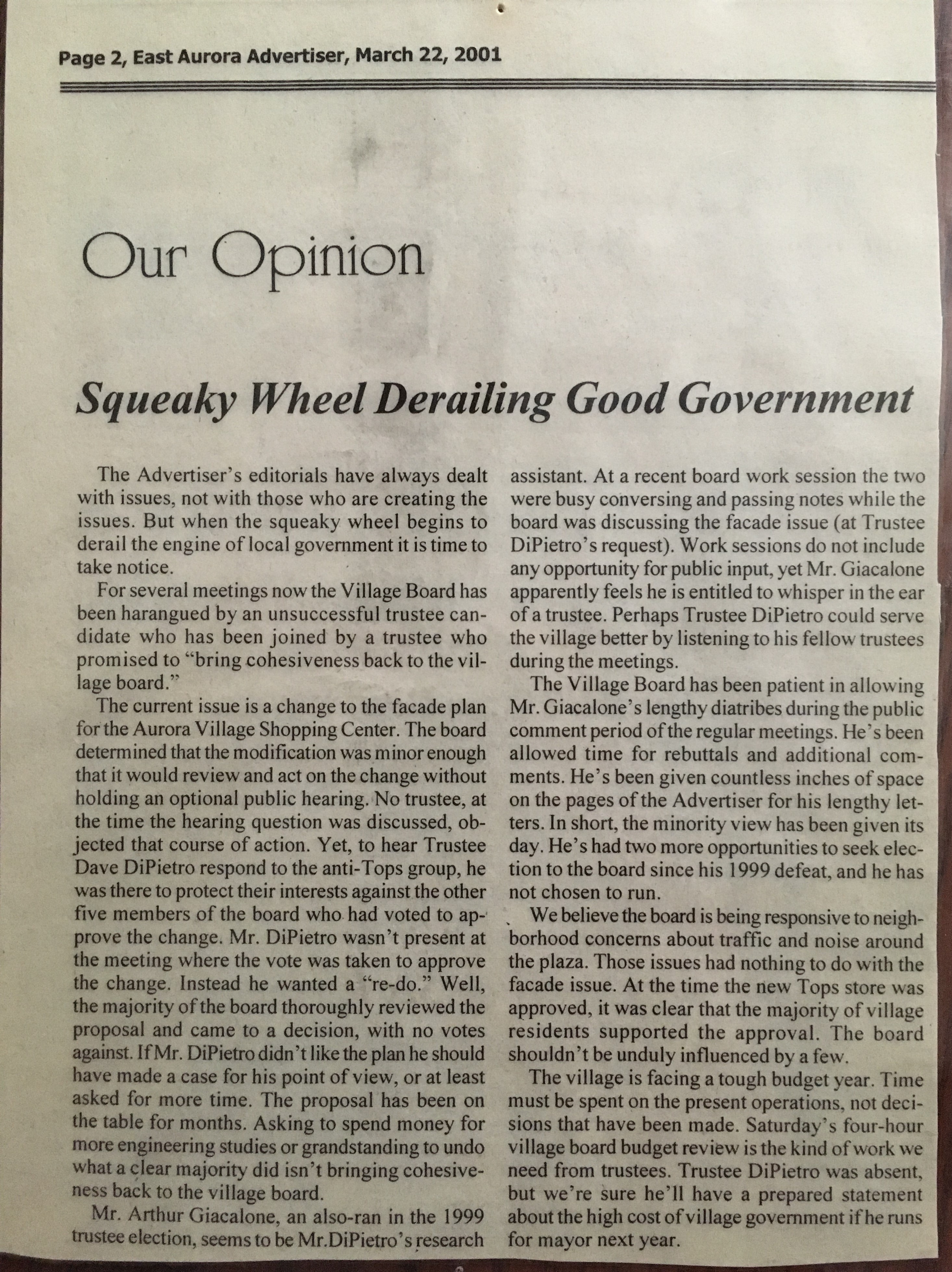
I first met Dave DiPietro in the late 1990s while I was raising a family and conducting a solo law practice in East Aurora.  Dave would call me or stop by my home regularly to discuss village issues and the law when he was serving as a Village Trustee.  In a March 2001 editorial (inserted below), the East Aurora Advertiser attempted to slam both Dave and me by characterizing me as Trustee DiPietro’s “research assistant.”  [Note:  I was respected by many in East Aurora for representing the Village Board in 1994 when it successfully turned back Wal-Mart’s rezoning request.]

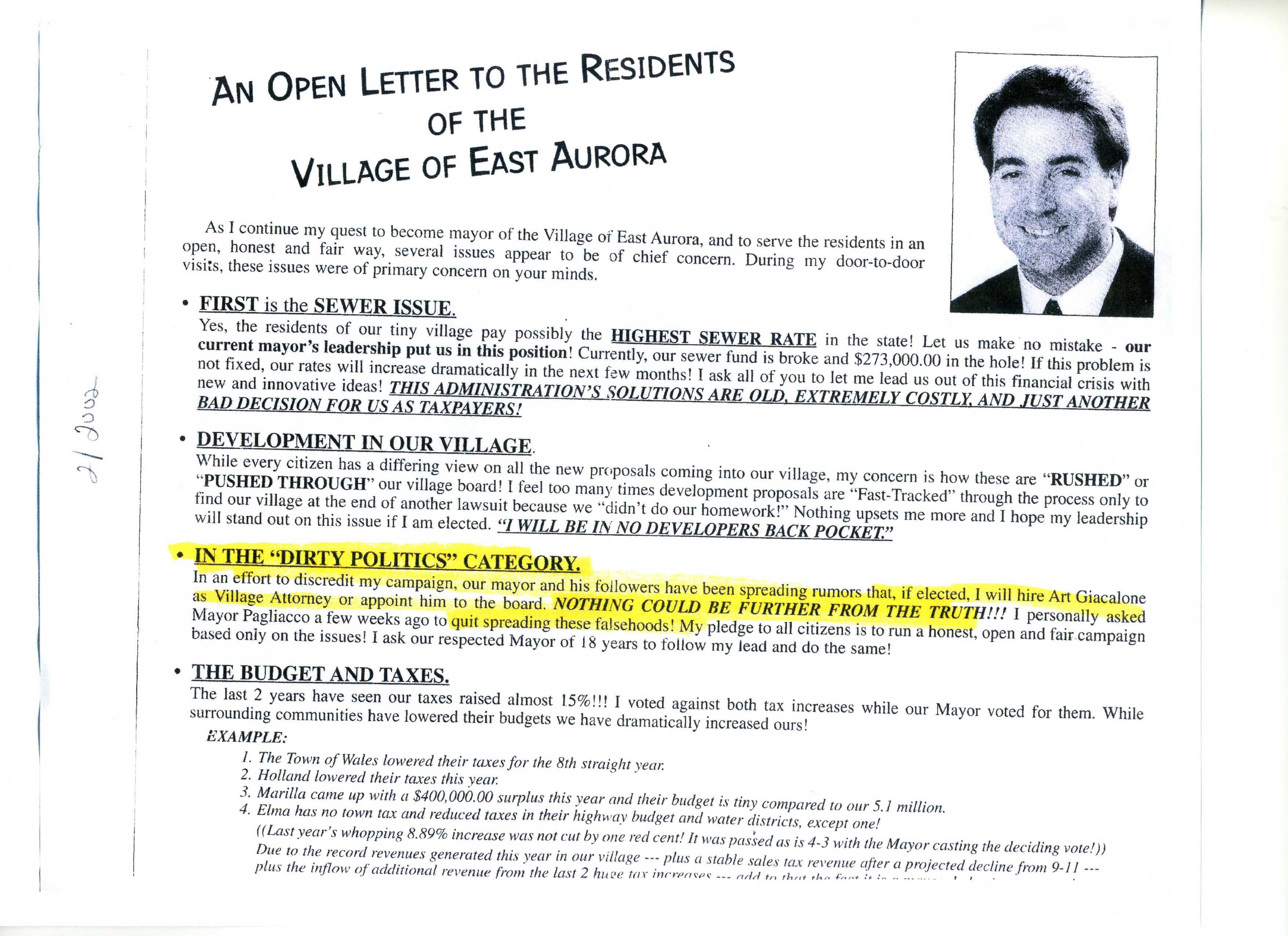
However, in February 2002, while running for East Aurora mayor, Dave threw me under the proverbial bus when the incumbent mayor claimed that, if elected, Dave would hire me as Village Attorney.  [The more conservative folk in town considered me anti-development and, therefore, unworthy.]  Dave sent a post card (inserted below) to every village and town resident characterizing the rumor as “dirty politics,” and exclaiming in bold print and ALL CAPS:  “NOTHING COULD BE FURTHER FROM THE TRUTH!!!”

February 2002 post card sent by Dave DiPietro to East Aurora area residents.

By the way, although I haven’t seen Dave in person since I moved back to the City of Buffalo in 2015, we have remained cordial in our personal interactions.

If you are at all interested in pursuing this or related topics, please contact me at 716-436-2646 or AJGiacalone@twc.com.

Thank you,

Arthur J. Giacalone

Posts navigation

← Older Entries
Newer Entries →
  • CATEGORIES

  • February 2026
    M T W T F S S
     1
    2345678
    9101112131415
    16171819202122
    232425262728  
    « Nov    
  • DISCLAIMER

    This blog is provided for general informational purposes only. It should not be construed as legal advice and is not intended to be a substitute for legal counsel. Persons requiring legal advice should retain a properly licensed lawyer. No attorney-client relationship will be formed based on use of this site and any comments or posts to this blog will not be privileged or confidential. *************** This blog's author, Arthur J. Giacalone, does not intend or consider the communications at this blog to be ATTORNEY ADVERTISING. The primary purpose of the communication is not for the retention of Mr. Giacalone's legal services. [See definition of "Advertisement" at Part 1200, Rules of Professional Conduct, Rule 1.0(a).] Nonetheless, in case the proper authorities choose to treat this web site as ATTORNEY ADVERTISING, the street address, phone number and email address of the law office of Arthur J. Giacalone are: 17 Oschawa Avenue, Buffalo, New York 14210; (716) 436-2646; AJGiacalone@twc.com.
Blog at WordPress.com.
With All Due Respect
Blog at WordPress.com.
  • Subscribe Subscribed
    • With All Due Respect
    • Join 62 other subscribers
    • Already have a WordPress.com account? Log in now.
    • With All Due Respect
    • Subscribe Subscribed
    • Sign up
    • Log in
    • Report this content
    • View site in Reader
    • Manage subscriptions
    • Collapse this bar
 

Loading Comments...