With All Due Respect

Photos and musings by Arthur J. Giacalone

  • About The Author
  • About This Blog
  • Pre-WADR Archives

Delaware Park is Next Stop on “Covid-19/ Resurgence” Summer Tour

Posted by Arthur J. Giacalone on July 27, 2020
Posted in: Byron Brown, Cazenovia Park, City of Buffalo, Covid-19/Coronavirus, Olmsted Parks, South Buffalo. Leave a comment

Pints-in-the-Park Summer Tour 2020

Mayor Byron W. Brown issued a July 16, 2020 press release in which His Honor cautions City of Buffalo residents of the continued dangers we face regarding the coronavirus:

COVID-19 remains a threat to our community and we cannot afford to let our guard down at this time. We must remain vigilant and continue to take the necessary precautions to maintain public health and safety. Please continue to practice physical distancing and wear face coverings when going out.

The Mayor followed that plea with a press conference July 24th announcing “an innovative and safe dining experience initiative that will enable restaurants to offer outdoor dining services to patrons” on a stretch of Chippewa Avenue. We were told that each of the 10 or so participating eating-and-drinking establishments “will safely operate while practicing New York State social distance guidelines and requirements.” Not only have their plans been reviewed by Mayor Brown’s Small Business Social Distancing Advisory Committee (SBDAC), but, as reported by WBFO, Mayor Brown said it’s important for patrons and proprietors to understand – this is not meant to be a block party: “This isn’t to allow mass gatherings on Chippewa. This is to allow more room to socially distance.”

No, the block party – where, it appears, you can get away with not wearing a face covering and adhering to social distancing and other health guidelines intended to slow the virus spread – was occurring on July 24th and 25th several miles away in South Buffalo’s Cazenovia Park.

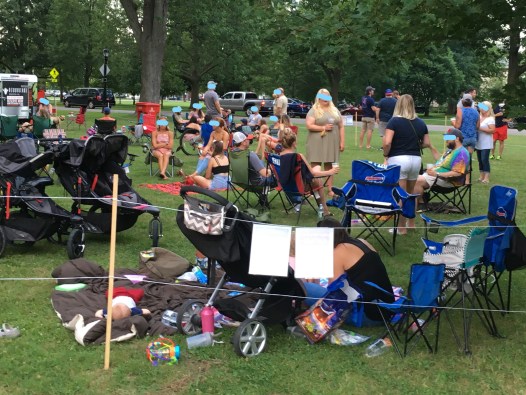
While bicycling through my neighborhood park at 8 PM on the Friday the 24th I observed at least 60 or 70 Pints-In-The-Park attendees, many of whom were not following the posted (and, by now, well known) Covid-19 protocols. I saw a similar scene at 6 PM on Saturday.  Here’s a sampling:

IMG_5801 (2)_LI

IMG_5802 (2)_LI

IMG_5805 (2)_LI

IMG_5806_LI

IMG_5809_LI

I have since confirmed that the City of Buffalo had issued a permit to (a rather aptly-named) Resurgence Brewing Company to host pop-up beer gardens – with the cutesy moniker, Pints-In-The-Park. Here’s how the events are described at Resurgence’s facebook page:

All Pints in the Park events will be held in Olmsted Parks with a portion of proceeds going toward the Olmsted Parks Conservancy.

Bring your own blankets and chairs and your mask for when you are up and walking around. We’ll provide the beer. Feel free to bring your own food as well. Bring the family, bring the dog and have a Pint, with us, in beautiful Cazenovia Park. We’ll be located next to the casino.

I found the city’s willingness to use our city park’s for this sort of commercial endeavor distasteful last year when I first became aware of it occurring in Caz Park. And, frankly, I was even more offended at that time when I realized Buffalo Olmsted Park Conservancy’s involvement – tacitly, or otherwise – in the endeavor.

IMG_5813

But I find the concept of a pop-up beer garden in our public park’s even more problematic in the summer of 2020. It is hypocritical, at best, for Mayor Brown’s administration to issue public statements urging the public, on the one hand, ”not to let our guard down” and to “remain vigilant” to the threat of Covid-19, while it allows residents to gather in Cazenovia Park in large numbers and hold a pint of beer, in the other hand, without ensuring enforcement of our state’s social distancing guidelines and requirements.

IMG_5804 (2)

I know that my sentiment will not be universally popular. But, nonetheless, I want to provide this shoutout to my friends and colleagues in North Buffalo:

THE RESURGENCE BREWING COMPANY’S PINTS-IN-THE-PARK SUMMER TOUR IS SCHEDULED TO POP-UP IN DELAWARE PARK ON AUGUST 7 & 8.

With All Due Respect,

Art Giacalone

P.S. Concerns have been raised for months that the Covid-19 pandemic has resulted in skyrocketing alcohol sales, and has raised concerns regarding substance abuse. See, for example, this.]

1 in 3 Young Adults is Medically Vulnerable to SEVERE covid-19 Illness

Posted by Arthur J. Giacalone on July 20, 2020
Posted in: Covid-19/Coronavirus. 1 Comment

The fact that this estimate is halved to 1 in 6 for non-smoking young adults is little comfort to this father of a son and daughter in their twenties.

The thought of writing about covid-19 and its impacts had not been part of my plans. That all changed this past weekend.

A beloved family member sent me a link to a July 9, 2020 video being disseminated across the internet by “reopen America” advocates. The so-called “facts” and “realities” expressed by the interviewed physician ranged from blaming the recent spike in covid-19 cases on “massive protests and rioting” across our country, to insistence that wearing masks has “very little utility in stopping the spread” of the virus and that hydroxychloroquine works “wonderfully well,” to espousing that schools reopen “with almost no restrictions.”

But what caught my attention and motivated this post was the commentators repeated claims that 31 year-olds – the average age of those currently testing positive for covid-19 – “have an easy time with the virus,” and should go about living their lives without worrying about being susceptible to the virus. I find these assertions reckless and dangerous.

According to health departments across the U.S., younger people are making up a higher percentage of those infected with the coronavirus. Seemingly, many younger Americans have the misimpression that their youth renders them invincible to any serious harm from covid-19. Perhaps a study published on July 13, 2020 in the Journal of Adolescent Health, will provide a strong dose of reality to the less-conscientious members of the younger generation (as well as their parents).

The study’s authors, analyzing National Health Interview Survey statistics for over 8,400 young adults aged 18-25 years, reached the following conclusions:

– Nearly one in three young adults are medically vulnerable to severe COVID-19 illness (32%).

– In contrast, in the nonsmoking young adult group, only about one in six is medically vulnerable to severe COVID-19 illness (16%).

– Among nonsmokers, females were significantly more likely to be medically vulnerable than males, because of their higher asthma and immune condition rates.

– Unexpectedly, the findings revealed a lower medical vulnerability of racial/ethnic minorities compared with the white subgroup, despite controlling for income and insurance status.

[Here’s the original article in its entirety: Medical vulnerability of Young Adults to Severe COVID-19 Illness 07-13-20 ; also, more generally, here’s a recent article at Johns Hopkins medical center’s website entitled, “Coronavirus and COVID-19: Younger Adults Are at Risk, Too”: https://www.hopkinsmedicine.org/health/conditions-and-diseases/coronavirus/coronavirus-and-covid-19-younger-adults-are-at-risk-too.]

While investigating the potential impact of covid-19 on younger Americans, I also came across information relating to two other specious assertions in the “reopen America” propaganda piece, the purported ineffectiveness of face masks and effectiveness of hydroxychloroquine.

Face masks: Intentionally or not, anti-mask advocates often blur two issues, the effectiveness of a mask in protecting its wearer from contracting Covid-19, and the usefulness of the mask as a tool to limit the spread of the virus, especially by an asymptomatic person. I find the explanations given by the Mayo Clinic and the U.S. Centers for Disease Control (CDC) much more persuasive than assertions of the naysayers. Here’s what the Mayo Clinic says:

Can face masks help slow the spread of the coronavirus (SARS-CoV-2) that causes COVID-19? Yes, face masks combined with other preventive measures, such as frequent hand-washing and social distancing, help slow the spread of the virus.

So why weren’t face masks recommended at the start of the pandemic? At that time, experts didn’t know the extent to which people with COVID-19 could spread the virus before symptoms appeared. Nor was it known that some people have COVID-19 but don’t have any symptoms. Both groups can unknowingly spread the virus to others.

These discoveries led public health groups to do an about-face on face masks. The World Health Organization and the U.S. Centers for Disease Control and Prevention (CDC) now include face masks in their recommendations for slowing the spread of the virus. The CDC recommends cloth face masks for the public and not the surgical and N95 masks needed by health care providers.

Hydroxychloroquine: I’m naïve enough to have been stunned to hear a self-proclaimed medical expert insist that research and studies show that hydroxychloroquine “works wonderfully well.” On July 16, 2020, a randomized trial with over 400 non-hospitalized participants, entitled, “Hydroxychloroquine in Non-hospitalized Adults With Early COVID-19,” was published in the American College of Physicians Journal, Annals of Internal Medicine. That study concludes that hydroxychloroquine “did not substantially reduce symptom severity in outpatients with early, mild COVID-19.” [I can’t help but wonder how soon the video’s propagandist will update his prior statements.]

Two final comments relating to the coronavirus.

First, if you’re into statistics and graphs, Johns Hopkins University has an up-to-date timeline of covid-19 policies, cases, and deaths in all 50 states, taking a look at how social distancing and other measures may have influenced those trends.

Second, as someone who took several constitutional law classes in law school, who has attended a variety of Continuing Legal Education seminars on constitutional law and civil rights over the decades, who has on occasion asserted constitutional claims on behalf of my clients (and, myself), and who continues to read and think about contemporary constitutional issues on a regular basis, I cannot fathom how any sensible lawyer could reach the conclusion that U.S. citizens have a constitutional right not to wear a mask in public. To me, that position is, frivolous, at best. It is akin to saying that we have a constitutional right not to use headlights or taillights when driving our cars at night, or windshield wipers when driving in the pouring rain, and proclaiming: Public safety and welfare be damned!

With All Due Respect,

Art Giacalone

P.S. I have intentionally not referenced the source of the offending video, or the speakers expressing their “realities’ and “facts.” I don’t wish to provide them any publicity. However, I did check into the background and funding sources of the website, and biographies of the two individuals on screen. In a nutshell, my research shows they all are so agenda-driven as to raise legitimate questions regarding the objectivity and accuracy of their assertions. Most troubling to me, as I attempt to conscientiously assess these complex scientific issues, is the primary funding source for the website: two billionaires who not only have spent a fortune advocating “human influenced climate change denialism,” but who are also believers in the scientific accuracy of the Bible.

Erie Basin Marina’s garden – all you need is 30 minutes and a mask

Posted by Arthur J. Giacalone on July 17, 2020
Posted in: City of Buffalo, Waterfront, WNY Photos. 2 Comments

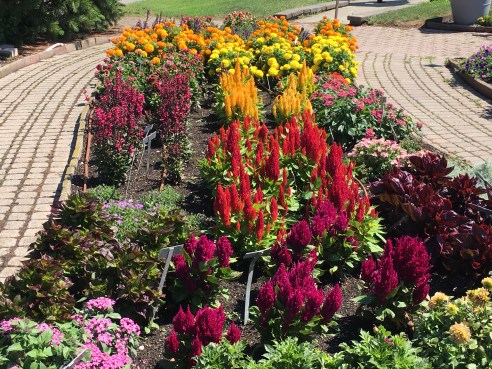
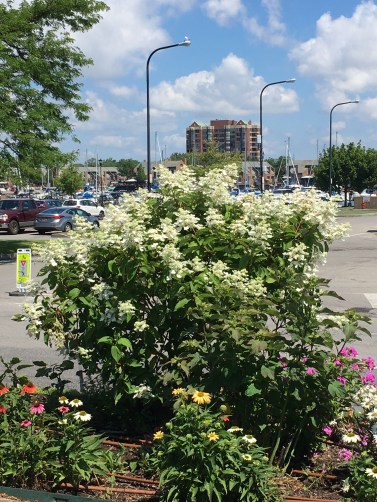
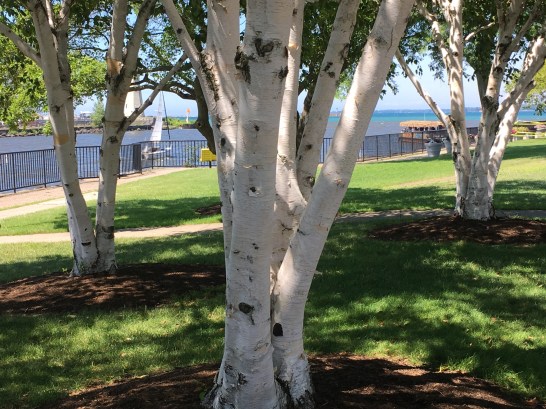
I wasn’t certain where I was headed as I drove away from my South Buffalo home today.  But I’m pleased that I ended up at the Erie Basin Marina (alongside The Hatch).  Here’s why:

IMG_5716 (2)

IMG_5714

IMG_5718 (2)

IMG_5723

IMG_5719

IMG_5726

IMG_5725

IMG_5735

IMG_5734

IMG_5742

IMG_5746

IMG_5745

IMG_5752

IMG_5748

IMG_5761

IMG_5763

IMG_5710

IMG_5756 (2)

With All Due Respect,

Art Giacalone


Legal Challenge to The Lawrence apartment project

Posted by Arthur J. Giacalone on July 9, 2020
Posted in: B-N Medical Campus, City of Buffalo, Development, Fruit Belt, Gentrification, Green Code, SEQRA, Zoning Law. Leave a comment

[I wrote on June 19th about my disappointment in the City of Buffalo Zoning Board of Appeals’ June 17, 2020 granting of 13 variances for “The Lawrence” apartment facility – straddling Michigan Ave. and the Fruit Belt’s Maple Street.  This week I filed a lawsuit challenging the approvals by both the ZBA and City Planning Board of that project.  What follows is my press release announcing the legal proceeding in Erie County Supreme Court.  Here’s WBFO’s response to the lawsuit, here’s the BuffNews article , and here’s BusinessFirst Buffalo’s version.  If you’re really curious (and, perhaps, a bit of a masochist), here’s the 72-page Verified Petition commencing the CPLR Article 78 proceeding:  Verified Petition Gidney v. Buffalo ZBA et al.]

July 9, 2020

CITY’S APPROVAL OF “THE LAWRENCE” APARTMENT COMPLEX ON FRUIT BELT’S WESTERN BOUNDARY CHALLENGED IN STATE COURT

 – The lawsuit claims that Buffalo’s Zoning Board and Planning Board disregarded the requirements and intent of City’s “Green Code”, and ignored the character of the adjoining residential neighborhood, to enable the developer to make a profit –

Michigan-Redev LLC spent around $2 million to buy 15 parcels of land across Michigan Avenue from the Buffalo Niagara Medical Campus in 2016 and 2017. At the time, most of the parcels were assessed in the $4,000 range. Six of the lots face Michigan Avenue and the medical campus, and 9 front on Maple Street, a traditional neighborhood of small homes, peaked roofs, and side yards. Under zoning laws in existence when the developer began assembling the one-acre site, a maximum of 27 apartments could be built. When the City enacted its new zoning ordinance early in 2017 (the Unified Development Ordinance or “Green Code”), the allowable number of residential units that could be constructed “by right” rose to around 57.

In August 2019, Michigan-Redev’s agent, Symphony Property Management LLC, went to the City with plans for an apartment complex they called “The Lawrence.” Little effort was made to comply with the Green Code’s limitations. Instead, the developer told city officials that they were unable to make a reasonable return on their $2 million investment unless they were allowed to construct a 129-unit building. On June 17th, following two revisions and multiple public hearings, Buffalo’s Zoning Board of Appeals (ZBA) granted Michigan-Redev thirteen (13) variances from the existing Green Code requirements – many substantial in size – approving a 133-unit structure, over 250’ long and 4 stories high on Maple St., and nearly 180’ long and 5 stories high on Michigan. On June 29th, the City Planning Board gave the project its approval.

On July 8, 2020, petitioners Elverna D. Gidney, whose family has owned a home about a block from The Lawrence site for nearly 60 years, and Lorna Peterson, a retired university professor who has worked tirelessly since 2014 to preserve and enhance the historic Fruit Belt community, filed a lawsuit in Erie County Supreme Court seeking to annul the ZBA and Planning Board approvals. The case, Elverna D. Gidney v. Zoning Board of Appeals of City of Buffalo, Index No. 806735/2020, is assigned to the Hon. Frank A. Sedita, and is scheduled to be heard 08/26/20.

Petitioners’ counsel, Arthur J. Giacalone, explains the reasons for his clients’ lawsuit:

The ZBA and Planning Board have the duty to protect the integrity of our zoning laws, and the character of our neighborhoods. They chose, instead, to protect the pocketbook of a developer who cavalierly ignored zoning requirements when purchasing the land. By decimating the Green Code, these boards disregarded the standards set by Buffalo’s Common Council, and exceeded their lawful authority. If their approvals are not reversed, the Fruit Belt will suffer further speculative buying and unjust gentrification.

 Inquiries or requests for copies of the court papers should be addressed to Arthur J. Giacalone, at (716) 436-2646 or AJGiacalone@twc.com. Thank you.

With All Due Respect,

Art Giacalone

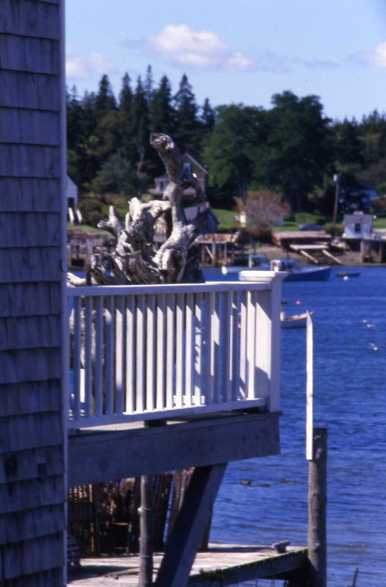
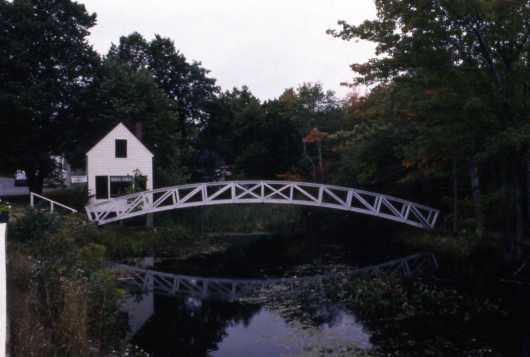
Visiting the coast of Maine

Posted by Arthur J. Giacalone on July 9, 2020
Posted in: Maine. Leave a comment

I recently learned that a friend – having adjusted fairly well to the premature ending of tutoring this school year – has now accepted the fact that the family’s annual vacation to Maine won’t be happening this summer as a result of Covid-19.  I feel bad, knowing how wonderful a trip to the pine tree state can be this time of year, and sharing the near-universal desire to escape to “somewhere else.”

The least I can do on this miserably hot July day (current temperature 96 degrees) is put together a virtual trip to the Maine coast (and, relive some favorite memories).

Enjoy.

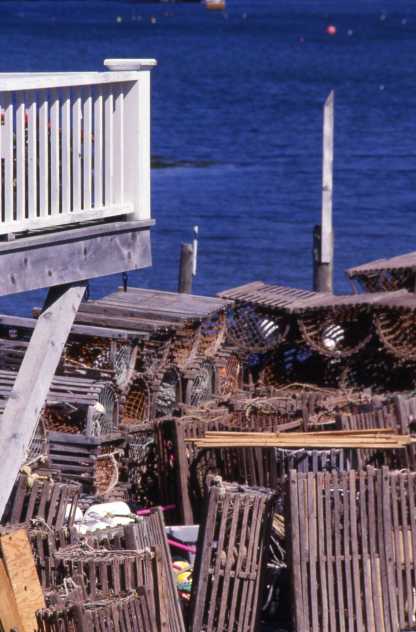
AJG-Lobstah-Kennebunkport

Mt. Desert Island

img045

img044

img039

img036

img046

img038

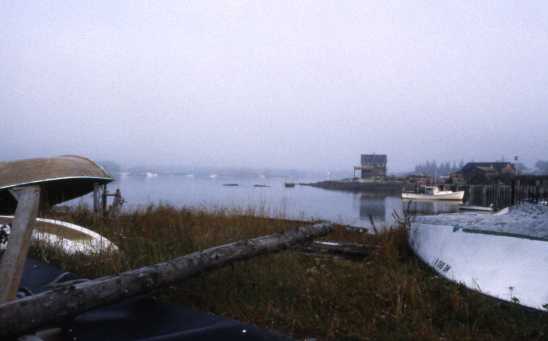
Anchored Boats

Boat Graveyard

MtDesIs 09-88(3)

Purple Hill 2

img234 (2)

img240

img239

img231

img241

Balcony

Museum - Bridge

Seagull blues

Solitary Seagull

Swirl

Biddeford, ME (Vacant)

DSCN1801 (2)

With All Due Respect (for nature’s beauty),

“Mr. Art”


Zoning Board’s trampling of Green Code rewards Fruit Belt speculators and emboldens gentrification

Posted by Arthur J. Giacalone on June 19, 2020
Posted in: B-N Medical Campus, City of Buffalo, Development, Fruit Belt, Gentrification, Green Code, Zoning Law. Leave a comment

Our state’s highest court expressed the following warning nearly a century ago concerning the power of a zoning board of appeals [ZBA] to grant “variances” from a zoning law’s requirements: “There has been confided to the Board a delicate jurisdiction and one easily abused.”  The author of such elegant prose, Chief Judge Benjamin N. Cardozo, must have foreseen an inexplicable (but, sadly, not surprising) decision on June 17, 2020 by the City of Buffalo’s ZBA.

A “variance” is described in Buffalo’s zoning code [the Uniform Development Ordinance (UDO), informally known as the “Green Code”] as follows:

“A zoning variance allows a narrowly circumscribed means by which relief may be granted from unforeseen applications of this Ordinance that create practical difficulties or particular hardships.” [UDO, 11.3.5(A)]

As the words “narrowly circumscribed” suggest, this tool is intended as a scalpel. Unfortunately, in Buffalo’s City Hall, it is relentlessly wielded as an axe.

On June 17th, a 3 to 2 vote by Buffalo’s ZBA – with “Ayes” by Chairman Rev. James A. Lewis, Janice McKinnie and James Hornung Jr., and “Nayes” by Bernice Radle and Thomas Dearing – granted the request by Symphony Property Management LLC and Michigan-Redev LLC to circumvent eleven requirements of the Green Code to allow construction of a 133-unit apartment development known as “The Lawrence.” The controversial project straddles Michigan Avenue and Maple Street, and represents both a massive encroachment into the Fruit Belt neighborhood, and, as will be addressed below, an utter disregard of the UDO/Green Code’s vision for that community.

IMG_4185 (3)

The site of the Symphony’s proposed project is an assemblage of 15 parcels – 6 on Michigan Avenue facing the Buffalo Niagara Medical Campus and zoned N-2E (“Mixed-Use Edge), and 9 on Maple Street, a residential neighborhood, zoned N-2R (“Residential”). Buffalo’s Common Council unanimously approved the UDO/Green Code on December 27, 20216. On December 23rd, just four days earlier, Michigan-Redev LLC purchased 11 of the 15 parcels (plus three adjoining lots) for the astronomical price of $1.75 million. According to an April 2014 Buffalo News article, it had only cost the sellers “about $100,000 to purchase, demolish and maintain” the parcels “The Lawrence” developers chose to buy for seventeen-and-a-half times that amount.

The intent of the N-2R zoning district on Maple Street (and, the vast majority of the Fruit Belt neighborhood) is clearly set out in the Green Code’s dimensional requirements. The N-2R zone envisions a residential district comprised of moderate size residential buildings (a maximum of 3-stories high), on moderate size lots (no wider than 60’), and separated by side yards at least 3-feet wide on each side.  And, to underscore the goal of  moderately dense N-2R neighborhoods, the UDO imposes a “Residential density” maximum of one unit for each 1,250 square feet of lot area.

Michigan-Redev LLC and its co-applicant, Symphony Property Management (by its principal, Timothy Leboeuf) never made an effort to comply with the requirements of the UDO/Green Code.  And, even more disturbing, the applicants’ attorney, Marc Romanowski, Esq., commented several months ago that Symphony was encouraged by Mayor Byron Brown’s Office of Strategic Planning staff – the folks who drafted the Green Code – to ignore the limitations mandated by the zoning code and proceed with a monumentally non-compliant proposal.

Despite the “narrowly circumscribed” role of a variance, Michigan Redev LLC and Symphony asked Buffalo’s ZBA to, in effect, decimate the UDO’s N-2R requirements in order to provide relief from a fully foreseeable and self-created hardship: that is, their need to overcome the huge price Michigan Redev had voluntarily paid for the 15-lot assemblage by allowing the developer to build a large, high-density project, out-of-scale and character with the Fruit Belt neighborhood, and requiring multiple and substantial variances.  In response, although they hemmed and hawed for months, the ZBA majority, in the end, abused its “delicate jurisdiction,” and took an axe to the Green Code’s letter and intent by approving the applicant’s March 5, 2020 proposal.

Here are the relevant figures:

– Number of units/density. By right, under the UDO, Symphony could lawfully build 21 apartment units on the 9 parcels located on Maple Street, one unit for every 1,250 square feet of lot area. By comparison, the 9 closest existing homes on Maple Street have a total of 17 units on nine parcels (which translates to one unit for every 2,345 square feet of lot area). Symphony disregarded both the Green Code’s restrictions, and the existing neighborhood density, and requested, and the ZBA approved, 68 units in the N-2R zone. In other words, thanks to its unbridled use of the variance tool, the ZBA majority will allow Symphony to construct 3.23 units for each unit permitted under the Green Code.

IMG_4067

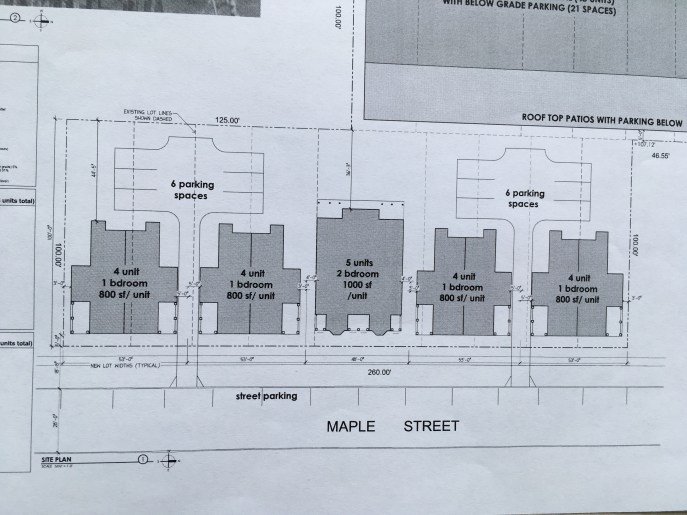
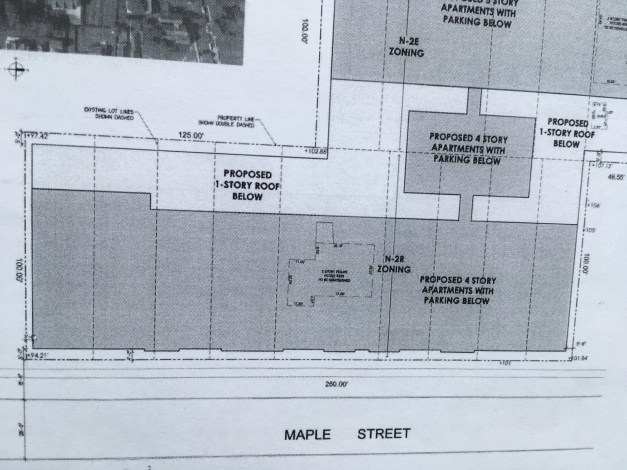
– Lot width/length of building. The nine Maple Street lots owned by Michigan Redev LLC total 260-feet in width, or an average of about 30’ each. The Green Code generously allows a property owner a maximum lot width of 60 feet. In other words, under the UDO, Symphony could construct, by right , 5 buildings on 5 lots ranging in widths from 48’ to 53,’ and, in doing so, not overwhelm the adjoining residential community. From the start, however, the voracious developer proposed one 254-foot long building on the 260-foot wide lot. And, the ZBA majority (Lewis, McKinnie and Hornung) generously approved Symphony’s request.

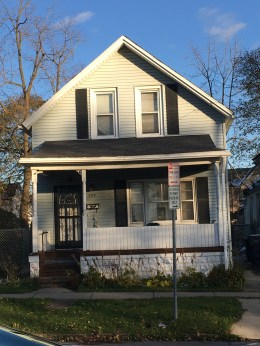
– Side yards/open space. Reflecting the traditional, medium-density character of the residential Fruit Belt streets, the Green Code requires each lot to have a 3-foot side yard, with a minimum total side yards of 15% of the lot width. The 260-foot wide lot for “The Lawrence” would require, under the existing zoning law, 52 feet of side yards.? So, what did the greedy, speculating developer request, and the UDO-trampling ZBA majority approve? An incredible total of six-feet of side yards on a 260-foot parcel.
IMG_4061

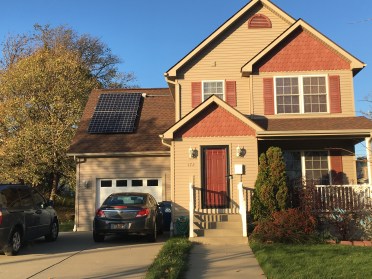
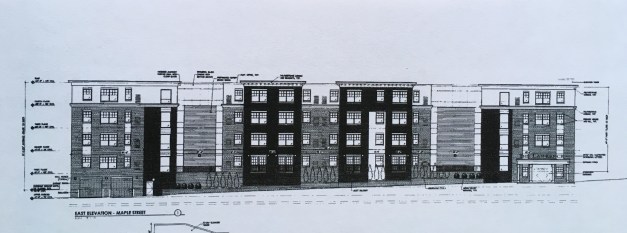
– Number of stories. Not one of the nine closest homes on Maple Street exceeds two stories in height. Nonetheless, the N-2R zone allows an owner to construct a building with a maximum of three stories. Despite the scale of the existing neighboring residences, and the 3-story limit in the Green Code, Symphony requested, and the ZBA majority granted, permission to build a 4-story, 254-foot wide apartment building on Maple Street.
IMG_4074

Although you can’t see the height of the structures, here are site plans, showing, first, the footprint of what could be built to comply with the UDO/Green Code, and then what the June 17th variances allows:
IMG_5375

IMG_5374

Also, here is the architectural drawing of the Maple Street “elevation” approved for “The Lawrence,” followed by a photograph of the three-unit, two-story residence on the 85-foot wide lot directly across Maple Street from the proposed site of “The Lawrence” (the largest of the nearby houses):
IMG_5376 (2)

IMG_4054

In my opinion, the decision made by Buffalo’s Zoning Board of Appeals’ majority on June 17, 2020 will a detrimental impact on the fabric of the historic Fruit Belt neighborhood. The ZBA’s misguided determination will further embolden developers to pay outrageously high prices to assemble large parcels of land – despite the restrictions codified in Buffalo’s zoning laws – with a renewed confidence that Buffalo’s City Hall will allow them to duplicate – if not surpass – Symphony’s out-of-scale and out-of-character apartment project. In doing so, the gentrification of the Fruit Belt – that is, the process of displacing current, low-income, African-American and Hispanic residents with more affluent and whiter occupants – will proceed unabated.

In 2004, our state’s highest court expressed its belief that a municipality’s zoning board is “entrusted with safeguarding the character of the neighborhood in accordance with the zoning laws.” That court has also held that lot size, density, and the scale and style of nearby homes are relevant factors when considering a proposed project’s impacts on a neighborhood’s character.

I’ll let you decide whether Buffalo’s ZBA has lived up to its fiduciary duty to the residents of the Fruit Belt neighborhood.

With All Due Respect,

Art Giacalone

P.S.  Here is a copy of my most recent letter in opposition to the proposed variance application, submitted to the ZBA – by way of the Office of Strategic Planning – on June 15, 2020: The Lawrence – Giacalone 06-15-20 ltr to ZBA.

P.P.S.  When reading the post following its publication, I noticed that I had forgotten to mention the arguments, repeated ad nauseum by Symphony’s lawyer, and embraced in city hall’s staff report, on why the massive scale of the building, and flagrant disregard of the Green Code’s lot width, side-yard, density, and height restrictions, would barely be noticed by nearby residents, and would not adversely impact the existing neighborhood character:  (1) the revised plan (see the “elevation” drawing above) “break[s] up the building design” and “mimics” 3 or 4 building structures”; and, (2) two 25-foot by 20-foot recesses in the Maple Street façade – characterized by Symphony as “patios” – “create 50’ of open space within the façade, greatly minimizing the impact of a loss of side yard separation.”  In fact, UDO requires side yards to be actual open spaces, extending from the front yard to the rear yard line.  As proposed, the patios extend about a quarter of the depth of the lot, and then meet a 4-story wall and the rest of the apartment building.  The following landscape plan gives you an idea of just how minimal the patio “recesses” actual are [I’ve highlighted the patios in yellow]:

IMG_5372

Medical Campus pledge for racial equity rings hollow

Posted by Arthur J. Giacalone on June 8, 2020
Posted in: B-N Medical Campus, City of Buffalo, Development, Fruit Belt, Gentrification, Roswell Park. Leave a comment
[My thanks to the Buffalo News edit page staff for publishing a version of this post in its “Another Voice” column, on-line June 8, 2020, and in the print version June 9.  I have written here about the unjust and unlawful gentrification of Buffalo’s Fruit Belt neighborhood on multiple occasions, including, for example, in 2015 and 2014.]

Buffalo Niagara Medical Campus President and CEO Matt Enstice has issued the BNMC’s “Pledge for Racial Equity,” expressing firm opposition to “any form of racial injustice,” and the BNMC’s “strongly held beliefs in promoting justice for all people.”  [Here’s the statement, BNMC’s Pledge for Racial Equity.]

The vast majority of women and men who work within the Medical Campus undoubtedly agree with these sentiments. And, I trust, the members of BNMC’s board of directors feel likewise.  [With a bit of scrolling, the institutions forming the BNMC, and it board members, can be found here.]

However, taking steps to displace a community of low-income people of color in the adjoining Fruit Belt neighborhood is not racial justice. Similarly, making families fear that they will be pushed out of their neighborhood and replaced by wealthier and whiter individuals – in the name of “progress” – is itself a form of racial injustice.  [Here is an informative introduction to the history and architecture of the Fruit Belt neighborhood, fruitbelt_brochure_final.]

Actions, and inactions, do speak louder than words.

In 2010, the BNMC issued a “Master Plan Update” urging the creation of “a campus-wide Generic Environmental Impact Statement (GEIS) in order to facilitate future campus development and assess the environmental, social and economic impacts of growth.” [See 2010 Master Plan Update, p. 62, 7.]  If done properly, the GEIS would have included an objective analysis of the potential for displacing the less-affluent neighbors of an expanding Medical Campus, and identified mitigation measures to reduce the adverse impacts. The GEIS was never done.

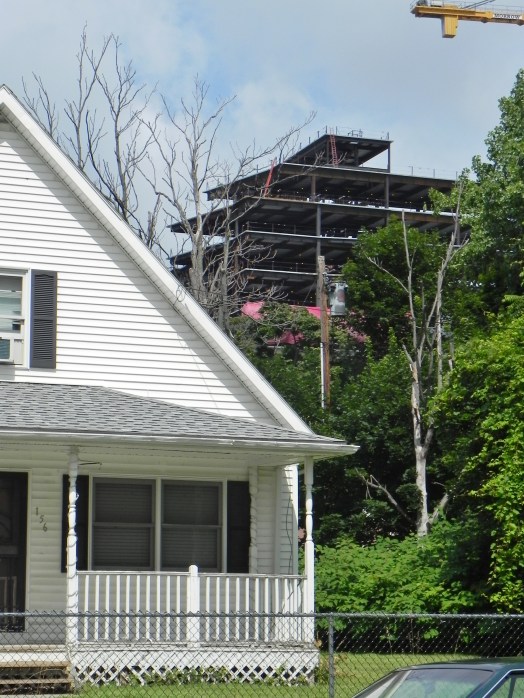
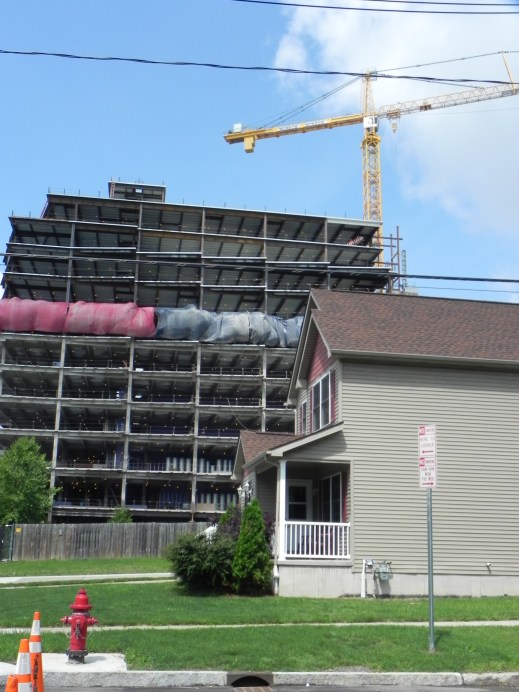
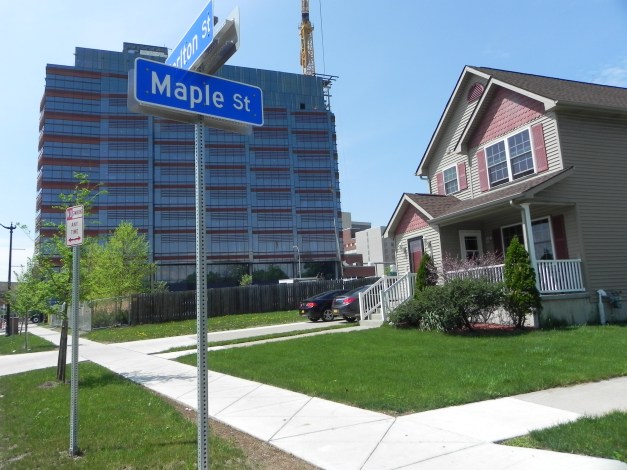
That same 2010 master plan included the following statement: “The transition between the medical campus and the Fruit Belt neighborhood must be carefully considered to take advantage of proximity while also mediating building scale, character and use.” [See 2010 Master Plan Update, p. 28, 30.]  Several years later, Roswell Park Comprehensive Cancer Center, a major member institution of BNMC, ignored that call for moderation, and built a 12-story tower at the very edge of the Fruit Belt neighborhood, where the typical building is a one- or two-story home.

DSCN4775

DSCN4758

DSCN4809

DSCN5945

Another prominent BNMC member, the University at Buffalo, caused turmoil and distrust in 2013. The 150 families living at McCarley Gardens, at the edge of the Medical Campus, learned that UB planned to purchase the site and demolish the low-income townhouse complex. They felt victimized and tossed aside, no more than collateral damage to be forced to move in the name of so-called “progress.” It took a prolonged effort by community residents and activists to convince UB to drop its plans.

McCarley Gardens

More recently, Roswell Park again demonstrated its insensitivity to the character and quality of life of the Fruit Belt neighborhood when it sold a single-family house on Maple Street to a private developer. By doing so, it provided the critical piece needed for a proposed “market rate” apartment complex that, if built, will be grossly out of scale physically with the nearby residences, and out of reach financially for most Fruit Belt residents.  [Here’s one of several iterations of “The Lawrence” project, The Lawrence – Elevations; and, here’s my opposing letter, submitted as a concerned citizen in March 2020 to the City of Buffalo Zoning Board of Appeals, The Lawrence – Giacalone 03-10-20 ltr to ZBA.]

Had Roswell Park desired inclusion and diversity, it would have insisted on an “affordable housing” requirement in the deed.

A pledge for racial equity will ring hollow in the absence of respect for the dignity of the individuals and families who live in the adjoining neighborhoods.

With All Due Respect,

Art Giacalone

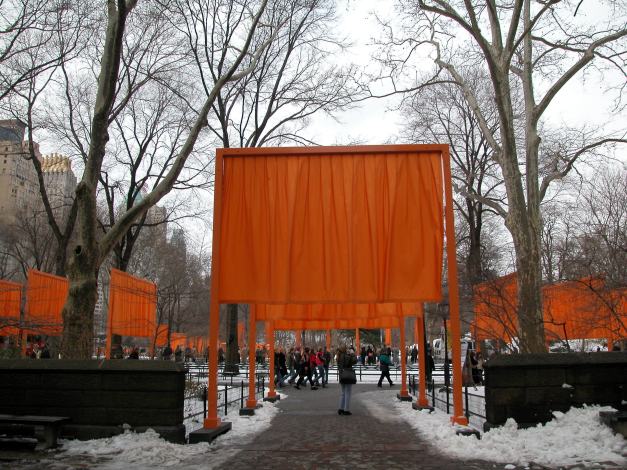
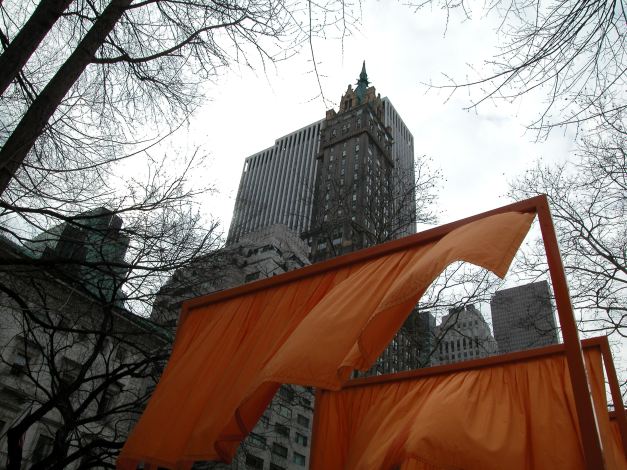
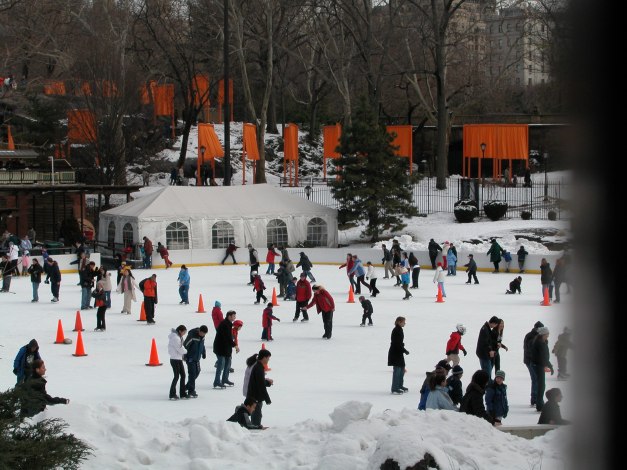
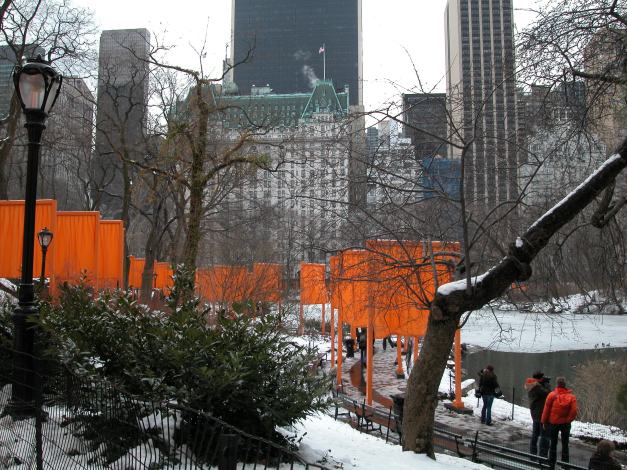
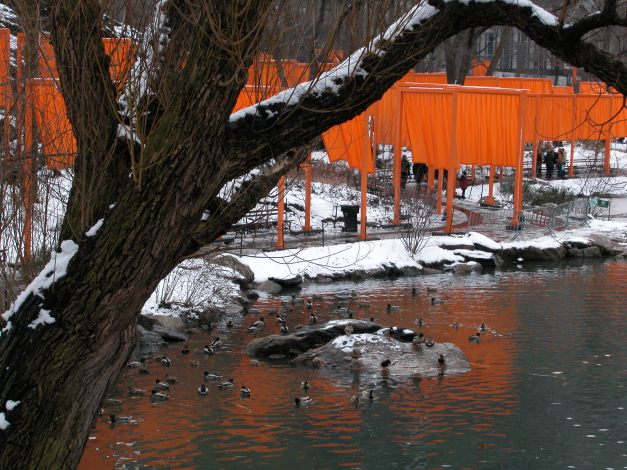
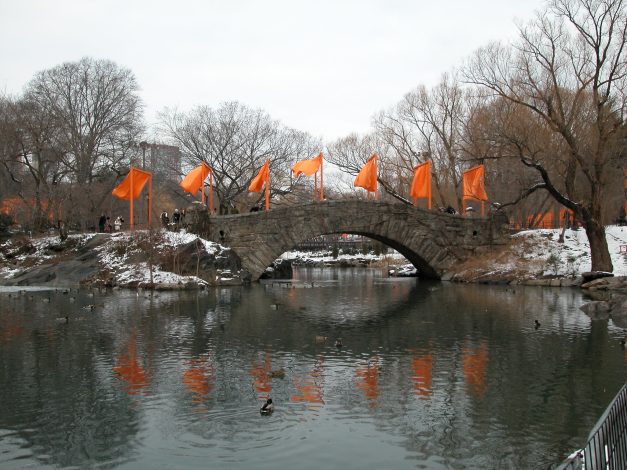
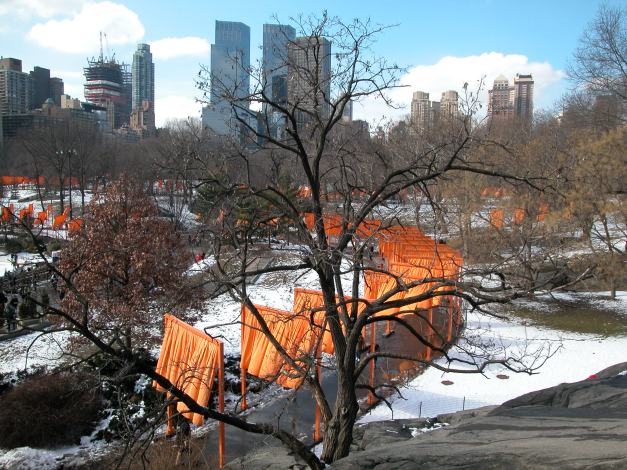
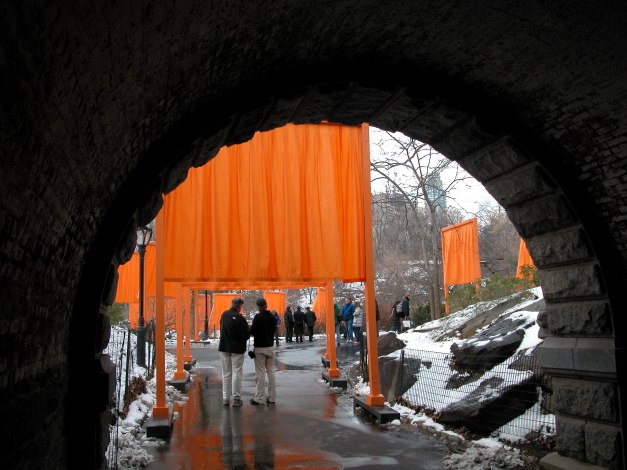
A Buffalonian’s 2005 Walk through Christo’s The Gates

Posted by Arthur J. Giacalone on June 8, 2020
Posted in: Christo's The Gates, New York City, Olmsted Parks. Leave a comment

Hungarian-born artist, Christo, died on May 31, 2020.  Given the variety of societal challenges we’ve been facing, I’ve wavered on whether to share photographs that I took in Central Park in February 2005.  I didn’t want to appear too trivial.  But, my indecision ended yesterday.

The June 7, 2020 print version of the Buffalo News contains, in its GustoSunday section, an article that had first appeared in the New York Times entitled, “Christo’s billowy visions were fleeting but unforgettable.”  Included in the piece was a solitary black-and-white photo from “The Gates,” a project conceived by Christo and Jeanne-Claude, his wife, twenty-six years prior to its fruition.

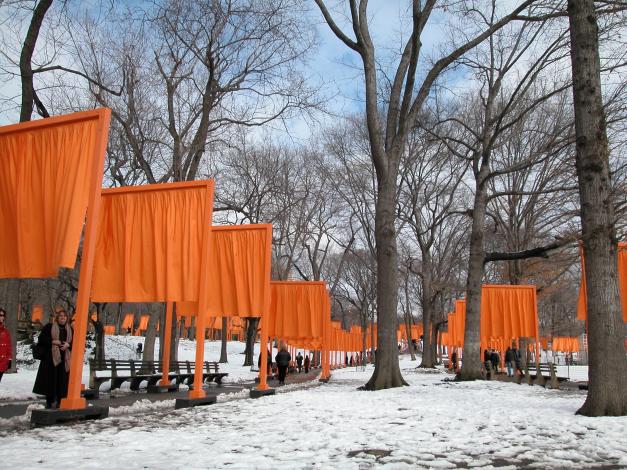
I had traveled to New York City on February 22, 2005 to experience The Gates first-hand.  The massive undertaking would be in existence a “fleeting” 16 days.  [Here’s the “appraisal” of the work of art published in the New York Times the day after its opening, “A billowy gift to the city, in a saffron ribbon.”]  The shades-of-gray image of The Gates in Sunday’s newspaper struck me as a wholly inadequate way to recall the iconic vision of the recently-deceased artist.  As Anna Quindlen wrote for Newsweek in March 2005:

“Said to be saffron but really a Hare Krishna orange, ‘The Gates’ consisted of a line of giant croquet wickets [7,532 in all] edging the park paths as far as the eye could see, their cross-beams hung with a flutter of fabric that embraced the walkers beneath.”

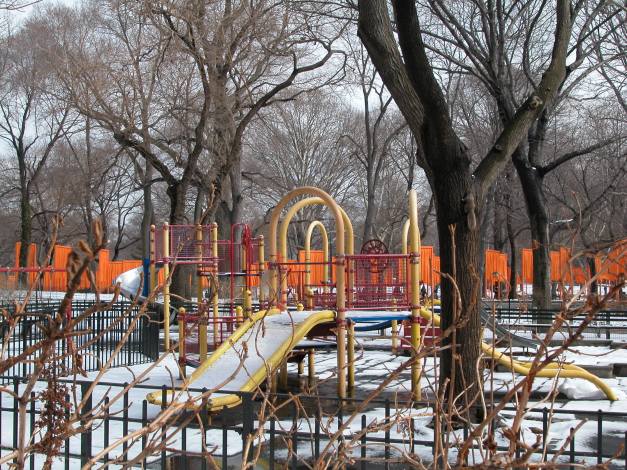
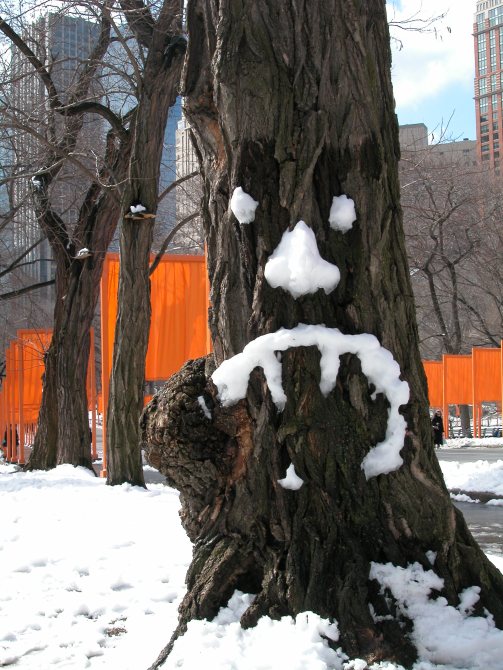
So I dug up my 2005 photos and instantly realized, as I revisited that stroll 15 years ago, how refreshingly stunning Christo’s project was.  It lifted my spirits.  And, I concluded, may well be an appreciated source of pleasure for the visitors to this blog.

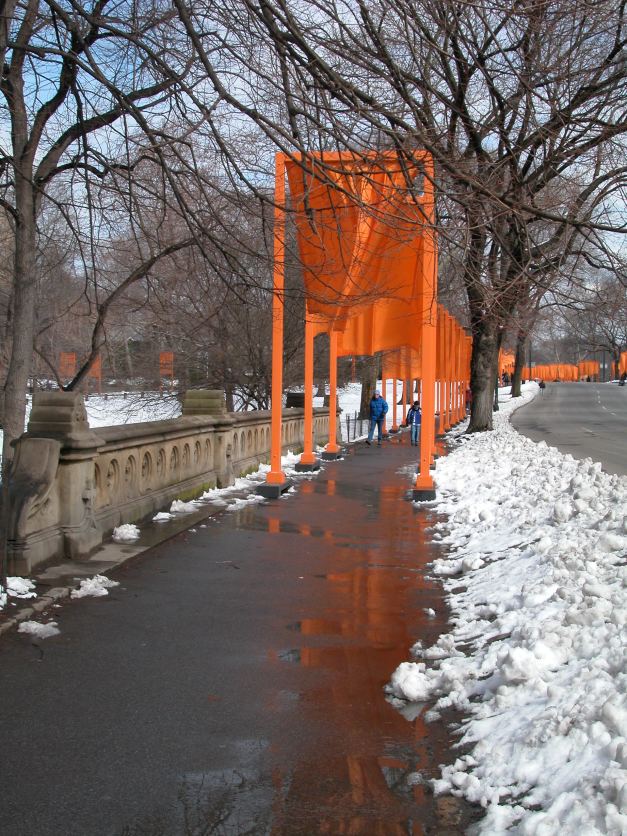
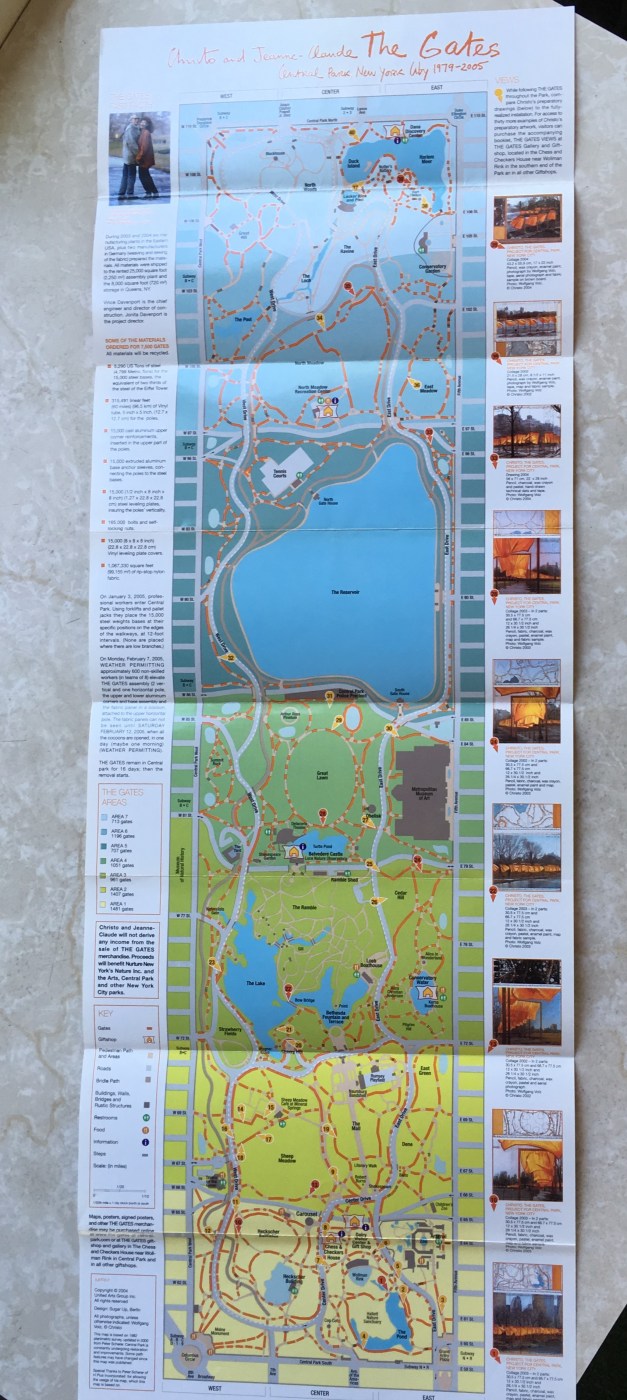
I’ll let the pictures tell their own story.  But, as a Buffalonian proud of our city’s Olmsted parks, I feel compelled to share this quote from The Gates’ official brochure:  “The 16 day duration work of art, free to all, is a memorable joyous experience for the people of New York, as a democratic expression that Olmsted invoked when he conceived a ‘central’ park.”

The Gates - Central Park 02-2005 067

The Gates - Central Park 02-2005 007

The Gates - Central Park 02-2005 011

The Gates - Central Park 02-2005 008

The Gates - Central Park 02-2005 014

The Gates - Central Park 02-2005 040

The Gates - Central Park 02-2005 019

The Gates - Central Park 02-2005 033

The Gates - Central Park 02-2005 031

The Gates - Central Park 02-2005 026

The Gates - Central Park 02-2005 050

The Gates - Central Park 02-2005 089

The Gates - Central Park 02-2005 088

The Gates - Central Park 02-2005 060

The Gates - Central Park 02-2005 084

The Gates - Central Park 02-2005 070

The Gates - Central Park 02-2005 018

The Gates - Central Park 02-2005 061

The Gates - Central Park 02-2005 081

The Gates - Central Park 02-2005 086

The Gates - Central Park 02-2005 085

With All Due Respect,

Art Giacalone

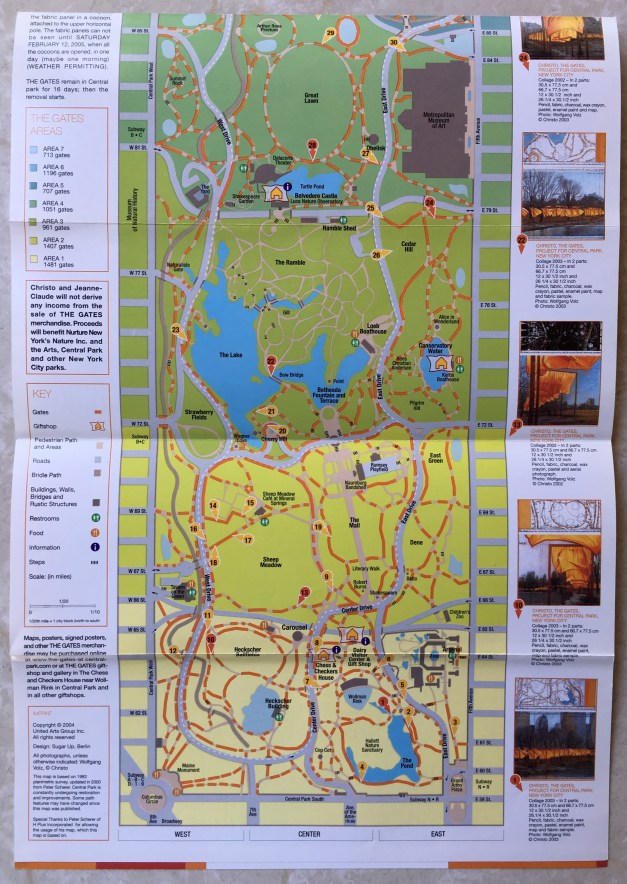
P.S.  Here are several pages from the official brochure:

IMG_5355 (2)

IMG_5357 (2)

In case you’d like at least a fighting chance to “read” the map, here it is split in two:

IMG_5358 (2)

IMG_5359 (2)

Clouds encircle Niagara Square one day later

Posted by Arthur J. Giacalone on June 1, 2020
Posted in: City of Buffalo, WNY Photos. 4 Comments

My Sunday morning, May 31, 2020, started with the following headline in the Buffalo News:  “Downtown protest turns violent – State of Emergency Declared – Vandalism reported after peaceful start.” 

I am having a difficult time sorting through and verbalizing my many and varied emotions and thoughts in response to both the brutal, thoughtless death of George Floyd, and the nights of turmoil rocking many of our nation’s cities following his murder at the hands (knee) of a white Minneapolis police officer and his three “law enforcement” accomplices.  At this point, the best I can do is note my agreement with the sentiments expressed by Buffalo News commentator Rod Watson in his June 1, 2020 column, “Violence was wrong, but don’t feign ignorance.”

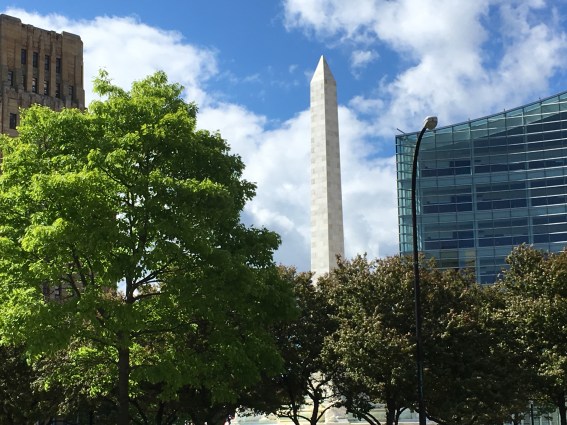
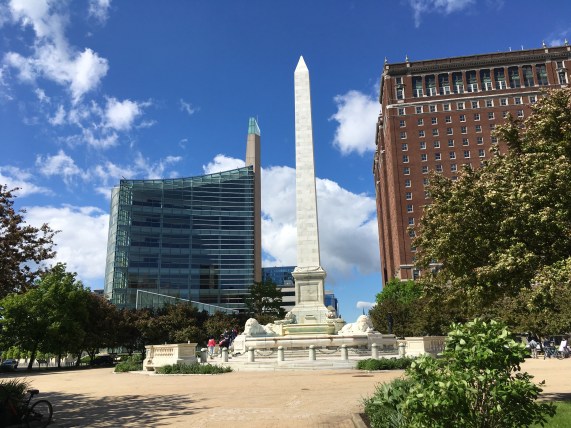
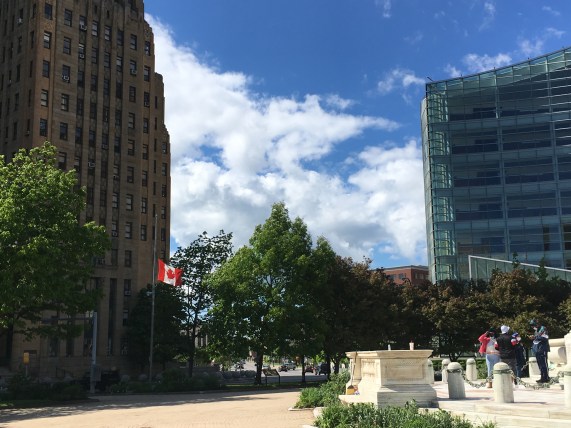
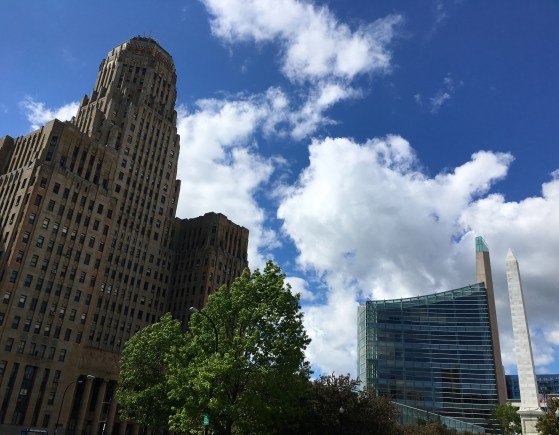
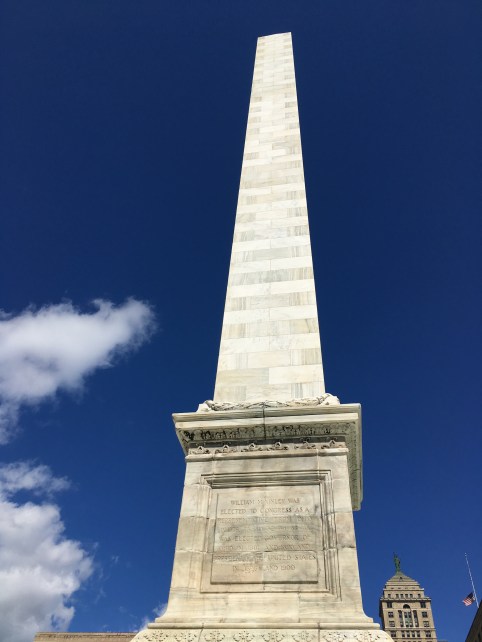
I drove to Niagara Square late Sunday afternoon.  I noticed a couple of police cars parked near the side of City Hall, a family of 5 or 6 chatting under the McKinley monument, and a handful of peaceful protestors.  What most struck me, however, was the assemblage of clouds that encircled Niagara Square.  So that’s the experience I’d like to share with you:

IMG_5293

IMG_5261

IMG_5295

IMG_5296

IMG_5304

IMG_5239 (2)

IMG_5282

IMG_5297

IMG_5300

IMG_5306

IMG_5314

IMG_5307

With All Due Respect,

Art Giacalone

P.S.  Here’s one photo reflecting activity from the night before.

IMG_5319

Chautauqua Institution – and my kids – are on my mind

Posted by Arthur J. Giacalone on May 29, 2020
Posted in: Chautauqua Institution, Giacalone family, WNY Photos. Leave a comment

I need a vacation (certainly not a stay-cation)!  And, I miss my children.  I’m probably not alone.

It wasn’t all that many years ago – my children are 19 and 22 – when options (in a good year) might include the Giacalone/Clarke family spending a week in a modest cottage or apartment at Chautauqua Institution.  Although CI’s 800-acre campus and cultural and educational community in Mayville is only 70 miles or so down the I-90 from Buffalo, it always felt like a whole new world to this “working class” parent.

But, not surprisingly, even as magical a place as Chautauqua Institution can’t escape the tentacles of Covid-19.  Early in May, its board of trustees announced that CI would “suspend any in-person programs” this summer, convening its arts, education, interfaith and recreational programming online.  It’s not clear whether the public will be given an opportunity to don a face covering, purchase a day pass [or, take advantage of the free “Sunday Pass”], and stroll the grounds (maintaining social distancing, of course).

Given these realities,  I’m stuck reliving favorite family memories through photos I’ve taken over the past two decades.  I’m sharing the assembled pictures with you in hopes of either refreshing your own pleasant recollections, or creating some new images for you to enjoy.

But I would be remiss if I didn’t first share two fairly recent occurrences that have tarnished my image of CI a bit:  First, harmful blue-green algae blooms have forced closings of Chautauqua’s “little beach” [as my kids called it], and curtailed other water activities.

IMG_2567

And, the CI board of trustees made the controversial decision in 2014 to demolish a structure, built in 1893, which the State’s Historic Preservation Office characterized as the “physical, functional, and spiritual heart of the Chautauqua Institution” – the Chautauqua Amphitheater.  When plans to demolish the Amp first went public, the National Historic Trust, a privately funded nonprofit organization that works to save America’s historic places, named the Chautauqua Amphitheater a “National Treasure,” and placed the Amp on its 2015 list of “Most Endangered Places,” expressing the following:

“The Chautauqua Amphitheater is the heart of a National Historic Landmark District located 70 miles southwest of Buffalo, NY. Internationally recognized as a forum for American culture and history, the Amp has hosted a wide range of leaders, activists, and artists over its 122-year history. FDR delivered his “I Hate War” speech there in August of 1936. William Jennings Bryan, Susan B. Anthony, Thurgood Marshall, and Bobby Kennedy all walked its boards, as did Ella Fitzgerald, Lionel Hampton, Marian Anderson, Susan B. Anthony, Van Cliburn, Amelia Earhart, Booker T. Washington, Bill and Hillary Clinton, and Sandra Day O’Connor, to name a few.”  

DSCN7457

Demolition of this beloved piece of America’s cultural history occurred in 2016. [For the record, I represented a group of CI property owners and residents in State Supreme Court in a zealous-but-futile effort to stop the demolition.  If interested, please read this post,and this one.]

Anyway, here are some happier images that I hope you’ll enjoy.

My son turned one at CI:

james almost one at chautauqua (2)

And my daughter mustered the courage to ride a tortoise (bunny in hand):

DSCN0060

The Miller Bell Tower could be heard (and, often seen) throughout the grounds.

DSCN7493

The “little beach” was a frequent lure.

DSCN0036

DSCN0050

DSCN0071

IMG_2576

But we all felt a bit tired after too much sun and sand.

DSCN0081

DSCN0082

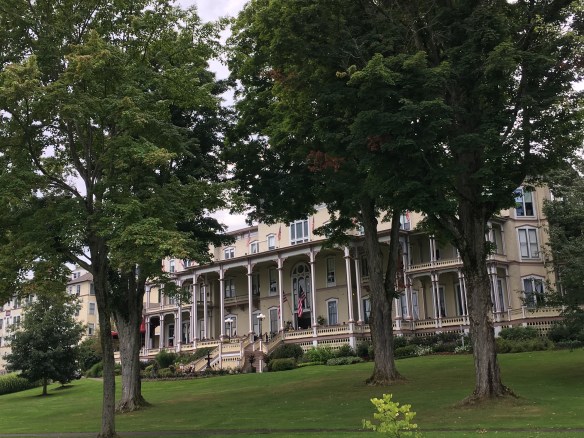
The “cottages” and accommodations along the shoreline range from grand old Victorians to modern summer getaways, to the classic Atheneaum Hotel.  [Some folk certainly know how to “rough it.”]

IMG_2584

IMG_2577

IMG_2593

Our lodgings were always centrally located, and a bit more rustic, but brotherly and sisterly love abound.

DSCN0092

DSCN0089

The CI campus includes many places to learn and expand your perspective.  In addition to the Amphitheater (the historic old, and its expanded replacement), daily lectures by national and international scholars and leaders also take place at the Hall of Philosophy.

CI - Lehrer-shields-gerson

[Above: PBS’ Jim Lehrer with Mark Shields and Michael Gerson at the Amp, 07-08-2012]

IMG_2594

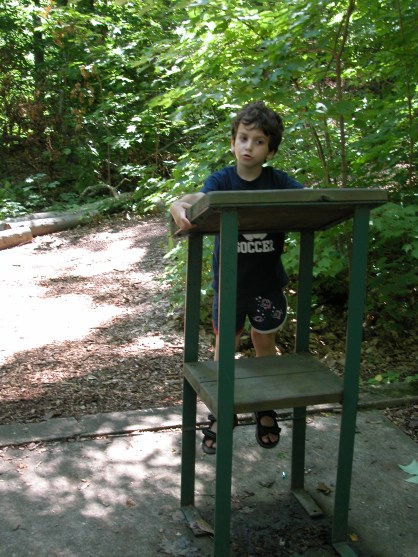
To no one’s surprise, my children preferred a place in the woods called The Nature Classroom, as well as playground activities.

DSCN0054

dscn0056 (3)

dscn0060

James at Chautauqua

DSCN0064

Works of art and places for quiet contemplation appear around many corners.

IMG_2597

IMG_2602

IMG_2606

And you can find some slightly less high-brow artistry.

DSCN7486

DSCN7490

I don’t want to forget the physical center of the campus, Bestor Plaza, and a sampling of the wonderful century-old residences that hug the shady, brick walkways traversing the grounds.

IMG_2615

IMG_2617

IMG_2603

IMG_2624

Here’s hoping that the in-person opportunity to stroll the paths, and take advantage of the cultural, educational, and recreational programming at Chautauqua Institution, are available to everyone in the foreseeable future.

IMG_2618

With All Due Respect,

Art Giacalone

Posts navigation

← Older Entries
Newer Entries →
  • CATEGORIES

  • February 2026
    M T W T F S S
     1
    2345678
    9101112131415
    16171819202122
    232425262728  
    « Nov    
  • DISCLAIMER

    This blog is provided for general informational purposes only. It should not be construed as legal advice and is not intended to be a substitute for legal counsel. Persons requiring legal advice should retain a properly licensed lawyer. No attorney-client relationship will be formed based on use of this site and any comments or posts to this blog will not be privileged or confidential. *************** This blog's author, Arthur J. Giacalone, does not intend or consider the communications at this blog to be ATTORNEY ADVERTISING. The primary purpose of the communication is not for the retention of Mr. Giacalone's legal services. [See definition of "Advertisement" at Part 1200, Rules of Professional Conduct, Rule 1.0(a).] Nonetheless, in case the proper authorities choose to treat this web site as ATTORNEY ADVERTISING, the street address, phone number and email address of the law office of Arthur J. Giacalone are: 17 Oschawa Avenue, Buffalo, New York 14210; (716) 436-2646; AJGiacalone@twc.com.
Blog at WordPress.com.
With All Due Respect
Blog at WordPress.com.
  • Subscribe Subscribed
    • With All Due Respect
    • Join 62 other subscribers
    • Already have a WordPress.com account? Log in now.
    • With All Due Respect
    • Subscribe Subscribed
    • Sign up
    • Log in
    • Report this content
    • View site in Reader
    • Manage subscriptions
    • Collapse this bar
 

Loading Comments...