With All Due Respect

Photos and musings by Arthur J. Giacalone

  • About The Author
  • About This Blog
  • Pre-WADR Archives

NEW YORK’S HIGHEST COURT: TOWNS MAY LAWFULLY EXCLUDE HYDROFRACKING THROUGH ZONING LAWS

Posted by Arthur J. Giacalone on June 30, 2014
Posted in: Hydrofracking. Leave a comment

In a decision released this morning, June 30, 2014, New York’s highest court, the Court of Appeals, ruled that local municipalities possess the authority, under their municipal home rule powers, to totally ban hydrofracking within their municipal boundaries through use of their zoning powers.

Rather than burdening this posting with my own legal analysis, I will merely quote below the question addressed in the court’s decision, and the conclusion reached by the New York Court of Appeals in an opinion written by the Hon. Victoria A. Graffeo:

NEW YORK STATE COURT OF APPEALS

_______________________________

In the Matter of Mark S. Wallach,

as Chapter 7 Trustee for Norse

Energy Corp. USA, Appellant,

Town of Dryden et al., Respondents.

———————————

Cooperstown Holstein Corporation,

Appellant,

Town of Middlefield, Respondent.

_______________________________

JUNE 30, 2014

 GRAFFEO, J.:

We are asked in these two appeals whether towns may ban oil and gas production activities, including hydrofracking, within municipal boundaries through the adoption of local zoning laws. We conclude that they may because the supersession clause in the statewide Oil, Gas and Solution Mining Law (OGSML) does not preempt the home rule authority vested in municipalities to regulate land use. The orders of the Appellate Division should therefore be affirmed.

                                                                                 …

At the heart of these cases lies the relationship between the State and its local government subdivisions, and their respective exercise of legislative power. These appeals are not about whether hydrofracking is beneficial or detrimental to the economy, environment or energy needs of New York, and we pass no judgment on its merits. These are major policy questions for the coordinate branches of government to resolve. The discrete issue before us, and the only one we resolve today, is whether the State Legislature eliminated the home rule capacity of municipalities to pass zoning laws that exclude oil, gas and hydrofracking activities in order to preserve the existing character of their communities. There is no dispute that the State Legislature has this right if it chooses to exercise it. But in light of ECL 23-0303 (2)’s plain language, its place within the OGSML’s framework and the legislative background, we cannot say that the supersession clause — added long before the current debate over high-volume hydrofracking and horizontal drilling ignited — evinces a clear expression of preemptive intent. The zoning laws of Dryden and Middlefield are therefore valid.

                                                                                  …

With All Due Respect,

 Art Giacalone

“NEW URBANISM” IS UNLIKELY TO CHANGE BUFFALO’S OLD WAYS

Posted by Arthur J. Giacalone on June 12, 2014
Posted in: Carl Paladino, City of Buffalo, Development, Green Code. 1 Comment

– If you’re Carl Paladino, you’ll still be able to build a 14-story, half-million-square-foot stand-alone tower on prime waterfront property! –

Image

Call me a cynic or, perhaps, just plain dumb.  But I can’t quite comprehend what the City of Buffalo is doing.  On one hand, it announced  plans last week to realign historic Erie Street to reopen vistas from downtown to its precious waterfront.  On the other hand, it modified its proposed zoning and development law last month in such a way that a hand-picked developer – Carl Paladino and his Ellicott Development Company – will be able to construct a freestanding tower on city-controlled property precisely in a location that will obstruct the view of the waterfront from a realigned Erie Street .  But I’m getting ahead of myself.

The “happy talk” about walkable cities and the Congress for New Urbanism [CNU] conference held last week in the Queen City has finally subsided. Despite listening to and reading many useful suggestions on how to make a city, village, or neighborhood more attractive and safe, I can’t say that I’m overflowing with optimism over Buffalo’s future (although I’m appreciative of its past glory).

Image

Image

I share the uneasiness expressed by Buffalo News columnist Colin Dabkowski regarding the concept of “urban triage” espoused by one of the New Urbanist’s bright lights, Jeff Speck. A philosophy that leads to infrastructure investment going primarily to a city’s downtown and more affluent areas – at the expense of the residents who live in its blighted neighborhoods – is difficult to embrace in a community with a thirty percent (30%) poverty rate (more than twice the national average). CNU needs to go well beyond a simple recognition in its charter “that physical solutions by themselves will not solve social and economic problems” for me to welcome a philosophy that focuses on making cities “useful, safe, comfortable and interesting” for “creative-class citizens.”

But my main concern with New Urbanism goes beyond the “urban triage” approach. The process of selecting one project or neighborhood over another means that the people in power, in the words of Mr. Speck, get to “PICK YOUR WINNERS.” In the City of Buffalo, that often translates to the Mayor choosing the “winners” and “losers” – especially when the Common Council has abdicated its role as an active and effective second branch of government. And, it all-too-often means that the decisions will be based, not on sound planning principles or a desire to improve the lives of the municipality’s most impoverished, but on political expediency.

Ironically, one has to look no further than to the latest installment of Mayor Byron Brown’s oft-praised Buffalo Green Code [“BGC”] – described on June 5, 2014 by the editorial staff of the Buffalo News as “Buffalo’s proposed, urbanism-influenced zoning code that could soon be a national model” – for a perfect example of politics prevailing over sound planning principles.

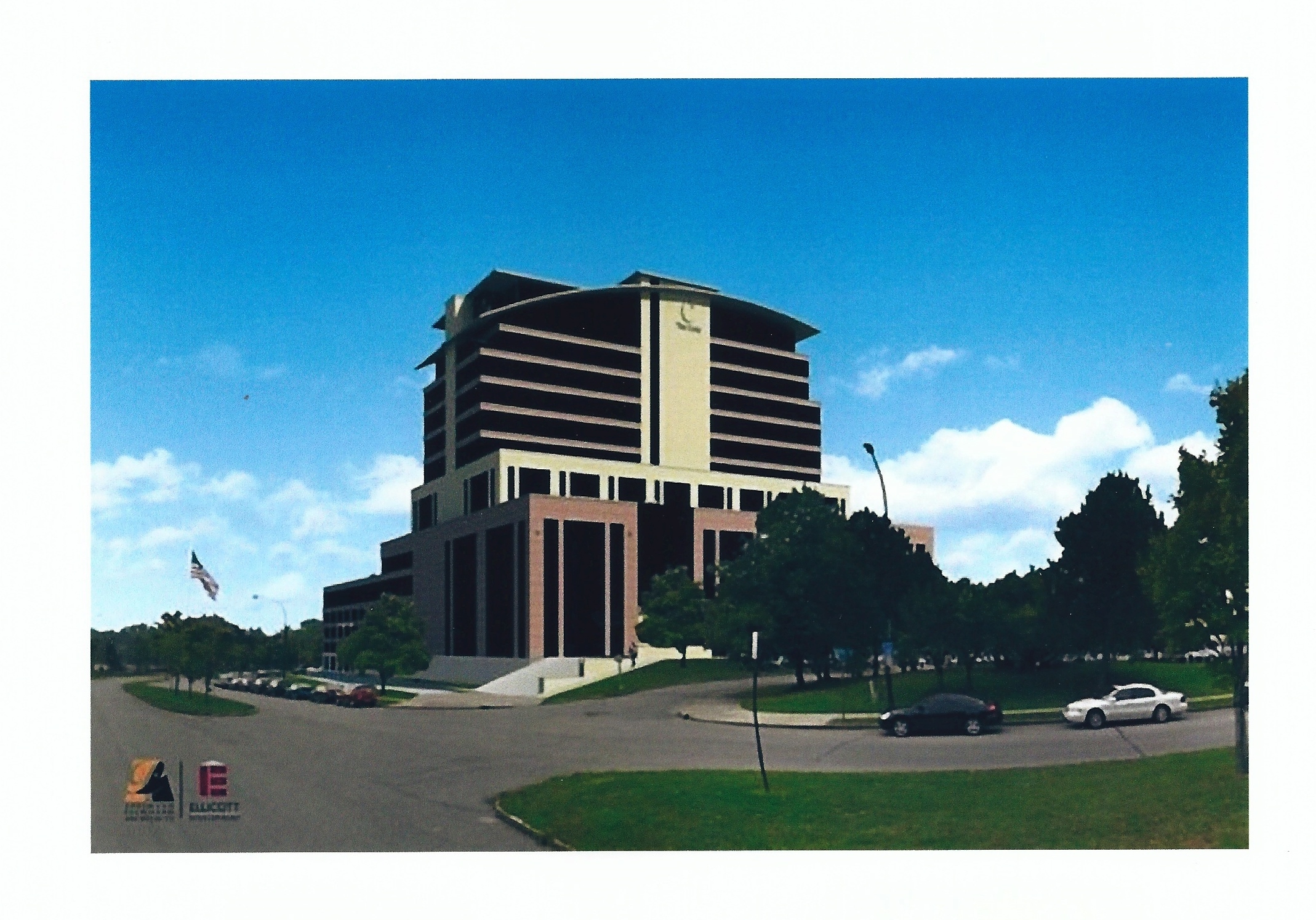
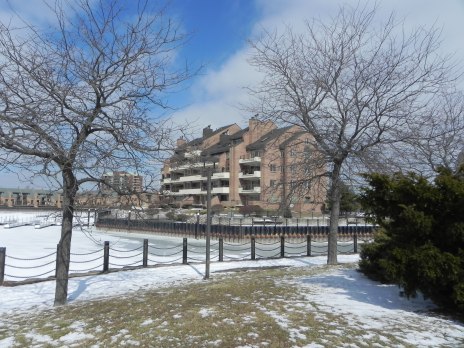
On June 3rd – the day before the CNU officially opened its conference at the Buffalo Niagara convention Center – the Brown administration issued for public review, as part of the BGC process, its Draft Local Waterfront Revitalization Plan [LWRP]. Although the text of the 178-page LWRP document fails to mention it, changes have been quietly made to the proposed Green Code that would allow Carl Paladino’s company, Ellicott Development, to proceed with its plans to construct a massive project known as “The Carlo” on prime waterfront property. More precisely, the parcels – currently owned by the City of Buffalo’s Urban Renewal Agency [“BURA”] – are located on Wilkeson Way and LaRiviere Drive across Erie Street from the Marine Drive Apartments and a stone’s throw from upscale townhome complexes such as Gull Landing.

Image

 As currently envisioned, the project – named after Mr. Paladino’s grandfather – includes a 14-story tower, approximately 143 hotel rooms, a banquet facility, 120,000-square-feet of office space, 36 apartments, two restaurants, retail space, and a parking ramp. Notably, the version of the Buffalo Green Code released to the public in the spring of 2012 would not allow such a massive structure at this valuable waterfront site.

The following chronology demonstrates how Mayor Brown’s administration has allowed politics, rather than the lofty planning principles purportedly personified by the Buffalo Green Code, to dictate future waterfront development:

JANUARY 26, 2007: As part of Mayor Brown’s “Queen City in the 21st Century” comprehensive plan, the City’s Office of Strategic Planning issues its draft LWRP. Included in its discussion of proposed uses and projects is the re-alignment of Erie Street which, historically, “was one of the most direct and important connections from downtown to the waterfront.” The expressed purpose of realigning Erie Street is to “expand the City across the I-190 and into this area, transforming the bridge underpasses from barriers to gateways, recreating uninterrupted sight lines and improving development opportunities…” According to the draft waterfront plan, “The realignment of this roadway is proposed to be complemented with the development of low-rise mixed office, commercial and residential development.” [Emphasis added.]

 APRIL 2, 2012: The proposed Buffalo Green Code’s draft “Future Place-Types” map shows all of the BURA land in and around the proposed site for “The Carlo” as Future Place-Type “N-1E (Downtown Edge).” The N-1E Downtown Edge zones are described as follows:

The edges of downtown composed primarily of connected, moderate-scale commercial block structures with consistent pedestrian-oriented frontages. [Emphasis added.]

Image

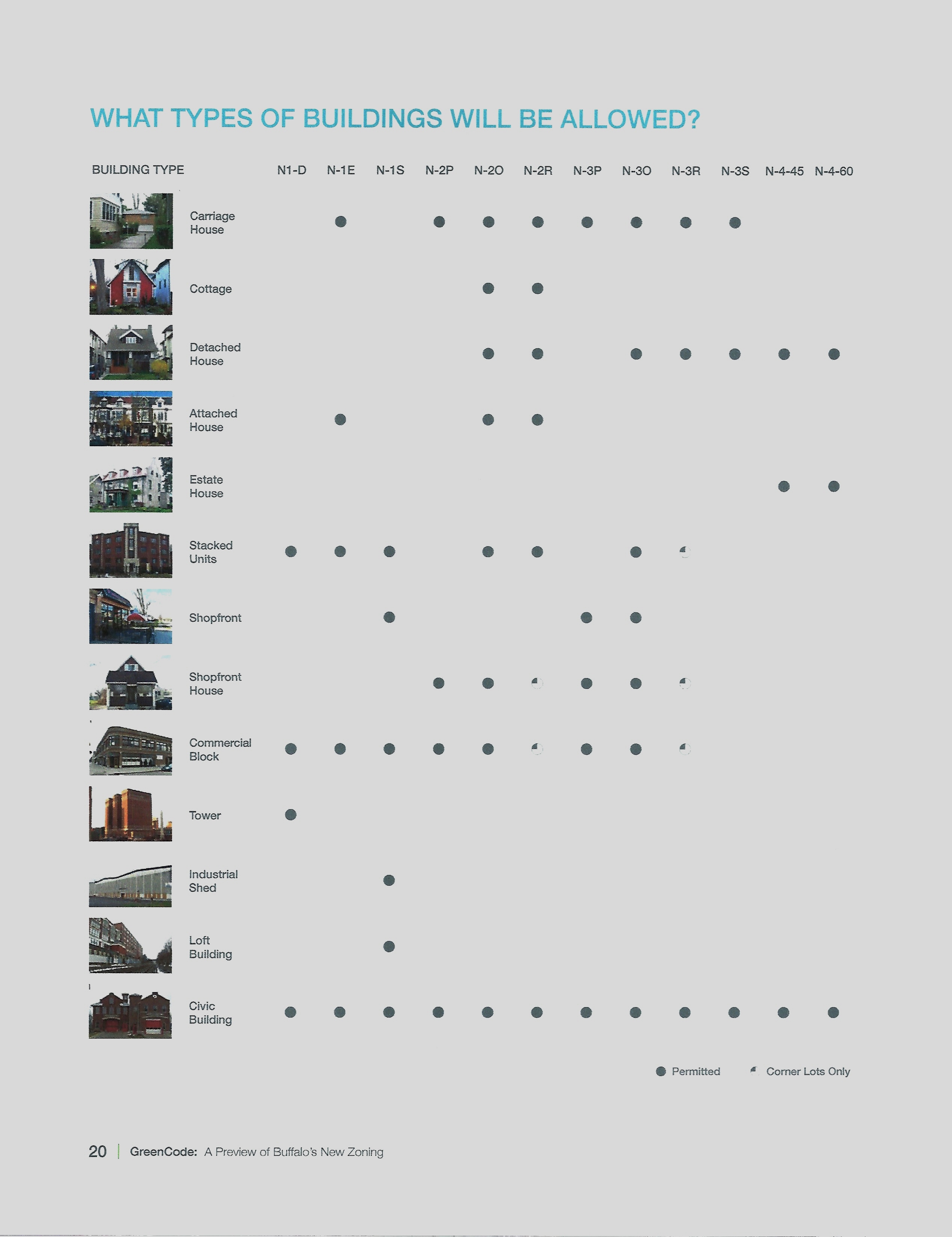
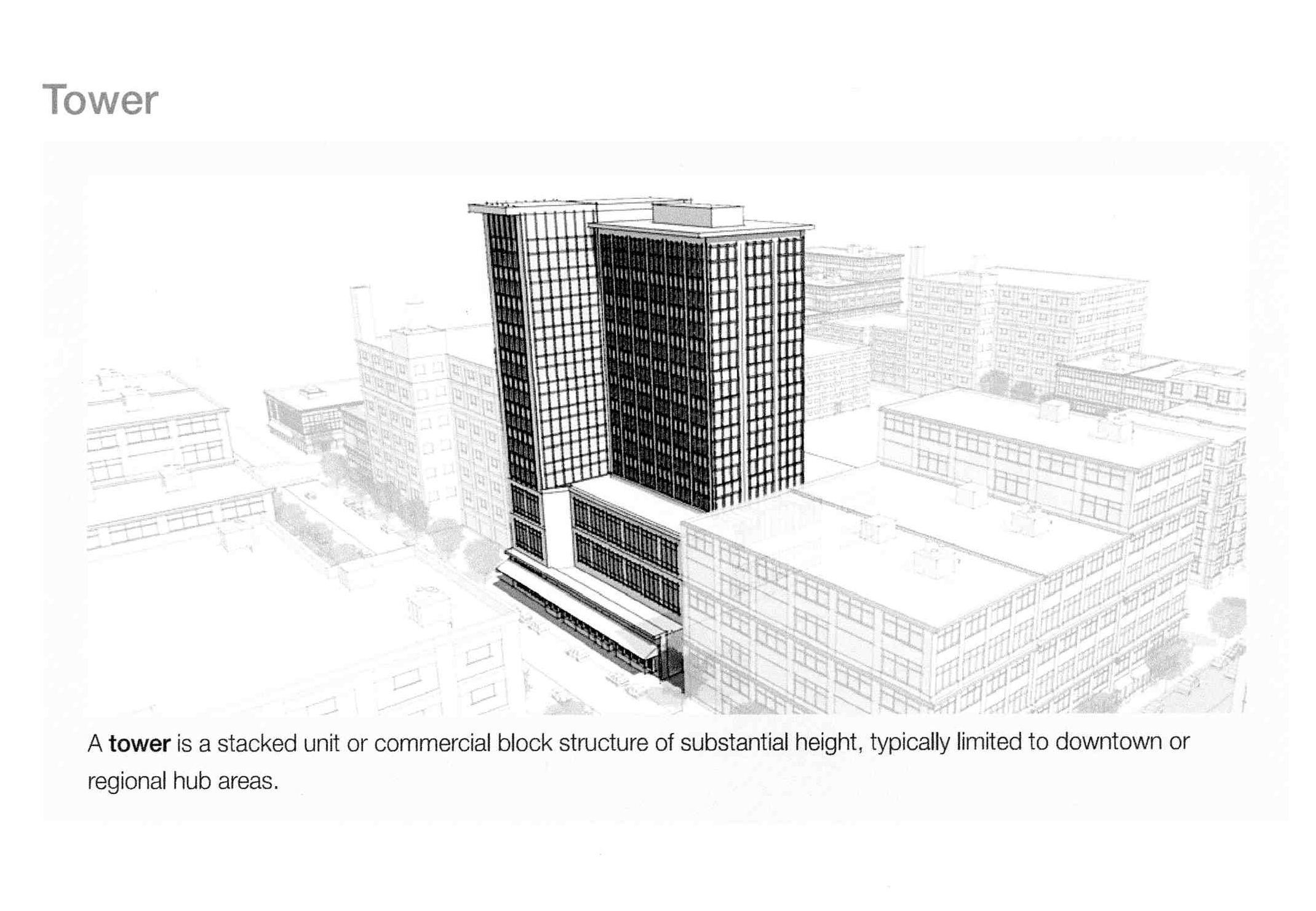
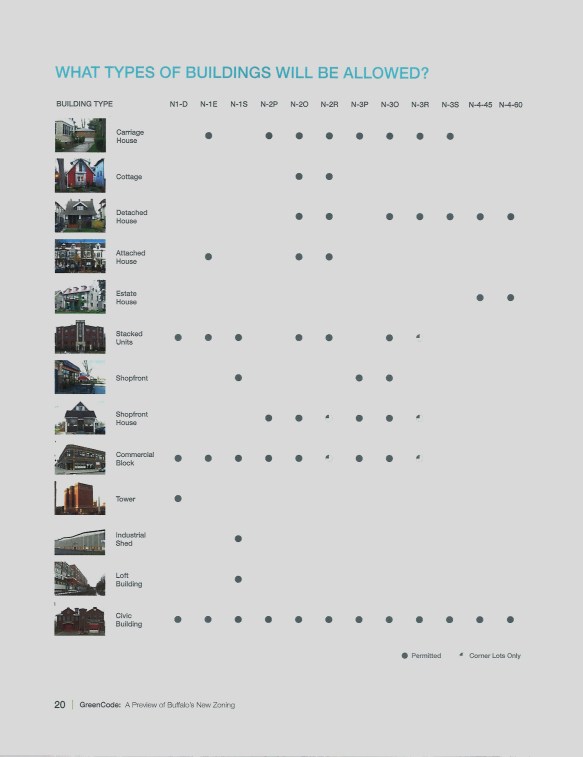
JUNE 4, 2012: A BGC document entitled, “A Preview of Buffalo’s New Zoning,” includes a table that allows a “tower” in only one zone, “N-1D (Downtown Hub).” A tower, defined as a stacked unit or commercial block building “of 12 stories or more,” is not permitted in the N-1E Downtown Edge zone.
Image

Image

FEBRUARY 22, 2013: During Mayor Brown’s “State of the City” address, he surprises the audience by announcing that Carl Paladino’s plan for a mixed-use hotel/apartments/ office space project – rejected six months earlier when proposed for the city’s Webster Block where Buffalo Sabres’ owner Terry Pegula’s hockey-oriented project is presently being constructed – would be upsized to a 14-story development and built on prime Waterfront Village property owned by BURA. Following the announcement, Mr. Paladino told the media:

“We worked out a deal for what we feel is now a better piece of land. It’s a better location for what we want to do, the best downtown location for that type project.”

FEBRUARY 28, 2013: The Buffalo Urban Renewal Agency unanimously grants Carl Paladino’s Ellicott Development company “exclusive development rights” for the prime 5.5-acre site near the entranced to the Erie Basin Marina. Mayor Brown is Chief Executive Officer of BURA, chairs its board, and controls a majority of its members.   The BURA board awards Paladino’s company the right to develop the waterfront parcel WITHOUT FIRST SOLICITING COMPETITIVE BIDS, depriving other developers an opportunity to present alternative proposals, and preventing public dialog on the desirability, nature and scale of the project.

Note: By awarding development rights to Mr. Paladino’s Ellicott Development Company, BURA instantly converted the Mayor’s long-time nemesis into a supporter just in time for his 2013 re-election campaign.

 FEBRUARY 27, 2014: The BURA board unanimously approves a request to extend the Ellicott Development Company’s exclusive right to purchase and develop the Waterfront Village property. According to the minutes of the BURA board meeting, “the conceptual plans for Phase I envision a fourteen (14) story building of a total of 574,298 square feet and include a 660 (plus/minus total spaces) car parking garage, 32 apartments and a 135 room hotel.”

Note: In addition to Mayor Byron Brown, the BURA board members present and voting for the extension of exclusive developer rights to Mr. Paladino’s company included Common Council President Darius Pridgen, North District Common Councilmember Joseph Golombek, Jr., the City’s Corporation Counsel Timothy Ball, the City’s Commissioner of Administration and Finance Donna Estrich, and Executive Director of the City of Buffalo’s Office of Strategic Planning Brendan Mehaffy. It is Mr. Mehaffy’s office that is in charge of preparing the Buffalo Green Code.

MAY 2014: The Office of Strategic Planning issues the current version of the Draft Buffalo Green Code [a/k/a “Unified Development Ordinance”] for public review. In an apparent effort to eliminate confusion resulting from the terminology used in the earlier versions of the draft BGC, the term “N-1E – Downtown Edge” is replaced by the term “N-1C (Mixed Use Core).” The “Draft Zones” map places the proposed site of “The Carlo” in the N-1C zone. When describing the various “neighborhood zones,” the May 2014 version of the BGC provides the following “purpose” for the N-1C Mixed-Use Core zone:

“The N-1C zone addresses the edges of the downtown core to facilitate mid-rise development with an intense mix of uses.” [Emphasis added.]

Despite this reference to “mid-rise development,” and in contrast to the BGC’s 2012 material, the table of “Building Types” included in the May 2014 BGC documents allows construction of a “tower” in both the “N-1D (Downtown Hub)” zone AND the N-1C (Mixed-Use Core) zone. No explanation is provided.

Image

JUNE 3, 2014: The Office of Strategic Planning issues for public review the “Public Review Draft” of the Local Waterfront Revitalization Plan as part of the Draft Buffalo Green Code process. The document, referred to as the “Buffalo Waterfront Plan,” includes the following information and proposals:

A. A table summarizing “the major development nodes and sites” within Buffalo’s LWLP area references seven (7) acres of land on LaRiviere Drive and Wilkeson Way as being located within the “Erie Street Corridor” and owned by “Ellicott Development through 2014.” It indicates (using outdated terminology) that the parcel is located in “Future Place Type” N1-E Downtown Edge.

B. The waterfront plan “encourages new water-enhanced infill and redevelopment of waterfront vacant land and buildings through mixed use zoning at … Erie Street between Main St and Lakeside Boulevard (a Brownfield Opportunity Area Strategic Site).”

Note: The site for “The Carlo” is actually located to the south of Lakefront Blvd.

C. The waterfront plan proposes implementation of the “Erie Street Waterfront Connection” project utilizing language similar to that found in the January 2007 draft LWRP:

“This project involves the realignment of Erie Street to reopen the connection between Main Street and the waterfront. This effort would re-establish the vista of the waterfront from downtown, recreate the radial street pattern, improve pedestrian access and safety, and provide new urban development sites to help move the City to the waterfront…” [Emphasis added.]

D. The waterfront plan boasts of efforts to obtain input from stakeholders on projects and programs within the LWRP area with “outreach activities” conducted “in each affected neighborhood in an effort to hear a range of feedback and address the concerns of those most likely to be affected by the proposed changes.”

Oddly, the Buffalo waterfront plan is devoid of any specific discussion of Ellicott Development’s plans for the prime waterfront parcel it has the right to purchase and develop – no description of its proposal to construct a 14-story tower with more than a half-million-square-feet of uses ranging from a hotel, banquet facilities, and luxury apartments to office and retail space, and a 660-vehicle parking garage. No mention is made of the fact that the only “stakeholder” with input on the proposal to construct “The Carlo” was, apparently, Mr. Paladino and his agents. Thanks to the backroom negotiations between the Paladino camp and City officials, and the pre-ordained nature of BURA’s decision-making process, the people living across the street from the site in the 600-unit Marine Drive Apartments and the owners and residents of the nearby townhouses and condominium units, have been left out of the “outreach activities.”

Image

Image

 Image

The waterfront plan also fails to explain why an LWRP that has long sought to re-establish the vista of the waterfront from downtown through realignment of Erie Street would acquiesce to a 14-story stand-alone tower obstructing that view.

Contrary to the hopes expressed in the June 5th Buffalo News editorial mentioned above, Mayor Brown’s decision-makers have already strayed from “the path of smart growth, people-first development and preservation of the neighborhoods.” By elevating politics over intelligent, informed planning principles, the latest version of the draft Buffalo Green Code embodies the kind of governance that is criticized on the very first page of Jeff Specht’s latest book, “Walkable City”:

 … In the small and midsized cities where most American spend their lives, the daily decisions of local officials are still, more often than not, making their lives worse. This is not bad planning but the absence of planning, or rather, decision-making disconnected from planning. [Emphasis added.]

Unless and until Western New York’s citizenry demands otherwise, there will be little, if any, change in the way Buffalo officials arrive at important development decisions – regardless of how many well-meaning and informed “new urbanists” visit the Queen City.

With All Due Respect,

Art Giacalone

P.S. I purchased Jeff Specht’s “Walkable City – How Downtown Can Save America, One Step At A time” immediately following his June 5th lunchtime presentation at Buffalo’s convention center, and got in the signature line. I wanted to let him know how troubling it was for me to think of City of Buffalo officials “picking the winners” given the politically-inspired decisions I had observed over the past two dozen years while representing ordinary citizens in land use and environmental matters. I must admit that I still don’t know how to construe Mr. Specht’s blank stare in response to my expression of concern.

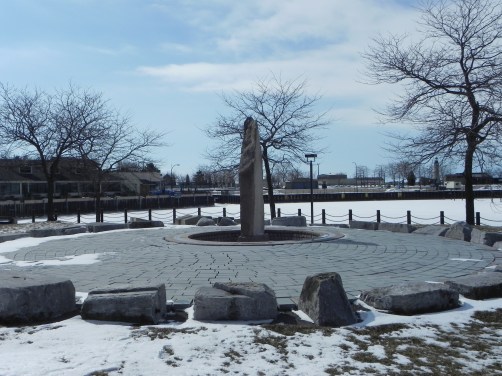
P.P.S.  Plans for Phase II of Mr. Paladino’s waterfront development remain sketchy. An article by Jill Terreri published in the Buffalo News on February 28, 2013, titled, “Paladino gets go-ahead from city agency on waterfront project,” described the second phase as consisting of “small-scale, lower-density buildings is planned on greenspace and part of the parking lot that is north of where the complex will be.”  It appears that Phase II would be adjacent to, and adversely impact of serenity of, the “Irish Famine Commemoration Monument,” which, since 1997, has quietly and solemnly commemorated the millions of people who suffered and died in Ireland’s Great Famine, and honored Buffalo’s present-day Irish community.

Image

Image

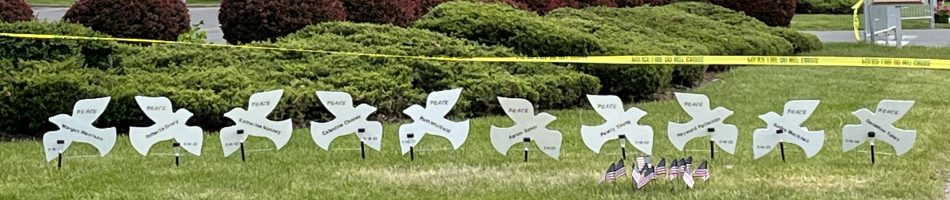
P.P.P.S.  The “SAVE OUR WATERFRONT” button inserted below was created by the late Mildred Harrington, artist and long-time resident of the Marine Drive Apartments.  Read about Millie’s efforts in 1989 – as an octogenarian – to preserve the quality of life of residents who treasure Buffalo’s waterfront.

Millie Harrington's Save Our Waterfront

Buffalo Green Code gives Developers “Green Light” on Elmwood Avenue

Posted by Arthur J. Giacalone on May 20, 2014
Posted in: Elmwood Village, Green Code. 1 Comment

 – HISTORIC FABRIC OF ELMWOOD VILLAGE THREATENED BY DRAFT CODE –  

1 green 

 A recent editorial in the Buffalo News praises the proposed “Buffalo Green Code.”  Reading more like a press release than a thoughtful opinion piece, the newspaper’s editorial staff proclaims that the draft development code “revamps building rules to emphasize neighborhood character,” and “promises to move Buffalo into the forefront of progressive, 21st century cities emphasizing accessible neighborhoods, environmental sustainability, mixed-use development and mass transit.”

The editorial reflects what Mayor Brown, out-of-town consultants and City Hall staff have been telling city residents for years: a neighborhood’s “historic fabric” – that is, building form and design, lot sizes, parks and streets – will provide “the foundation for future growth” and play an important factor in determining a neighborhood’s future.  In fact, the 2012 version of the code emphasized that, “planning for sustainable neighborhoods means preserving the character of neighborhoods while encouraging development consistent with the prevailing patterns.”

1 Yellow

Nice words. But residents and others who appreciate the unique character of the Elmwood Village should not take too much comfort in them. A close reading of the current draft of the “Uniform Development Ordinance” [the formal name for the Buffalo Green Code] reveals that the Brown Administration’s plans, if not drastically changed, will be disastrous for this attractive and livable community recognized in 2007 by the American Planning Association as one of the ten “Great Neighborhoods in America.”

To appreciate the tangible threat the Green Code represents to the Elmwood Village, it helps to hear what an urban planning expert and former Director of Planning for the City of Rochester, Arthur J. Ientilucci, AICP, had to say last year while serving as a consultant to five Granger Place and Forest Ave. property owners fighting to preserve their neighborhood’s quality of life:

    “Elmwood Village is a thriving mixed use urban neighborhood with many amenities that are attractive to urban dwellers… A good deal of the Elmwood Village’s character is derived from the intermingling of small scale commercial uses and a variety of residential building styles affording a wide range of choice for its residents. The harmonious scale, older homes, and connectedness of buildings and uses throughout the area is a significant and attractive attribute. The district appears to have achieved a balance between residential and non- residential use both in terms of density, concentration and scale. This balance appears to have accrued from the residential character of the neighborhood, the scale of its non-residential structures in relation to nearby residential properties, and zoning code limitations on the intensity and scale of commercial use.”  

The City’s past role in nurturing the balance between residential and non-residential uses in the Elmwood Village – most notably, the limits in the intensity and scale of commercial uses that have been in place since the creation of the Elmwood Business zoning district in the late 1970s – will disappear if the Buffalo Green Code, as currently drafted, is enacted into law by the City’s Common Council.  Its authors have decided not to “REINFORCE” the historic fabric of the Elmwood Village by highlighting and protecting the current harmony between residential and commercial uses in terms of density, concentration in scale. Instead, the Uniform Development Ordinance proposes to “TRANSITION” much of Elmwood Avenue to what is awkwardly called the “N-2C Mixed-Use Center” zone, urban areas characterized by “significant scale” and “high diversity of uses.”

1 Red

The inappropriateness of selecting “N-2C Mixed-Use” as the proposed designation for the Elmwood Village’s primary street can be seen by taking a close look at the current makeup of the two blocks of Elmwood Avenue extending from Potomac Ave. to Forest Ave.

There are approximately 30 buildings on Elmwood between Potomac and Bird.  Not one of these buildings exceeds 2 1/2 stories in height.  Two dozen or eighty percent of these structures were built a century ago as detached residential buildings.  They are all separated from the public right-of-way by front lawns.  Here are three examples:

DSCN3501        DSCN3511       DSCN3521

Five of the remaining buildings were constructed for retail use on the first floor, with apartments or offices on the second.  A small one-story retail structure was built in the 1960s.

          DSCN3510         Exh 18 - 1054 Elmwood Ave. 11-06-13

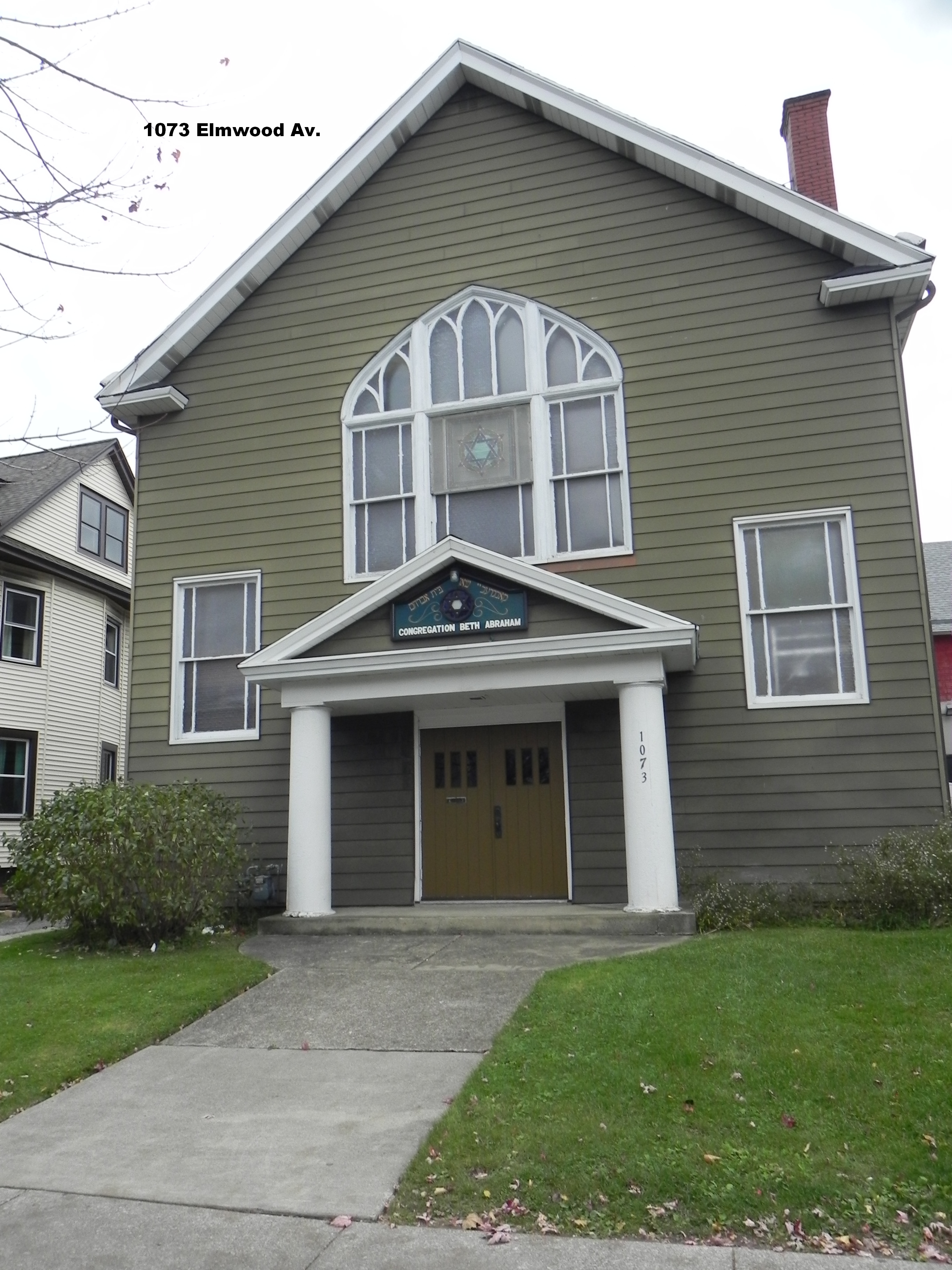
 The “form” [to borrow a term from the Green Code] of the buildings on the northernmost Elmwood Village block, running from Bird Avenue to Forest Avenue, is similar to the Potomac-to-Bird block.  All of the buildings have fewer than three stories.  Only seven of the approximately 30 structures were built for non-residential purposes, and one of those is a house of worship.

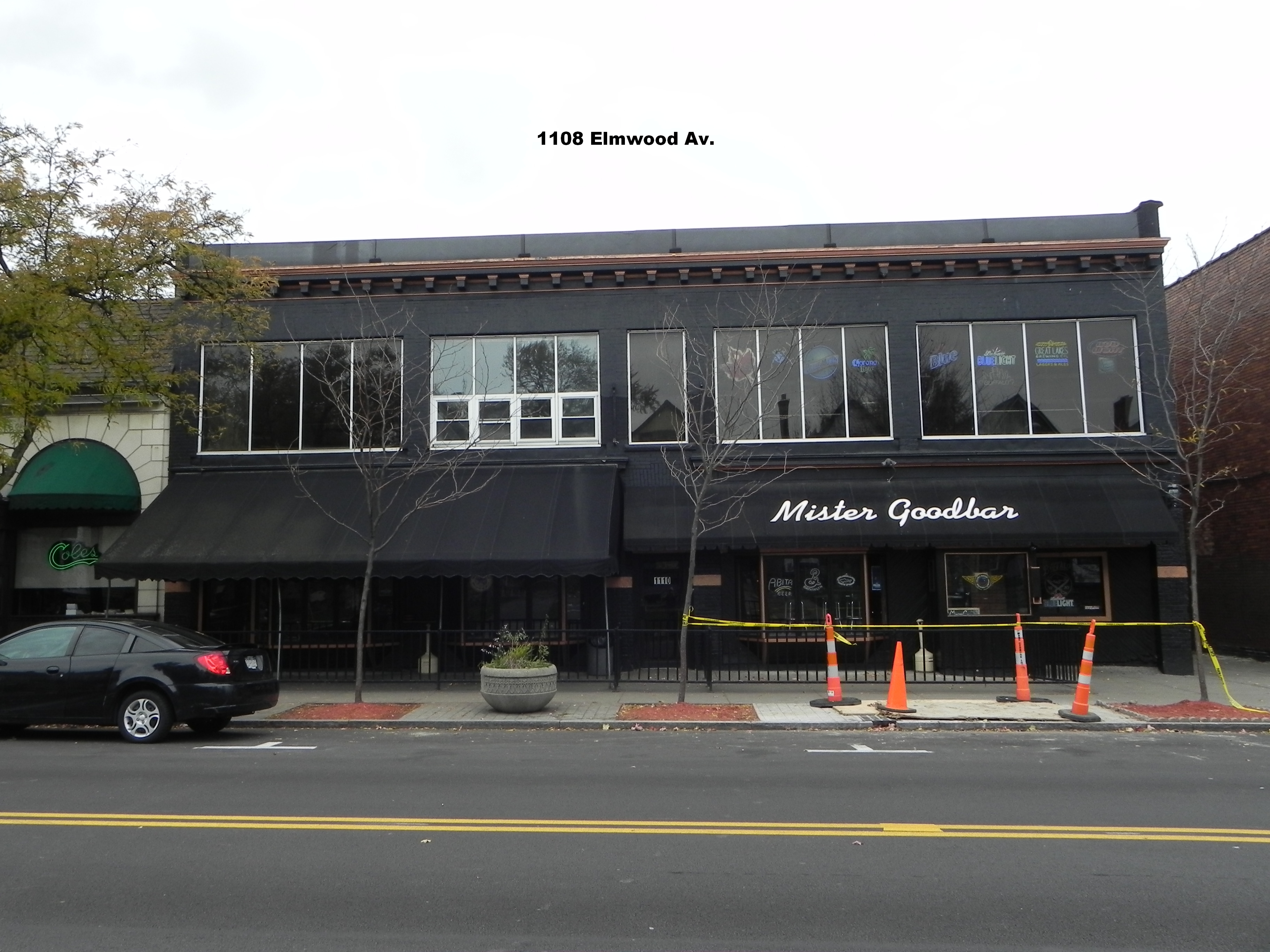
Exh 33 - 1108 Elmwood Ave. 11-06-13    Exh 15 - 1073 Elmwood Ave. 11-06-13    Exh 13 - 1081 Elmwood Ave. 11-06-13

Each of the remaining buildings was constructed for residential use, and has a substantial setback from the public sidewalk and street. They include one-family, two-family, and three-family residences, as well as two eight-unit apartment houses.

Exh 76 - Front yards 1095-1121 Elmwood

 The current draft of the Green Code prohibits the construction of any type of residence – detached, attached, or stacked – on virtually all of Elmwood Avenue from Bryant St. to Forest Avenue. There is an exception:  residential units may be located on the second floor or higher in what the proposed code calls a “commercial block” building, described as follows:  “A commercial block is a structure of two or more stories designed to facilitate pedestrian-oriented retail or office uses on the ground floor, with upper floors typically designed for residential, hospitality, or employment uses.”  Article 3 – Neighborhood Zones – of the proposed code provides this illustration of a 3-story version of the “commercial block” form:

BGC- Commercial Block form

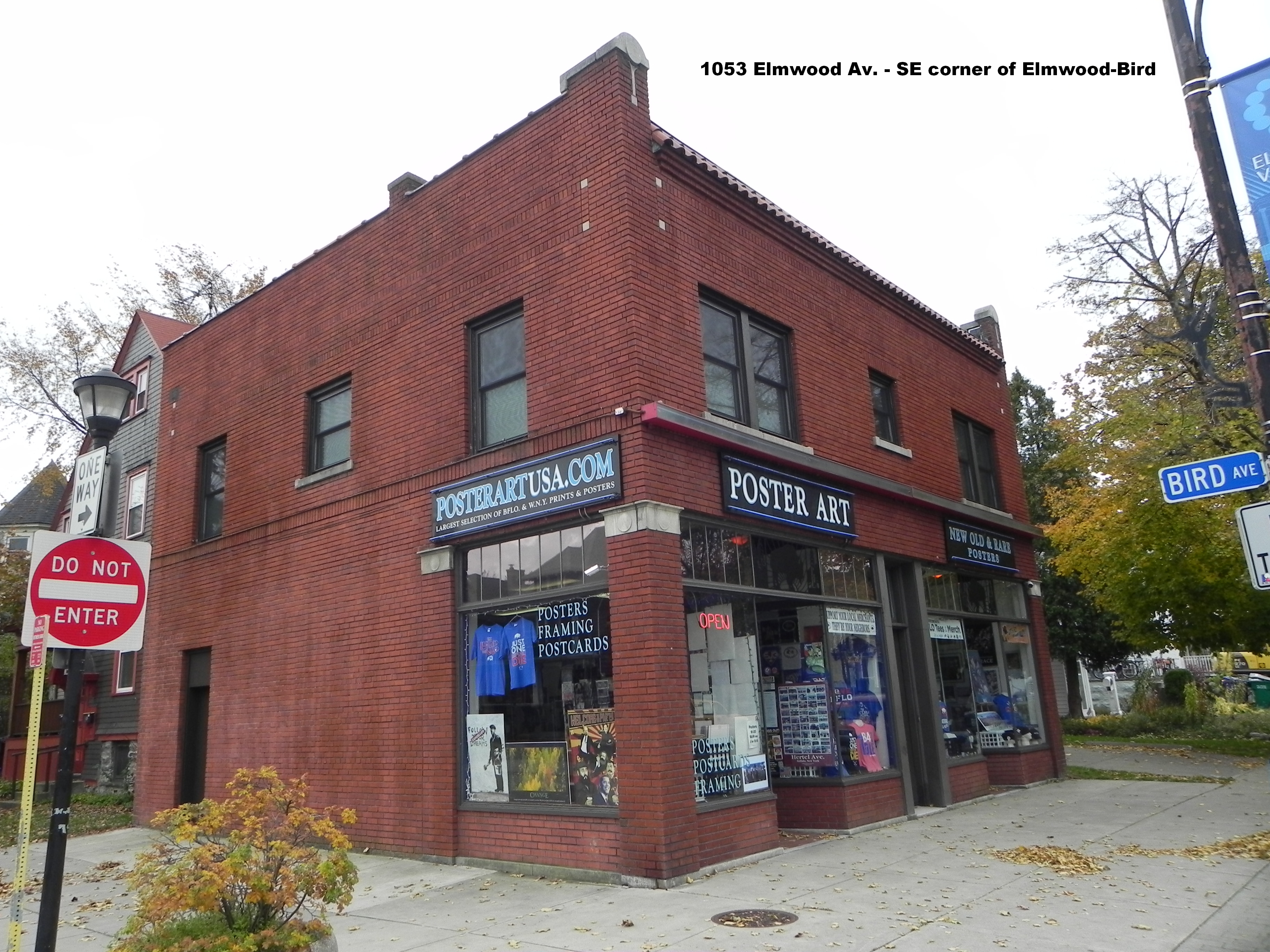
A number of existing structures on Elmwood Avenue between Potomac and Forest fit the definition of a “commercial block,” including, for example, the “Poster Art” building on the southeast corner of Elmwood & Bird, and Mr. Goodbar (pictured above).  But each of these long-standing Elmwood Village fixtures is only two-stories in height, and complements the scale of the neighborhood’s residential structures.

Exh 17 - 1053 Elmwood 11-06-13                           Exh 34 - 1116 Elmwood Ave. 11-06-13

In sharp contrast, the draft Green Code removes the existing zoning limitations on the intensity and scale of commercial building.  Currently, the maximum building height is three stories.  Of equal or greater significance, the existing zoning ordinance limits the size of a business outlet to 2,500 square feet on any one floor, and 5,000 square feet total in any one building.  The local business community has been fighting for years – with the assistance of the Elmwood Village Association – to eliminate the square-footage restrictions. The proposed ordinance grants their wish and, in doing so, jeopardizes the appreciable balance that now exists between residential and commercial uses in the Elmwood Village.

More specifically, the proposed Green Code would allow a “commercial block” building on Elmwood Avenue to be five stories tall and to cover 100% of the lot – whether or not the parcel adjoins existing residences. While the typical lot on Elmwood between Forest and Potomac avenues is approximately 30 to 40 feet wide, the draft Green Code would allow a commercial block building to be constructed on a lot as wide as 225 feet. Not only would such a structure dwarf nearby buildings – residential or commercial – it would lead to developers buying and demolishing seven or eight existing residential structures in order to build one monolithic building.

If the Common Council were to enact the Green Code as presently proposed, a building in excess of 150,000-square-feet could be construct in the Elmwood Village AS OF RIGHT – that is, without the need for a zoning amendment or variance.

For example: The lots on the east side of Elmwood Ave. between Bird and Forest are 140-feet deep. Under the draft Green Code, a “commercial block” building is allowed to be five-stories in height, situated on a parcel as wide as 225 feet, and cover up to 100% of the lot. The proposed ordinance also eliminates ALL minimum off-street parking requirements for commercial buildings. With these rules in place, a building could be 225 feet wide, 140 feet deep, and five stories high. That translates to 157,500 square feet of commercial space [that is, 225’ x 140’ x 5 = 157,500 sq. ft.].

To help grasp the scale of a 157,500-square-foot building, JP Bullfeathers has a total square footage of 6,441 square feet.  Mr. Goodbar’s two-story structure totals 6,930 square feet.  And, heading south a few blocks on Elmwood Avenue, the Lexington Co-op supermarket totals 8,880 square feet. In other words, the hypothetical commercial block building described above would be MORE THAN 17 TIMES LARGER THAN THE LEXINGTON-COOP BUILDING.

The Gates - Central Park 02-2005 072

Allowing such mammoth structures on Elmwood Avenue would obliterate the “balance between residential and non- residential use both in terms of density, concentration and scale” that Rochester’s former zoning director, Art Ientilucci, perceives as an essential aspect of the Elmwood Village’s character.

And it is not only the scale of the structures allowed under the draft Green Code that threatens the fabric of the Elmwood Village. It is also the diversity of uses that would be allowed under the Uniform Development Ordinance (in what appears to be a concerted effort by the proposed code’s authors to expand the traditional “downtown” area outwards).

City Hall

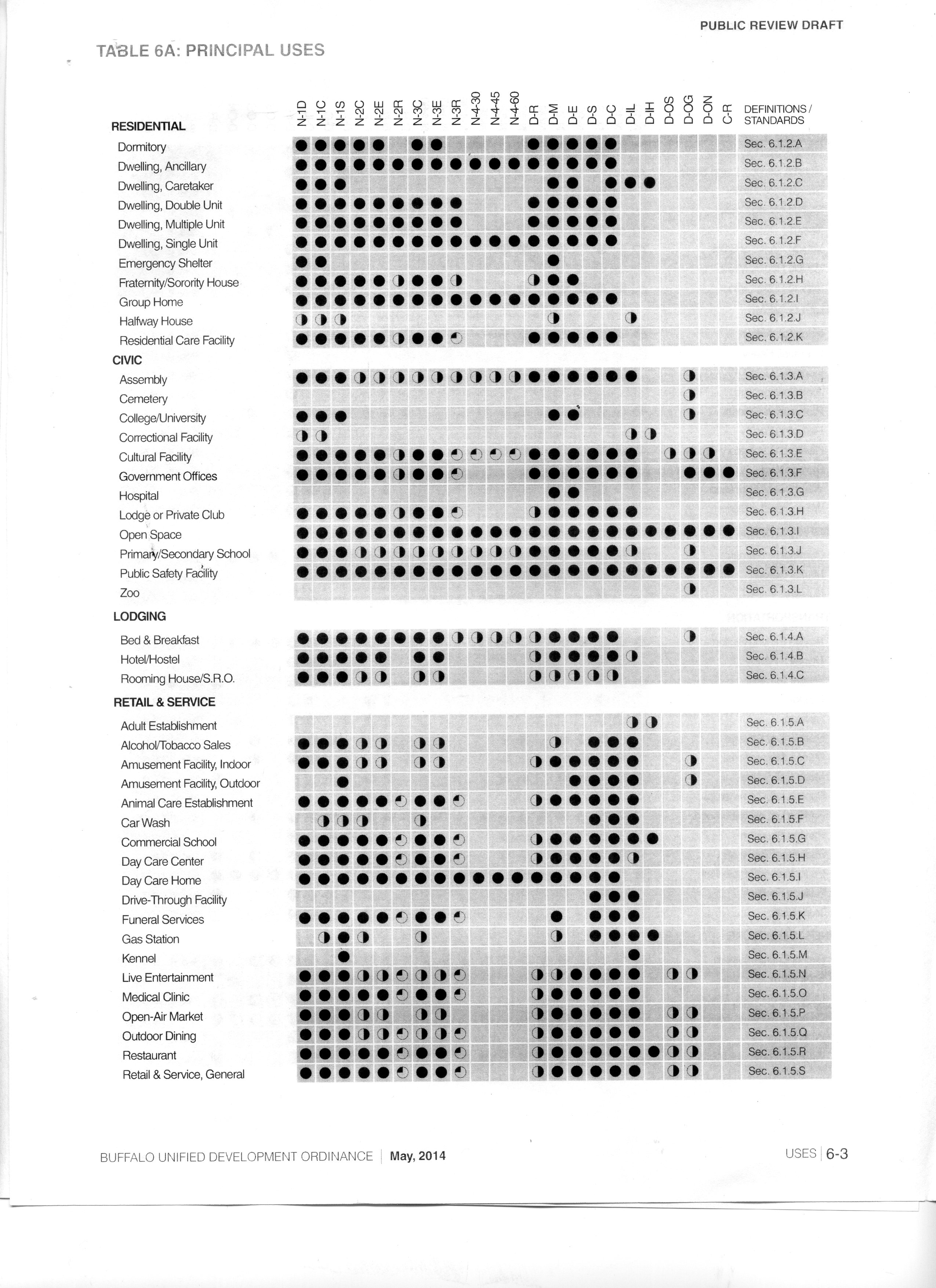
While many a suburbanite may think of the Elmwood Village as “downtown Buffalo,” few, if any, Elmwood Village residents would accept that characterization.  Nonetheless, under the draft code, not only would density on Elmwood Avenue be substantially increased, there would be little distinction between the uses allowed in the “N-1D Downtown/Regional Hub” zone, and those permitted in the “N-2C Mixed-Use Center” zone, the proposed designation for much of Elmwood Avenue.  With the exception of a correctional facility, college or university, halfway house, and emergency shelter, all of the 53 principal uses allowed in downtown Buffalo would be permitted in the N-2C zone either as-of-right or with a special use permit.  That includes hotels, government offices, indoor amusement facilities (undefined), and dormitories (without the current limitation of being located within ½ mile of the institution it would serve).   [The May 2014 draft Green Code lists the “principal uses” for each of the 23 zones and districts at page 1 and page 2 of  “TABLE 6A”.] 

For all of these reasons, the proposed Buffalo Green Code will be a disaster for residents and visitors who value the character and historic fabric of the Elmwood Village.  But don’t rely solely on the word of a semi-retired land use and environmental lawyer who is often referred to by his detractors as “anti-development” and an “obstructionist.”  Also consider what Rocco Termini, the prominent Buffalo developer, wrote in a March 4, 2006 op-ed piece in the Buffalo News entitled, “Proposed hotel doesn’t fit area’s urban fabric.”  Responding to a planned four-story, 40,000-square-foot hotel/retail project slated for the southeast corner of Elmwood and Forest, Mr. Termini, the recent recipient of Leadership Buffalo’s “Community Impact Award,” expressed the following:

            “The controversy surrounding the construction of a hotel on the corner of Elmwood and Forest avenues is not about size; it’s about destroying the urban streetscape that has made Elmwood a successful pedestrian-friendly shopping area.

            People come to Elmwood to walk around and visit all the quirky, offbeat shops… We, as a community, cannot lose the uniqueness of the Elmwood strip.

            The supporters of the development suggest that the six buildings need to be demolished because they have been neglected by the owner over the last decade. As a policy, do we want to reward bad owners by allowing them to sell their property to eager developers?”   …

            We need to change the direction of the development community and do not just things that are easy, but what is right for the community. This is an opportunity to be proud of what we do.”

The draft Buffalo Green Code, as currently written, would provide developers a virtual “Green Light” to unravel the historic fabric of the Elmwood Village. [By the way, I thank my friend Sandra Girage for providing the answer to the question that has been haunting me for years:  What exactly does “green” stand for in the name “Buffalo Green Code?”]

Unless the residents and friends of the Elmwood Village stand up and loudly demand a major change in the proposed code, the road ahead will be a rough one for this historic neighborhood.  Your written comments on the draft Green Code should be emailed to info@buffalogreencode.com or sent by the U.S.P.S. to: Attn: Buffalo Green Code, Mayor’s Office of Strategic Planning, 920 City Hall, Buffalo NY 14202.

With All Due Respect,

 Art Giacalone

P.S.  A version of this posting was published in the May 22, 2014 edition of the ArtVoice Weekly at http://artvoice.com/issues/v13n21/letters_to_artvoice.

What exactly is a “State Energy Plan”?

Posted by Arthur J. Giacalone on May 13, 2014
Posted in: Uncategorized. Leave a comment

We’ve all been invited by the New York State Energy Planning Board to review and comment on the “2014 Draft New York State Energy Plan.”  That’s great, I guess.  Our comments are due by May 30, 2014, and, if we want to submit our thoughts online, there is only one place to do that: http://energyplan.ny.gov/Process/Comments.aspx.

I had hoped to start the review process by now to ensure that Memorial Day festivities wouldn’t get in the way of meeting the May 30th deadline.  But I got sidetracked by the realization that I didn’t know what the purpose of a State Energy Plan is, or whether it actually has any real-world impact.

Perhaps more importantly, I had no familiarity with the NYS Energy Planning Board, who the members are, who appoints them, etc., etc.  I may be a bit naive, but I’m not willing to immediately trust these folks simply because their home page quotes Rachel Carson.

So, as a public service to anyone who might have similar questions or qualms, here’s what I’ve been able to cobble together:

Permanence has not been the State Energy Plan’s Hallmark

The earliest “State Energy Plan” [“SEP”] I was able to identify was adopted in 2002 during the administration of Gov. George E. Pataki.  It was designed “to keep New York at the forefront among states in providing its citizens with abundant, competitively priced, clean, and efficient energy resources.”  Reflecting just how much the world has changed in a dozen years, the 2002 plan contained no reference of any kind to Marcellus Shale or high-volume hydraulic fracturing (“hydrofracking”).

An annual report and activities update was issued in 2005, but it was prepared on a voluntary basis by the former staff of the State Energy Board.  The state legislation establishing the State Energy Planning Board and the SEP process expired on January 1, 2003.

Gov. David A. Paterson, apparently unwilling to wait for legislative action, created a State Energy Planning Board by executive order in 2008.  The new board was instructed to publish a final Energy Plan by June 30, 2009, and to issue a new energy plan at least every three years thereafter.

The opening paragraphs of Gov. Paterson’s Executive Order No. 2 appear to reflect the issues most on the mind of New York’s chief executive, that is, threats to the environment and public health, and global climate change:

            “WHEREAS, decisions about how to meet the state’s future energy needs can have significant impacts on the environment, public health, public welfare, safety, mobility, quality and reliability of services, energy costs, and the ability to maintain and grow the State’s economy; and

            WHEREAS, the burning of fossil fuels is a major contributor to global climate change, which poses a serious threat to the environment and the public health in New York State and elsewhere; …”

Governor Paterson’s unilateral move to create a State Energy Planning Board awakened the lethargic legislators in Albany.  By September 2009, the expired statutory provisions establishing an energy planning board were reinstituted, calling for an SEP every four years.  Not surprisingly, the 2009 legislation expressly gives “the speaker of the assembly and the temporary president of the senate” (as well as the governor) the power to appoint a representative to serve on the board.  It also asks the board to include in the State Energy Plan information and analyses both on a “statewide” basis and, to the extent practicable, for the “downstate region” [New York City and eight nearby counties] and “upstate region” [the rest of the state].

In contrast to the primacy given to the environment, public health, and climate change in the Paterson executive order, the 2009 legislation lists the goal of “minimizing public health and environmental impacts, in particular, environmental impacts related to climate change” after the expression of the following objectives for the State’s energy plan: “improving the reliability of the state’s energy systems; insulating consumers from volatility in market prices; [and] reducing the overall cost of energy in the state.”

The basic features of the 2009 legislation remain in place today.  However, Gov. Andrew Cuomo presided over a number of changes to the SEP process less than seven months after his January 1, 2011 inauguration, enacting what has been characterized as “minor amendments to Article 6 [of the Energy Law] in order to change the composition of the board and streamline its operations.”  In “streamlining” the SEP process, the current statute reduces somewhat the role of regional planning council members, lessens the obligation to identify and assess certain “regional” needs, and limits “forecasts” of enumerated topics to “a minimum period of ten years” rather than the previous call for “forecasts for periods of five, ten and fifteen years.”

Energy Planning Board Members – The Governor’s in Control

One feature of the State Energy Plan process has been constant throughout the 2002, 2009 and 2014 plans:  The Governor has preeminent control over the makeup of the State Energy Planning Board.  That power has been either absolute (the executive fiat-approach taken Gov. Paterson in 2002), or de facto as a result of a governor’s ability to nominate the Commissioner or Chairperson who, by virtue of the position he or she holds, is automatically a member of the energy planning board.

Given the predominance of gubernatorial “appointees” on the State Energy Planning Board, it is highly unlikely that the ability of each legislative chamber to appoint a single member to the board has a meaningful impact.  Pursuant to the current statute, a simple majority vote is all that is needed for board actions or decisions.

The number of board members has increased with each reincarnation.  The 2002 version included the heads of five agencies:  the New York State Energy Research and Development Authority (NYSERDA); New York State Department of Transportation (DOT); New York State Public Service Commission (PSC); New York State Department of Economic Development [an agency that was eliminated with the 2009-2010 State budget with its responsibilities transferred to the Empire State Development Corporation (ESD)]; and, New York State Department of Environmental Conservation (DEC).

The Paterson-created State Energy Planning Board retained each of the five 2002 agencies (or its successor agency), and added the New York Department of State (DOS), New York State Department of Health (DOH), and the States’ Division of Budget.  Executive Order No. 2 also named as board Chair the Deputy Secretary of Energy in the Governor’s office, and placed the Assistant Secretary for Renewable Energy in the Governor’s office as head of the “Energy Coordinating Working Group.”

The current configuration of the State Energy Planning Board requires a considerably larger conference table than either of its predecessors, despite the fact that the panel no longer includes a representative from the State’s Division of Budget or the Governor’s office.  The 2011 legislation adds the Commissioner of Labor, Commissioner of Agriculture and Markets, and Commissioner of Homeland Security and Emergency Services, as well as the appointees of the State Senate, State Assembly and (of course) the Governor.  Pursuant to the statute, the President of NYSERDA now serves as the Chair of the State Energy Board.

While they each perform valuable services on behalf of the citizens of New York State, none of the newly added agencies has a “mission statement” that focuses on the public health, the environment, or concerns over climate change:

        Labor:  “The mission of the New York Department of Labor is to protect workers, assist the unemployed and connect job seekers to jobs.”

        Ag & Markets:  “Our mission is to foster a competitive food and agriculture industry that benefits producers and consumers alike.”

        Homeland Security:  “Created in 2010, DHSES and its four offices … provide leadership, coordination and support for efforts to prevent, protect against, prepare for, respond to, and recover from terrorism and other man-made and natural disasters, threats, fires and other emergencies.”

Who actually gathers the data and drafts the State Energy Plan?

Not surprisingly, members of the State Energy Planning Board are authorized by the current statute to designate “an executive staff representative” to attend board meetings and participate on the board on their behalf.  And the tedious-but-critical process of gathering and analyzing data and information and drafting the SEP falls to the staff of the various participating agencies:

Staff services shall be performed by personnel of the department of public service, the department of environmental conservation, the department of transportation, the department of economic development, the division of homeland security and emergency services and the New York state energy research and development authority, as directed by the board. Assistance shall also be made available, as requested by the board, from other agencies, departments and public authorities of the state.

The difficulties of obtaining input from the actual board members – given their many responsibilities and, perhaps, lukewarm interest in the State Energy Plan process – are reflected in a statement attributed to the board Chair, NYSERDA President Francis J. Murray, Jr., in the July 9, 2012 meeting minutes:

       ” …  Mr. Murray encouraged Board members, particularly designees, to ensure that their principals (agency commissioners, etc.) are given ample time to weigh in on the various technical reports and documents.”

Does the State Energy Plan have any clout?

What happens to the State Energy Plan once a simple majority of the State Energy Planning Board members approves the final version of a plan prepared by personnel of the various agencies?  Must its goals and objectives be strictly followed?  Does it tangibly influence the actions and decisions of public entities and private companies?  Will it merely sit on a virtual shelf collecting virtual dust?

Here’s what Gov. Paterson’s 2002 executive order envisioned:

      “Upon issuance of the Energy Plan, every agency, department, office, division and public authority of the State shall, unless otherwise restricted by applicable law, give due consideration to and be guided by the Energy Plan in their decision-making.”

As meek as Mr. Paterson’s words appear to this skeptical environmental/land use lawyer, they read like a mighty roar when compared with the “reasonably consistent” standard found in the current version of the State Energy Plan law:

        “Section 6-104(5) (a).  The state energy plan shall provide guidance for energy-related decisions to be made by the public and private sectors within the state. (b) Any energy-related action or decision of a state agency, board, commission or authority shall be reasonably consistent with the forecasts and the policies and long-range energy planning objectives and strategies contained in the plan, including its most recent update; provided, however, that any such action or decision which is not reasonably consistent with the plan shall be deemed in compliance with this section, provided that such action or decision includes a finding that the relevant provisions of the plan are no longer reasonable or probable based on a material and substantial change in fact or circumstance, and a statement explaining the basis for this finding.”         

As with the comprehensive plans prepared by local municipalities, our elected and appointed officials will most likely point to a paragraph here and there in the State Energy Plan when it supports whatever actions or decisions they’re about to make.  And the SEP will be conveniently forgotten when decisions being made fall short of the anemic “reasonably consistent” standard found in the enabling legislation.

With All Due Respect,

Art Giacalone

P.S.  Thanks to GreenWatch’s Jay Burney, this piece was published as a Guest Commentary on May 15, 2014 at http://blogs.artvoice.com/avdaily/2014/05/15/greenwatch/.  If you are interested in sustainability, you should check out https://www.facebook.com/greenwatching.


Chason Affinity’s Hotel Project Would Destroy Historic Fabric of the Elmwood Village

Posted by Arthur J. Giacalone on April 23, 2014
Posted in: Development. Leave a comment
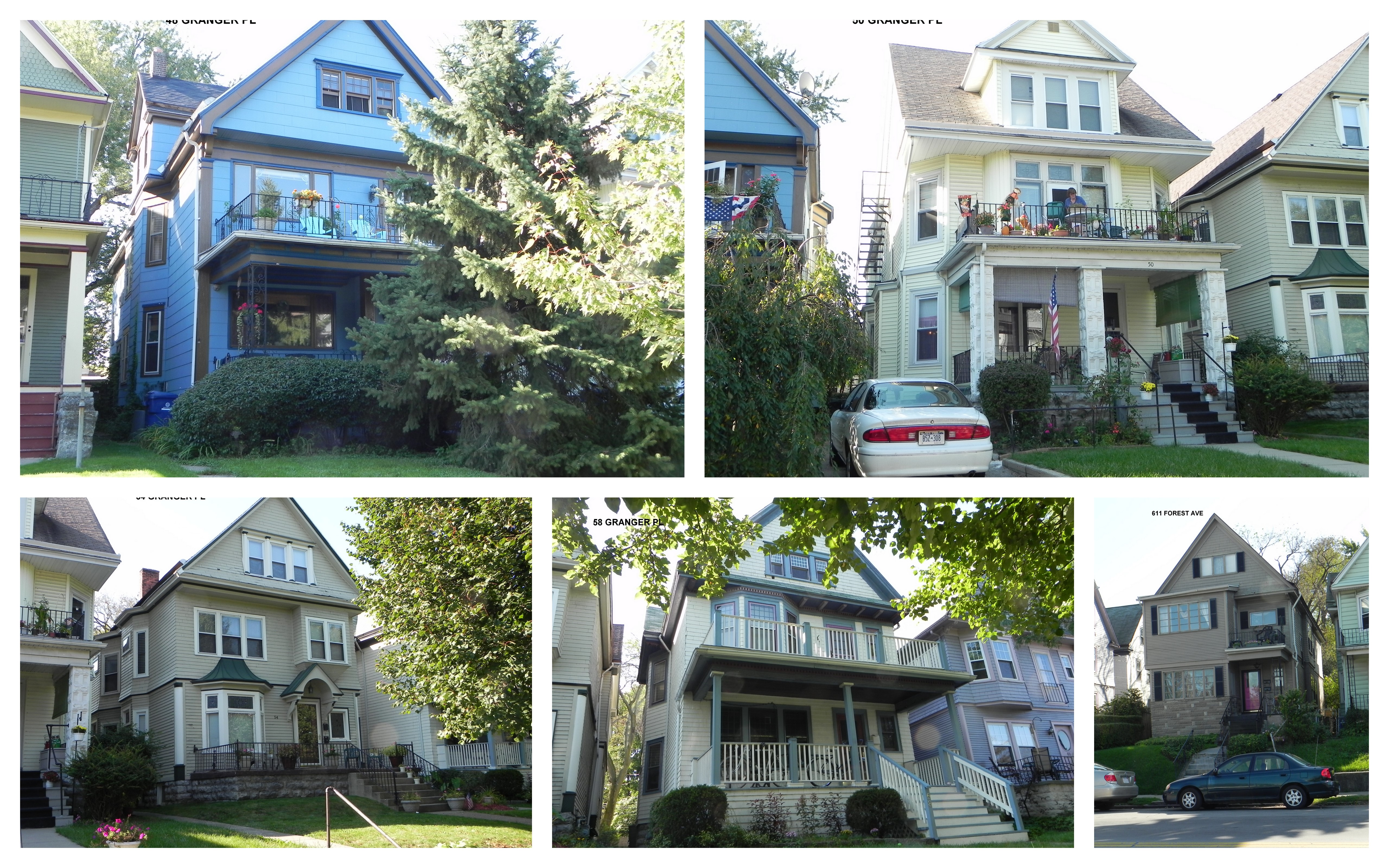
Mark Chason, the principal of the Chason Affinity Companies, says that the proposed hotel/retail/condominium project slated for the southeast corner of Elmwood and Forest avenues will take into account “the neighborhood fabric where the building will reside.”  In response, Buffalo News columnist Denise Jewell Dee had the following comment:  “Those are the right words.  Now, we’ll see if they live up to the promises.”

My clients, a sturdy group of property owners on Granger Place and Forest Avenue in the City of Buffalo, hope that we’ll never have to find out whether Mr. Chason meant what he said.  They intend to appeal the April 11, 2014 decision by the Hon. John A. Michalek, Justice of the Supreme Court, which granted Chason Affinity’s request to extinguish restrictive covenants that bar construction of the proposed mixed-use facility.  If the project proceeds, however, and Mr. Chason was sincere in expressing his development company’s intentions, I have the following piece of advice:  Good luck keeping that promise!

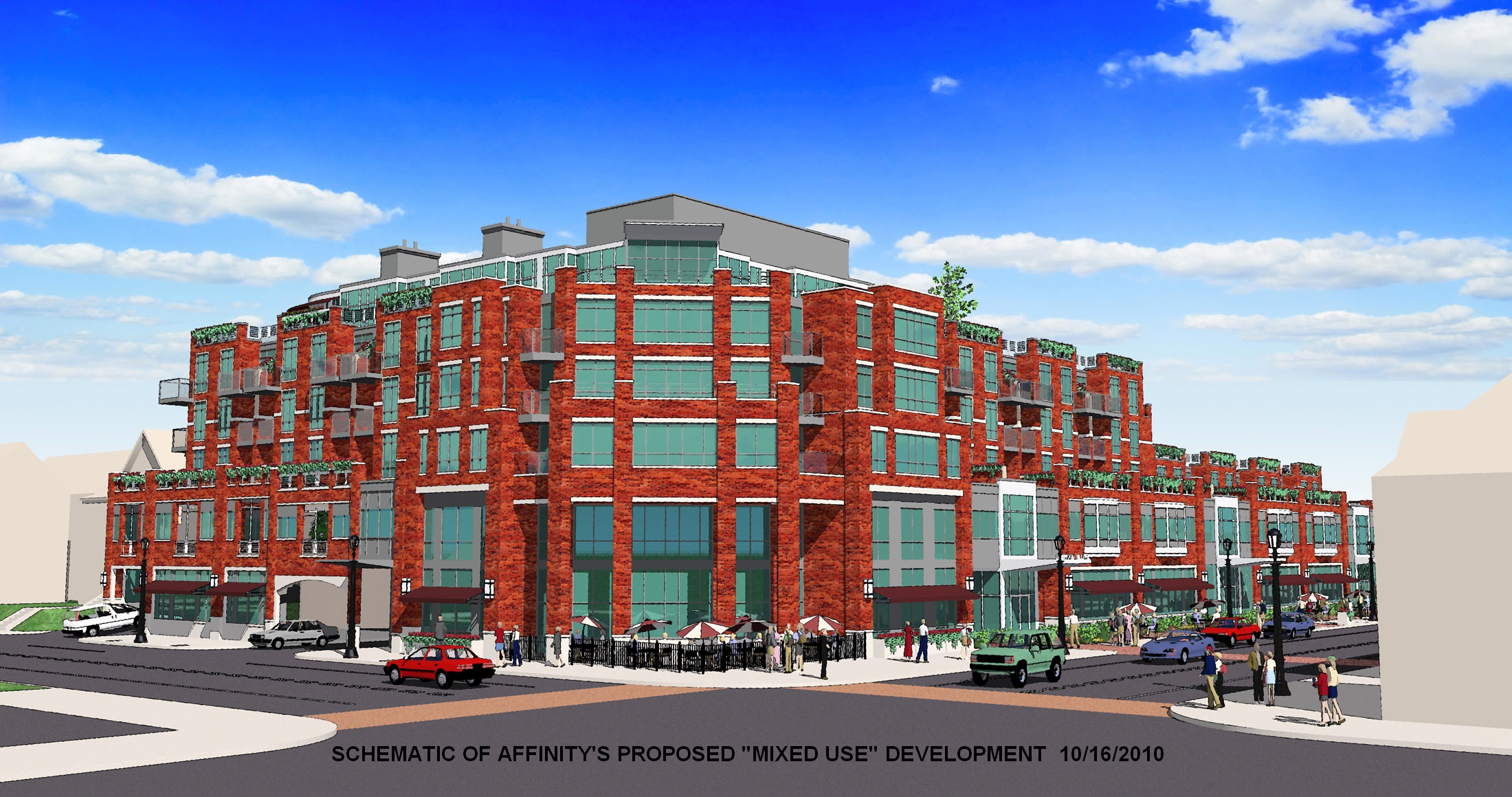
The likelihood that a six-story, 200,000-square-foot mixed-use building can be designed to fit comfortably into the fabric of the historic Elmwood/Forest neighborhood is remote, at best.

Affinity schematic 10-16-2010

As Mr. Chason exclaimed in a February 2009 Buffalo News article when unveiling his company’s plans, “There would be nothing else like this in Buffalo.  It’s more like something you’d see in Toronto.”

The contrast between the facility Mr. Chason envisions for the corner of Elmwood and Forest and the existing structures at the eleven-parcel site is startling.  The ten primary buildings that would be demolished to make room for Mr. Chason’s mixed-use project were constructed between 1900 and 1920 for residential use, are two stories in height, and have a combined area of less than 28,000 square feet, one-seventh the size of the proposed Chason Affinity project.

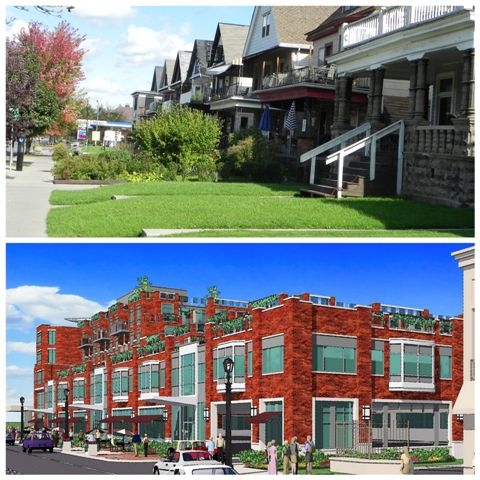
Elmwood-Forest DNA v Mutant 1

Elmwood-Forest DNA v Mutant 2

The nearby residences on Granger Place and Forest Avenue are similar in size, age and architectural styling to the existing structures at the Chason Affinity site.

Defendants' Houses

Defendants’ Houses

In fact, the overall cohesiveness in architecture, density, setbacks from the street, and landscape features throughout the Elmwood Village area led to the creation in 2012 of the “Elmwood West Historic District” and the placement of 1,300 properties west of Elmwood Avenue on the state and National Register of Historic Places.  [Click here for National Register of Historic Places Registration application form for Elmwood West Historic District.]  A similar process has begun for the “Elmwood East Historic District,” which, if successful, could place the existing structures owned by Chason Affinity on the national historic registry.

Mr. Chason’s plan to develop the one-acre site at Elmwood and Forest with one massive structure would also sharply contrast with the five commercial properties directly across the street on the west side of Elmwood Avenue.  They are only two-stories in height, and, combined, have a gross floor area of approximately 32,000 square feet, one-sixth the size of the Chason Affinity proposal.

Exh 34 - 1116 Elmwood Ave. 11-06-13

Exh 33 - 1108 Elmwood Ave. 11-06-13

Exh 32 - 1104 Elmwood Ave. 11-06-13

The Chason plan also conflicts with the City’s zoning laws.  Buffalo’s zoning code does not allow construction of a hotel on the Chason Affinity site, and the maximum permissible floor area for a single business is 2,500 square feet on any single floor or 5,000 square feet in any single building.  Additionally, the much touted Elmwood Village Design Standards mandate that “new buildings shall maintain the predominant scale of other buildings nearby … and respect the predominant height of buildings in the area.”  The tallest building on the block stands only three stories tall.

Exh 45 - 12 - 14 GRANGER PL

Unless Chason Affinity drastically changes its plans, Mr. Chason will have an extremely difficult time keeping his promise.  His building belongs in Toronto, not at the gateway to the Elmwood Village.

With All Due Respect,

Art Giacalone

Fresh Air – Hot Air – Bad Air

Posted by Arthur J. Giacalone on March 1, 2014
Posted in: Andrew Cuomo, Health impacts, Peace Bridge, SEQRA. Leave a comment

* Science vs. Science Fiction at the Peace Bridge *

 A couple of quick comments on recent Peace Bridge-related matters:

THE “FRESH AIR” – It is refreshing when as dignified a professional as Jamson S. Lwebuga-Mukasa, M.D., PhD – the person who knows the most about the scientific connection between the asthma epidemic on Buffalo’s lower west side and Peace Bridge truck traffic – tells it like it is.  The eminent pulmonologist and epidemiologist speaks out forcefully and clearly in the March 1, 2014 Buffalo News “Another Voice” column, understandably frustrated by recent statements by two vociferous supporters of “Peace Bridge expansion,” U.S. Sen. Charles Schumer and Rep. Brian Higgins.  Dr. Lwebuga-Mukasa describes the Schumer and Higgins claims that the pre-inspection of a percentage of trucks in Canada will improve air quality in Buffalo’s West Side as “rhetoric.”  This man of science and conscience then calls on all of us to contact our local leaders and demand that they “cut the rhetoric and produce a responsible solution based on scientific facts, not science fiction.”  Here’s a link to the Another Voice column:    http://www.buffalonews.com/opinion/another-voice/another-voice-pre-inspection-program-wont-fix-emission-problems-at-the-peace-bridge-20140301.

THE “HOT AIR” – On February 28, the international body informally known as the “Peace Bridge Authority,” named Sam Hoyt as its new chairman.  Given Mr. Hoyt’s willingness to carry Governor Andrew Cuomo’s water whenever or wherever he’s asked, we can no longer pretend that the interests of Western New York, especially its residents, will take precedence over the whims and demands of the man residing in the Governor’s Mansion in Albany.  Nor will we ever be able to take at face value the statements coming from the PBA’s chairman.  A perfect example of Mr. Hoyt’s willingness to express the proverbial “party line” emanating from the Governor’s office, rather than anything resembling the truth, are the comments he made this past week while wearing his “other hat” as an official of the Empire State Development Corp.  It was last summer that the ESD purchased the Episcopal Church Home [ECH] property across the street from the Peace Bridge plaza.  In a troubling report issued several days ago, InvestigativePost environmental reporter Dan Telvock reveals that the ECH property, purchased for $4.7 million despite being appraised for only $1.8 million, may end up costing taxpayers as much as $27 million.  [Read the article at http://artvoice.com/issues/v13n9/news_feature.]  There is no doubt that the Governor desperately wanted the ECH land for expansion of the Peace Bridge plaza.  Court papers filed by the Episcopalian Church Home board in the spring of 2013 expressly advised the court that ESD intends to develop the property “as part of an expanded Peace Bridge Plaza.”  Despite this reality, Sam Hoyt insisted in response to Mr. Telvock’s questioning that ESD’s “goal” when it purchased – and overpaid for – the Episcopalian Church Home campus was “to remove the blight from the neighborhood.”  Apparently, Mr. Hoyt  and Gov. Cuomo think we are all pretty darn stupid.

THE “BAD AIR” – Unless the good people of Western New York respond to Dr. Lwebuga-Mukasa’s plea and demand a real solution from its local, state and federal leaders, the residents of Buffalo’s lower west side will continue to breathe the polluted air that spews from the commercial truck traffic at the Peace Bridge.  A decent society would not allow this environmental injustice to continue.

A legal note:  In addition to being fiscally irresponsible, ESD purchased the Episcopalian Church Home property without first conducting a full environmental impact study assessing the cumulative impacts of the many pieces of the Peace Bridge “expansion” puzzle.  In doing so, ESD, in my opinion, violated the letter and spirit of the State Environmental Quality Review Act [SEQRA].  Also, as reported in Mr. Telvock’s article, in addition to ESD overpaying for the ECH property, the State Department of Health waived $1.8 million in judgments against the Episcopal Church Home for Medicaid overcharges.  That looks to me to be a gift by the State to a private entity, an act that violates the New York State Constitution.

With All Due Respect,

Art Giacalone

WNY’s “most influential person” ignores health issues at Peace Bridge

Posted by Arthur J. Giacalone on February 8, 2014
Posted in: Brian Higgins, Health impacts, Peace Bridge. Leave a comment

– Brian Higgins’ “big picture” overlooks truck traffic’s steep toll on residents –

Congressman Brian Higgins is ranked No. 1 in the Buffalo Business First list of the 250 “most influential” people who both live and work in Western New York.  In the opinion of the local business publication, the Buffalo Democrat “wield(s) the most clout” of any man or woman in our eight-county region.  As described in a headline at WBFO-FM, “Higgins tops list of region’s movers and shakers.” There can little doubt that Rep. Higgins has great influence throughout the WNY area.  Tragically, for the residents of Buffalo’s Lower West Side, he has used his clout to frustrate any attempt to meaningfully reduce the adverse impacts of diesel fumes and other toxins on the health of the thousands of children and adults living in close proximity to the Peace Bridge.

THIS NEIGHBORHOOD DESERVES PROTECTION!

THIS NEIGHBORHOOD DESERVES PROTECTION!

For example, in June 2012, Buffalo Mayor Byron Brown sought to slow down the Peace Bridge Authority’s plans to demolish a block of houses on Busti Avenue to make way for expansion of the U.S. plaza.

PBA'S NEGLECTED HOUSES PRE-DEMOLITION.

PBA’S NEGLECTED HOUSES PRE-DEMOLITION.

The Mayor’s somewhat surprising action occurred following a meeting with community representatives.  After that conference, a noted public health research scientist, Dr. Jamson Lwebuga-Mukasa, PhD, MD, wrote a letter to the Mayor which included the following description of the health impacts of Peace Bridge truck fumes on the lives of nearby children:              

… I will now talk about children’s health. Sick children cannot concentrate on their school work. A child who has stayed up all night, or in an emergency room and/or hospital, because of asthma, sinusitis, ear ache, cough or nasal congestion, watery eyes, he/she and the parents are not be able to attend school or go to work. This contributes to poor school attendance, school achievement and high health care costs. Parents have to stay at home or leave work to care for their children. This will contribute to a permanent underclass that will last for the next 50 to 100 years. In the meantime, an organization will make profits from tolls and shops at the ever enlarging parking lot. The City of Buffalo will provide services for water, sewers, connecting roads and truck traffic will clog side streets. The number of jobs coming to Western New York will be low paying and often short-lived. Most likely the workers will not even come from the affected community. Workers at the toll booths are exposed to truck pollution and develop chronic illnesses that will increase as traffic increases. Because pollutants are distributed to other organs in the body, people do not associate their illnesses with traffic pollution. The diseases include: heart attacks, stroke, certain cancers and other inflammatory conditions. In many cases, such illnesses will be paid for by taxpayers. Parking lot owners keep the profits…                                                        

[Click here for Dr. Lwebuga-Mukasa’s letter to Mayor Brown.]

Mayor Brown cited the nearby community’s “valid concerns” and the existence of “many unanswered questions” when asking the Peace Bridge Authority and Gov. Andrew Cuomo to delay demolition.  According to the Buffalo News, Mr. Higgins “expressed great displeasure with the latest Peace Bridge delays.”  Although the Congressman noted that he understood concerns about a new Peace Bridge plaza and increased truck traffic on any new span, ”Higgins went on to state that it’s important to keep the focus on the BIGGER PICTURE”:

“You want to lose the Buffalo Bills? Don’t build the bridge,” he said. “You want to lose the Buffalo Sabres? Don’t build the bridge. You want to lose JetBlue and Southwest? Don’t build a bridge. You want to devastate the retail economy of Western New York? Don’t build a bridge.” 

FRont Park 11-12-08 034

[Click here for Buffalo News articles, June 2012.]

More recently, Rep. Higgins weighed in on reports that discussions had taken place among a group of officials in Washington, D.C., during July and August 2012, concerning the possibility of moving Peace Bridge truck traffic to the Lewiston-Queenston Bridge to address the high rates of childhood asthma in the adjacent residential neighborhood.  According to the Buffalo News, the Congressman was shocked by the story – not because efforts to ameliorate a clear environmental injustice had been scuttled, but because he and other WNY officials were not part of the conversation.  Rep. Higgins downplayed the adverse health impacts of the various plaza expansion projects now underway at the Peace Bridge:

… Higgins also defended the environmental impact of the various projects planned for the Peace Bridge, which not only include the customs house and new access ramps, but also a plan to be implemented soon that will pre-clear cargo traffic on the Fort Erie, Ont., side of the bridge. Also, Higgins and Sen. Charles E. Schumer, D-N.Y., are fighting to increase the number of customs agents at the bridge in order to cut down on wait times there…  Higgins said that all of those efforts aim to reduce the amount of time that diesel trucks spend idling at the bridge – and it’s the fumes from idling trucks that can create asthma problems.  “The real solution to the problem is in front of us, and that is to build in more capacity,” he said.

[Click here for BuffNews “secret plan” articles.]

I, for one, find the words expressed by Dr. Lwega-Mukasa in his above-mentioned letter to Mayor Byron Brown considerably more persuasive than the utterances of WNY’s “most influential person”:

…  After a transient decrease in traffic congestion at the bridge, traffic volume will increase as truckers take advantage of decreased congestion at the bridge and the US Customs Control booths. Increased truck volume will trigger a new round of congestion and a requirement for parking lot enlargement paid for by the tax payers. The proposed plan does not address increased pollution from diesel trucks accelerating out of the plaza or idling at the duty-free shop parking lot. The new round of congestion and increased pollution will require still more expansion of the parking lot deep into the community, which will increase illnesses associated with truck pollution exposure. This will results in still further widening of the parking lot and pollution due to additional traffic… 

[Click here for Dr. Lwebuga-Mukasa’s letter to Mayor Brown.]

Now is the time for Brian Higgins to use his impressive clout to protect the health of the men, women and children who live under the poisonous cloud created by Peace Bridge traffic.  His refusal – year after year – to take effective steps to end this environmental justice travesty is a disservice to the eight-county region he calls home.  And, a disgrace.

Brian, for the sake of the children, see the true “big picture.”

SCHOOL BUS ON COLUMBUS STREET.

SCHOOL BUS ON COLUMBUS STREET.

With all due respect,

Art Giacalone

P.S.  I look forward to the day when community activists, such as the Lower West Side crusaders Kathy Mecca and Liz Martina, are recognized by the local media as belonging on a list of WNY’s “most influential” residents.  In the long run, they will be acknowledged as having been on the correct side of history (if not, we’re all in deep trouble).   

Note:  A shorter version of this post was published on February 15, 2014 in the “Another Voice” column of The Buffalo News: http://www.buffalonews.com/opinion/another-voice/another-voice-higgins-should-use-his-clout-to-protect-residents-near-the-peace-bridge-20140214

PEACE BRIDGE: What’s “Shocking” is PBA’s Failure to Address Health Impacts of Truck Traffic

Posted by Arthur J. Giacalone on February 1, 2014
Posted in: Health impacts, Peace Bridge, SEQRA. 1 Comment

– Priorities of Peace Bridge expansion supporters are unjust & inhumane –

“SHOCKING.”  That’s how the Buffalo News’ editorial staff describes the news of a secret plan initiated in the summer of 2012 by a small group of Washington, D.C. officials to redirect truck traffic from the Peace Bridge to the Lewiston-Queenston Bridge.  [Click here for the Jan. 29, 2014 Editorial.]  [Click here for Jerry Zremski’s Jan. 26, 2014 article.]

“UP IN ARMS.”  That, according to the Buffalo News opinion piece, is a proper response by state officials who were unaware of “this secret operation.”

The recent article IS shocking – and there certainly IS reason for anger.  But, with all due respect to the advocates of Peace Bridge expansion, these emotions would be more appropriately directed at the persistent failure of the Peace Bridge Authority [PBA], State of New York, and federal government to honestly and effectively deal with a grave environmental injustice:  the exorbitantly high rates of childhood and adult asthma suffered by residents of Buffalo’s Lower West Side as a result of Peace Bridge truck traffic.

Aerial map - Vicinity of Peace BridgeMap from online site of Erie Co. [NY] Office of Geographic Information Services depicting residential neighborhood situated  adjacent to Peace Bridge complex, located in the bottom left corner of photo. 

State and federal authorities have been aware for years of the connection between commercial truck traffic at the international crossing and poor air quality in the surrounding neighborhood.  Back in 2007 when a “signature bridge” was the PBA’s goal, a Draft Environmental Impact Statement [DEIS] prepared on behalf of the PBA, NYS Department of Transportation, and the Federal Highway Administration [FHWA] included the following explanation why “no action” (doing nothing to improve capacity at the Peace Bridge) would not be an acceptable option:

             “… The existing facility processes heavy commercial truck traffic adjacent to a densely populated residential neighborhood, presenting significant noise and air quality concerns and negatively affecting waterfront, commercial and residential land uses from Porter Avenue north along Niagara Street to Massachusetts Avenue.”        

Not surprisingly, this reference to “air quality concerns” was not included in the main text of the DEIS – the portion most likely to be read by officials, the media, or the public – but was buried way back in “Appendix S.”  [Click here for the pertinent excerpts from DEIS Appendix S & A.]

Additionally, “Appendix A” of the 2007 DEIS provided the following description of the toxic impacts of diesel exhaust on human health:

        “… Diesel exhaust is likely to be carcinogenic to humans by inhalation from environment exposures…  Diesel exhaust also represents chronic respiratory effects, possibly the primary noncancer hazard from MSATSs [Mobile Source Air Toxics].  Prolonged exposures may impair pulmonary function and could produce symptoms such as cough, phlegm, and chronic bronchitis…”

High asthma rate study area

** Note: This is a map reflecting high asthma rates in neighborhood adjoining Peace Bridge from a study, entitled “Geographic Clustering of Adult Asthma Hospitalization and Residential Exposure to Pollution at a U.S.-Canada Border Crossing,” by Tonny J. Oyana, PhD, Peter Rogerson, PhD, and Jamson S. Lwebuga-Mukasa, MD, PhD, published in the American Journal of Public Health in July 2004. **

** Note:  Copyright restrictions prevent me from using a chilling visual statement by Adam Zyglis, the Buffalo News political cartoonist, which appeared in the newspaper’s June 9, 2013 edition.  Mr. Zyglis eerily captured the high “toll” nearby residents involuntarily pay as a result of vehicle exhaust from bridge traffic.  In the midst of thick plumes of exhaust fumes, a sign at a toll booth reads:  “PEACE BRIDGE TOLLS – Cars… $3; Buses… $11; Trucks… $6-53; WEST SIDE RESIDENTS… ASTHMA.” **    

Despite the 2007 DEIS’ acknowledgement of the harmful effects of truck exhaust on nearby residents, the same environmental impact statement chose to ignore the pleas of Jamson Lwebuga-Mukasa, PhD, MD, an esteemed expert in lung disease and asthma research and member of SUNY at Buffalo’s School of Medicine and Biomedical Sciences faculty.  Dr. Lwebuga-Mukasa’s recommendation to the PBA, NYSDOT and FHWA to direct truck traffic away from the Peace Bridge for the sake of public health was disregarded simply because his research was performed “independent of the Project Consultant Team”:

        “…There was also a presentation given at [a workshop held in 2002] by Dr. Jamson Lwebuga-Mukasa, a local public health research scientist.  …  Dr. Mukasa presented research which he believes shows that heavy traffic at the Peace Bridge is linked to poor respiratory health of the west side of Buffalo and the surrounding community.  Dr. Mukasa suggested that public health would be protected by providing additional cross border capacity at another location and to not allow trucks to cross at the Peace Bridge.  The Project Consultant Team has not endorsed Dr. Mukasa’s conclusions since his research is independent of the Project Consultant Team.”

[See “Page iv” of DEIS Appendix S, link above]  [Emphasis added.].

               ** Note:  The DEIS author’s excuse for merely swatting away Dr. Lwebuga-Mukasa’s research and recommendations flies in the face of a primary purpose for the environmental review process under SEQRA [NY State Environmental Quality Review Act].  In a landmark 1986 decision in Jackson v. NYS Urban Development Corp., 67 NY2d 400, New York’s highest court characterized the SEQRA review process as “a cooperative venture” whereby the government agencies have “the benefit of public comment” before issuing a Final EIS and approving a proposed action. ** 

Ron Rienas, PBA general manager, is one of the Peace Bridge expansion supporters identified in recent Buffalo News articles critical of the secrecy of the efforts to consider removal of truck traffic from the international crossing.  In 2007, Mr. Rienas was one of four officials to sign the DEIS prior to its release to the public for comments.  [Click here to see DEIS text excerpt.]  I won’t venture a guess as to whether the PBA general manager got as far into the voluminous document as “Appendix A” or “Appendix S” before he signed off on it.  But as a signatory, he should be accountable to the public for the information contained in it, including the description of the harmful effects of diesel exhaust on humans.

Unfortunately, the public comments of Mr. Rienas do not reference the negative impacts of truck traffic on Lower West Side residents.  To the contrary, the PBA general manager is continuing the shameful legacy of minimizing the research and conclusions of health experts such as Dr. Lweguga-Mukasa and other scientists.  According to  the January 29th Buffalo News editorial, Mr. Rienas characterized the research relied upon by the clandestine operatives as “woefully out of date.”

The Buffalo News editorial staff apparently did not bother to question the accuracy of Mr. Rienas’ disparaging description of the crucial research.  With a little effort, the Buffalo News and Mr. Rienas would have found a 2011 report, Air Toxics Exposure from Vehicle Emissions at a U.S. Border Crossing:  Buffalo Peace Bridge Study, detailing a timely research project conducted by Dr. John Spengler of the Department of Environmental Health, Harvard School of Public Health, and colleagues including Dr. Lwebuga-Mukasa.  I urge them to read it.

Mr. Rienas is busy these days explaining why the PBA and other agencies fully comply with their legal obligations when they look separately at the potential adverse impacts of the various projects underway or soon to begin in and around the Peace Bridge.  The official who made the decision in August 2012 to stop the discussion of plans to redirect traffic from the Peace Bridge to the Lewiston-Queenston Bridge, Denise Pease, Regional Administrator of the U.S. General Services Administration, is engaged in the same activity.  In a February 1, 2014 letter-to-the-editor, Ms. Pease assures all of us that the GSA “carefully follow[ed] the law.”  [Click here for Denise Pease’s letter.]

** Note:  We hope to address the claims of “full compliance” in a future post.  **

The PBA general manager and GSA administrator are engaged in a process that started decades ago.  In a 2000 decision involving the Peace Bridge, the Hon. Eugene M. Fahey, a notable WNY jurist, described the agencies’ endless excuses for not objectively assessing and mitigating the cumulative impacts of Peace Bridge expansion plans as “strategems to avoid the required environmental review.”  [See City of Buffalo v. NYS Dept. Of Environmental Conservation, 184 Misc.2d 243, 707 NYS2d 606 (Sup. Ct. Erie Co.).]  Justice Fahey ordered the PBA to do an environmental review that examined the Peace Bridge’s “cumulative impacts.”  However, the PBA, FHWA, and NYSDOT eventually abandoned the review, as well as a proposed new bridge, prior to issuing a Final Environmental Impact Statement reflecting the “cumulative impacts” of the multiple “capacity improvement” projects under consideration.

The clever tricks and schemes to circumvent meaningful examination of the health implications of Peace Bridge truck traffic continue.  Regretfully, none of the expansion-plan advocates appears willing to face, or even acknowledge, the “environmental injustice” the secretive group in Washington, D.C., was trying to address.  The Buffalo’s Lower West Side is unquestionably a community with a high percentage of low-income and minority residents experiencing a disproportionate share of adverse environmental impacts as a result of its proximity to the Peace Bridge.

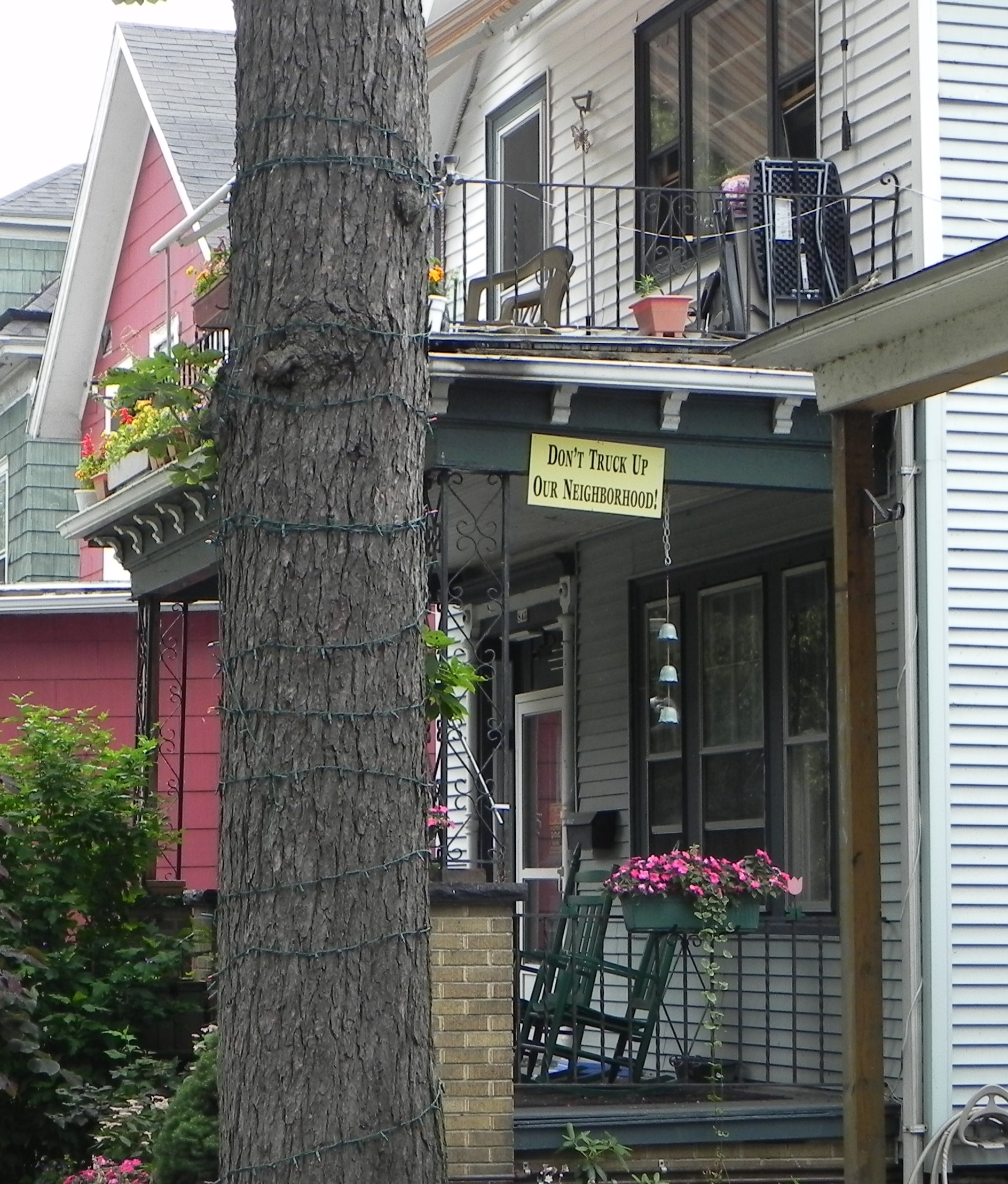
Don't Truck Up Our Neighborhood!

Don’t Truck Up Our Neighborhood!

And the PBA, GSA, FHWA, and NYSDOT are unwilling to admit that THEY DO POSSESS THE AUTHORITY, under the existing environmental review laws, to conduct a thorough and objective comprehensive review addressing and mitigating the human health implications of Peace Bridge traffic – whether or not they are actually mandated to do so.  But their priorities are such that they refuse to recognize and take steps to eliminate the human suffering that results from commercial truck traffic.

That is what is truly SHOCKING.  That is reason for the entire Western New York community to be UP-IN-ARMS!

With All Due Respect,

Art Giacalone

Peace Bridge: GSA is second federal agency to consider moving truck traffic

Posted by Arthur J. Giacalone on January 27, 2014
Posted in: Development, Health impacts, Peace Bridge. Leave a comment

– EPA identified Lewiston-Queenston as alternative in 2007 –

The front-page cover story in the January 26, 2014 edition of the Sunday Buffalo News, “The Secret Attempt To Ban Trucks At The Peace Bridge,” reveals just how swiftly state and federal officials moved to scuttle consideration of a plan to reduce the high rate of childhood asthma in a City of Buffalo neighborhood near the Peace Bridge.  According to the News Washington Bureau Chief, Jerry Zremski, a small group of concerned officials at the U.S. General Services Administration had proposed a “possible win/win solution” to address the pollution problem, barring commercial truck traffic from the international crossing between Buffalo and Fort Erie, Ontario, and moving it twenty-one miles away to the Lewiston-Queenston Bridge.

Map Peace Bridge to Lew-Queenstion Bridge

Environmentalists and Peace Bridge expansion supporters reacted with anger when they read of the secretive nature of the August 2012 discussions.  [See 01-27-14 article here.]  But it doesn’t surprise this observer that the GSA officials who recognized the harm being done to the Lower West Side children by truck fumes, and sought alternatives to resolve the health calamity, chose to work in secrecy.  They were not the first federal officials to identify the problem and view the Lewiston-Queenston Bridge as a possible solution.

In a letter dated November 29, 2007, a U.S. Environmental Protection Agency official in the agency’s New York City office, John Filippelli, provided the EPA’s comments to the Federal Highway Administration following its review of the Draft Environmental Impact Statement for the Peace Bridge Expansion Project.

A major concern expressed in the 2007 EPA letter is the fact that, “for all intents and purposes,” the draft EIS only considered one option, the FHWA’s preferred alternative, a new companion bridge:  “… [C]ertainly the draft EIS could have presented another alternative to meet the project’s purpose and need and objectives, whether from the original list of 59 alternatives listed in Appendix S, or a totally new alternative, such as routing all truck traffic to the Queenston-Lewiston Bridge [sic].  [Emphasis added.]  [Click here for the Nov. 29, 2007 EPA letter.]

The EPA’s letter also included the following references to “a bridge to the north” and the failure to consider “air quality”:

             “… [I]t is not clear within the draft EIS why the preferred alternative was chosen, rather than a replacement bridge or a bridge to the north…” [Emphasis added.]

             “… None of the screened alternatives considered air quality, water quality or sediment analyses.”  [Emphasis added.]

The federal agency entrusted with the protection of our environment also had a critical view of aspects of the 2007 plans that remain a part of the current Peace Bridge Expansion smorgasbord:  “The preferred alternative also includes a visitor center, duty free shop and a 477 space parking garage.  It is these attributes of the alternative that would result in the highest impacts to the low income residential neighborhood…”  [Emphasis added.]

FRont Park 11-12-08 058

It isn’t difficult to imagine that the views expressed in the Nov. 29, 2007 EPA letter were as harshly received by supporters of Peace Bridge Expansion as the subsequent efforts in August 2012, and that the GSA team was aware of the repercussions of making such a bold proposal.  History has shown that there is one thing even more predictable than traffic delays at the Peace Bridge on a summery Friday afternoon:  Government officials and politicians in Albany and Washington, D.C., will find new ways to circumvent their legal and moral obligation to address the high rate of childhood and adult asthma that has been scientifically linked to diesel fumes generated by Peace Bridge truck traffic.

            ** Note: A good place to start for a summary of the scientific studies establishing the link between high asthma rates on Buffalo’s Lower West Side and bridge pollution is a May 25, 2013 report by investigativepost.org. **   

          ** Note:   A map providing a visualization of the geographic clustering of asthma patients in the vicinity of the Peace Bridge complex can be found in a study by Tonny J. Oyana, PhD, Peter Rogerson, PhD, and Jamson S. Lwebuga-Mukasa, MD, PhD. ** 

The next posting here will expand on the topics addressed in Jerry Zremski’s companion piece in the Sunday Buffalo News, “Critics call review process for expanded facilities deficient,” the continued failure/refusal of federal and state officials to assess the “cumulative impacts” of the multiple projects at and near the Peace Bridge intended to improve traffic efficiency.  In doing so, it will assess claims by the Peace Bridge Authority’s general manager, Ron Rienas, that segmented environmental reviews are proper because the custom house expansion, new ramps, etc., are separate projects being built by different entities.

And future posts will look at the decades of what a notable jurist, the Hon. Eugene M. Fahey (currently an Associate Justice of the Appellate Division, Fourth Department, of the New York State Supreme Court) once described as “strategems to avoid the required environmental review” of the cumulative impacts of Peace Bridge expansion plans.  [See City of Buffalo v. NYS Dept. Of Environmental Conservation, 184 Misc.2d 243, 707 NYS2d 606 (Sup. Ct. Erie Co.).]

Visitors to this blog can go to the “Pre-WADR Archives” page for a sampling of the author’s prior commentary regarding past “strategems” deployed by officials and agencies, such as Gov. Andrew Cuomo’s heavy-handed threats to dissolve the Peace Bridge Authority, and the Empire State Development Corporation’s deceptive purchase in June 2013 of the Episcopalian Church Home parcel for $4.7 million (property described as “blighted” and appraised at a mere $1.8 million).

DSCN3032

DSCN3191

DSCN3189

With All Due Respect,

Art Giacalone

This posting has been reprinted in ArtVoice, Jan. 30, 2014.

Court-ordered “prior restraint” ends on day 410

Posted by Arthur J. Giacalone on January 13, 2014
Posted in: John A. Michalek, Judiciary, Lawyer's 1st Am. rights, Professional Ethics. Leave a comment

[Note:  On June 29, 2016, John A. Michalek, former State Supreme Court Justice, pled guilty to bribery charges.  See the Buffalo News article here.  As far as I can tell, the charges to which Michalek admitted guilt do not involve the case that I had before “His Honor” that inspired this January 2014 post, although the timeframes coincide.  But I’m still waiting for the other shoe to drop.  Also, to date, I appear to be the only local lawyer willing to speak out publicly regarding Michalek’s inappropriate conduct while on the bench.  See the May 11, 2016 report in The Public re “Michalek’s Blemishes.”]

I recently spent 409 days – from November 20, 2012 through January 2, 2014 – with my First Amendment right to free speech restricted by a series of court orders entered by New York State Supreme Court Justice John A. Michalek.  Fortunately, that “prior restraint” has ended.

On January 3, 2014, the NYS Appellate Division, Fourth Department, ruled unanimously that the lower court had “abused its discretion” when it precluded me from communicating with Kaleida Health, a non-party health care provider, concerning the subject matter of the pending lawsuit (an action by the plaintiff development company to extinguish restrictive covenants on eleven parcels of land in the City of Buffalo).  In pertinent part, the Fourth Department’s Memorandum and Order reads as follows:

                “In appeal No. 1, we agree with appellants that Supreme Court abused its discretion in precluding Giacalone from communicating with Kaleida pursuant to CPLR 3103.  Plaintiff sought, inter alia, to enjoin Giacalone from communicating with Kaleida on the ground that Giacalone had violated the New York Rules of Professional Conduct (22 NYCRR 1200.0 et seq.), and the order to show cause bringing on the motion contained a temporary restraining order (TRO) enjoining Giacalone from engaging in certain conduct.  By the order in appeal No. 1, the court, inter alia, denied that part of plaintiff’s motion based on the alleged violation of the Rules of Professional Conduct and vacated the TRO, but the court also sua sponte granted the relief with respect to Kaleida pursuant to CPLR 3103.  In pertinent part, that statute permits the court to issue “a protective order denying, limiting, conditioning or regulating the use of any disclosure device” (CPLR 3103 [a]).  Here, however, there was no evidence establishing that Giacalone had misused the discovery process.  Indeed, the documents submitted in support of plaintiff’s order to show cause do not mention the discovery process, nor do they contain any evidence establishing that the conduct complained of was related to any information obtained in that process.  Thus, inasmuch as “plaintiff failed to show that there was anything unreasonable or improper about defendants’ demands” or the use of discovery materials by defendants and Giacalone (Response Personnel, Inc. v Aschenbrenner, 77 AD3d 518, 519), and there was no indication that “the disclosure process [was] used to harass or unduly burden a party” or a witness (Barouh Eaton Allen Corp. v International Bus. Machs. Corp., 76 AD2d 873, 874; see Seaman v Wyckoff Hgts. Med. Ctr., Inc., 25 AD3d 598, 599, lv dismissed 7 NY3d 864), the court abused its discretion in precluding Giacalone from communicating with Kaleida (cf. Jones v Maples, 257 AD2d 53, 56- 57).  We therefore modify the order by vacating the ordering paragraph in which that relief was granted.  In light of our determination, we do not consider appellants’ further contentions concerning preclusion.”

See Affinity Elmwood Gateway Properties LLC v. AJC Properties, 113 AD3d 1094 (4th Dept. 2014) (CA 13-00539, Jan. 3, 2014).  As the Appellate Division’s  memorandum indicates, the constitutional issues were not considered in light of the court’s vacating of the offending portion of the lower court’s order.  [Click hereto review Appellants’ Brief, which contains a detailed discussion of the pertinent facts]


With All Due Respect,

Art Giacalone

Posts navigation

Newer Entries →
  • CATEGORIES

  • March 2026
    M T W T F S S
     1
    2345678
    9101112131415
    16171819202122
    23242526272829
    3031  
    « Nov    
  • DISCLAIMER

    This blog is provided for general informational purposes only. It should not be construed as legal advice and is not intended to be a substitute for legal counsel. Persons requiring legal advice should retain a properly licensed lawyer. No attorney-client relationship will be formed based on use of this site and any comments or posts to this blog will not be privileged or confidential. *************** This blog's author, Arthur J. Giacalone, does not intend or consider the communications at this blog to be ATTORNEY ADVERTISING. The primary purpose of the communication is not for the retention of Mr. Giacalone's legal services. [See definition of "Advertisement" at Part 1200, Rules of Professional Conduct, Rule 1.0(a).] Nonetheless, in case the proper authorities choose to treat this web site as ATTORNEY ADVERTISING, the street address, phone number and email address of the law office of Arthur J. Giacalone are: 17 Oschawa Avenue, Buffalo, New York 14210; (716) 436-2646; AJGiacalone@twc.com.
Blog at WordPress.com.
  • Subscribe Subscribed
    • With All Due Respect
    • Join 62 other subscribers
    • Already have a WordPress.com account? Log in now.
    • With All Due Respect
    • Subscribe Subscribed
    • Sign up
    • Log in
    • Report this content
    • View site in Reader
    • Manage subscriptions
    • Collapse this bar
 

Loading Comments...