With All Due Respect

Photos and musings by Arthur J. Giacalone

  • About The Author
  • About This Blog
  • Pre-WADR Archives

Ethics Code chatter masks real problem: Political Contributions

Posted by Arthur J. Giacalone on February 23, 2018
Posted in: Buffalo News, Erie County, Mark C. Poloncarz, Political Contributions. Leave a comment

[A version of this post is published at The Public – click here – beneath the headline:  “On the Ethics Code, It’s not the Sabres tickets, Folks…”]

The Buffalo News has expended substantial space and ink reporting and editorializing on the effort of Erie County’s elected officials to determine what is or isn’t a “nominal” gift that county officers and employees may accept without running afoul of his or her ethical obligations. The discussion arises in the midst of the county legislature’s unimpressive effort to rewrite the county’s Code of Ethics.

The focus of the public debate – by the newspaper and county legislators – has been on a rather mundane issue: Should a 200-level Sabres ticket be considered an allowable gift?

I.  Elephant in the room?

According to the News editorial board, the “nominal gift” question and other complex ethical concerns could be appropriately resolved if county lawmakers consider the following question: “How best can we instill and protect the public’s confidence in government?” From my perspective, it would be more useful (and, more honest) if our county officials, the media, and Erie County residents asked the following question:

“What is more likely to improperly influence our county’s elected officials, a Sabres ticket (which, this season, virtually no one wants), or the generous political contributions the county executive, members of the county legislature, the district attorney, the sheriff, the county comptroller, and the county clerk pursue and receive each time they run for office?”

I have little doubt that an overwhelming majority of residents would perceive political contributions as the bigger threat to their confidence in government. To help place my suggested inquiry into a tangible context, I visited the website of NYS’s Board of Elections – at http://www.elections.ny.gov/contribandexpend.html – and retrieved information concerning the contributions various Erie County officials have received between January 2010 and February 2018. Here are some thought-provoking results:

** County Executive Mark C. Poloncarz’s campaign was the beneficiary of over $2.4 million in contributions over the eight-year period. As a member of the public, my confidence in Mr. Poloncarz’s decision-making is shaken much less by the thought that someone might offer him a Sabres ticket or a ceremonial plaque, than by the fact that he has received $28,000 in contributions from the Clover property management group, $31,000 from Mosey Associates/Mosey Persico LLP, $23,297 from the Lippes Mathias Wexler Friedman law firm, $22,484 from Phillips Lytle LLP, a one-time $5,000 contribution in 2015 from R & P Oak Hill Development LLC, etc., etc.    

** County Legislator Joseph C. Lorigo received in excess of $230,000 in campaign contributions between January 2010 and February 2018. The generosity of his campaign contributors – including the $7,000 he received from his father and Erie County Conservative Party chair, Ralph Lorigo – seems much more likely to influence legislator Lorigo’s conduct in office than any nominal gift an organization or individual might toss his way.

** County Legislator Barbara Miller-Williams’ receipt of $34,330 in political contributions pales in relative size to the funds accepted by other county officials. But, is it unfair to wonder how much influence City of Buffalo Mayor Byron Brown could exert, if he wished, on Ms. Miller-Williams when nearly ten percent (10%) of all contributions she received ($3,224) came from the mayor’s campaign coffers?  

Given the stunning contrast between the value of the token gifts offered to our elected officials, and the size and significance of campaign “war chests,” it seems rather frivolous for our county’s lawmakers to prepare, discuss and argue over a detailed list of what should or should not be treated as a “gift” under the new Code of Ethics. Can our lawmakers actually quibble, with a straight face, over promotional hats and t-shirts, publicly-presented sports memorabilia, or invitations to attend personal or family social events, when political contributions of $1,000, $5,000, or even $10,000 are the metaphorical “elephant in the room”? Apparently, they can.
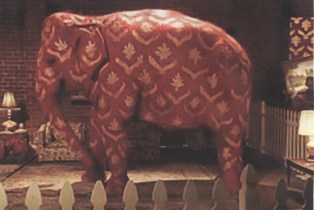
Elephant in room per Michalek

Mind you, I don’t mean to suggest that the topic of political contributions has been totally ignored by our intrepid legislators. Erie County legislators have managed to slip into their latest Code of Ethics proposal a provision meant to shield county officials from any suggestion that political contributions – even if they violate the state’s election law – are to be considered “gifts” intended to influence the performance of an elected official’s duties:

“Proposed Code of Ethics, Section 6(a) … For purposes of this sub-section, the term “gift” shall not include … (viii) contributions reportable under article fourteen of the Election Law, including contributions made in violation of that article of the election law; …”

Please note that I am not suggesting that a municipality’s code of ethics is the appropriate mechanism to address as vexing and complicated an issue as the corrupting impact of political contributions on the integrity of our democratic institutions. On the other hand, I would find it terribly refreshing if one of our elected officials were to decide that a political contribution offered to her or him appears to be an improper attempt to influence her/him in the conduct of her/his office, and files an official report pursuant to Section 11 – “Duty to report” – a provision found in both the current and proposed county code of ethics:

“Section 11.      Duty to report.

Every county office or employee shall report to the Erie County Board of Ethics, district attorney and county attorney any action which may reasonably be interpreted as an improper attempt to influence him in the conduct of his office.”

II. The proposed Code of Ethics – exceeding its authority.

The county’s authority to adopt a code of ethics is found in Article 18 of the state’s General Municipal Law [GML], entitled “Conflicts of Interest of Municipal Officers and Employees.” GML Section 806 provides the following instructions:

GML Section 806. Code of ethics. 1. (a) The governing body of each county, city, town, village, school district and fire district shall … adopt a code of ethics setting forth for the guidance of its officers and employees the standards of conduct reasonably expected of them… Codes of ethics shall provide standards for officers and employees with respect to disclosure of interest in legislation before the local governing body, holding of investments in conflict with official duties, private employment in conflict with official duties, future employment and such other standards relating to the conduct of officers and employees as may be deemed advisable. Such codes may regulate or prescribe conduct which is not expressly prohibited by this article but may not authorize conduct otherwise prohibited… [Emphasis added.]

[Here’s the entire text of GML Article 18: General Municipal Law Article 18.  And, here’s a brief history of NY’s “conflict of interest” legislation included in a hand-out I prepared in 2005 for a NYS Bar Association Continuing Legal Education program: GML Art. 18 – AJG’s CLE outline June 2005.]

In an opinion letter dated February 14, 2018, County Attorney Michael A. Siragusa advised the Erie County Legislature of his conclusion that “there is no evident conflict” between the proposed Code of Ethics and the ethics laws enacted by the NYS legislature. [Here’s the County Attorney’s letter: Code of Ethics 02-14-18 Dept of Law letter.]  I respectfully disagree:

A. Failure to prohibit “conflicts of interest” banned by GML Article 18.

The heart of Article 18 of the state’s General Municipal Law is found at GML Section 801, titled “Conflicts of interest prohibited.” That provision – with exceptions found at GML Section 802 – expressly prohibits a municipal officer or employee from having “an interest in any contract with the municipality of which he is an officer or employee” when such officer or employee, individually or as a member of a board, has the power or duty to: “(a) negotiate, prepare, authorize or approve the contract or authorize or approve payment thereunder (b) audit bills or claims under the contract, or (c) appoint an officer or employee who has any of the powers or duties set forth above.”

Amazingly, neither Erie County’s current Code of Ethics, nor the proposal now under consideration, includes this ban against a county officer or employee having an “interest” – defined as “a direct or indirect pecuniary or material benefit accruing to a covered individual or his relative” – in a contract with Erie County. Rather than prohibiting the proscribed “conflicts of interest,” county lawmakers (as set forth at Section 5, “Disclosure of interest in county business”) merely require a county officer or employee with an interest in an actual or proposed contract with the county to: (i) “publicly disclose the nature and extent of the interest in writing”; (ii) “consider divesting himself of the interest, if he can do so without undue hardship” (with the conflicted officer or employee’s conclusion in that regard being “conclusive”); and, (iii) “If he does not divest himself of that interest, he must abstain from participation in such action.”

By allowing elected officials and other county officers and employees to decide whether they wish to divest themselves of an interest in a county contract, rather than prohibiting the conflict, the current and proposed codes violate GML Section 806 by, in effect, “authoriz[ing] conduct otherwise prohibited” by GML Article 18. I suggest that our county lawmakers, as well as the County Attorney, go back to the statute that authorizes (and, mandates) a code of ethics, and slowly and carefully read the “Conflicts of interest prohibited” provisions.

Constructiin and Corruption logo

B. Failure to include GML Article 18’s “Contracts void” provision.

Reflecting the significance of its prohibition against conflicts of interest, GML Article 18 makes contracts intentionally entered into despite a prohibited conflict of interest “null, void and wholly unenforceable”:

“GML Section 804. Contracts void.

Any contract willfully entered into by or with a municipality in which there is an interest prohibited by this article shall be null, void and wholly unenforceable.”

It appears that Erie County’s lawmakers have willfully excluded this fundamental provision from the county’s Code of Ethics, and, in doing so, have authorized contracts prohibited under GML Article 18.

C. Requiring financial disclosure by candidates for elected offices.

The language is less than clear, but the current and proposed code of ethics compel candidates for elected office to file extensive financial disclosure statements. While it may be beneficial to voters (and, to incumbents facing a challenger) for candidates to publicly disclose their financial information prior to election day (after all, many Americans wanted presidential candidate Donald Trump to make his tax returns public), the issue for county lawmakers is whether they possess the authority to require candidates for elected office in Erie County, as part of the county’s ethics code, to file financial disclosure statements.

I have no knowledge of any court decisions addressing this legal issue. In my opinion, the answer is pretty clear: GML Article 18, at Section 811, only authorizes a municipality – such as the County of Erie – to require the filing of financial disclosure statements from two categories of individuals: municipal officers, employees, and elected officials, on one hand, and local political party officials, on the other. There is no authority – at least in GML Article 18 – to compel such disclosure by candidates for elected office.

III. The proposed Code of Ethics – exclusion of unpaid officials.

GML Article 18’s definition of “municipal officer or employee” is appropriately broad, and includes an officer or employee “whether paid or unpaid,” as well as “members of any administrative board, commission or other agency” of the municipality. In doing do, it ensures that conflict-of-interest and disclosure provisions apply to individuals who serve without compensation on administrative and policy-making boards – individuals who often are well-connected politicos, influential business women and men, and/or campaign contributors.

Additionally, the state’s conflict-of-interest law expressly includes members, officers and employees of a municipality’s “industrial development agency” as a “local officer or employee” required to file an annual financial disclosure statement.

County lawmakers have chosen to limit the term “employee” to a person “who receives a salary or wage” from Erie County. They also have not mentioned in their definition of “officer or employee” whether the term applies to the members, officers and employees of the Erie County Industrial Development Agency [ECIDA].

While members of the ECIDA board of directors are not compensated, they possess the power to dole out millions of dollars in tax abatements and other forms of “corporate welfare” to Erie County businesses and organizations. As legislator Lorigo expressed in a press release when he was appointed to the ECIDA board: “The ECIDA can have a significant impact on our community, providing valuable incentive programs that will make Western New York stronger for the long-term.” [Note: Mr. Lorigo is no longer on the ECIDA board.] Given the policy-making powers of the ECIDA, the updated Code of Ethics must make it clear that the code’s financial disclosure provisions apply to the ECIDA members and staff.

DSCN9111

Clarification is also needed on the status of members of the county’s Board of Ethics. As with ECIDA members, appointees to the Erie County Board of Ethics are uncompensated, but possess significant discretionary powers. The public has the right to know as much as possible about the financial, family, political, and business connections of individuals entrusted with the authority to pursue – or not – county officers and employees accused of violating the code of ethics.

IV. The proposed Code of Ethics – making Board of Ethics even more political?

The current Code of Ethics calls for a six-member Board of Ethics. Each member is appointed by the county executive subject to confirmation by the county legislature, and all six members possess full voting powers.

In contrast, the current proposal would increase the size of the board to eight members, five of whom would be full voting members appointed by the county executive subject to confirmation by the county legislature, and three of whom would be non-voting “ex-officio members.” One ex-officio member would be appointed by the Chair of the Erie County Legislature (currently, Peter J. Savage, III), one by the Legislature’s Majority Leader (currently, April N.M. Baskin), and one by the Legislature’s Minority Leader (currently, Joseph C. Lorigo).

I can’t help but question the wisdom of this change. Given the sensitive and confidential nature of Board of Ethics proceedings, what constructive role would non-voting members play? How would the investigation of alleged ethical violations be enhanced by the presence of individuals who would almost certainly act as his or her appointee’s “eyes and ears”?

Conclusion

Our elected officials and their advisors must invest as least as much time and energy to ensure compliance with the letter and spirit of Article 18 of New York’s General Municipal Law – the source of their authority to adopt and amend a code of ethics – as they have drafting and quibbling over what is or isn’t an acceptable gift. If they do, the public might actually regain some confidence in government.

With All Due Respect,

Art Giacalone
The “Heart of SEQRA” – the Environmental Impact Statement – at the verge of extinction

Posted by Arthur J. Giacalone on February 12, 2018
Posted in: Andrew Cuomo, City of Buffalo, Development, SEQRA, SolarCity. 2 Comments

[A version of this post is published at page 8 of the print and digital version of the February 14-20, 2018 edition of “The Public” under the headline, “The Endangered Environmental Review”:  https://issuu.com/dailypublic.com/docs/public_y18w7web.  Once again, my thanks to Geoff Kelly, the publication’s editor-in-chief, for extending the reach of this humble blog.]

ZERO. That’s the number of times during the entirety of 2017 that a city, town, village, industrial development agency, school district, or any other local government agency in ERIE COUNTY issued a “Positive Declaration” and required preparation of an Environmental Impact Statement (EIS) under the State Environmental Quality Review Act (SEQRA) prior to approving a proposed development project, enacting a new law, or adopting a change in land use policy.

ZERO. That’s also the number of times in 2017 a local government agency in NIAGARA COUNTY issued a “Positive Declaration” and required preparation of an EIS for a proposed project or law.

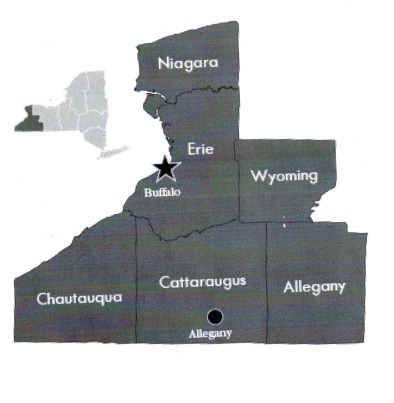
As a matter of fact, a review of the Environmental Notice Bulletin [ENB] – published by the New York State Department of Environmental Conservation [DEC] – reveals that during 2017 only TWO Positive Declarations requiring a proposed action to undergo the EIS environmental review process were issued for proposed projects and laws in the six counties comprising DEC’s Region 9 – Allegany, Cattaraugus, Chautauqua, Erie, Niagara, and Wyoming counties.  [See here and here.]

CCI021218

And it’s not only the hundreds of local agencies in the six-county “Region 9” area that spent an entire year without requiring a project sponsor – including the government entities themselves – to prepare an Environmental Impact Statement. Not one New York State agency issued a Positive Declaration during 2017 for an action proposed for Region 9’s six counties. Not the NYS Office of Parks, Recreation and Historic Preservation. Not the NYS Urban Development Corporation/Empire State Development. Not even the DEC, the state department entrusted with the duty of promulgating SEQRA regulations and protecting NYS’s environment and its human and community resources. [Click here for my compilation of DEC Region 9 – 2017 SEQR and Other Notices]

The EIS is accurately characterized by NY’s courts as “the heart of SEQRA.” It is a document which provides government agencies, the project sponsor, and the public a means to systematically consider potential environmental impacts, alternatives to a proposed action, and appropriate mitigation measures to eliminate or substantially reduce adverse impacts. Whenever a proposed project or policy – referred to by SEQRA as an “action” – may have the potential for one or more significant adverse environmental impact, the SEQRA mandates that the “lead agency” issue a “Positive Declaration” and require preparation of a draft EIS.

But the letter and spirit of SEQRA are being avoided – not followed – by local or state agencies. For example, the desire of the City of Buffalo to be “developer friendly” and place virtually every land use project on a “fast track” to approval has led even the most conscientious member of the city’s Planning Board – Cynthia Schwartz – to apologize to a developer’s lawyer during a public hearing for even mentioning her belief that a massive project on the shore of Lake Erie needed an EIS.

And it doesn’t matter how large a proposed project is, or how sensitive ecologically the site of the proposed development may be. In 2014, Gov. Andrew Cuomo’s administration – with the College of Nanoscale Science and Engineering serving as “lead agency” – allowed construction to proceed at the 90-acre, nearly one-million square-foot manufacturing and research and development complex at South Buffalo’s RiverBend site without preparation of an EIS. This glaring disregard of SEQRA’s requirements occurred despite the project’ location along the Buffalo River’s highly sensitive “Area of Concern” (AOC), one of the most toxic hotspots in the Great Lakes region.

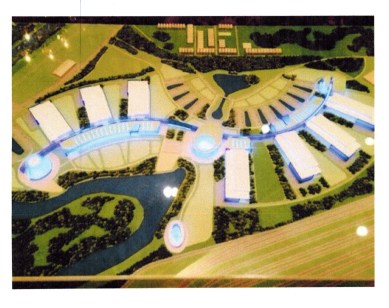
Innovation Hub model

Given the State’s approach to the Riverbend project, it’s not surprising that the Governor’s economic development engine, Empire State Development, concluded in April 2017 that an Environmental Impact Statement wasn’t needed for the proposed Athenex Manufacturing Project in the Chautauqua County Town of Dunkirk. After all, how could there possibly be a potential adverse impact to the environment when clearing a 33.5-acre site near Lake Erie and constructing a 40-foot high, 320,000-square-foot pharmaceutical manufacturing facility housing manufacturing, warehouse, laboratories, office and central utilities spaces?

The paucity of EISs should be troubling to anyone who cherishes NY’s natural and manmade resources, who believes that our government officials and agencies are obligated to objectively and fairly comply with state law, or who believes that zoning, land use, and development decisions should be made by fully-informed agencies following meaningful public scrutiny and review.

With All Due Respect,

Art Giacalone

Confidence in judicial integrity takes another blow – but don’t tell Ralph Lorigo

Posted by Arthur J. Giacalone on January 22, 2018
Posted in: Judiciary, Ralph Lorigo. Leave a comment

[A version of this post is published in the January 24, 2018 edition of “The Public” under the headline, “A Conservative Party Payday“.  My thanks to Geoff Kelly, the publication’s editor-in-chief, for extending the reach of my humble blog.]

Political analyst Bob McCarthy reports in the January 21, 2018 Sunday Buffalo News that one of the final actions taken by recently-retired Erie County Surrogate Judge Barbara Howe was to appoint Ralph C. Lorigo and Philip Tantillo trustees for the Statler Foundation. The newspaper version of the article contains the headline, “Architects of Mosey victory get trustee posts,” and – in contrast to the BuffNews website – the following subheading:  “Statler Foundation appointments raise questions about judicial elections”

In support of the suggestion of a possible link between the appointments to the independent foundation’s board – which most likely will earn Messrs. Lorigo and Tantillo annual stipends of approximately $20,000 for life – and the integrity of New York’s system for electing judges, McCarthy’s article provides the following facts:

    “When Acea M. Mosey began planning to succeed Barbara Howe as Erie County surrogate judge several years ago, political advisers emphasized two important steps.        

    Secure backing from the county’s top political chairmen to ensure an uncontested election in 2017, they said, and raise enough money to scare off anyone even contemplating a primary challenge.                                                                                                                              

    She followed the advice to a tee and glided through the November election to the bench.   

    Now, two of the key architects of that strategy are surfacing in a new way. Ralph C. Lorigo and Philip Tantillo have been appointed trustees for the Statler Foundation and stand to earn stipends of between $18,000 and $20,000 a year for the rest of their lives. 

    Howe, whom Mosey calls her mentor, last month named made the appointments in one of her last official acts as surrogate.

    Lorigo, the Erie County Conservative chairman, joined with Republican and Democratic leaders last year to bestow early endorsements on Mosey and deter any others from entering the race.

    Tantillo, Mosey’s treasurer, then raised more than $900,000 for her campaign — the richest judicial treasury in Western New York history. That sum also scared off anyone thinking about the surrogate’s race. …”                                                                                

Whether or not a specific legal or ethical rule has been broken, I find the Statler Foundation appointments surprising and gravely disappointing. When I appeared a couple of decades ago before Barbara Howe in her capacity as a State Supreme Court Justice, she left the impression of a conscientious and cautious jurist. Judges – at the brink of retirement or otherwise – are obliged to uphold the integrity and independence of the judiciary. [See Section 100.1 of the Rules of Judicial Conduct, 22 NYCRR 100.1.] That should mean – in my professional opinion – avoiding not only impropriety, but even the appearance of impropriety.

The standard I’m expressing is by no means an extreme one. Its source is Section 100.2 of the rules of judicial conduct:

Section 100.2. A judge shall avoid impropriety and the appearance of impropriety in all of the judge’s activities.

(A) A judge shall respect and comply with the law and shall act at all times in a manner that promotes public confidence in the integrity and impartiality of the judiciary.

(B) A judge shall not allow family, social, political or other relationships to influence the judge’s judicial conduct or judgment.

As defined in the judicial conduct rules, an independent judiciary “is one free of outside influences or control.” Impartiality denotes absence of bias, whether for or against a person or class of people. And, not surprisingly, a judge making appointments is required to exercise her or his power “impartially”, “on the basis of merit”, and without “favoritism.” [See Sections 100.0(R) & (S) and 100.3(C)(3) of the Rules of Judicial Conduct.]

[Click here to see 22 NYCRR Part 100  – the Rules of Judicial Conduct – in its entirety.]

According to Bob McCarthy’s article, Barbara Howe urged Acea Mosey – who had served as the surrogate court’s public administrator since 2005 – to run for the office of surrogate. As he had done for Howe in 2003 and 2013, Ralph Lorigo joined Erie County Democratic and Republican chairmen and endorsed Acea Mosey for surrogate – virtually guaranteeing an uncontested election.

Only the retired judge knows whether she allowed outside influences – including political relationships – to influence her judicial judgment. As portrayed in McCarthy’s article, the new trustees “never knew vacancies existed until notified by Howe.” If that’s so, one certainly can’t say that Howe allowed the wonderful things that Lorigo had done – to advance both her own career and the judicial ambitions of Mosey – to bias her against selecting them for the Statler Foundation appointment.

I’ve previously used this forum – and others – to express my displeasure with the way New York State goes about selecting (and, protecting) the women and men who enforce and interpret our laws. [See, my posts regarding this past November’s election, and the system generally.] But I will leave it up to others with more influential platforms than this blog to determine whether the former Judge Howe – in appointing Ralph Lorigo and Philip Tantillo to the coveted position of Statler Foundation trustees – acted “in a manner that promotes public confidence in the integrity and impartiality of the judiciary.” As proclaimed in the rules of judicial conduct: “An independent and honorable judiciary is indispensable to justice in our society.” [See Sections 100.1 of the Rules of Judicial Conduct.]

But before ending this post, I’d like to perform a public service. I believe that anyone interested in discussing the Statler Foundation appointments with Ralph Lorigo, and questioning how Judge Howe’s actions might reflect on New York’s judiciary, should be prepared for the Erie County Conservative Party chairman’s potential response.

While Chairman Lorigo is mightily proud of his political clout, he dearly longs to be appreciated for his lawyering and business skills. His desire to be respected on both fronts may help explain the “amused look” described by Matt Spina – a Buffalo News investigative reporter – in a May 26, 2012 article:

“Lorigo forms an amused look when asked about the clout he carries into a courtroom where the judge might covet the Conservative line, or he argues a zoning matter in a town where board members want his party’s backing. He thinks suspicions that he often gets his way because of his chairmanship are overblown.”

Ralph’s insistence that such claims are “overblown” ring a bit hollow given the biography he was using in May 2012 at his law firm’s website. The elder Lorigo’s bio included the following assertion:

“… Ralph has a very strong interest in New York State and local politics. … [H]e became Erie County Conservative Chairman in 1994, a position he still holds today. … As the longest sitting County Chairman in Erie County, Ralph has formed many long lasting relationships with town, county and state governmental officials, as well as a strong involvement in judicial races through [sic] Erie County…”

[Note: Such statements may be considered “attorney advertising” under NY court rules.  Click here to read Ralph Lorigo’s May 2012 website bio.] 

While Matt Spina’s press credentials may have insulated him from anything more offensive or revealing that “an amused look,” two interactions that I experienced with Ralph Lorigo – in his role as lawyer for developers – were a bit less pleasant.

In the fall of 2009, I commented in my capacity as a resident at a Village of East Aurora Village Board meeting regarding a proposed commercial project. Mr. Lorigo represented the project sponsor. I expressed my belief that there were elected officials in Western New York who, wishing not to offend the Chairman of the Erie County Conservation Party, appeared to bend over backwards to please him. Ralph rudely interrupted my comments from the rear of the meeting room, yelling out loudly and angrily something to the tune of, “Art, you better not go there!”

Little did I know that Mr. Lorigo’s words of anger at the East Aurora meeting were just a mild sampling of how the lawyer/political operative was capable of responding when he interprets comments as somehow questioning his legal skills and effectiveness.

On December 18, 2009, I appeared in State Supreme Court before the Hon. Joseph R. Glownia. Lorigo was opposing counsel. After hearing oral argument, Judge Glownia ruled against me. As he and I were walking out the courtroom, Ralph turned around and did something I had never encountered before (or since): he told me what I had done wrong to lose the case. I jokingly told Ralph that I disagreed with his conclusion, but would perhaps change my mind if I ever became as brilliant as him.

Ralph took a few steps outside the courtroom door, and, standing a foot away from me and shouting in my face, made references to my law school alma mater, and angrily and repeatedly called me an “A**HOLE,” telling me that I was out-of-line beginning with comments I had made at the Village Board meeting a couple months earlier. When I told Ralph that I believed what I expressed at the village board meeting, and that I wasn’t the only person with that opinion, he expanded his repertoire, shouting out loud – with a number of individuals nearby – that I was a “F***ING A**HOLE.”  [Note:  Given the extraordinary nature of Mr. Lorigo’s 12/18/2009 verbal assault, I sent him a letter memorializing my recollection of what had occurred. Click here to read my Dec. 23, 2009 letter to Lorigo .]

So, you may wish to tread gently if and when you decide to mention the trustee appointments to the Erie County Conservative Party chairman.

With All Due Respect,

Art Giacalone


Comfy and colorful under the dome – South Buffalo’s Botanical Gardens

Posted by Arthur J. Giacalone on December 31, 2017
Posted in: South Buffalo, WNY Photos. Leave a comment

DSCN9167 - CopyIf you’re not in a hurry, and are yearning for a respite from the frigid cold, or a peaceful place to help forget about a stressful 2017, here’s a sampling of the pleasures at South Buffalo’s gem, the historic Buffalo & Erie County Botanical Gardens:

DSCN9010 - CopyDSCN9008

DSCN9014 - Copy

DSCN9018

DSCN9029

DSCN9035

DSCN9038

DSCN9039

DSCN9043

DSCN9045

DSCN9046

DSCN9051

DSCN9052

DSCN9055

DSCN9065

DSCN9070

DSCN9073

DSCN9076

DSCN9077

DSCN9079

DSCN9086

DSCN9082

DSCN9092

DSCN9094

DSCN9088

DSCN9096

DSCN9099

DSCN9101

DSCN9102

DSCN9109

DSCN9111

DSCN9116

DSCN9117

DSCN9119

DSCN9122

DSCN9124

DSCN9125

DSCN9130

DSCN9131

DSCN9133

DSCN9132

DSCN9140

DSCN9141

DSCN9150

DSCN9030

DSCN9171

With All Due Respect (and, wishes for a surprisingly positive 2018),

Art Giacalone


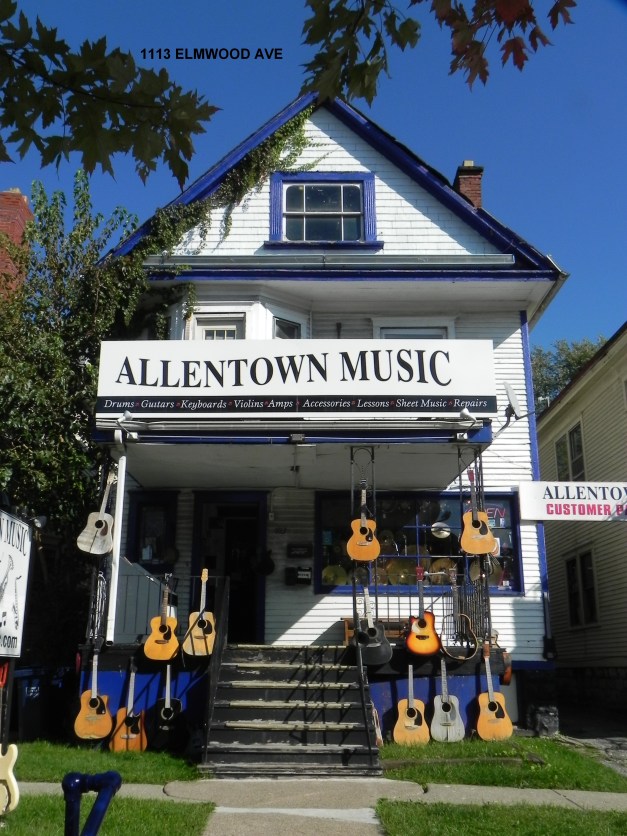
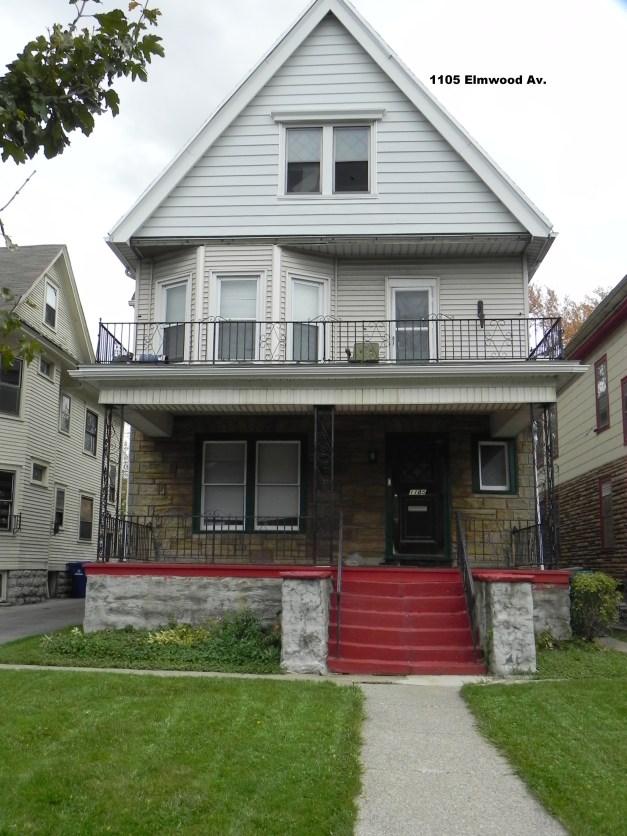
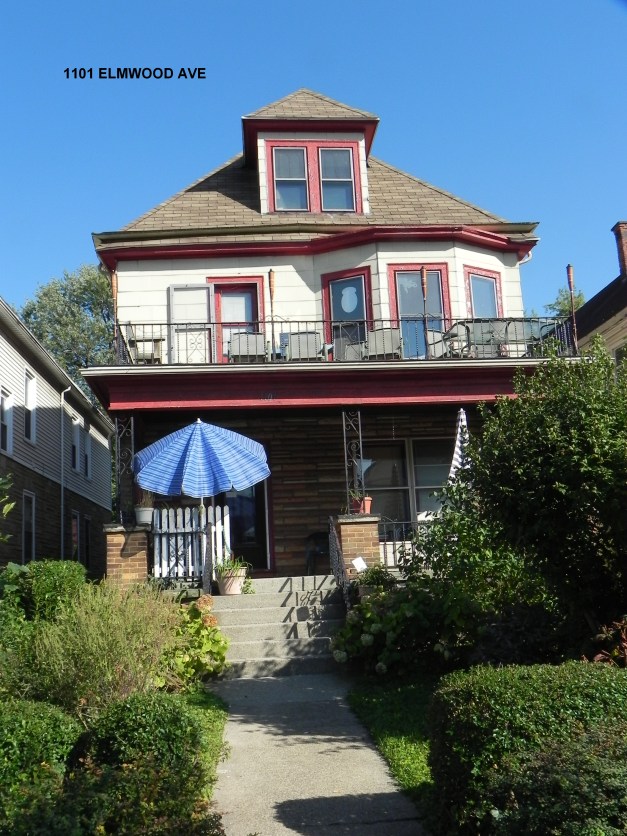
Devolution by design – Elmwood’s tattered urban fabric

Posted by Arthur J. Giacalone on December 27, 2017
Posted in: Byron Brown, Chason Affinity, Elmwood Village, Green Code, Political Contributions, Uncategorized. 4 Comments

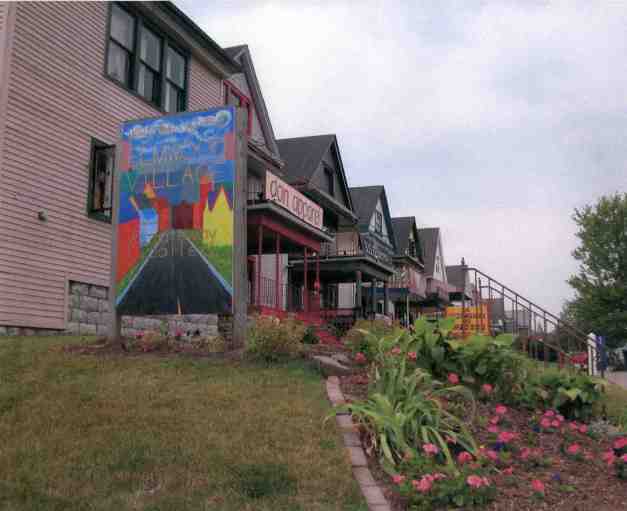
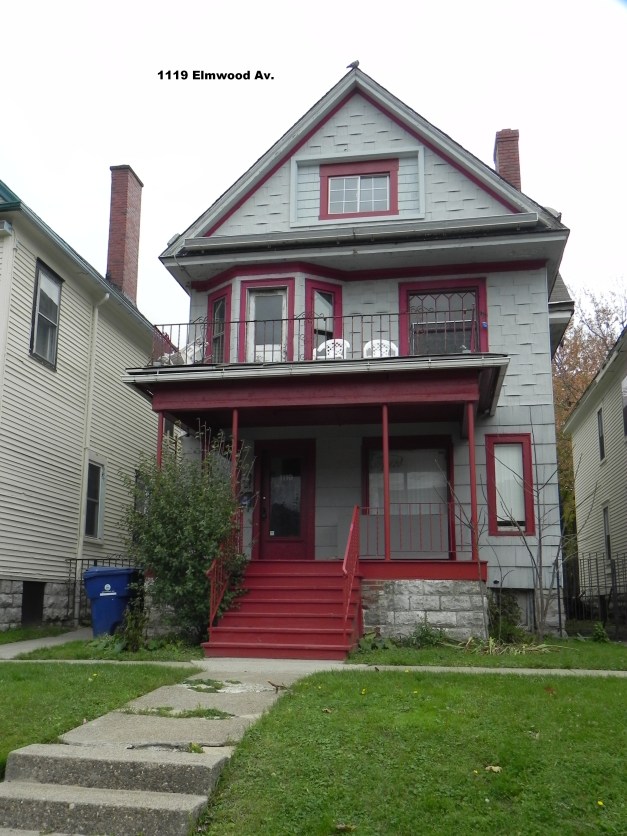
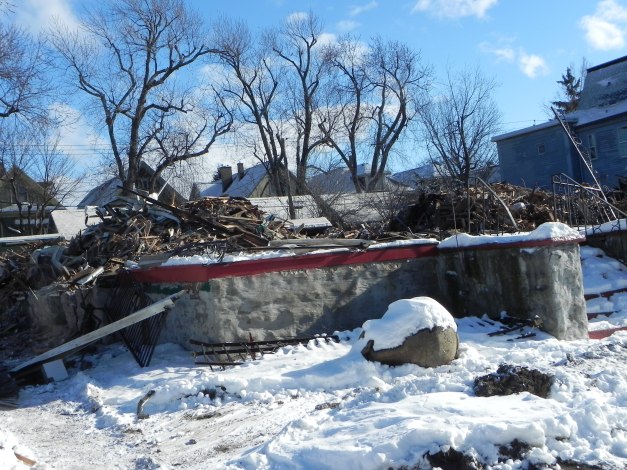
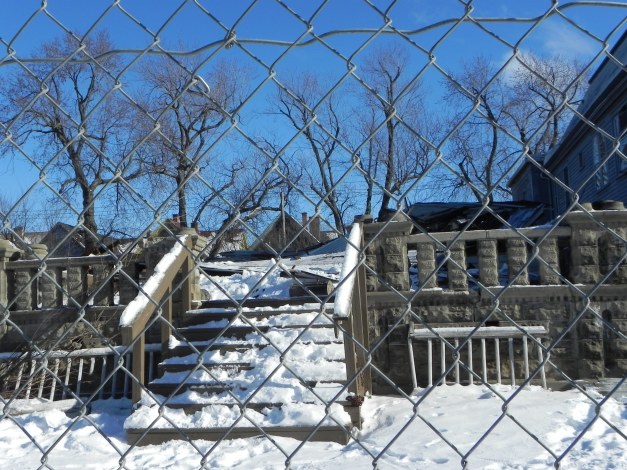
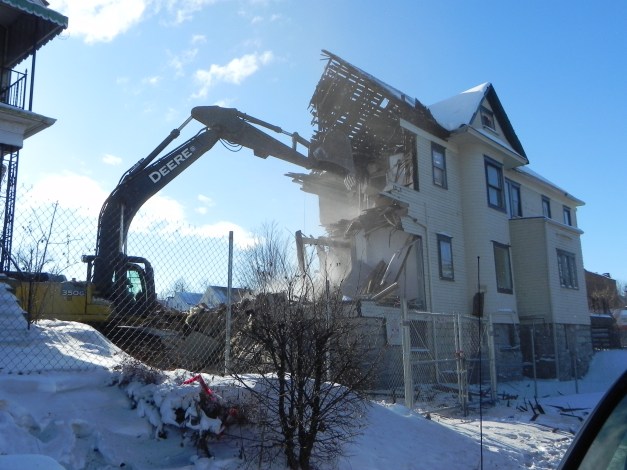
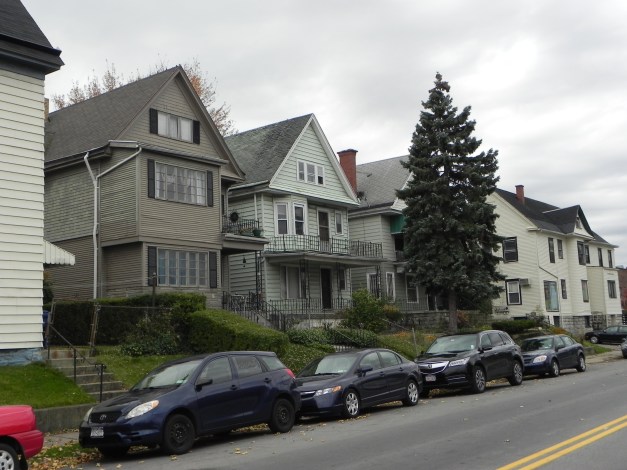
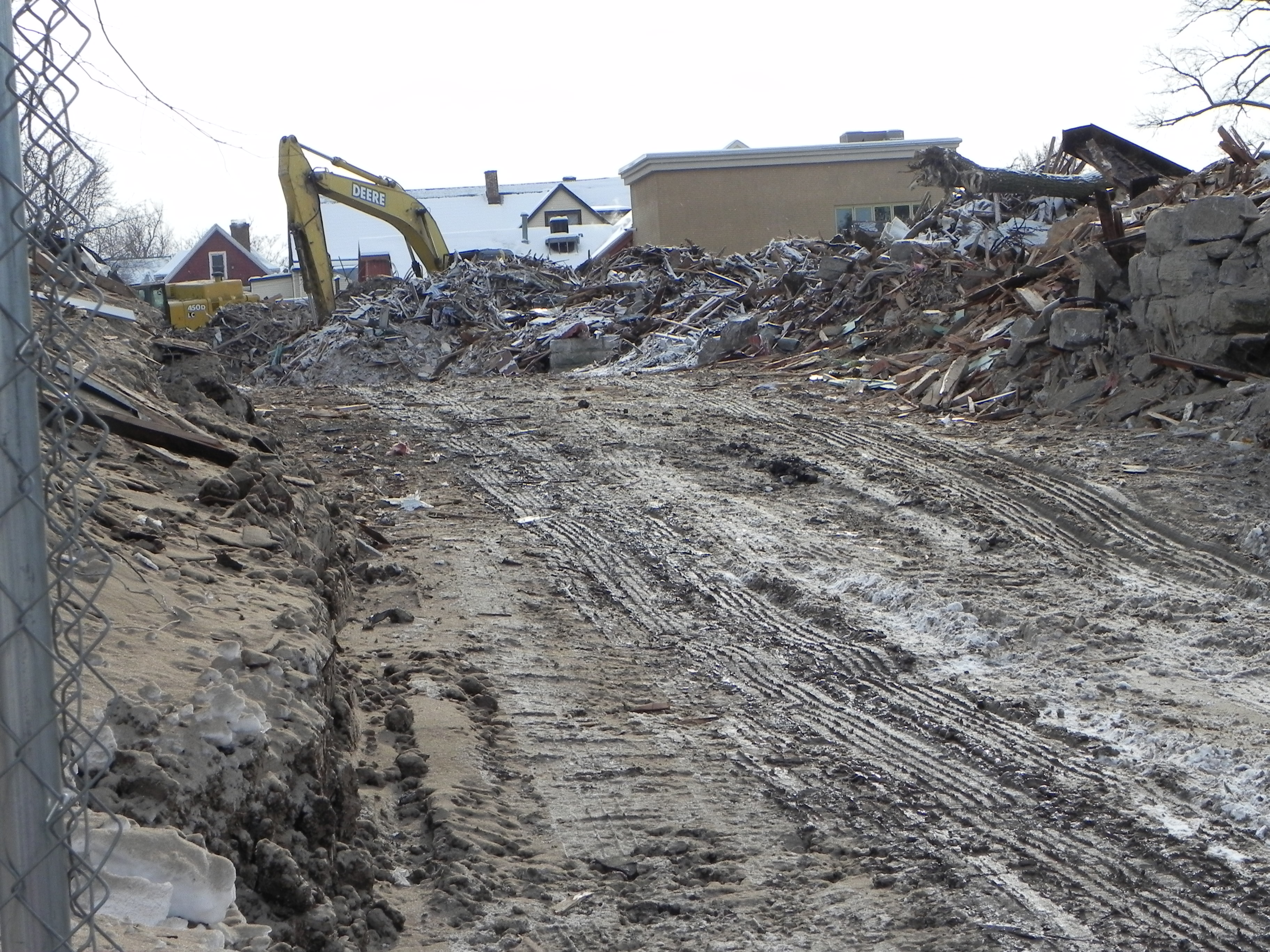
UPDATE Dec. 30, 2017:  When I originally posted this piece on 12/27, destruction of a dozen century-old buildings was still in progress at the southeast corner of Elmwood and Forest avenues.  Each structure that was being destroyed was a contributing resource to the nationally listed “Elmwood Historic District (East).”  [See SHPO’s 12-19-2016 letter]  Prior to Chason Affinity’s commencement of demolition activities, the Elmwood Historic District was “highly intact” and proudly represented the City of Buffalo’s turn-of-the-twentieth-century economic, social and architectural zenith.  I returned to the scene of destruction on December 29, and photographed the mud and mounds of rubble where two two-family residences had stood for a century on the south side of Forest Avenue between Elmwood and Granger Place.  I wanted to capture the image of “the last house standing” – the double owned by my friend and former client, Sandra Girage, who has courageously fought alongside her neighbors to preserve the character of the neighborhood she loves.  [I have added images of the Forest Ave. portion of Chason Affinity’s “devolution by design” at the end of this post.]  In my opinion – as the attorney who, until the latest judicial challenge, represented the opponents to the series of project’s proposed for the southeast corner of Elmwood & Forest – the multi-year legal, political, and judicial steps that have led to this inexcusable tattering of the Elmwood Village’s historic urban fabric epitomize the broken nature of Buffalo’s zoning, land use, and environmental processes.

DSCN8943

DSCN8954

elmwood-forest-looking-south-06-22-06

DSCN8971


Exh 4 - 1119 Elmwood Ave. 11-06-13

DSCN8969

exh-5-1115-elmwood-ave-11-06-13

DSCN89321113-elmwood-ave

DSCN8935

exh-9-1105-elmwood-11-06-13

DSCN8944

1101-elmwood-ave

DSCN8948

exh-11-1095-elmwood-ave-11-06-13

DSCN8951

Exh 76 - Front yards 1095-1121 Elmwood

DSCN8957

DSCN2319

DSCN8981

DSCN2316

DSCN9002

DSCN3695

DSCN3692

DSCN8990

DSCN2306

DSCN9000

THE LAST HOUSE STANDING ON THE FOREST AVE. BLOCK THAT WAS 100% RESIDENTIAL PRIOR TO CHASON AFFINITY:

DSCN8997

HERE’S WHAT’S COMING TO THE HISTORIC ELMWOOD VILLAGE:

rendering-of-affinity-project

Byron Brown photo

With All Due Respect,

Art Giacalone


Last-Minute gift idea for politicians, developers and contractors

Posted by Arthur J. Giacalone on December 21, 2017
Posted in: Development, Political Contributions, Political Corruption, Uncategorized. Leave a comment

Still trying to figure out what to give the equivocating elected official, demanding developer, or recently-indicted construction company executive on your holiday list? Perhaps a newly created board game, “Construction and Corruption,” is the answer.

The brainchild of Montrealer David Loach, “Construction and Corruption” is a negotiation game where players compromise, bribe, sabotage and cajole each other through four phases of interaction: contract creation, construction, mayoral election, and federal investigation. The primary goal is to maximize profits by delaying the actual completion of a project. No promises or bribes are binding.

Constructiin and Corruption logo

You may have some difficulty purchasing the game in time for this holiday season. While there is a prototype available at a premium, Mr. Loach and his partners have begun a Kickstarter campaign with hopes of having a $70 (Canadian) version on the market in the near future. [You can read a December 19, 2017 interview with David Loach on CBC radio’s “As It Happens” by scrolling down and finding the heading “Montreal Construction Game.”]

Me, I’m going to wait for a game that better reflects the true extent of the tawdry world of land use development. Mr. Loach presents a street-level view of construction-related shenanigans. I’m more interested in a realistic, multi-dimensional playing field where major developers provide sizeable donations to not only city officials, but to state executives and federal officials as well, and are rewarded with huge projects, a free-pass on environmental review, and, to the most-connected pillars of society, brownfield tax credits. It’s a world where longtime political foes can be silenced by sweetheart deals, zoning laws are deceptively written to empower developers and weaken the influence of city residents, and media publishers treat gentrification – the displacement of less-affluent residents – as “wholly desirable.”

In the immortal words of Michael Corleone (Al Pacino) to his sister Connie (Talia Shire) in Francis Ford Coppola’s The Godfather Part III: “All my life I kept trying to go up in society to where everything higher up was legal, straight. But the higher I go, the crookeder it becomes. Where the hell does it end.”

Happy Holidays!

With All Due Respect,

Art Giacalone

NY’s Flawed System of Selecting Judges on Display Election Day

Posted by Arthur J. Giacalone on November 7, 2017
Posted in: Judiciary. Leave a comment

I walked to my polling station early this morning proud to exercise my right and responsibility to vote. A number of specific races were of special interest to me, as was the referendum on whether to hold a constitutional convention.

I departed the polling place angry and disheartened, having left half my ballot empty.

I REFUSE TO CAST A MEANINGLESS VOTE!!! And, sadly, that is what selecting judicial candidates was today:  meaningless. We, the voters, were offered no selection. The political parties chose the candidates for each and every judicial position on the ballot, and the number of candidates listed NEVER exceeded the number of open positions.

For example, choosing two candidates for State Supreme Court when only two individuals are listed (no matter how good a choice they may be), is no choice at all. Similarly, selecting our next Surrogate Judge and having only one name to choose from is no option.

I wrote about the sorry nature of New York’s system of choosing judicial candidates in a May 11, 2016 post. Here’s what I said at that time:

New York’s unique system of selecting candidates for the general trial level judges – Supreme Court Justices – is truly troubling.

Ninety-five years ago, New York ceased using a primary election process for selecting candidates for Supreme Court Justices, and replaced it with party conventions in each of the state’s thirteen judicial districts. The political parties select the candidates for Supreme Court Justice (who are elected to 14-year terms) at conventions composed of delegates elected by party members.

This unconventional method for selecting the state’s most powerful trial judges – the men and women making decisions that directly impact the lives of New York’s citizens, corporations, and government agencies – is universally scorned. A recent editorial in the Buffalo News, under the headline “Corrupt system of selecting judges creates the potential for criminal activity,” called it a “wretched corruption-inducing system.” According to Western New York’s largest newspaper, “[I]n New York, judicial candidates practically have to prostrate themselves before party leaders and influential players in order to win a place on the bench.”

In 2003, New York City Mayor Michael R. Bloomberg was a bit more diplomatic, but equally biting. Suggesting that a lack of rigorous merit-based selection standards endangered the public’s trust and respect for the courts, then-Mayor Bloomberg correctly noted that the existing convention system allowed party leaders to virtually handpick the winning judicial candidates. In his words, “There is nothing wrong with being politically active, but knowing where the local clubhouse is should not be a prerequisite for becoming a judge.”  [See Bloomberg’s comments at pages “3” and “4” of a NYC Bar report.]

Perhaps the best known expression of disdain for New York’s judicial selection process came in 2008 from the pen of the Hon. Stephen Breyer, Associate Justice of the United States Supreme Court. While concurring with Justice Scalia’s opinion of the court in NYS Bd. of Elections v. Lopez Torres – which held that New York’s system for choosing party nominees for State Supreme Court does not violate the First Amendment – Justice Stevens, joined by Justice Souter, made the following observation:

     “While I join Justice SCALIA’s cogent resolution of the constitutional issues raised by this case, I think it appropriate to emphasize the distinction between constitutionality and wise policy. Our holding with respect to the former should not be misread as endorsement of the electoral system under review, or disagreement with the findings of the District Court that describe glaring deficiencies in that system and even lend support to the broader proposition that the very practice of electing judges is unwise. But as I recall my esteemed former colleague, Thurgood Marshall, remarking on numerous occasions: ‘The Constitution does not prohibit legislatures from enacting stupid laws.’”

Having spent forty years appearing before dozens of New York State Supreme Court Justices – on behalf of clients ranging from state prisoners, average citizens concerned about land use and environmental matters, and, on occasion, municipalities – I can state unequivocally that New York’s flawed method for selecting judges has not prevented some remarkably intelligent and ethical men and women from ascending to the bench. On the other hand, my clients and I have been subjected to some questionable conduct and decision-making over the years at the hands of Supreme Court Justices who are the product of this “wretched, corruption-inducing system.” [See, for example, two past posts at this blog:  https://withallduerespectblog.com/2014/01/13/and-on-the-410th-day-the-abuse-of-discretion-ended/ and https://withallduerespectblog.com/2015/04/09/justice-and-even-the-appearance-of-justice-eludes-peace-bridge-neighbors/.]

But New York’s judicial selection process is not the only problem for any New Yorker who, in the words of the Buffalo News, “cares about an upright judiciary and honest government.” From my perspective, the self-regulation and self-policing of the judiciary has contributed to an environment where less-than-ethical judges can get away with behavior that erodes the public’s trust and confidence in the courts.

[If this topic interests you, here’s a link to the remainder of my May 2016 post: https://withallduerespectblog.com/2016/05/11/nys-system-of-selecting-judges-isnt-the-only-obstacle-to-assuring-an-ethical-judiciary/.]

With All Due Respect,

Art Giacalone

Are there “very soft and very loose” subsurface conditions under the Outer Harbor’s Terminals “A” & “B”?

Posted by Arthur J. Giacalone on October 30, 2017
Posted in: Development, ECHDC, Gerald A. Buchheit Jr., Waterfront. Leave a comment

[Full disclosure:  I represent four City of Buffalo residents and environmental activists who are challenging the City of Buffalo Planning Board’s approvals for the 23-story tower Queen City Landing project at the former Freezer Queen site on the Outer Harbor.  The geotechnical report referred to in this post is part of the City’s “Certified Record” in the pending lawsuit in State Supreme Court, Erie County.] 

The Erie Canal Harbor Development Corporation (ECHDC) recently spent a chunk of the public’s money for an “Existing Conditions Assessment” of several of the agency’s Outer Harbor properties. (Here’s the August 2016 Executive Summary.)  A significant portion of the assessment focuses on the 50-acre “Terminal Complex” (that is, Ford’s Terminals “A” & “B”) at 901 Fuhrmann Blvd.

The Terminal Complex is located immediately north of, and adjacent to, the 20-acre Queen City Landing LLC (QCL) parcel – the former Freezer Queen site – at 975-1005 Fuhrmann.

QCL-Terminal Complex No. 1

The recently released Executive Summary discusses surveys and sampling of asbestos, hazardous materials, lead, and mold, as well as structural assessments of buildings, structures and slip walls. What is not mentioned is subsurface conditions. That omission is troubling given the content of the belatedly-revealed May 2016 Geotechnical Report prepared for the proposed Queen City Landing project by Empire Geo-Services, Inc., of Hamburg, NY.

The May 2016 report provides a detailed characterization of the soil, bedrock and groundwater conditions present at the former Freezer Queen site. The following facts and conclusions regarding the Queen City Landing site caught the eye of this non-engineer:

(a) The QCL site, which was originally part of Lake Erie, was reclaimed to the current site grades with various man-placed fill extending to depths ranging between 10 feet and 19 feet. The fill is contained within the existing marine bulkheads. The fill appears to have been placed in a generally random and uncontrolled manner, and was generally “not densified” in a controlled manner at the time of its placement. [501-503]

(b) “Medium to very soft and loose to very loose indigenous soils” were encountered below the existing man-placed uncontrolled fill, and were found to extend to at or near the top of bedrock. Bedrock was encountered in test borings at depths ranging between about 70.0 feet and 75.8 feet below the existing ground surface. [507] The medium-to-very-soft consistency clays were first encountered at a depth around 25 feet, and are “under-consolidated.” [502-504]

(c) The existing fill and underlying soft clay soils have “very marginal bearing capacity support” and would be “susceptible to excessive total and differential settlement” of a conventional spread or mat type foundation system, and are not considered suitable for the use of spread or mat type foundations to support the proposed 23-story building and parking ramp structures. [507]

(d) Due to the extensive amount of existing fill and the known soft soil deposits present in the area of the site, along with the anticipated heavy foundation loads, both the building and parking ramp structures are expected to be supported on a deep, driven pile foundation system bearing on the Limestone bedrock at depths ranging between about 70.0 feet and 75.8 feet below the existing ground surface. [507-508, 498]

(e) The expected settlement within the existing fill and indigenous soils, particularly the soft to very soft soils, due to the site filling, will need to be taken into account when sizing the selected piles for the foundation system. [510]

(f) The raising of site grades as much as 7 feet within the building and parking ramp areas, to establish at-grade level finished floor elevation of 583.0 feet, is expected to result in excessive post-construction settlement beneath the additional fill, potentially resulting in approximately 4-inches + of long term consolidation settlement. Due to the thickness of this highly compressible stratum, it is estimated that a period of around 3 to 7 years would be required for approximately 75% of the consolidation settlement to occur. [507-508]

(g) Freestanding water was observed in the test borings at depths ranging from 5 feet to 14 feet, corresponding to elevations ranging between 575.0 feet to 562.4 feet. It is possible that some perched or trapped groundwater could also be present in the upper more permeable fill soils, which overlie less permeable fill soils.

(h) Lake Erie is prone to a seiche effect (that is, an oscillation of the surface of the lake) from a strong sustained wind event out of the southwest, during which the northeastern end of the lake can rise several feet. These fluctuations can also occur in the groundwater levels along the adjacent shoreline. [505-506]

(i) Based on the subsurface conditions encountered in the test borings – that is, soft to very soft clays – the proposed Queen City Landing apartment/mixed-use building and parking ramp development site should be classified as Seismic Site Class “E” in accordance with the Building Code of New York State. [515, 504] [Note: Soft soils with slower shear-wave velocities generally produce greater amplifications of ground shaking than stiff soils with faster shear-wave velocities.]

The QCL partners, Gerald A. Buchheit, Jr., and RP Oak Hill Building Company Inc., did not make the geotechnical report available to the City of Buffalo Planning Board or the public prior to city’s decisions on May 31, 2016 to skip a SEQRA environmental impact statement for the 23-story tower project, and to approve the proposed 23-story mixed-use development without any conditions or mitigation measures.

QCL also neglected to submit its geotechnical report to the Planning Board in November 2016 when it applied to move the building 25 feet to the north due to (in the words of its lawyer) “constructability” issues.

Given that history, I presume that QCL has not sent the geotechnical report to the officials at ECHDC (with potentially troubling findings underlined and highlighted in yellow). After all, Buffalo Business First reporter Jim Fink wrote in a February 2016 article that Queen City Landing’s Gerry Buchheit has “expressed interest in the Port Terminal complex for a separate but related development to Queen City Landing.” Additionally, a September 2015 vision for a development called “TERMINAL PLACE at Queen City Landing” – attributed to the NFTA – expressed a plan to “coordinate simultaneous development with the neighboring Freezer Queen parcel creating a critical mass to revive the waterfront.”

QCL-Terminal Complex No. 2

[Note: It may merely be a coincidence, but the executive summary for the ECHDC’s “Existing Conditions Assessment” contains the following observation – at page 11 of 12 – “There is a section along the west side of the wall near the southwest corner showing more significant cracking and loss of fill material from behind the wall, which has led to a corresponding sinkhole in the parking lot at that location.”]

The ECHDC and the public need to know – sooner rather than later – whether the soils on the parcel adjoining the Queen City Landing site is comparable to the subsurface conditions described in the geotechnical report.  It is our job to make certain that the ECHDC doesn’t bury its collective head in these very soft and very loose soils in an attempt to avoid this significant environmental issue.

With All Due Respect,

Art Giacalone

Justice Paula Feroleto’s (indirect) role in furthering Chason Affinity’s project

Posted by Arthur J. Giacalone on October 7, 2017
Posted in: Chason Affinity, Elmwood Village, FOIL, Joel Feroleto, Judiciary, Paula L. Feroleto, JSC, Political Contributions. Leave a comment

I learned on October 6th that a member of the public (an individual who has never been one of my clients) made an incorrect comment at the October 5, 2017 public hearing before the City of Buffalo’s Preservation Board concerning the Hon. Paula L. Feroleto and Chason Affinity’s proposed project at the corner of Elmwood and Forest avenues. Justice Feroleto is the mother of Delaware District Council Member Joel Feroleto, who is a staunch supporter of Chason Affinity’s plans to demolish eleven century-old buildings that comprise an important and highly visible part of the Elmwood (East) Historic District (see SHPO’s 12-19-2016 letter) which is listed in both the State and National Registers of Historic Places.

I did not attend or have any involvement in the Preservation Board meeting – where, according to WBFO’s 10/06/2017 report), the board “unanimously rejected demolition permits for the buildings at Elmwood and Forest to make way for the Chason Affinity project”.  However, out of respect for Justice Feroleto and the neighbors who have fought for a decade to preserve the historic character of the Elmwood Village, I would like to share what I know about the role Councilmember Feroleto’s mother played – inadvertently, or otherwise – in making the current plans for the southeast corner of Elmwood and Forest possible.

recently-updated

I.  Joel Feroleto’s failure to disclose his communications with Chason Afinity

Before doing that, however, I would like to update my blog post from June 27, 2017 – entitled, “Disappointed by Councilmember Joel Feroleto.” Two of the factors that I found most discouraging about Joel’s handling of the proposed Chason Affinity project – known as “1111 Elmwood” – were the “timing of political contributions” he received from individuals affiliated with Chason Affinity’s project, and the Councilman’s “parroting of the developer’s positions.” As a result of these concerns, on June 8, 2017, I sent an email to the City Clerk (Gerald Chwalinski), the City’s Corporation Counsel (Timothy Ball, Esq.), the Common Council Interim Chief of Staff (Malcolm A. Ertha), and Councilmember Feroleto, making the following request for records pursuant to the Freedom of Information Law (FOIL):

All communications in written or electronic form (including, without limitation, correspondence, letters, memoranda, notes of meetings or conversations, emails, telephone messages, text messages, audio or video recordings,) between Councilmember Joel Feroleto or his staff and the Chason Affinity Companies, any of its affiliates (including, without limitation, Affinity Elmwood Gateway Properties, LLC), its officers and managers (including, without limitation, Mark Chason and P. Jeffrey “Jeff” Birtch), and/or its agents (including, without limitation, Steven Carmina and Steven J. Ricca, Esq.), from 09/01/2015 to 06/08/2017, regarding (1) any proposed development at the southeast corner of Elmwood & Forest avenues (including, without limitation “1111 Elmwood”); (2) the Green Code/UDO; and/or (3) required approvals at the Common Council, Planning Board, or Zoning Board of Appeals.

[See Feroleto FOIL – email to city officials 06-08-17  and FOIL Request by AJGiacalone 06-08-2017 .]

Despite the passage of four months, neither the city’s top lawyer, nor the Common Council’s chief of staff, nor Councilmember Feroleto, has responded to this request. Althouh the City Clerk did reply on June 9, 2017, he washed his hands of any obligation to provide the FOILed documents. According to Mr. Chwalinski, the City Clerk’s office “only maintains records that are filed for Common Council meetings.”

Not surprisingly, Joel did not submit his communications with Chason Affinity to the City Clerk’s office as part of the official record. That shouldn’t matter, however. The purpose of FOIL is to expose to the public the workings of government. Any records, documents, papers, notes, etc., in Joel Feroleto’s possession that relate in any way to the performance of his duties as a Common Councilmember – including his communications with Chason Affinity and its agents pertaining to the Elmwood/Forest project – constitute “agency records” and are subject to the rights of access conferred by FOIL.

[Note: See the opinion expressed by the Executive Director of the State’s Committee on Open Government, Robert J. Freeman, regarding a village trustee’s “private” papers, in FOIL-AO-13904.]

I urge Councilmember Feroleto’s constituents in the Delaware District to ask their elected official: Joel, with all due respect, what are you hiding?

II. Justice Paula Feroleto’s role in furthering Chason Affinity’s goals

A.  John Michalek’s retention of Chason Affinity’s “Commercial Division” lawsuit.

Since September 2009, Justice Feroleto has been the Administrative Judge for the Eighth Judicial District of New York State’s Supreme Court, which includes Erie and seven nearby counties. As reflected in her official biography, she is a well-respected jurist and administrator.

State Supreme Court includes a “Commercial Division” where a specified list of business-related cases are heard. An Eighth Judicial District justice is assigned to the Commercial Division for a three-year stint, and a “Court Attorney” assists the assigned justice in progressing the cases. Former (and, now-disgraced) State Supreme Court Justice John A. Michalek served as the Commercial Division’s judge from January 1, 2010 to December 31, 2012.

In September 2011, the law firm of Lippes Mathias Wexler Friedman LLP, commenced an action on behalf of an affiliate of Chason Affinity (Affinity Elmwood Gateway Properties LLC) in the Commercial Division seeking to extinguish restrictive covenants that burdened the parcels owned by Chason Affinity and many other lots in the vicinity of the southeast corner of Elmwood and Forest. The restrictive covenants, which date back to 1892, prohibit construction of a building for commercial use. [See Transcription of James N. Granger Deed No. 1 Daniel]  Because the case was brought in the Commercial Division, the case was assigned to Justice Michalek. The Commercial Division’s Court Attorney at the time was Anne S. Rutland, Esq.

On at least two occasions – around June and September 2012 – Ms. Rutland advised Chason Affinity’s lawyers and me that the pending lawsuit to extinguish the restrictive covenants would be re-assigned to the new justice taking over the Commercial Division on January 1, 2013. As the Court Attorney explained, the only Commercial Division cases that Michalek would retain were those scheduled for trial on or before June 2013. Chason Affinity’s lawsuit was scheduled for trial no earlier than October 2013.

On the second occasion that we were advised of the upcoming re-assignment, the Chason Affinity lawyer sitting across from Ms. Rutland – Brendan H. Little, Esq. – slumped in his chair and grimaced as if he had just learned that his pet dog had been run over by a car. I understood his concern. Throughout the first year of litigation, it appeared to me and my clients that John Michalek was representing plaintiff Chason Affinity, rather than acting as a neutral judge trying to objectively and fairly rule on the issues in the case. [Here are several examples: MICHALEK – 8 Examples to Share 05-30-14 ]

To my surprise, late in December 2012, I received a set of papers from Mr. Little and his supervising attorney, former State Attorney General Dennis C. Vacco, Esq., scheduling oral argument in January 2013 before Michalek, not the newly-assigned Commercial Division justice. When I asked Michalek why the case was not re-assigned, he smirked and said that the decision was made by the Administrative Judge – that is, Justice Feroleto.

I have no way of knowing how or why the decision was made to keep the restrictive covenant lawsuit in Michalek’s untrustworthy hands, or who spoke to whom, or what information was or was not shared with the Administrative Judge or her staff. But I had no doubt then – and, continue to have no doubt – that my clients’ efforts to prevent the extinguishing of the restrictive covenants had zero chance of succeeding (despite the merits of their position) as long as Michalek was the judge deciding the case.

B.  Refusal to re-assign restrictive covenant lawsuit despite “ex parte” communications.  

In December 17, 2013, I wrote to Justice Feroleto, sending copies to Michalek and opposing counsel. The letter requested a conference with the attorneys for the parties and Michalek to discuss whether there should be a re-assignment of Chason Affinity’s lawsuit following what, in my opinion, had been two improper ex parte communications between counsel for Chason Affinity and Justice Michalek or his court staff. Note: An ex parte communication is a conversation or communication between one party and a judicial officer without the other party being present. [Please note that at no time did I question the propriety of actions taken by Justice Michalek’s long-time Confidential Clerk, Lynn A. Clarke.]

Eleven months earlier I had provided Justice Feroleto with a copy of my clients’ motion requesting Michalek to disqualify himself from continued handling of the case. The motion had been preceded by a series of actions by Michalek that appeared to reflect either a partiality in favor of Chason Affinity, or hostility toward me or my clients. [I had never before taken such a step in my three-dozen years of practicing law.] One of Michalek’s transgressions was his imposition of a “gag order” prohibiting me from communicating with Kaleida Health, despite the fact that Kaleida was neither a party, nor a witness, to the restrictive covenant lawsuit. [Not surprisingly, Michalek refused to voluntarily step down from the case.]

Rather than conducting the requested conference, Justice Feroleto sent a letter to me and opposing counsel indicating her position that she lacked the authority to interfere with a case once it has been assigned. [About two weeks after Justice Feroleto’s decision to take no action, the Appellate Division in Rochester ruled that Michalek had abused his discretion in precluding me from communication with Kaleida, and vacated the order prohibiting my communications with the health care provider.  (Click here to see the letter-to-the-editor that I had written concerning Kaleida’s selection of Chason Affinity to redevelop the Gates Circle site of the former Millard Fillmore hospital.)  According to the appellate court, Chason Affinity had provided no evidence to establish that I had done anything unreasonable or improper, that I had misused the discovery process, or that I had harassed or unduly burdened Chason Affinity.]

It should be noted that former-Justice Michalek’s questionable actions occurred during the same time period that Michalek and political operative G. Steven Pigeon were allegedly engaged in “a mutually-beneficial relationship” that resulted in Michalek pleading guilty in June 2016 to bribery and filing a false instrument, as well as recently-announced federal charges of bribery, wire fraud and conspiracy against Pigeon.

In my opinion, by not re-assigning the restrictive covenant case, or, at a minimum, meeting with the parties and Michalek to send a message that she was keeping an eye on the proceedings, Administrative Judge Paula L. Feroleto – inadvertently, or otherwise – guaranteed that the Elmwood Village neighborhood would lose its most powerful weapon against unwanted commercial intrusion: the 1892 restrictive covenants.

rendering-of-affinity-project

With All Due Respect,

Art Giacalone

Dear Carl, It is time to quietly move on.

Posted by Arthur J. Giacalone on September 19, 2017
Posted in: Carl Paladino. Leave a comment

An open letter to Carl Paladino, former member of the City of Buffalo Board of Education:

Dear Carl,

Now that the Buffalo Board of Education has filled the seat you formerly held, I hope that you will set aside your legal battles – as difficult a decision as that may be – and focus your energy and desire to strengthen our community in a more constructive manner.

Your replacement – pediatric psychologist Catherine Flanagan-Priore – appears to be a dedicated professional with a true commitment to the children of Western New York, and much to offer Buffalo’s school children.

A significant segment of parents and residents of the city you proudly call home are exhausted by the torrent of acrimony and unpleasant news that has come to define their public school district. And the children of Buffalo will continue to be adversely affected if tax dollars are used – not to improve the quality of education – but to pay lawyers defending litigation you have brought in state and or federal courts.

Most importantly, I know how important your family is to you. As you stated in a Buffalo News article this past June, you regret the shame that you brought on your children following your controversial comments about Barack and Michelle Obama.

As long as you are battling Buffalo’s Board of Education (or, some of its members) in a public arena, the people of this city – and your family – will be reminded of, and embarrassed by, your incendiary words.

It is time to move on.

With All Due Respect,

Art Giacalone

Posts navigation

← Older Entries
Newer Entries →
  • CATEGORIES

  • February 2026
    M T W T F S S
     1
    2345678
    9101112131415
    16171819202122
    232425262728  
    « Nov    
  • DISCLAIMER

    This blog is provided for general informational purposes only. It should not be construed as legal advice and is not intended to be a substitute for legal counsel. Persons requiring legal advice should retain a properly licensed lawyer. No attorney-client relationship will be formed based on use of this site and any comments or posts to this blog will not be privileged or confidential. *************** This blog's author, Arthur J. Giacalone, does not intend or consider the communications at this blog to be ATTORNEY ADVERTISING. The primary purpose of the communication is not for the retention of Mr. Giacalone's legal services. [See definition of "Advertisement" at Part 1200, Rules of Professional Conduct, Rule 1.0(a).] Nonetheless, in case the proper authorities choose to treat this web site as ATTORNEY ADVERTISING, the street address, phone number and email address of the law office of Arthur J. Giacalone are: 17 Oschawa Avenue, Buffalo, New York 14210; (716) 436-2646; AJGiacalone@twc.com.
Blog at WordPress.com.
With All Due Respect
Blog at WordPress.com.
  • Subscribe Subscribed
    • With All Due Respect
    • Join 62 other subscribers
    • Already have a WordPress.com account? Log in now.
    • With All Due Respect
    • Subscribe Subscribed
    • Sign up
    • Log in
    • Report this content
    • View site in Reader
    • Manage subscriptions
    • Collapse this bar
 

Loading Comments...