With All Due Respect

Photos and musings by Arthur J. Giacalone

  • About The Author
  • About This Blog
  • Pre-WADR Archives

Reasons to remember February 26, 1919

Posted by Arthur J. Giacalone on February 25, 2019
Posted in: Giacalone family, Native American. 3 Comments

Two events of historic note occurred a century ago on February 26, 1919:

Congress names the Grand Canyon in Arizona a National Park.

It was a hundred years ago on the 26th of February 1919 that Congress designated the Grand Canyon a national park.  People from across our nation and the globe consider it a geologic “wonder of the world” and a must-see tourist destination.  An estimated five or six million recreational visitors venture annually to northwestern Arizona to see and experience the Grand Canyon – on foot, by mule, in boats, and even on a glass-bottom skywalk.  No doubt, to a large percentage of these tourists, a hundred years seem like a substantial period of time.

grand-canyon-skywalk [image from the internet]

gran canyon mules on steps

[images from the internet]

But, as a recent npr report reminds us, “long before it became a national park, the Grand Canyon was a place many Native Americans called home.”  How long, one might ask?  The following statement at the Grand Canyon’s official website places the passage of a single century into its proper context:

“The oldest human artifacts found [within the park’s boundaries] are nearly 12,000 years old and date to the Paleo-Indian period.  There has been continuous use and occupation of the park since that time.”

Many Native Americans continue to call the Grand Canyon home.  But, as the npr report underscores, Native Americans have had “a really long, bitter relationship with the park.”  That “relationship” has included forced removal and sequestration.

And tensions continue today.  As noted at the canyon’s website, “The park’s 11 Traditionally Associated Tribes and historic ethnic groups view management of archeological resources as preservation of their heritage.”  And, as reported on npr, tribal leaders seek not only an opportunity to tell their stories, but also economic empowerment.

Congress designates Maine’s Acadia (then, Lafayette) the first National Park east of the Mississippi River.

Its name was changed in 1929 to Acadia, but on February 26, 1919, Congress also formed Lafayette National Park, the first national park located east of the mighty Mississippi.  In contrast to the massive Grand Canyon park, which covers 1.2 million acres, Maine’s Acadia National Park encompasses just over 49,000 acres in three main areas, the largest located on Mount  Desert Island, a short causeway from the mainland.

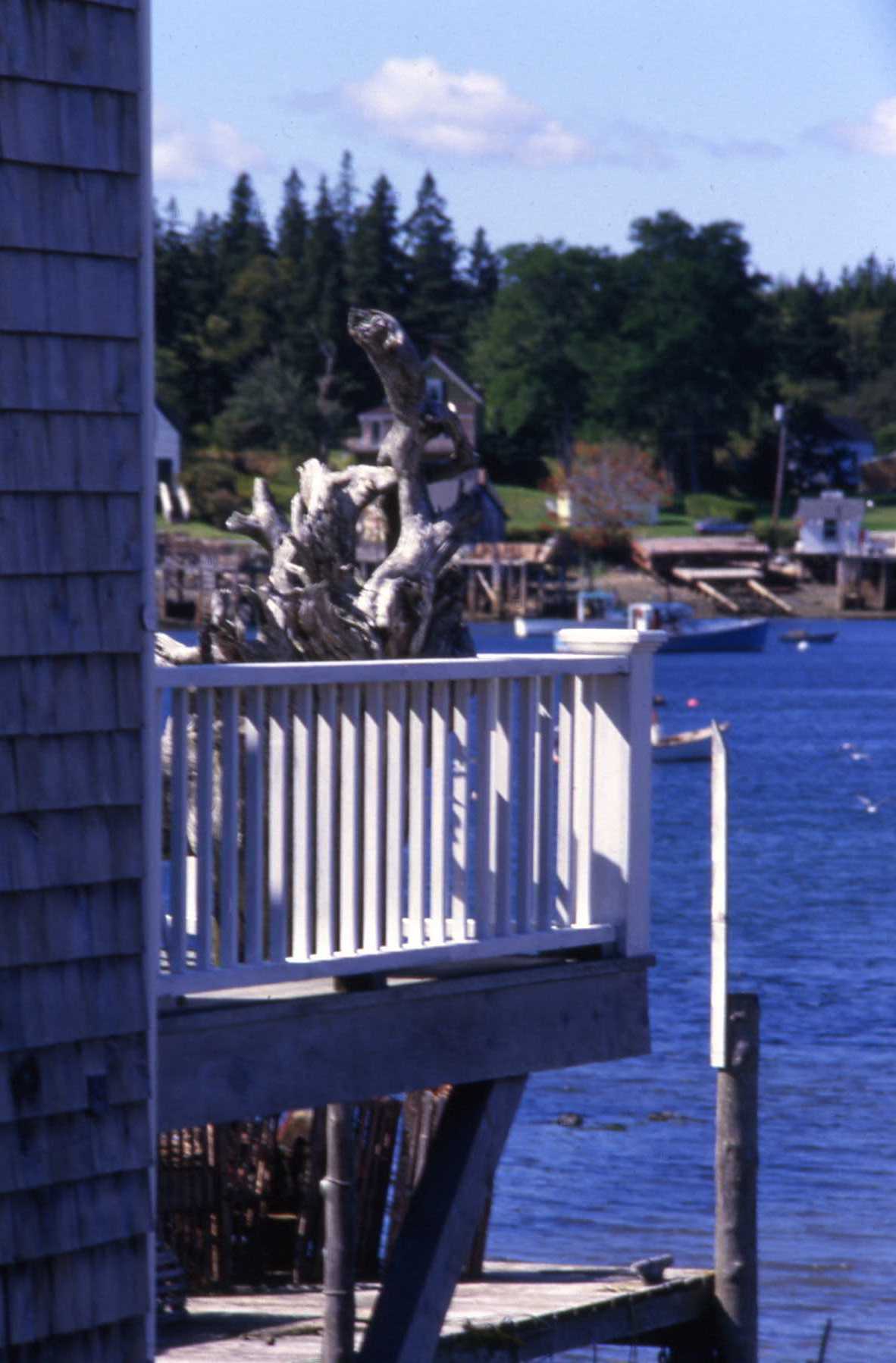
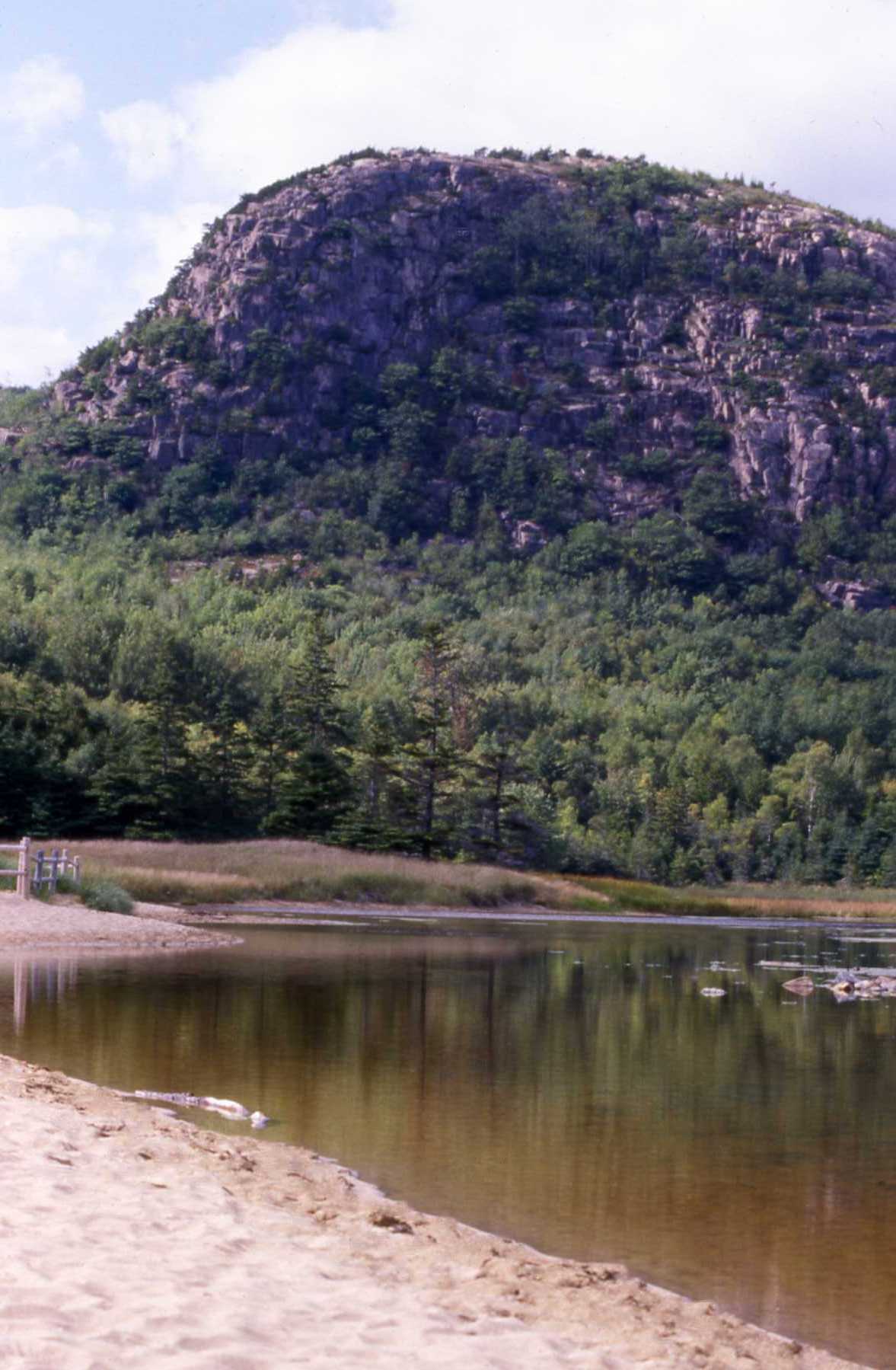
Although I have yet to visit the Grand Canyon, I know and appreciate Acadia’s scenic beauty – rocky coastlines, pristine ponds and lakes, granite mountains, secluded sandy beaches.  Thanks to dear Buffalo friends, Franca and the late Robin Bannerman, I frequently stayed (starting in the early 1980s) at their rustic cottage in Bass Harbor on  “the working-side” of Mount Desert Island.

Rocks with artist

Balcony

Seagull blues

Purple Hill 2

River Bank

Although, admittedly, I didn’t give thought to it while enjoying the beauty of Mount Desert Island, I now can’t help but wonder when it was that Native Americans first hunted and lived on lands that we now call Acadia National Park.  How long did they remain on this land following the arrival of Europeans to their rocky coast?

Curiously, Acadia’s website omits any references to what was occurring on Mount Desert Island and the nearby coastline area prior to the nineteenth century.  Instead, we are told that “we have all inherited these hallow grounds from those dedicated visionaries who came before us” –  not indigenous people, but wealthy philanthropists who “anticipated the dangers that over-development would bring to this coastal wonderland.”  Hopefully, I’ll have the opportunity in the foreseeable future to investigate the pre-colonial history of the lands included in Acadia.

But now I’d like to share with you a very personal reason that February 26, 1919 holds such significance to me.  It was the day my father was born.

The birth of my father, Arthur P. Giacalone (1919 – 2008).

My father was born on February 26, 1919 in Lodi, New Jersey to Sicilian immigrants, Ignatio and Virginia (D’Amore) Giacalone.  He was the fifth of five children, and remained, for better and for worse, “the baby” of the family his entire life.

1 - Arthur P. Giacalone's Mother & Father

[This is the only photo we have of my father’s parents, Virginia and Ignatio.  Sadly, we have no pictures of my father as a child.]

Attilio was Dad’s given name, a fact I was unaware of until I was perhaps 10 or 11 and asked him why my grandmother would often call him “Tee-lee.”  According to my father, his first- grade teacher refused to call him Attilio because it was such “a silly name,” and insisted on using the name Arthur.  The moniker stuck, at least when he was outside of his mother’s earshot.

As with most first-generation immigrants, the Giacalone family struggled to make ends meet. Although my father rarely complained about his childhood, I can recall him mentioning on several occasions how embarrassed he felt when classmates would tease him because of the worn, hand-me-down, wooly knickers he would wear to school, around the neighborhood, and when accompanying his father peddling produce. It’s no wonder that Arthur P. looked so baffled when his teenage sons insisted on wearing torn and ragged jeans in the 1960s

My paternal grandfather, Ignatio, died when my father was only four.  The entire Giacalone family moved from Lodi, NJ to Rochester, NY a few years later.  The Great Depression proved a difficult obstacle for his mother and siblings.  My Dad never finished high school (a fact he tried to hide from his children who had the good fortune of attending school as long as they wished), dropping out in the 11th grade to help support his mother.

67 - Art & Arthur at HLS Graduation 1975

Dad and his older brother Frank, worked as box-makers at a local lumberyard.  Perhaps it was this period at the lumberyard, with the two young men inhaling sawdust and other airborne contaminants (along with decades of smoking Camel cigarettes), that weakened their lungs and contributed to the emphysema that eventually robbed them both of their vitality.

My Dad rarely spoke about the three years and eight months he spent as a soldier in the U.S. Army during WWII.  He did tell us that he had spent time in New Guinea and the Philippines, that he was wounded by shrapnel while in a foxhole making pancakes on an Easter Sunday morning, which resulted in a large scar on his back (which always reminded me of an upside-down ice cream cone) where his right shoulder blade belonged.  He also would smile and occasionally mention his Filipino girlfriend (but never provided details).  Dad also shared the fact that he had contracted malaria twice while in the Philippines (and sent back to the front when considered healthy enough to fight).

img082

123R-APGpurple

Sadly, I never had the courage to talk with him about the horrors that he must have experienced, or the friends that he lost, and we never spoke about the camaraderie that he shared with his fellow soldiers. Private First Class Arthur P. Giacalone was of a generation that didn’t allow itself the comfort of openly discussing their fears or nightmares. And he was the product of a society that refused to acknowledge Post-Traumatic Stress Disorder and the impact the horrors of war had on the young men and women who experienced it firsthand.  He never once took out his Purple Heart on Memorial Day, or put on his uniform to march in a 4th of July parade (although he always remained trim enough to easily fit into it).  He was, nevertheless, proud to be an American.

DSCN8222

Ironically, a window into my father’s war years opened up on the same day that the door was shut forever on any opportunity to talk with him about those years. Shortly after returning to my parents’ home a few hours after he died on January 11, 2008, my mother, searching for papers requested by the funeral parlor, found an envelope with military papers I had never seen before.  They included his Honorable Discharge papers, an “Enlisted Record and Report of Discharge” form, and two handwritten pages of a chronology my Dad had prepared which started on 2/27/42 when he “Left home,” and ended on 11/28/45 when he wrote in large print: “Arrived HOME 11/28/45.”
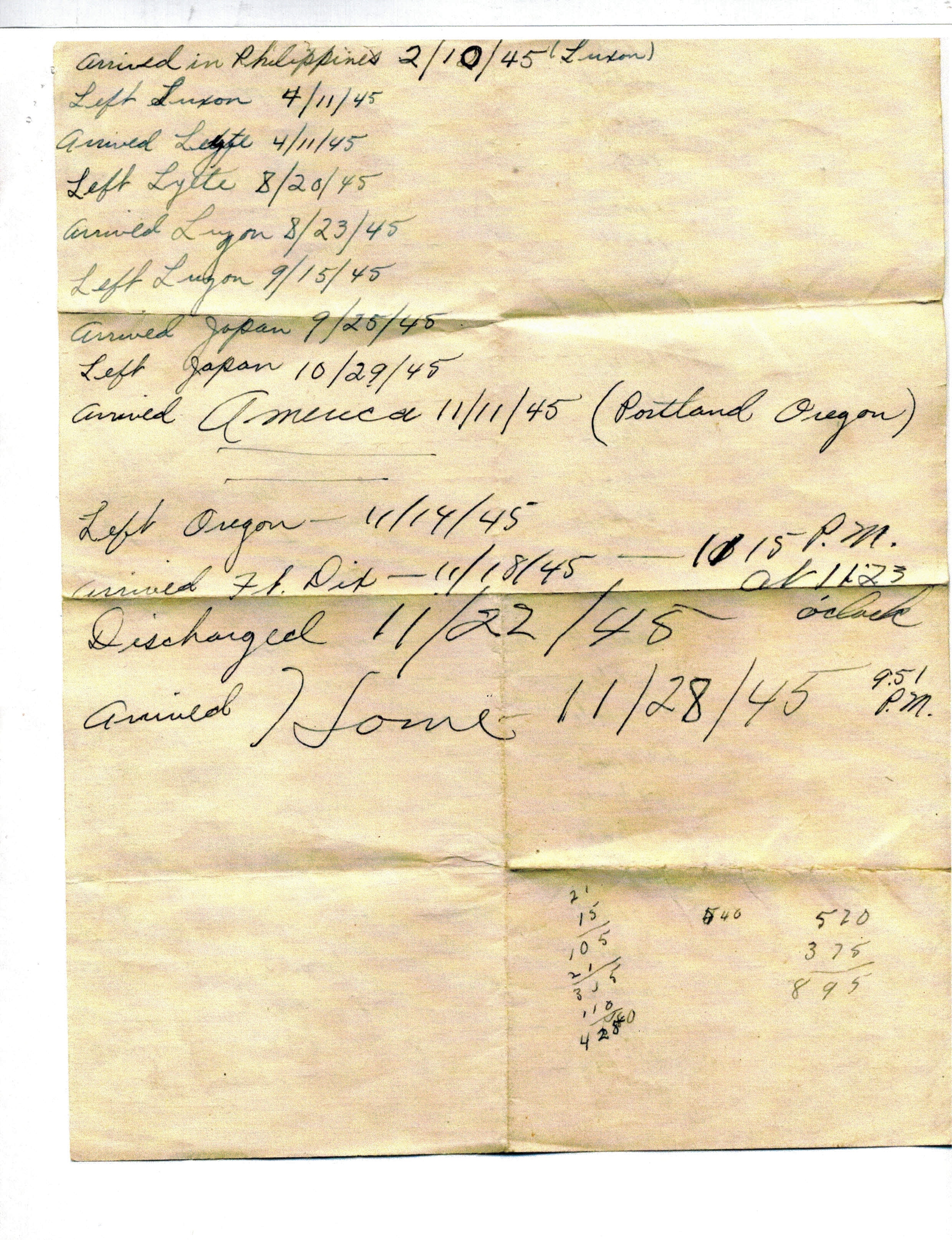
APG's WWII log p.2

As my brother so aptly expressed during my father’s eulogy, one common thread throughout my dad’s life was his love for his family, his mother and siblings (who all pre-deceased him), and his wife and children.  He met his beloved wife of 60 years, Connie M. Papagni, not long after the war (legend has it that he was showing off for her at Rochester’s Charlotte Beach by doing headstands).  They were married on September 13, 1947. Being “good Catholics,” my sister Linda was born nine months later and my identical twin brother David and I showed up a mere 18 months after that.

Art and Connie

8 - Wedding Bells 9-13-1947

12 - Connie with Arthur David & Linda and Proud Dad

Arthur P.’s “big break” jobwise was joining the U.S. Post Office as a mail carrier in the early 1950s. The rhythms of a mailman’s life influenced our family in many ways.  Dad got up for work at about 5:10 a.m. for nearly three decades. That meant he was our fail-safe mechanism when David or I ignored the alarm clock and missed our 5:00 a.m. “rise-and-shine” the four or five years we had morning paper routes.  It also meant that I occasionally had to see the look of disappointment on my dear father’s face when, as a young adult, I rambled into the house past 5:00 a.m. after a night of “socializing.”

31 - Christmas Eve 1953 - The Singing Mailman

The mailman’s timetable also left me with one very fond childhood memory.  Although Sundays were always a non-workday, a mail carrier’s second day off rotated each week, meaning a two-day weekend only arrived once every six weeks. If, during the summer months, that rare Saturday off coincided with a good picnic day, my parents would pack us into our 8 or 10-year-old the car and we would drive across town to a bakery that made mouthwatering chicken pot pies. My Mom would carefully place the piping hot delicacies into the car’s trunk wrapped in a blanket or two, and my Dad would head south to Canandaigua Lake’s Kershaw Park and a wonderful day of food, swimming and play (and, if we were really lucky, a stop at the end of the day at Roseland amusement park).

My mother, Connie, started working as a salesclerk with a downtown Rochester department store when David and I were seven or so to help support the family and pay off medical bills.  [Their health insurance policy’s “pre-existing illness” exception, and limited in-hospital coverage, placed a huge financial burden on this working-class family.] When my parents had trouble making ends meet on two paychecks, my Dad would find a part-time job, even if it meant bagging groceries (with a smile) at the local A&P supermarket.  He was never extravagant when it came to his own needs, placing the family first. He didn’t experience the luxury of owning a brand-new car until he was in his fifties and the children had moved away.

36 - New Year's 1954 - Connie with D-A-L

But my father also knew how to have a good time and loved to dance – especially the jitterbug.  Wedding parties, back in the day when everyone had a live band, were a favorite social event for my Dad.  He would dress up and head out our door with a plastic bag under his arm – containing a change of clothes so he would have something dry to put on for the last dance and ride home.  He enjoyed every dance, and when one partner would tire, he would find a new one – and no one (except, my Mom) would ever turn him down.  “Night Train” was special to him, and when he heard the first notes, he would look across the room to find his niece Rosemary and dance up a storm.  Arthur P. danced with joy and enthusiasm well into his seventies (and would still have been jitterbugging away if emphysema hadn’t robbed him of his breath).

Dad hung up his mailman’s uniform when he turned 60, feeling that the change a number of years earlier from the “U.S. Post Office” to the “U.S. Postal Service” had ushered in a new era where “service” to the customer was no longer the first priority.   He also felt (correctly, I’m sure) that the USPS was doing everything it could to push the older carriers into retirement so less expensive replacements could be hired.  Never sitting still for long (until his final years), Arthur P. took a job as a school bus driver shortly after retiring from the postal service, rising at 5:00 a.m. to transport “special ed” children to and from school.  To his dismay, he was told when he turned 65 that, under NY law, he was not allowed to drive a school bus any longer.  He was hurt and insulted by the law, amazed that such an arbitrary decision could be made without even testing his driving abilities.  I offered to challenge the law in federal court as unlawful age discrimination, but my father never was one to openly challenge authority, and he declined my offer.

89 - Art & Connie in Hawaii Oct 1987

My folks never experienced the joy of having grandchildren living in town with them, except for the years that their first granddaughter, Linda’s daughter Kara, went to R.I.T. as an undergraduate.  The initial round of grandchildren, Blake, Kara and Timothy, were raised in Massachusetts, and then New Jersey, depriving my Dad of an opportunity to whine a bit about having to baby-sit every now and then.  Years after my father assumed that there wouldn’t be any grandchildren with the “Giacalone” surname, my children, Lissa (1997) and James (2000), brought sunshine into my folks’ lives.  Living within an hour-and-a-half of Rochester meant that their Nana and Papa got to see and spoil them fairly regularly, although we never did visit often enough to suit either grandparent.

72 - Nana & Papa with Blake and Kara 1976

115 - Papa & Lissa Father's Day 2000

188 - Papa on his 88th with James

My father died on January 11, 2008, about six weeks shy of his 89th birthday. Dad had endured a tough ten-day hospital stay which followed several challenging years with emphysema progressively narrowing his physical world and dementia slowly robbing him of his short-term memory.

Arthur P. Giacalone was a good, honest, hardworking and decent man.  He epitomized the dignity of “the common man.”  I miss him.

Happy 100th Birthday, Dad!

With All Due Love and Respect,

Art Giacalone

P.S.  Here’s a collage of four generations of Giacalone men:

190 - 1st Ignatio - 2d Arthur P - 3d Arthur J & David A - 4th James A.

And here’s four generation of our family’s strong and resilient women:

4 Generations Women

BuffNews editors give Cuomo a free pass on Amazon HQ2 & RiverBend

Posted by Arthur J. Giacalone on February 22, 2019
Posted in: Andrew Cuomo, Buffalo News, SolarCity. Leave a comment

It’s not surprising that Governor Andrew Cuomo places the blame for Amazon’s decision not to proceed with a headquarters in Long Island City, Queens, squarely on the Democrats in the State Senate.  Our uber-confident governor has never been one to admit to possible mistakes.

But the Buffalo News editorial board owes its readership a more nuanced assessment of the governor and his handling of development-related matters.  Its February 17th editorial, “Senate Dems poison Amazon deal and hurt the rest of New York,” is a perfect example of the easy-on-Cuomo approach.

The recent opinion vilifies the State Senate for what the editorial board characterizes as “reckless conduct,” calling out its Majority Leader, Andrea Stewart-Cousins, for her “unfortunate leadership.”  But no mention is made of the governor’s arrogant style and secretive decision-making process.  Cuomo unnecessarily alienated legislative leaders, as well as the public, by failing to involve them in the formulation of the nearly $3 billion package of state and city tax breaks offered to Amazon.

The editorial board ironically suggests that the actions of Senate Democrats will adversely impact all of New York State by discouraging other companies from engaging in “a rigged game.”  Such commentary, devoid of any mention of the blackeye the Empire State has suffered from the Buffalo Billion bid-rigging scandal, belongs in a Cuomo press release, not a regional newspaper’s editorial.

Equally disappointing is the editorial’s take on the Buffalo Billion and Buffalo’s underachieving Tesla plant and unimpressive job creation figures.

To simply opine that, “Western New York is better off for Tesla’s presence,” begs the question:  Would Buffalo be worrying about Tesla and its Buffalo solar business if the Buffalo Billion plan had been skillfully and thoughtfully planned and implemented in the midst of Gov. Cuomo’s 2014 re-election campaign?

The facts reflect poorly on our governor.

The November 2013 plan for the RiverBend site envisioned – not the “silver bullet” of a million-square-foot single-purpose building – but seven smaller structures used by a variety of businesses.  [See Model of original RiverBend plan Nov. 2013.]

The original “anchor tenants” touted by Cuomo for RiverBend were two long-forgotten California-based manufacturers, Solevo (solar panels) and Soraa (LED lighting).

The concept of a one-million-square-foot plant came, not from the Cuomo administration, but from SolarCity, a solar panel installation company owned by two cousins of Tesla’s Elon Musk.  SolarCity announced plans in June 2014 to purchase Solevo.

A month before the September 2014 Democratic primary, lured by the image of the largest solar panel manufacturing facility outside of China, Gov. Cuomo embraced SolarCity’s massive plans for RiverBend.  Overlooked was SolarCity’s almost $50 million second quarter loss.

An unplanned event brought Tesla to Buffalo.  Elon Musk’s company purchased the bankrupt SolarCity in 2016.

Given this reality, the Buffalo News editorial board should be asking:  With proper planning and public input, how else could the Cuomo administration have invested $750 million in Buffalo’s future, and how much better off might Western New York be today?

With All Due Respect,

Arthur J. Giacalone

Lessons learned from Amazon’s aborted NYC HQ2 and Buffalo’s RiverBend project

Posted by Arthur J. Giacalone on February 14, 2019
Posted in: Andrew Cuomo, Buffalo Billion, Corporate Welfare, Development, Howard Zemsky. Leave a comment

Buffalo businessman Howard Zemsky recently found himself in an unenviable position:  explaining to a legislative panel in Albany Tesla’s disappointing job-creation figures at the million-square-foot centerpiece of Gov. Andrew Cuomo’s “Buffalo Billion,” while justifying $1.525 billion of incentives to lure Amazon to build a headquarters in the Long Island City neighborhood of Queens.

Things haven’t gotten easier for Zemsky, President of New York’s Empire State Development agency, or his boss.

In what New York’s governor might consider his own “Valentine’s Day Massacre,” Amazon issued a February 14, 2019 statement expressing its decision “not to  move forward” with its plan to construct 4 million square-feet of office space and bring 25,000 employees to NYC.  The reason given:  “… [A] number of state and local politicians have made it clear that they oppose our presence and will not work with us to build the type of relationships that are required to go forward with the project.” It was a mere three months earlier that Zemsky characterized the Amazon proposal as a “once-in-a-lifetime opportunity,” and expressed pride in bringing “the largest deal in ESD history” to our state.

In headier days (that is, prior to the Buffalo Billion bid-rigging scandal), Mr. Zemsky proudly instructed communities across our state to “learn the lesson of the Buffalo Billion,” and transform their economies to be self-sustaining “through real investments that actually create jobs.”

Ironically, there are important lessons for communities to learn (beyond the convictions of Buffalo’s Louis P. Ciminelli and SUNY Polytechnic Institute’s Alain Kaloyeros) from our governor’s handling  of the Buffalo Billion and Amazon HQ2 project:

First, without the benefit of public comment and input from beyond his inner circle, Andrew Cuomo will miss the broader picture. With the Buffalo Billion, his administration poured $750 million into building the Western Hemisphere’s largest solar panel factory and filling it with sophisticated equipment, but failed to make certain that its tenants – initially SolarCity, now Tesla – were financially secure.  With Amazon HQ2, Cuomo arrogantly made decisions that would impact an existing community for decades without seeking the perspective of local leaders and residents, choosing instead to secretly negotiate an agreement with Amazon.  [See Memorandum of Understanding signed by Mr. Zemsky on behalf of Empire State Development: amazon – new-york-agreement 11-12-18.]

Second, Andrew Cuomo is willing to ignore state laws meant to protect the environment and character of existing communities.  Despite an obligation to assess potential environmental impacts prior to approving funding for a project, members of the Public Authorities Control Board – all appointed by the governor – approved the first $118 million for RiverBend two months before the mandatory environmental review.  Then, to ensure a “shovel in the ground” prior to the 2014 gubernatorial election, SUNY Poly, under the now-disgraced Kaloyeros, performed a perfunctory environmental assessment for this massive industrial facility without the benefit of an Environmental Impact Statement.  [See RiverBend Negative Declaration 05-21-2014.]

To borrow a phrase from our governor, the Cuomo administration’s handling of both the RiverBend and Amazon HQ2 projects constitutes “governmental malpractice.”

With All Due Respect,

Art Giacalone

Sham, Spurious and Sundry Unspeakables in one Jurist’s Courtroom

Posted by Arthur J. Giacalone on January 5, 2019
Posted in: City of Buffalo, Judiciary, Lawyer's 1st Am. rights, South Buffalo. 3 Comments

“Really?”

That was my spontaneous exclamation on November 20, 2018 when a judge abruptly and angrily ordered me in open court to “stop using” words such as “sham,” and to “use legal words.”

And “sham” wasn’t the only expression to arouse the jurist’s pique.  His Honor went on to characterize phrases in my court papers such as “working in concert” and  “spurious legal contentions” as “the sort of things that this Court, for one, is tired of hearing from lawyers.”

Here’s the actual exchange [I’ll spare the casual readers of this post the details of the court case, but the curious can peruse the affirmation which contains the above-quoted “unspeakables” for an overview of the facts and legal contentions: krehbiel v. wnymcs – giacalone affirmation 11-18-18]:

                                                            …

MR. GIACALONE: … [A]nd that’s why we see this whole thing as a sham.

THE COURT:  No, stop using those words.

MR. GIACALONE: Well, how could – –

THE COURT:  Don’t use ruse, sham, red herring, all that stuff.

MR. GIACALONE: Really?

THE COURT:  Stop using it.  Use legal words.

MR. GIACALONE: It is a legal word, Your Honor.

THE COURT:  Sham?  Isn’t that a derogatory word?

MR. GIACALONE: Can I find court cases that refer to shams?

THE COURT:  I don’t – –  You know – –

MR. GIACALONE: For some reason, we can’t express how we interpret the actions of the City. I don’t have the luxury of assuming that they’re acting in good faith, Your Honor.  I observe what they’re doing.

THE COURT:  Well – –

MR. GIACALONE: I’m just saying – –

THE COURT:  I’m searching for words to make sure that I use them correctly.  I read your affidavit in opposition – – or your affirmation, excuse me, not an affidavit, an affirmation.  You use the phrase, working in concert.  There’s other words.  Cannot hide under – – is it a sheaf?

MR. GIACALONE: Sheaf.

THE COURT:  – – of affirmations and spurious legal contentions, and the purported need for rescission seems to be little more than a sham, a manufactured excuse to rid themselves of embarrassing litigation.  Those are the sort of things that this Court, for one, is tired of hearing from lawyers.  Now, I’ll bet if I go to [opposing counsel’s], I can probably find a few.

MR. GIACALONE: Well, that’s the point.

THE COURT:  Let me finish.  I’ll bet I’ll find – – is that where I left off?

THE REPORTER:  Yes.

THE COURT:  Wishful thinking.  Self-imposed requirement of petitioners who evidently wish to control the project.  I mean, there’s a few.  They’re a little more subtle, but your briefs and your affirmations would be a lot less – – a lot shorter and less for the Court to read if you left out the hyperbole and the adjectives used to describe your opponents’ thoughts, arguments, etcetera.  Those are the sorts of things that this Court, for one, is tired of having to wade through in order to reach a determination.  I try very hard to avoid such adjectives in describing arguments and conclusions of counsel and their clients.

                                                            …

My surprise at His Honor’s sensitivity to expressions such as sham and spurious is two-fold.

First, it is not difficult to find either court decisions which characterize activities and legal proceedings as shams (from a dissenting opinion by the late U.S. Supreme Court Justice Antonin Scalia, a per curiam order of the U.S. Court of Appeals, Second Circuit, to a memorandum from our own Appellate Division, Fourth Department), or repeated references to spurious legal claims and defenses in opinions rendered by our state’s appellate courts.

More significantly, the ability of lawyers in a judicial proceeding to “speak freely to zealously represent their clients without fear of reprisal or financial hazard” is so integral to the search for truth and the welfare of society that oral and written statements made by attorneys in connection with a court proceeding are absolutely immune from liability for defamation when such words and writings are pertinent to the questions involved.   New York’s highest court established this legal principle more than 120 years ago, “for the benefit of the public, to promote the administration of justice, and only incidentally for the protection of the participants in judicial proceedings.”  [See, for example, Youmans v. Smith, 153 NY 214 (1897); Park Knoll Associates v. Schmidt, 59 NY2d 205 (1983); Front v. Khalil, 24 NY3d 713 (2015).]

It has always been my goal as a lawyer to thoroughly, accurately, and diligently represent my clients’ legitimate interests, and to do so in a professional and honest manner.  The court papers that so offended His Honor attempted to fully support – factually and legally – my clients’ claims of sham, spurious arguments, and city officials working in concert with the project’s sponsor.  Ironically, my conscientious efforts to explain and support my clients’ assertions appear to have irritated the judge who expressly referenced the length of my last submission:  “Twenty-eight pages.”  [Of course, His Honor did not mention that my affirmation was in response to four attorney affirmations, an affidavit, and a memorandum of law, totaling 31 pages in length (plus several exhibits).]

I may not be the proverbial “sharpest marble in the drawer,” but I can’t for the life of me understand how the words and phrases that I spoke and wrote are not an acceptable part of the legal lexicon.

I also can’t understand why His Honor chose, not once, but twice, to address me as “Arthur” during oral argument, rather than “Mr. Giacalone.”  In contrast, my two opposing counsel were consistently identified as “Mr. ________” and “Ms. ________.”  [Note: During my 42 years of appearing in courtrooms – at trial-level and in appellate proceedings – no judge or justice had ever chosen to refer to me by my first name.]

But I think I understand why His Honor complied (over my objection) with my opposing counsel’s peculiar request to attach to the official “Order and Judgment” not only the two-page transcript of the Court’s November 20, 2018 oral decision (dismissing my clients’ lawsuit), but the entire 34-page transcript of that day’s oral argument.  In doing so, the Court not only went beyond the customary practice in Western New York (and, I believe, elsewhere), His Honor exhibited his unmatched hubris.

With All Due Respect,

Art Giacalone

A Citizen’s Guide to Land Use and Zoning Law

Posted by Arthur J. Giacalone on December 22, 2018
Posted in: Citizen's Guide to Land Use & Zoning, City of Buffalo, Development, Erie County, Green Code, SEQRA, Zoning Law. 2 Comments

I was honored this past year when Sam Magavern, as Executive Director of Partnership for the Public Good, asked me if I would be interested in writing a handbook to assist Western New York residents better understand land use and zoning laws, and more effectively express their concerns about proposed projects or changes in land use laws.  When Sam approached me, I was well aware of how tirelessly PPG has worked to provide research and advocacy support to community groups and advocates to improve the quality of life and ensure justice throughout the Buffalo Niagara region.

I had some reservations (as I’ll address in a minute), but I took on the task, and PPG published the finished product earlier this week, entitled, “Land Use and Zoning Law:  A Citizen’s Guide.”  [You can also find the handbook here: environment-_land_use_and_zoning_law_a_citizens_guide ]

Although PPG generously attributes the writing of the guide to me, it was, in fact, a team effort.  The final version reflects the evenhandedness and editorial insight of Sam Magavern, as well as the “historic preservation” expertise of Jessie Fisher, Executive Director of Preservation Buffalo Niagara.  My sincere thanks to both.

Regarding my reservations, I realized that it would a struggle for me to overcome my skepticism of the zoning and land use process while organizing and drafting the handbook.  As I wrote in a July 2018 post following announcement of the Buffalo Billion-related conviction:

“Zoning, land use and construction decisions are made at what I view as the intersection of politics and greed.  It’s an unattractive and discouraging place to be if you believe that citizens deserve both an open and fair process, and government officials who truly strive to function lawfully and in a manner intended to benefit society as a whole.”

Much of my perspective and concerns relating to the development process are the result of three decades of dealing with Buffalo City Hall.  As expressed in a recent posting regarding a proposed project on Buffum Street near my South Buffalo residence:

“As a lawyer who has spent nearly 30 years representing residents in land use and environmental matters, I have lost virtually all confidence in Buffalo City Hall’s willingness and ability to comply with zoning and environmental review laws.”

Not only has the City of Buffalo failed to consistently apply and enforce its much touted zoning and development law, the “Uniform Development Ordinance” or “Green Code” [one startling example, the Chason Affinity project at Elmwood and Forest avenues], it has managed to render SEQRA, a citizen’s most effective tool, virtually meaningless by its reluctance to require project sponsor’s to prepare draft Environmental Impact Statements.  [See my February 2018 post on the virtual extinction of EISs.]

Equally disappointing, when it comes to preserving the Queen City’s historic and architectural heritage, Buffalo’s pro-development and arrogant decision-makers have refused to listen to, or consider, the recommendations of State preservation experts when such advice contradicts a developer’s plans.  [See State Historic Preservation office letter re Elmwood/Forest project: SHPO’s 12-19-2016 letter] This myopic stance was tangibly demonstrated in 2017 when, following the “leadership” of Councilmember Joel Feroleto, the Common Council made decisions which led to the demolition of 10 century-old buildings in the Elmwood Village to make room for a massive, incongruous, mixed-development project.

DSCN8941

More recently, this position was formalized, at the urging of Councilmember Christopher Scanlon, in a resolution adopted by Buffalo’s Common Council on October 2, 2018 (in furtherance of Maritime Charter School’s Buffum Street expansion plans):   “… As a municipal entity, the Common Council is not required to take advice from or consult with New York State Historic Preservation Office (SHPO) in any way.”  [See Common Council Resolution rescinding special use permit 10-02-2018]

Sophisticated and politically-connected developers, emboldened by their lawyers, have learned to work in concert with compliant government officials to circumvent and maneuver through zoning laws and SEQRA requirements.  The only way to reverse this tidal wave will be through persistent vigilance and hard work on the part of residents and community advocates.

I hope PPG’s handbook will assist those efforts as we strive to protect and enhance the character and integrity of our neighborhoods and communities throughout Western New York.

With All Due Respect,

Art Giacalone

Can’t trust City Hall & Chris Scanlon to protect the Buffum Street Neighborhood

Posted by Arthur J. Giacalone on October 15, 2018
Posted in: Carl Paladino, Christopher Scanlon, Development, Political Contributions, South Buffalo. Leave a comment

As you probably know, Maritime Charter School wants to build a three-story, 65,000-square-foot high school building, and a 24,000-square-foot pre-fabricated athletic building (large enough for three full-size basketball courts) at the rear of its existing two-story middle school at 102 Buffum Street (the former Public School No. 70).

DSCN9653

The proposed “expansion” and addition of a high school would negatively impact nearby residents and the ability to peacefully enjoy life in the Buffum Street neighborhood, and threatens the sanctity of lands long held sacred by indigenous groups:

– NYS’s Historic Preservation Office has described the 102 Buffum Street parcel as having “high cultural, historic and archeological sensitivity” due to the likelihood that the Mission House (school) of the Buffalo Creek Indian Reservation was located at the site, and its proximity to the Seneca Indian Park (burial grounds).  Archeological resources of great significance to Native American communities, including human remains, could be disturbed if expansion is allowed.  See SHPO 06-19-18 letter re 102 Buffum.

DSCN9588

– According to Maritime, if the expansion project goes forward, there would be 5 times as many students and faculty at the Buffum Street site, increasing from the current 105 and an estimated 525.

– Maritime’s transportation plan estimates that the combined middle school/high school would bring an average of 104 vehicles to 102 Buffum Street (not counting yellow school buses) each school morning.  That’s one car every 35 seconds during the morning rush hour.  Nearly as many vehicles would be leaving the Buffum Street site during the peak afternoon rush hour.

DSCN9708

– If Maritime’s varsity sports teams play any games at the Buffum Street site, neighborhood residents would experience traffic, parking, and noise issues beyond normal school hours.

– An expanded Maritime school would need an additional 57 parking spaces, and, as a result, the beautiful green lawn and majestic trees on the east side of the existing school building would be removed and be replaced by an asphalt parking lot.

DSCN9606

– The number of buildings would increase from 1 to 3.  The foundations of the two new buildings would expand beyond the existing paved area at the rear of the school and onto the grassy slope and a portion of the wooded area.  These changes would increase the rainwater that runs off the parcel, adding to existing drainage and flooding problems for Zittel Ave. yards.   See Charter school addition site plan

Slope4 07-05-18

City Hall officials, including South District Councilmember Christopher Scanlon, ignored these potential impacts to the Buffum Street neighborhood when they approved the Maritime charter school’s expansion plans this past May and June.  Recently, as you may have heard, Maritime asked the City’s Common Council to rescind its June 2018 approval of a “special use permit” which allowed construction of the new high school and athletic buildings.  On October 2nd, without any chance for the public to speak, the Common Council – led by Mr. Scanlon – complied with Maritime’s request, rescinding the prior approval.  See

Maritime and the Common Council claim that the approval of the expansion plans was set aside so that Maritime can pursue an archeological examination of the Buffum street site.  This explanation just isn’t logical.  As owner of 102 Buffum Street, Maritime undoubtedly has the right to conduct an archeological study without rescinding the special use permit approval.  It’s their land.

From my perspective, the real reason for rescinding the approval is so that the City and Maritime can have a “do-over” – clean up the mistakes the City made when rushing to approve the expansion plans in May and June, and then re-approve the same plans for a new high school building and athletic facility.  Maritime’s letter requesting the rescission states, “Maritime still intends to undertake the Project…”

As a lawyer who has spent nearly 30 years representing residents in land use and environmental matters, I have lost virtually all confidence in Buffalo City Hall’s willingness and ability to comply with zoning and environmental review laws.  Here are but a few reasons why I believe that the Buffum Street neighborhood cannot rely on City Hall to protect its interests:

  1.  Maritime school’s purchase in June 2017 was financed 100% by Ellicott Development, the Paladino family company, and Ellicott Development plans on constructing (and, profiting from) the expansion project. Councilmember Scanlon is deeply connected to the Paladinos.  For example, public records show that he received at least 17 political contributions from Paladino-related individuals and entities between Aug. 2012 and Feb. 2016.  See Scanlon contributions from Ellicott Development 2012-2016
  2. At the Common Council’s June 2018 public hearing, a respected Native American activist advised Scanlon and company of the potential desecration of human remains if the expansion was allowed, and two residents raised concerns regarding traffic, loss of trees, drainage, and neighborhood character. At the close of the hearing, Scanlon stood up, did not mention any of the issues raised by the public, and advised the council that he supported the project. [Note:  Scanlon, and an Aug. 17, 2018 Buffalo News editorial, mention Maritime’s reputation as an academic success when expressing support for the expansion project.  However, a chart included in a recent Buffalo News article shows that Maritime’s 7th and 8th graders scored the lowest of any of Buffalo’s 12 charter schools and lower than two-thirds of the students in Buffalo’s public schools.  In 2018, only 15.0% of Maritime’s tested students were proficient in ELA, and 10.1% proficient in Math.]\
  3. Maritime’s Director of Administrative Services, David P. Comerford (who appeared on behalf of Maritime at the City’s public hearings), has deep City Hall connections. He spent years as Buffalo Sewer Authority’s General Manager, and his brother, James Comerford, Jr., is the City’s Commissioner of Permit & Inspection Services.

I urge anyone concerned about the Maritime charter school’s plans to change the character of this quiet, historical residential neighborhood to contact Councilmember Chris Scanlon to express your position:  Christopher P. Scanlon, 65 Niagara Square, Room 1401, Buffalo, NY 14202; (716) 851-5169; Email at cscanlon@city-buffalo.com.

Thank you.

With All Due Respect,

Art Giacalone


Is QCL’s 23-story glass tower this decade’s ethanol plant?

Posted by Arthur J. Giacalone on September 10, 2018
Posted in: Gerald A. Buchheit Jr., Waterfront. 1 Comment

Silo City has become an integral and inspirational part of Buffalo’s arts and recreation scene.  Major theatrical events, music festivals, poetry readings, historic land and water tours, kayaking, etc., entice the public to the banks of the Buffalo River.

As The Public’s Aaron Lowinger proclaimed last month, “Perhaps no cultural revelation in Buffalo these past 10 years is more important to the city’s past and future … than the reintroduction of the vast array of grain silos at Silo City into Buffalo’s civic life.”  Likewise, the Buffalo News has described the Silo City experience as “transformative, for the viewer, participants and the city they love.”

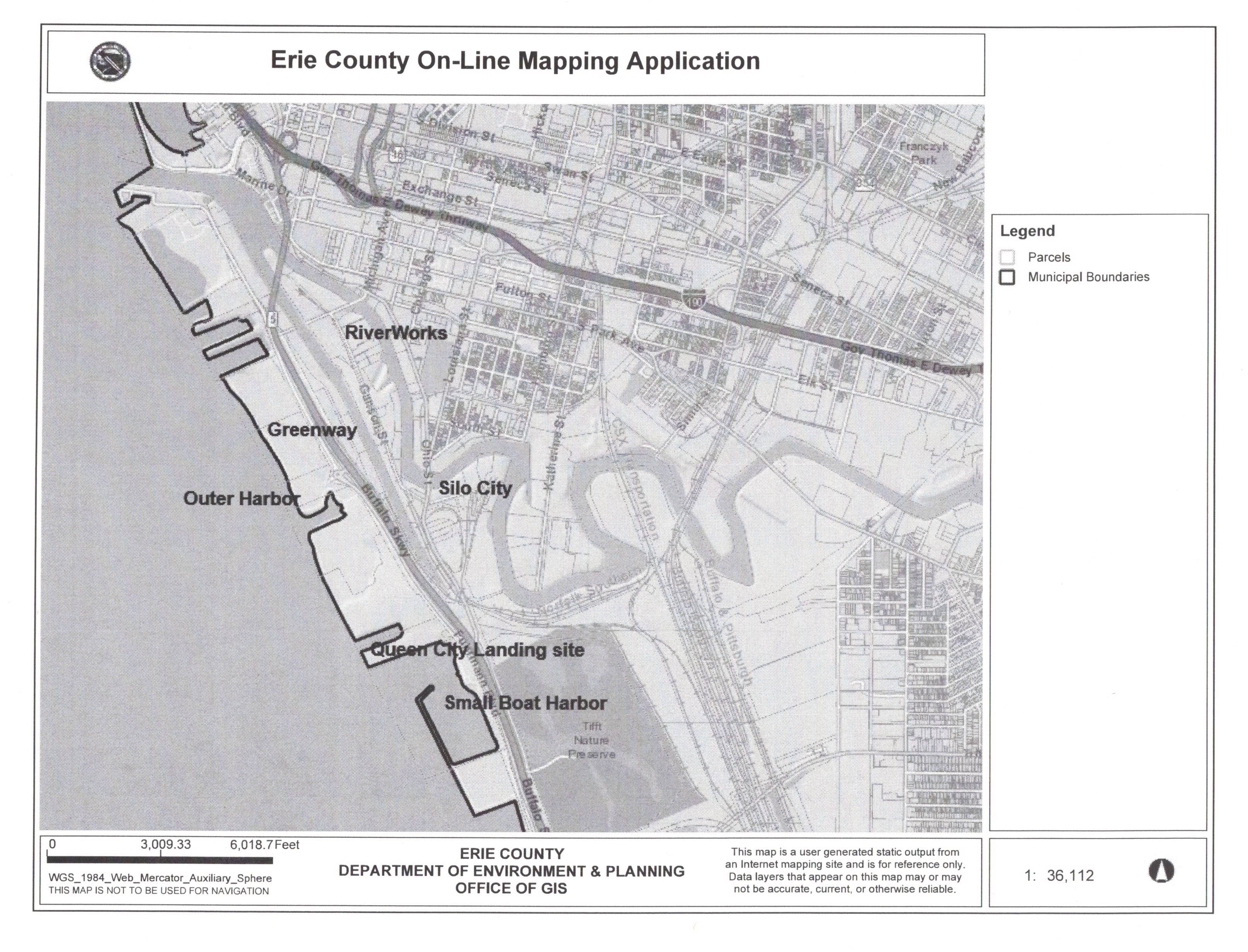
Silo City, in its current glory, would not exist if Buffalo City Hall – including the City Planning Board, Zoning Board of Appeals, Common Council (with the exception on then-Council President David Franczyk), and Mayor Byron Brown –  had their way a decade ago.  And, most likely, Western New Yorkers would not have been enjoying the “Music is Art” festival this past weekend at the Buffalo RiverWorks complex, around the bend of the Buffalo River from Silo City.

Map - scan of Silo City vicinity

Rather, an imposing 18-acre ethanol-producing plant would be covering the Silo City site, consuming a million gallons of water per day, discharging 300,000 gallons of wastewater to the Buffalo Sewer Authority daily, and impacting the surrounding community with its odor, noise, and river and rail traffic.

But, alas, the ethanol plant was never built, a victim of market forces.  The brains behind the project – RiverWright Energy’s Rick Smith III and Greg Stevens – pulled the plug on the facility despite having obtained all the necessary zoning approvals from City Hall and a permit from the NYS Department of Environmental Conservation to construct and operate the plant.  As Buffalo News reporter David Robinson wrote in an October 2011 article, “All of a sudden, making ethanol went from being a highly profitable business to one that, at best, was earning only a few nickels on the gallon or, at worst, was losing money.”

Ironically, Rick Smith, a motivating force behind both the late ethanol plant proposal and Silo City, seemingly failed to appreciate the cultural and recreational value of the historic silos.  The environmental assessment forms submitted on his behalf in late 2006 insisted that the ethanol-production facility would not adversely affect aesthetic resources important to the community, or existing or future recreational opportunities.

It’s my prediction (and, yes, hope) that a comparable fate awaits Queen City Landing’s 23-story, glass-and-steel mixed-use tower proposed for the former Freezer Queen parcel on Buffalo’s Outer Harbor.  That is, that markets forces will compel the project sponsors to abandon the project, allowing the site and nearby waterfront resources – including the Small Boat Harbor, Greenway trail, Tifft Nature Preserve, etc. – to thrive.

I have long believed that there isn’t a strong enough demand for luxury apartments to support a 200-unit structure at the former Freezer Queen site.  Not only are there few nearby amenities to satisfy up-scale residents, Lake Erie’s winds and prolific snow make the site less-than-attractive for a substantial period of each year.

Bird's Eye View from Fuhrmann Blvd.

There are noteworthy parallels between the proposed ethanol plant and 200-unit apartment tower.  In both cases:

– When submitting their proposals to City Hall, the project sponsors appeared more focused on potential profits (and, perhaps, their own egos), than realistic market forces.

– The city’s Planning Board turned its collective eye away from obvious environmental issues, and issued a “Negative Declaration” rather than requiring the developer to prepare an Environmental Impact Statement.

– Zoning standards meant to protect Buffalo’s coastal areas and shoreline were ignored.

–  A handful of concerned city residents had the courage to challenge the proposed project at public hearings and in the courts.  [Full disclosure:  I represented three Old First Ward residents in opposing the proposed ethanol plant, as well as four Outer Harbor activists in fighting the 23-story tower project.]

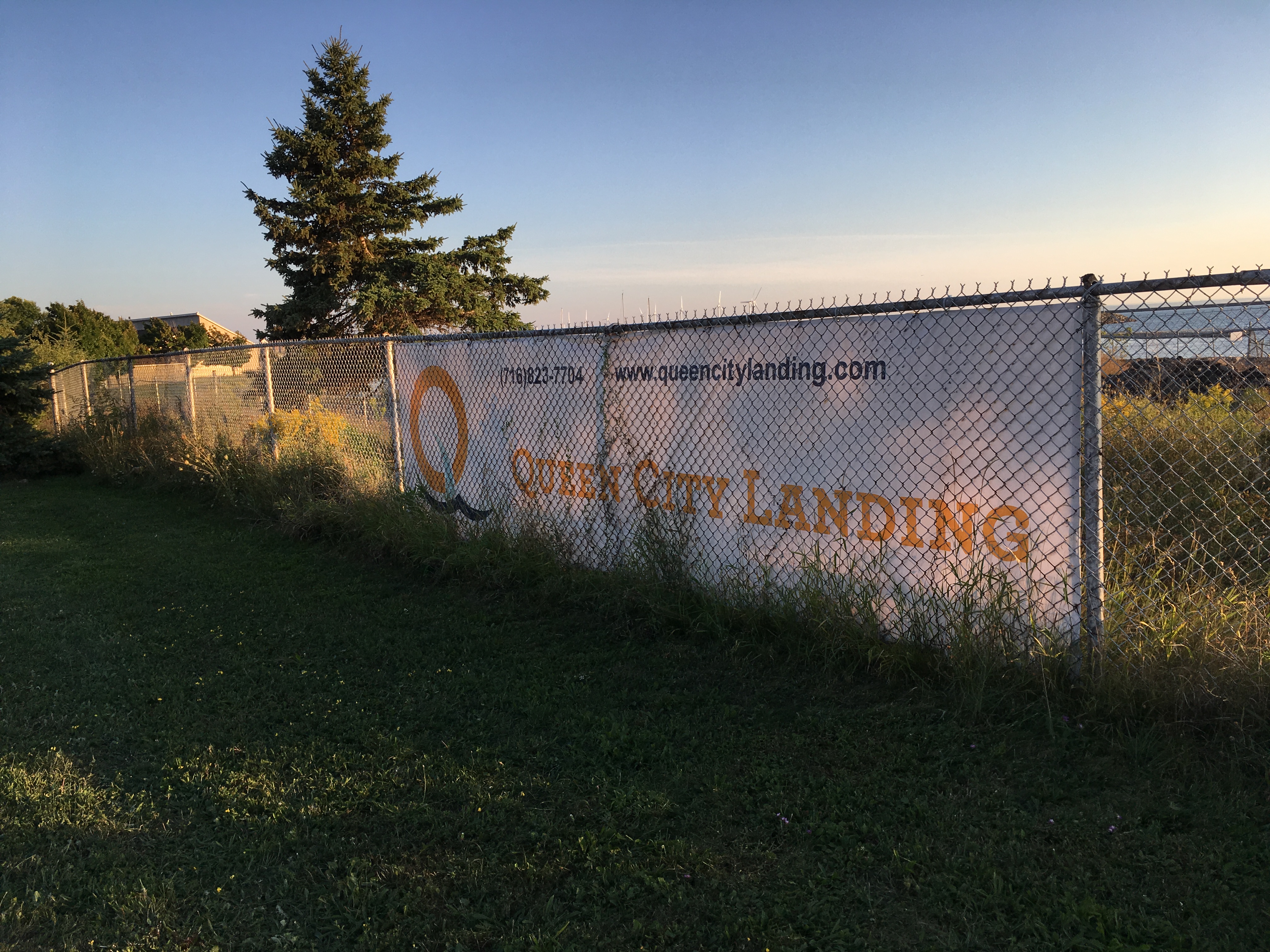
Obviously, I have no way of knowing what the principals at Queen City Landing, LLC are thinking.  And, you can bet, they wouldn’t publicly admit it if they were abandoning the project.  But, if visuals are any indication, the sponsors of the QCL mixed-use development may have already moved on from their towering dream.  Queen City Landing’s official site has not changed (in any apparent way) for years, and the only advertisement at the site for the proposed project is a soiled banner obscured behind weeds and a chain link fence.

IMG_0272

There is hope for the Outer Harbor’s future.

With All Due Respect,

Art Giacalone

Teachout for NYS Attorney General – the independence and knowledge to tackle Cuomo and Trump

Posted by Arthur J. Giacalone on September 5, 2018
Posted in: Andrew Cuomo, Political Corruption. Leave a comment

UPDATE II:  With a headline proclaiming, “Teachout plans to use office in war on corruption,” the September 9, 2018 Sunday Buffalo News quotes from the Attorney General candidate’s prophetic 2014 opinion piece to demonstrate her “nose for corruption.”  Here’s the on-line version of the 09/09/18 article; and, here’s Zephyr’s 2014 “Another Voice” column.

UPDATE I:  I often disagree with the positions taken by the editorial board of the Buffalo News.  But, they got this one right, endorsing Zephyr Teachout for NYS Attorney General.  Click here.

[Full Disclosure:  I’m trying to approach the upcoming Democratic primary for New York State Attorney General objectively, but it is a bit of a struggle.  For one thing, I have known Zephyr Teachout since her 2014 campaign for NYS governor.  Her first fundraiser in 2014 west of the Hudson River took place around my kitchen table when I was living in East Aurora.  More importantly, my decades of litigating development and land use matters on behalf of residents has exposed me to the pervasive legal and political manipulation of the development process [for example], and reinforced my belief that government agencies and public officials – more than individual citizens or corporate entities – have an obligation to know, obey, and respect our laws.  These two factors can’t help but influence my assessment of the various candidates vying for the right to run in November to become New York’s chief lawyer.]

Zephyr at 2014 fundraiser in East Aurora.JPG

New York’s registered Democrats will have the opportunity on Thursday, September 13, to select an Attorney General candidate with the integrity and knowledge to challenge abuse of power and ethical lapses, not only in our nation’s capital, but in Albany.  In my opinion, that individual is Zephyr Teachout.

The impressive lawyers seeking to be our state’s next Attorney General – Letitia (Tish) James, Leecia Eve, Sean-Patrick Maloney, and Zephyr Teachout – all proclaim the courage to take on Donald Trump.  That attribute is essential these days.  But trust in government will not be restored if we don’t demand that the head of our state’s Department of Law also possess the independence and tenacity to take on Andrew Cuomo and the web of corruption apparent throughout the Empire State.  Zephyr Teachout demonstrated her independence and mettle when she ran against the incumbent governor in 2014.

Not only is she not beholding to Andrew Cuomo, Teachout is unburdened by ties to corporate interest.  While her competitors – most notably, Maloney and James – have received large donations from the real estate industry, she has refused to take corporate PAC money.  [Note:  Teachout’s primary opponents have recently attacked her over her “refusal to take limited liability campaign contributions, and her stated independence from Gov. Andrew M. Cuomo.”]

Zephyr Teachout’s campaign for Attorney General is consistent with the observations she made in an “Another Voice” column in September 2014.  Noting how demoralizing it was to see prominent Buffalo developers awarded huge contracts following sizeable contributions to Andrew Cuomo’s 2014 campaign, she observed:  “[T]he state’s pervasive culture of corruption and ‘pay to play’ must not drive the choices we make to boost Buffalo.”  [Click Another Voice 09-05-14 Teachout on Buffalo Billion for Zephyr’s 2014 op-ed piece.]

I fully agree with the sentiment expressed by the New York Times editorial board:  “New York needs a great lawyer. We believe that Democrats who are seeking a means of standing up to the Trump presidency and graft in Albany can find in Ms. Teachout their most effective champion for democracy and civil rights, good government and the environment, workers’ rights, fair housing and gender equality.”

With All Due Respect,

 Art Giacalone

P.S.  I still can’t get over the irony of the attached 2014 photograph of Andrew Cuomo:  Cuomo’s Restoring Public Trust photo 07-13


Buffalo’s Outer Harbor at its late-summer best

Posted by Arthur J. Giacalone on August 31, 2018
Posted in: Waterfront, WNY Photos. 4 Comments

It’s a 15- or 20-minute bike ride from my South Buffalo home to Buffalo’s Outer Harbor.  On August 31st, I pedaled there after my usual Friday evening dinner – tuna fish sandwich and broccoli – arriving at the Outer Harbor’s south end around 6:30 PM.  The quality of the sunlight was so splendid that I decided to do something I had never done before – I used my recently acquired smart phone to take a series of photos, starting at the Tifft Street Pier, and ending at one of my favorite places, Wilkeson Pointe.

It was a perfect evening for experiencing the Outer Harbor – no major event overwhelming nature with crowds, vehicles, and noise.

Enjoy the views:

IMG_0238

IMG_0240

IMG_0246

IMG_0247

IMG_0252

IMG_0257

IMG_0262

IMG_0265

It isn’t pretty, but here’s my favorite dual-purpose facility:

IMG_0266

Charley’s Boat Yard on a Friday evening:

IMG_0267

The Greenway Nature Trail:

IMG_0273

IMG_0274

IMG_0276

IMG_0277

IMG_0280

IMG_0282

The Skyway:

IMG_0283

Wilkeson Pointe:

IMG_0287

IMG_0291

IMG_0296

IMG_0298

Don’t you wish you were here?

With All Due Respect,

Art Giacalone

John P. Lane spoiled me – as town attorney, then as a state court judge – may he RIP

Posted by Arthur J. Giacalone on August 14, 2018
Posted in: Judiciary. 4 Comments

The recent obituary for the Hon. John P. Lane, retired State Court Justice, reminded me of why I’ve spent so many years being disappointed – all too often – by my interactions with the average municipal attorney or judge.

John P. Lane

John Lane was a man of integrity; decent, honest, and intelligent.

When he was opposing counsel in a Town of Amherst matter, he didn’t play tricks.  He was as interested as I was in getting disputes resolved efficiently and fairly.  He actually addressed – in his court papers, and during oral argument – the issues I raised on behalf of my clients.  When we disagreed on the meaning of a zoning provision or SEQRA requirement, he expressed his opposition firmly but respectfully.  And, he was willing to admit if his municipal client was in the wrong.

Justice John P. Lane exhibited the same characteristics when sitting on the bench.

He showed respect to everyone in the courtroom.  He thoroughly knew and understood land use and environmental laws.  And, importantly, he was willing to look beyond the reasoning and excuses presented by municipal attorneys and developers’ lawyers, to determine what had actually happened during the decision-making process.

Most importantly, Justice Lane was willing to make an unpopular decision when the law and the facts demanded it.  [See one example: Price v. Common Council Sup.Ct. Erie Co. 2004.]

John Lane set the bar high.  He will be missed.

With All Due Respect,

Art Giacalone

Posts navigation

← Older Entries
Newer Entries →
  • CATEGORIES

  • February 2026
    M T W T F S S
     1
    2345678
    9101112131415
    16171819202122
    232425262728  
    « Nov    
  • DISCLAIMER

    This blog is provided for general informational purposes only. It should not be construed as legal advice and is not intended to be a substitute for legal counsel. Persons requiring legal advice should retain a properly licensed lawyer. No attorney-client relationship will be formed based on use of this site and any comments or posts to this blog will not be privileged or confidential. *************** This blog's author, Arthur J. Giacalone, does not intend or consider the communications at this blog to be ATTORNEY ADVERTISING. The primary purpose of the communication is not for the retention of Mr. Giacalone's legal services. [See definition of "Advertisement" at Part 1200, Rules of Professional Conduct, Rule 1.0(a).] Nonetheless, in case the proper authorities choose to treat this web site as ATTORNEY ADVERTISING, the street address, phone number and email address of the law office of Arthur J. Giacalone are: 17 Oschawa Avenue, Buffalo, New York 14210; (716) 436-2646; AJGiacalone@twc.com.
Blog at WordPress.com.
With All Due Respect
Blog at WordPress.com.
  • Subscribe Subscribed
    • With All Due Respect
    • Join 62 other subscribers
    • Already have a WordPress.com account? Log in now.
    • With All Due Respect
    • Subscribe Subscribed
    • Sign up
    • Log in
    • Report this content
    • View site in Reader
    • Manage subscriptions
    • Collapse this bar
 

Loading Comments...